How to clean your home and live more sustainably

2024-04-10T09:01:00

(BPT) – Do you want to live more sustainably but don’t know where to start? Leading a sustainable life doesn’t have to be complicated. In fact, you can make a difference right at home. This Earth Month, celebrate by taking stock of products you use every day that may contribute to worldwide pollution: cleaning supplies.

The problem with traditional cleaning supplies

Many traditional cleaning supplies can be harmful to the planet. When cleaning supplies enter water systems with harsh chemicals, they can cause harm to animal and plant life. Cleaning products also typically come in single-use plastic containers that don’t get recycled correctly or get thrown out, adding to the 350 million metric tons of plastic produced worldwide every year.

Thankfully, many companies like Tru Earth — a Certified B Corp — are helping save the planet by offering home cleaning products that are packaged in recyclable cardboard, preventing the need for single-use and short-lived plastic jugs.

Are you ready to keep your home and the planet clean? Then check out these easy product swaps you can make to go green while cleaning your clothing, kitchen and bathroom.

1. Laundry products
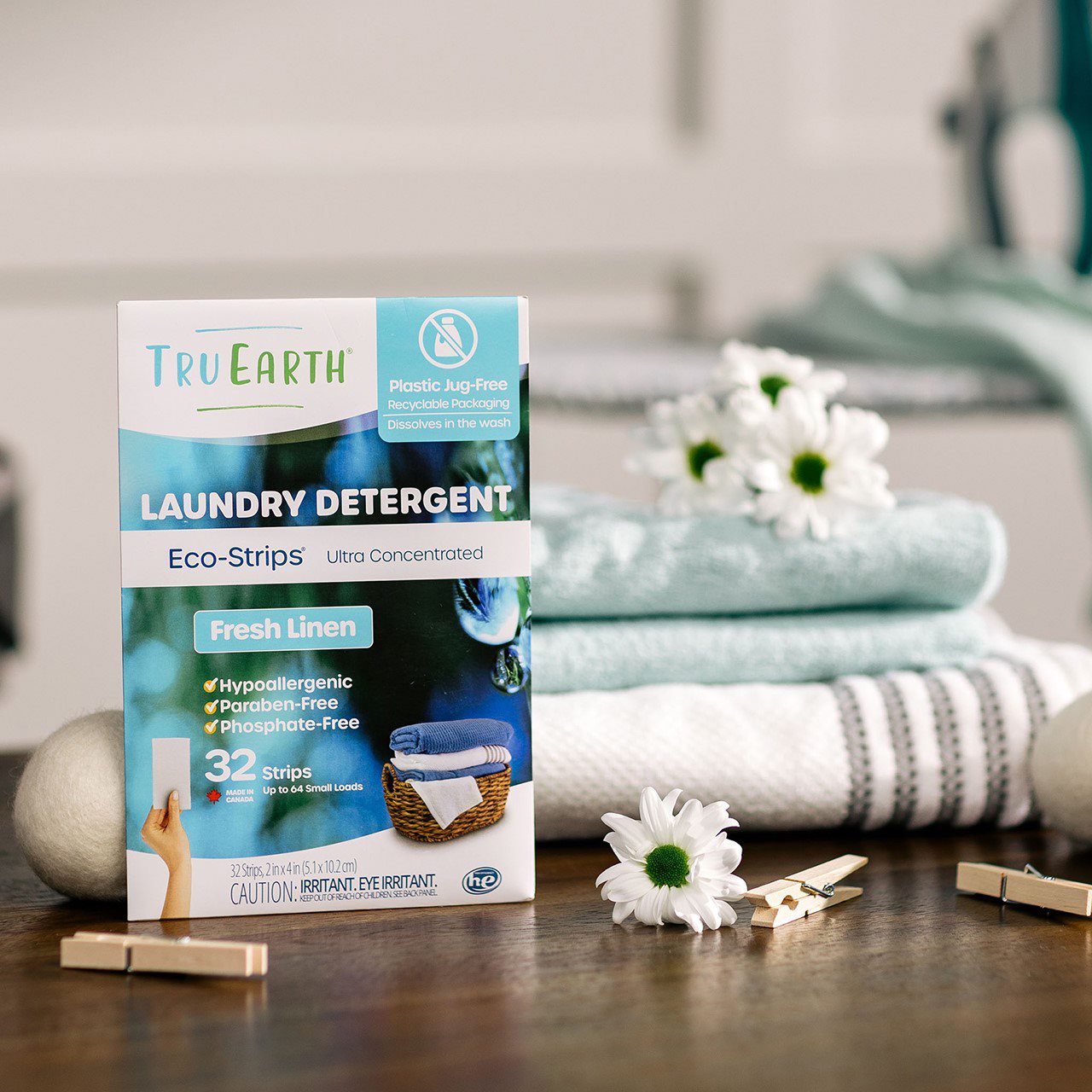
From the packaging they come in to the pollution produced by transporting them, laundry products can create a lot of harmful waste. Instead of buying your regular jug of liquid detergent or softener, opt for products like Tru Earth Eco-Strips®.

Tru Earth Eco-Strips laundry detergent and fabric softeners make laundry and other household chores easier while helping reduce plastic pollution with recyclable cardboard packaging rather than large plastic jugs. The innovative strips have prevented nearly 200 million single-use plastic containers from entering landfills and oceans!

Say goodbye to washing your clothing with parabens, phosphates, dyes and chlorine. These Eco-Strips® are free from harsh chemicals other cleaning brands use and are also vegan-friendly.

Just because these ingredients are kinder to the planet doesn’t mean you have to compromise on clean clothing. The laundry detergent strips tackle stains, revealing your clothing’s vibrant colors and even restoring radiant whites. Meanwhile, the fabric softener strips reduce wrinkles and add a pleasant scent to your laundry.

Best of all, Tru Earth Eco-Strips® simplify doing laundry. No need to measure or clean up liquid detergent. One strip can easily clean one load of laundry. And, these convenient strips work in hot or cold water and all types of washing machines, including high-efficiency ones.

2. Kitchen products

The kitchen is another area in your house where you can swap traditional cleaning products for more sustainable solutions. Whether you’re cleaning your counters, dinner table or appliances, you’re likely using multi-surface cleaners that came in a plastic bottle.

Ditch the plastic and instead use Tru Earth Eco-Strips Multi-Surface Cleaner. All you need to clean the surfaces in your home is one strip, a glass spray bottle and hot water. Just like the laundry strips, the multi-surface strips are made with cleaner ingredients free from harsh chemicals.

Need to mop your kitchen floors? No problem. Just toss a strip into a bucket of hot water and soon enough, you’ll have a clean, lemon-scented floor that you can be proud of.

3. Bathroom products

The multi-surface strips aren’t limited to kitchen use. You can also use them to clean your bathroom sink and floor. However, when cleaning your toilet, opt for Tru Earth Eco-Strips Toilet Bowl Cleaner.

Toss a strip into your toilet bowl. Wait a few minutes for it to dissolve, and then stir the water with your toilet brush. The ingredients are safer for the planet and its recyclable packaging means you’re helping prevent the need for unnecessary single-use and short-lived plastic in the home.

Tru Earth’s critical cause is to make true lasting change that helps save the planet. Not only are the products you buy good for the planet, but they also do good. For every $25 of Tru Earth products purchased anywhere in the world, online or in-store, the company will donate laundry detergent for 1 person in need for an entire month. To date, Tru Earth has donated nearly 40 million Eco-Strips®, or loads of laundry, to people in need.

Create a healthier home and environment for you and everyone else. By making smarter choices with the household products you use, you can make a difference. To learn more about Tru Earth and its critical cause, visit Tru.Earth.

New clinical egg study reveals egg-cellent results

2024-04-08T07:37:00

(BPT) – Americans are increasingly aware of the impact of cholesterol on heart health and overall well-being, but it’s not always easy to know which foods will truly have a positive effect. To add to the confusion, it can feel like research is always revealing something new, so it can be difficult to keep up.

Eggs, for example, have often received negative press related to cholesterol. However, new clinical research by a leading academic medical center showed eating fortified eggs, like Eggland’s Best eggs, did not negatively affect cholesterol levels. Additional findings suggest that eating 12 Eggland’s Best eggs a week can be part of a healthy diet, even for more high-risk individuals.

Research also suggested that consuming Eggland’s Best eggs could potentially reduce levels of “bad cholesterol” (LDL cholesterol) in older individuals and those with diabetes, and may help increase levels of “good cholesterol” (HDL cholesterol) in older individuals. The consumption of Eggland’s Best eggs may also increase Vitamin B12 levels, helping to support a healthier lifestyle.

Registered Dietitian and Nutritionist Dawn Jackson Blatner said this clinical study helps clarify the confusion regarding the nutrition of eggs and can help people feel more confident about including fortified eggs as part of a healthy diet, even for people who are at high risk for heart disease. Dawn also shared additional tips for people who may be looking to lower their cholesterol levels:

1. Eat more fiber: Fiber-rich foods are key for a healthy heart and lipid levels. Fiber-rich foods include whole grains, fruits, vegetables, beans, lentils, nuts and seeds.

2. Swap your fats: Switch to more heart-smart fats to add flavor such as olive oil, nuts, seeds, avocado and fish. Strive to decrease foods higher in saturated fat like butter, cheese, fatty meats and fried foods.

3. Choose eggs wisely: Not all eggs are created equal. Eggland’s Best eggs have more than double the omega-3s and Vitamin B12, 25% less saturated fat, 10 times more Vitamin E, and six times more Vitamin D compared to ordinary eggs.

Jackson Blatner shares her favorite recipe for a delicious toast that contains healthy fats and wholesome ingredients like salmon, avocado and Eggland’s Best eggs:

Salmon and Avocado Toast

Prep Time: 5 minutes
Cook Time: 5 minutes
Total Servings: 2 avocado toasts

Ingredients:
2 Eggland’s Best eggs, large
1 teaspoon olive oil
2 slices whole grain bread, toasted
1/2 avocado
1 cup raw spinach or arugula
2 ounces smoked salmon
Black pepper, to taste

Instructions:
1. In a skillet over medium heat, add olive oil, crack in Eggland’s Best eggs, and cook until eggs are over-medium.

2. Top each piece of whole grain toast with equal amounts of (in this order): sliced avocado, spinach, salmon, and top with a cooked Eggland’s Best egg and sprinkle of pepper.

Allergy Info: no added sugar (can be gluten-free if gluten-free bread is used)

To learn more about this study from a Leading Academic Medical Center, visit EgglandsBest.com/EggStudy.

Mindfulness tips to support early learners’ development now

2024-04-08T07:03:00

(BPT) – While mindfulness once felt like a wellness trend, it’s become a way of life for adults hoping to maintain healthier routines, be intentional in their work and handle daily stresses efficiently. According to the Centers for Disease Control and Prevention (CDC), mindfulness is the practice of being fully aware of your thoughts and feelings in a moment without judging them or negatively reacting.

But what about kids? Even at an early age, stress can lead to harmful brain development, potentially shrinking brain capacity, locking in fight, flight or freeze responses and escalating mental health disorders. A stressed brain is blocked, frustrated, over-reactive and anxious. The CDC recently published a policy report on youth mental health, which listed daily mindfulness practices as the #2 strategy to drive improvement. Mindfulness and self-regulation can impact a child’s ability to learn, and these skills are crucial for growth inside and outside the classroom. The CDC recommended K-12 classrooms practice mindfulness more regularly, but even early childhood education centers can attest to the positive impact of adopting this mindset.

Bright Horizons, a leading global provider of high-quality early education and child care, is naturally integrating mindfulness into the daily routines of early learners at hundreds of its child care centers. Utilizing Inner Explorer, a platform designed to support mental health and well-being, Bright Horizons centers implement this daily mindfulness program to help its children learn critical skills like self-awareness, self-regulation and empathy.

“Young children don’t know how to recognize and manage their emotions. They use coping tools available to them until they learn new strategies. Emotional recognition and regulation skills can and should be taught, just like any other set of skills. One of the most valuable strategies we can teach them is mindfulness,” said Bright Horizons Chief Academic Officer Rachel Robertson. “Mindfulness is paying attention on purpose, and we know it can play a crucial role in helping young children manage their emotions and actions. But, it requires intentional support from teachers and parents to develop it. Beginning mindfulness practices at an earlier age also boosts important cognitive skills. It has a significant impact on executive function, creating habits that carry into adulthood and nurturing several skills identified as essential for future success.”

Want to integrate more mindfulness practices into a child’s daily routine? Robertson has several tips and techniques parents and teachers can use:

  • The STOP Strategy: Stop, pause and focus. Take a deep breath. Observe what’s going on around you and inside yourself. Proceed.
  • Gratitude Moments: Spend a few moments each day sharing what you are grateful for.
  • Nature’s Symphony: Close your eyes and identify as many sounds as possible, from birds chirping to leaves rustling or cars nearby.
  • Starfish Breathing: Take five breaths as you trace your hand, one finger at a time.
  • Mindful Walk: Pick one sense like sight and notice how many different colors you can see.
  • Shake the Sillies Out: Pretend you’re a statue, take a deep breath and shake the energy out!

The possibilities of mindful activities for you and early learners are endless, and the benefits of more intentional practice cannot be denied. To learn more about Bright Horizons, visit brighthorizons.com.

4 Ways Your Screen Time Could Be Costing You

2024-04-04T08:01:00

(BPT) – Screens are a necessary part of life today, particularly for those who rely on their computers or other digital devices for work. But did you know that spending long hours on screens can have negative physical, mental and financial impacts? A new report by the American Optometric Association (AOA) revealed that more than 104 million Americans are exposed to prolonged screen time, including 70% of those working office jobs, that could be affecting their quality of life.

According to the report, the impact of unmanaged excessive screen time (spending 7+ hours on screens per day and not visiting an optometrist in the past year) on eye health was found to be wide-ranging. Of the 32 million Americans who had unmanaged excessive screen time, 55% experienced vision-related symptoms that may have been improved or resolved from regular visits to the optometrist. The report indicated that symptoms related to excessive screen time exposure could cost a person around $702 per year.

Prolonged screen time, especially if you use a computer screen for work, can do more than just affect your wallet:

1. Health implications — As little as two hours of screen exposure per day can induce eye-related symptoms like myopia (nearsightedness) and digital eye strain, which can cause discomfort and impact your quality of life. Symptoms of digital eye strain include dry eyes, blurred vision, headaches, and back and neck pain.

2. Lower productivity — Symptoms related to excessive screen time can lead to decreased productivity and less time to do the things you love if you have difficulty concentrating on screen-based tasks and have to put in longer hours to keep up.

3. Missed work — Sometimes people have to miss work to recover from symptoms due to excessive screen time. In a four-week period, nearly 3 in 5 (57%) employed Americans with eye conditions miss full or partial days of work because of eye conditions or short-term symptoms, and nearly 1 in 10 (9%) miss more than a full work week.

4. Poor sleep — Too much screen time can also keep you up at night. Using phones or tablets during the hour before bedtime can affect your ability to fall and stay asleep, and poor sleep quality can cause difficulty concentrating and impact your mental health.

How to ease the effects of prolonged screen time

You can’t always reduce your screen time, so it’s important to implement healthy habits to keep your eyes and overall body healthy.

Get a comprehensive eye exam: To make sure your eyes are as healthy as possible, it’s vital to see an optometrist for a comprehensive eye exam annually, even if you don’t use corrective lenses.

Optometrists are trained to provide comprehensive eye and vision care, and they can detect over 270 serious health conditions, including diabetes, high blood pressure, autoimmune diseases and cancers from an in-person eye exam.

“Seeing a doctor of optometry even just once per year can help prevent and reduce the effects and symptoms caused by excessive screen time, improving your quality of life,” said AOA President Dr. Ronald L. Benner. “There’s no substitute for an in-person visit to detect and treat potential problems promptly, and to help you learn better eye health practices at work and at home.”

Try these tips to avoid digital eye strain at home and at the office:

Blink often: Screen time decreases your blink rate, but blinking helps create and spread tears across your cornea, which keeps your eyes hydrated. If you have trouble remembering to blink frequently, try setting a reminder every few minutes. For a fun way to learn more about keeping your eyes healthy while on screens, download the mobile game Blink Land, available on IOS and Android devices.

Take breaks: Shifting your gaze away from your screen can also give your eyes a much-needed break. Also, practice the 20-20-20 rule: For every 20 minutes of computer viewing, gaze at something 20 feet away for 20 seconds to relax the eye muscles.

Check your positioning: Your computer screen should be 15-20 degrees below eye level (about 4 or 5 inches) as measured from the center of the screen, and 20-28 inches from your eyes.

To learn more about eye health and find an AOA doctor of optometry near you, visit AOA.org/EyeDeserveMore and learn more tips from AOA’s User Guide Study Companion.

10 game-changing strategies for finding the right summer camp

2024-04-03T14:19:00

(BPT) – With the days growing longer and warmer, securing a suitable camp for your child can feel like an impossible task. However, finding the perfect camp experience for your kid this summer doesn’t have to be daunting with these top 10 considerations.

1. Your child’s interests

As parents, you know your child best and can determine which camp experience makes the most sense. But remember to include your child in the process. Decisions about camp are family choices and should be a joint venture; they can help support a more successful camp experience.

2. Accredited camps

Always look for a day or overnight camp that is accredited by the American Camp Association (ACA). When a camp is accredited, it means they’ve gone through a thorough, voluntary process that supports the health and safety of all campers and staff. ACA collaborates with experts from national youth-serving organizations to guide the practices and policies at your child’s camp, reflecting the most up-to-date, research-based standards in camp operation.

3. Your child’s needs

Are you looking for a program that supports your child’s personality and learning style? Does your camper have certain medical requirements, mental health considerations or dietary restrictions? Understanding the strengths in a camp’s focus or programming may help you make your choice. It’s also important to understand that most camps prohibit kids’ access to technology or the internet while at camp. Have an honest and open conversation with your child about this prior to registering.

4. Character development

Many camps are run with an intrinsic focus on character-building skills and traits that help kids grow up to be successful adults. Look for camps talking about this in their mission, staff training and program design. ACA’s recent National Impact Study found that camp experiences support social connectivity, creating communities where young people feel safe, heard and like they belong.

5. Staff training

When researching a camp, ask questions! What kind of training do counselors receive? What types of screening do they require? What is the counselor-to-camper ratio? What are the ages of staff members? The same qualities of trustworthiness and dependability sought by any employer are valued skills and experiences in camp staff.

6. Camp philosophy, policies and procedures

Each camp has its own method of constructing programs based on its philosophy. Does it complement your own parenting philosophy? Ask camp directors about their communication policies. How do they handle homesickness and other adjustment issues? How are behavior and disciplinary problems handled? What is the camp’s dress code?

7. Length and location

Location can be a major factor in choosing a camp. Do you want to attend a camp close to home or in another state? Similarly, think about the length of the camp session. Do you want a short session for your child, such as a few days or a week, or something longer, such as two weeks or a month?

8. Camp provisions

Are there certain amenities or features you’re looking for? Maybe your child is interested in waterfront activities or a ropes course, or maybe you’re searching for a more specialized camp such as a sport- or STEM-specific program. Consider activities, food, lodging and other offerings to decide the right fit for your child.

9. Recommendations

Talk to friends, neighbors, relatives or other parents; often, word of mouth and a recommendation from someone you trust is the best endorsement. Similarly, if your child is a first-time camper, consider planning for summer camp with other parents. Having a friend with them can help children adjust, quiet nerves and build confidence away from home.

10. Certified camp finder tools

If you’re still not sure where to begin, ACA’s Find-a-Camp tool is a free resource with the most extensive directory of summer and year-round camp programs. Filter your search by your exact wants and needs. You’ll also find resources for financial aid, camp scholarships and more.

Finding the right summer camp for your child doesn’t have to be overwhelming. Take the time to explore these game-changing strategies to find the perfect summer camp match for your child.

Reinventing Services with Customers at Heart

2024-04-02T10:29:00

(BPT) – For consumers, it’s the ‘experience’ that counts. According to PwC, 73 percent of all customers place experience near the top of their checklist when making purchasing decisions, following only price and product quality in order of importance.

LG, a company that strives to ensure that ‘Life’s Good’ for all, has prioritized the art of providing F.U.N. — first, unique and new — core values for customers.

To successfully deliver the types of experiences that customers desire, LG first had to make sure that all parts of the organization were aligned and properly equipped for the task at hand. In 2024, a new CX performance management system was applied to the entire executive organization structure — not just Korean executives at the company’s headquarters but global executives and employees in charge of sales, manufacturing and management — with a view to adding CX to other crucial measurements of overall business performance, such as sales and operating profit.

The data from the CX indicator is analyzed to assess the various teams involved and to instill a ‘customer-first’ mindset throughout the entire company. The definition of ‘customer’ in this equation is not limited to end-users, but includes business partners and relevant internal departments as well.

The company made meaningful changes by promoting various customer value innovation activities. However, it was identified that a process was needed to properly evaluate business performance as well as reward the achievement of increased levels of customer satisfaction.

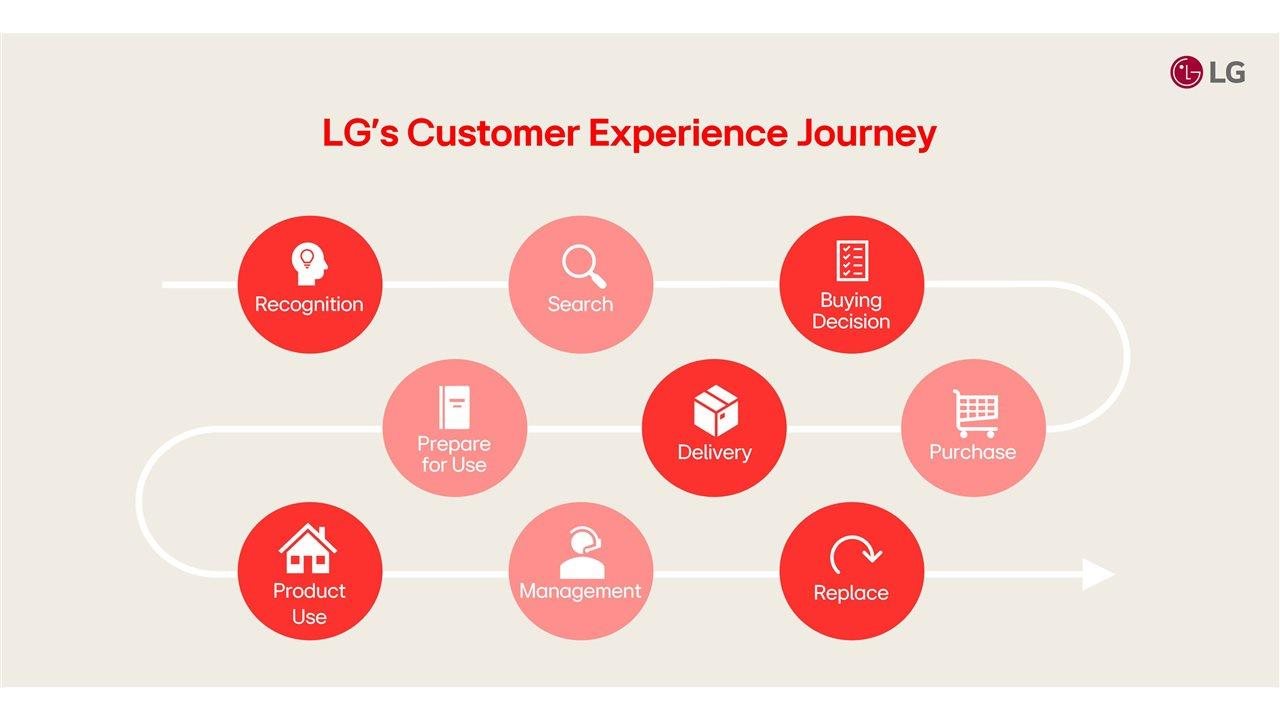
Accordingly, starting from this year, all LG Electronics executives will be evaluated based on the level of customer satisfaction within the organizations under their purview, and also on whether or not they have achieved their allotted tasks. Customer satisfaction is graded based on LG’s in-house-developed measurement tool, which quantifies the satisfaction level of LG customers during each stage of the customer experience journey.

Now, each organization is charged with the mission of determining how it will go about innovating target customers’ experiences. In this way, each unit or team can give in-depth consideration to the important question of “What constitutes a differentiated experience from the customers’ perspective?” and then gauge whether or not a specific CX innovation can be realized.

For teams that don’t work directly with customers, CX tasks can include identifying the relevant customer groups, such as internal departments or suppliers, for a certain aspect or piece of organizational work, and generating appropriate and actionable innovation activities to drive meaningful results. LG strongly believes that customer value innovation is not just the domain of ‘management’ or select customer-facing teams. Rather, it takes a whole company working together to consistently create it, with each person adopting a ‘customer-first’ mindset and seeking to view all pertinent matters from the customer’s perspective.

This belief reflects LG CEO William Cho’s management philosophy, which states that the start and end of all innovation is the customer. Since taking charge of the company at the end of 2021, CEO Cho has continuously emphasized how accelerating customer experience innovation plays a critical role in improving customers’ lives. As a result of his astute direction, and as underscored by LG’s ‘Future Vision 2030’ document and recent brand reinvention, the company is actively expanding its CX innovation initiatives.

To boost the innovation of customer experience, the company has launched a company-wide project calling on all employees to meet with customers directly to hear their honest feedback and concerns in order to empathize with them. As a part of this internal project that focuses on LG’s commitment to advancing CX, executives partook in an on-site experience program designed to ensure the implementation of customer-centric management practices and policies. Last year alone, more than 280 LG executives from the Korean headquarters visited key offline sites to see firsthand a broad range of customer contact points and associated activities, including product purchase, phone consultation, rental, delivery and after-service care.

Many of these executives even visited Hi-Tele Service, an LG subsidiary that provides remote customer service. While there, the executives had the valuable opportunity to hear feedback direct from LG customers — giving them insight into how and where the CX might be further improved and refined.

On top of these activities, in order to hear from customers, LG hosted seminars where employees could share CX innovation cases as well as programs where they could directly listen to customers’ stories. And, to boost empathy for customers, the company is carrying out company-wide activities that enable employees to set their own customer and determine the value they can provide to these customers.

Customer value innovation is not just a task for management or teams that work directly with customers. It is the job of everyone at LG to make meaningful changes by rethinking and differentiating everything the company does from the customer’s perspective.

LG is committed to providing differentiated customer value. The company will continue to pursue a customer-centric way of working — one that is based on a detailed understanding of and empathy for its customers.

Not limited to HQ, our system of actively meeting, hearing and empathizing with customers is being put into place in LG offices around the world. In a dedicated series on LG Newsroom, we will introduce how various LG teams and subsidiaries are making changes to reinvent CX, so stay tuned.

By Kang Je-nam, director of Customer Value Innovation Division at LG Electronics

4 ways to achieve financial empowerment this year

2024-04-02T11:01:00

(BPT) – Finances are consistently a top concern for many Americans, with “saving money” ranking among their primary common goals. This year, Americans are more concerned than ever due to the uncertainty created by high inflation, rising interest rates, lack of income growth and dwindling savings. According to investment research site YCharts, the U.S. personal savings rate for January 2024 was 3.8% vs. 19.3% in January 2021, a 15.5% drop in just three years.

Here are some interesting stats on the state of the U.S. economy:

  • Per Gallup, 45% rate the American economy as poor; with 63% saying it is getting worse, not better
  • 63% of respondents tell Gallup that high prices pose a severe or moderate financial hardship
  • A 2023 survey conducted by Payroll.org highlighted that 78% of Americans live paycheck to paycheck, a 6% increase from the previous year. In other words, more than three-quarters of Americans struggle to save or invest after paying for their monthly expenses
  • Similarly, a 2023 Forbes Advisor survey revealed that nearly 70% of respondents either identified as living paycheck to paycheck (40%) or — even more concerning — reported that their income doesn’t even cover their standard expenses (29%)
  • The Labor Department reported that in October of 2023 nearly 8.4 million people held multiple jobs — the highest level since July 2019, before the COVID-19 pandemic began
  • According to the Federal Reserve Bank of New York, U.S. consumer credit card debt topped $1.1 trillion in the last quarter of 2023

The economy and job markets remain in a state of constant flux, which is causing many families to worry about their ability to pay an unexpected bill, continue to pay off student loans, mortgages or credit card debt, or save money for the future.

“Saving money is more than just putting spare change into a coffee can or simply ordering takeout less often,” said Sam Jarman, financial expert, Mercury Content Partner. “Sure, those things can add up over time, but people may find that their greatest savings can come from taking a look at the necessary expenses they pay for every month, such as insurance.”

Jarman recommends these four tips to help protect your finances:

1. Check your auto insurance coverages. There’s no reason to pay for more coverage than you need, but being underinsured can leave you exposed. “The cost of repairs after a collision has grown in recent years, both as a result of more crossovers and SUVs on the road, and more technologically advanced vehicles,” said Jarman. “Beyond paying for more expensive repairs if your insurance doesn’t cover it, if you’re underinsured, you may also be responsible for paying out of pocket for medical bills, which could potentially devastate savings for a down payment on a house, your child’s college tuition or a future vacation. It’s vitally important to make sure you have the right amount of auto insurance coverage to protect against unforeseen events.”

2. Know what your homeowners insurance covers. First and foremost, be sure to read your homeowners insurance policy so you’re clear about what it does and doesn’t cover. It’s a good idea to check in with your agent each year to ensure you have adequate coverage, especially if you’ve made renovations, own collectible or valuable items, or live in an area that’s prone to flooding or earthquakes, as standard homeowners insurance policies typically don’t cover these situations. Also, maintain a home inventory to make sure to have an accurate record of your belongings and property.

3. Be aware of potential gaps in coverage. A standard homeowners insurance policy often doesn’t cover mechanical failures to your home’s appliances, HVAC or other essential systems, nor does it cover a break to service lines on your property that supply your home with electricity, gas or sewer functions. In either of these scenarios, this means you would be responsible for writing a big check to a repair company or having to purchase a pricey replacement. However, adding home systems protection and service line protection endorsements can help provide coverage for costly repairs and replacements, saving you both money and peace of mind. Pennies spent now can save you dollars down the road.

4. Regularly shop for the best coverage and price. Insurance prices can vary significantly from company to company, so it’s a good idea to take a few minutes to see if you’re getting a good deal. Shop around at least once a year — making sure to look for the exact same coverage limits — to see if you can find a more affordable rate. Additionally, check what discounts your carrier may offer. You may qualify for a discount you didn’t know existed.

“Often, regional insurers like Mercury Insurance are more attuned to their policyholders’ needs and can offer better rates,” Jarman added. “For example, the California Department of Insurance found that Mercury auto insurance policyholders save an average of $1,008, which can go a long way in feeling more secure in your savings.”

The most effective way to make sure your finances are minimally impacted by insurance costs is to speak to an independent insurance agent. They can help make sure you have the proper amount and type of coverage to keep yourself, your family and property protected.

3 ways to maximize nutrition in your baby’s diet

2024-04-02T10:01:00

(BPT) – As a parent, it’s normal to be focused on your baby getting enough of the nutrients their little bodies need to grow and thrive. Once babies are eating solid food, it’s the perfect time to start widening their palates by introducing a variety of healthy plant-based options.

Here are three tips from Plum Organics to help you choose foods that will start your baby on a good path toward adventurous flavors and textures for years to come.

1. Introduce bitter and savory flavors early

You may naturally want to choose sweet foods like fruit when you first start feeding your baby solid food, like mashed-up bananas and applesauce. However, it’s a better idea to get your child acclimated to a wider variety of flavors that represent more foods they will encounter as they grow early on, including savory and even bitter tastes. That way they will be more open to liking foods like vegetables and proteins, which are not sweet.

Some parents will opt for baby foods that combine fruits and vegetables to sneak veggies in, but fruits often mask the bitter flavor of vegetables, which defeats the purpose. Instead, try foods that introduce different flavors through vegetables only, so babies learn early that all foods are not — and don’t need to taste — sweet.

“Babies are born with an innate preference for sweet foods and an aversion to bitter foods,” said Whitney English, M.S., R.D. and co-founder of Plant-Based Juniors. “To foster a diverse palate and support adventurous eating, we need to train babies’ palates to enjoy bitter flavors by introducing them early and often!”

To help you get started, leading organic baby food brand, Plum Organics offers a Zucchini, Pea + Kale with Thyme pouch which is organic, non-GMO and contains no added sugars.

“Herbs and spices also contain bitter compounds, and it’s helpful to get babies acquainted with them early too,” added English. “Right from the start, you can add them to meals to create interesting and diverse flavors. The only spices you’ll want to avoid are those with heat, like chili powder or peppers.”

2. Focus on vitamin C to boost iron absorption

According to the Mayo Clinic, iron is a priority nutrient for children, as it aids their bodies in many important ways such as using oxygen and helping to make red blood cells, both of which are crucial for growing children. And unfortunately, many children do not get enough iron, which can lead to iron deficiency anemia.

“Iron is a critical nutrient for growth and development, which is why needs are high during pregnancy and early childhood to support rapid growth and the production of energy, red blood cells and brain cells,” said Alexandra Caspero, M.A., R.D. and co-founder of Plant-Based Juniors.

But because iron can be harder to absorb in the body, it’s important to include vitamin C in the diets of babies and young children, as that nutrient can better enhance iron absorption.

“Iron is found in two forms: heme and non-heme iron. Heme iron is found only in animal foods like meat, poultry and seafood. It’s much more easily absorbed than non-heme iron. Non-heme iron is found in both animal and plant foods such as legumes, whole grains, nuts, seeds and leafy greens and is harder to absorb than heme iron,” explained Caspero. “Fortunately, pairing non-heme iron with a source of vitamin C can increase the absorption of non-heme iron by three to six times.”

For this reason, Caspero recommends serving infant-friendly sources of vitamin C alongside iron-rich meals. For example, many Plum Organics pouches include vitamin C-rich foods like broccoli, sweet potato, blueberries, mango and more.

3. Make it easy to feed your baby healthier food on-the-go

While it may seem challenging to feed your little one nutritious food when you’re running from one appointment or playdate to another, you can make it easier for yourself by picking up some Plum Organics pouches, which are veggie-packed and great for parents and caregivers to make feeding a breeze.

With a variety of flavors your baby is bound to love, you’ll be ready to offer a quick meal or snack whenever it’s needed, expanding your baby’s palate and providing the peace of mind that you’re feeding them well.

Learn more tips about feeding your baby or toddler at PlumOrganics.com.

7 Tips for Spring Yard Prep

2024-04-02T10:01:00

(BPT) – After winter’s last gasp, spring is just around the corner. That means it’s time to get out into the yard and tackle some spring cleaning. With a little DIY prep work now, your yard will be your family’s oasis for months to come.

Here are seven spring cleanup tasks from ECHO Inc. to put on your to-do list, along with the right tools to get the job done.

Clean up debris. Gather up any stray branches, twigs and trash that have blown into your yard. Tool tip: Keep two bags handy, one that you regularly use for garbage and a bag specifically designed for yard waste. Garbage services in many cities have specific windows of time in which they’ll pick up yard waste in the spring, so check with yours and make sure you get your debris to the curb on time!

Rake the lawn. Didn’t get to those leaves before the first snowfall? Now’s the time to rake them up. This will let sunlight and air reach your grass, sparking it to grow. Tool tip: They go in that same yard waste bag you’re using for debris.

Do you need to aerate? Take a hard look at your lawn. Is the soil too compacted? Do you have bare patches? It could mean you need to aerate the soil. Tool tip: You can do this job yourself by renting an aerator from your local hardware store. Or, bring in a lawn service to do it for you. This is also the time to apply fertilizer if your yard needs it.

Deal with downed trees or branches. After this unpredictable winter, many people are faced with downed trees or large branches in their yards. Cutting them up and disposing of them now will save lawn headaches later. Tool tip: This is a job for a chainsaw. The battery-powered ECHO eFORCE DCS-5000 chainsaw is quiet, easy to use and you don’t have to mess with gas and oil. Or a power cord. You’ll get 200 cuts on a single charge delivering professional-grade power via the ECHO eFORCE 56V battery system.

Trim up shrubs. Since you’ve got that ECHO chainsaw powered up, take a look at your shrubs. Did you find any dead or diseased branches? Zip them off. Now is also a good time to shape your bushes and plants, cutting away any stray branches for a clean look.

Prune your trees. If you have low-hanging or dead branches, the time to clean those up is early spring, before the leaves start budding out. Tool tip: An extendable pruner is the safest tool for this job. It allows you to prune branches without climbing onto a ladder. Read more about it in this article from Almanac. One important rule to remember when doing this task: Stay away from branches that are anywhere near a power line. That is a job for the pros, period.

Tend your garden. Whether you have an in-ground garden or containers, remove any dead plants and other debris like sticks from those beds. Also, cut your perennials back to just a few inches off the ground. This will facilitate new growth. Tool tip: Turn over or till your soil with a simple hoe if your garden is small. For bigger plots, you’ll want to use a tiller.

With these tips and the right tools, you can spruce up your yard, making it ready for your family to enjoy until the snow falls again. For more information about how to use ECHO’s line of outdoor power tools, visit their website at www.echo-usa.com.

USS Wisconsin commemorates 80th anniversary with World of Warships collaboration

2024-04-02T09:01:00

(BPT) – In a salute to naval history and video game innovation, Wargaming’s World of Warships — a massive multiplayer online naval combat game — is adding the USS Wisconsin to its roster of more than 800 vessels starting April 17, which also marks the ship’s 80th anniversary.

Steeped in history, the USS Wisconsin played a pivotal role in World War II and beyond. From the Pacific Theater battles to its resurgence during Operation Desert Storm, this battleship has left an indelible mark on military history. Today, as part of Nauticus, a Maritime Discovery Center located in Norfolk, Virginia, the Wisconsin serves as a floating museum — a tangible link to the past — by offering visitors a glimpse into its illustrious legacy.

To commemorate the USS Wisconsin anniversary and the upcoming 80th anniversary of D-Day, World of Warships is spreading awareness about this historical vessel, honoring military families, and making naval history accessible to video game and history enthusiasts alike through several USS Wisconsin-focused initiatives.

Active service members and veterans who visit the Nauticus and the USS Wisconsin during April will enjoy complimentary admission courtesy of World of Warships. For those unable to visit in person, World of Warships is offering a virtual alternative.

The game makers recently conducted a livestream providing a tour of the USS Wisconsin, examining the ship from stem to stern and exploring the vessel’s storied past. This stream allowed viewers to delve into the ship’s history. It featured a special appearance by a Desert Storm veteran who served aboard the vessel, offering valuable insights and anecdotes. The 60-minute archived stream is available to view on World of Warships’ Twitch channel.

Photo courtesy World of Warships

World of Warships has naval history coded into its DNA and remains steadfast in its commitment to preserving naval history. Through educational initiatives like the “Naval Legends” YouTube series and partnerships with maritime museums like Nauticus and the USS Wisconsin, the game fosters an appreciation for naval heritage. Because many of these museums are underfunded and run by volunteers, often veterans, World of Warships actively fundraises to restore museum ships and raise awareness of their vital role in preserving history for current and future generations.

World of Warships is a free-to-play naval warfare game where players command historical warships from various nations in intense multiplayer battles. The game offers a wide range of vessels, from nimble destroyers to powerful battleships and aircraft carriers. With strategic gameplay, realistic ship mechanics and stunning visuals, World of Warships immerses players in epic naval combat across diverse environments.

Photo courtesy World of Warships

And now, with the addition of the Wisconsin (fondly called “Big Wisky”), players will have three months to build a virtual USS Wisconsin, known as a Tier X ship in the game, from the ground up in 30 phases and at each of those phases receive different rewards to ease their progress in the game, as well as another ship, a recreation of the USS West Virginia, a Colorado class battleship. Once complete, players will have the opportunity to captain the ship in naval battles independently and in group missions.

To learn more about how you can visit the USS Wisconsin at Nauticus, visit Nauticus.org/Battleship-Wisconsin-Turns-80/. If you want to build your own Wisconsin and captain the ship in history-altering battles, visit WorldofWarships.com.

Battleship Wisconsin photo courtesy Nauticus.