
3 ways to get the most from your Medicare Advantage plan

2023-02-28T13:03:00

(BPT) – How well do you know your health coverage? Now is the perfect time to review your Medicare Advantage (MA) plan and make sure you’re getting the most from your benefits.

It can be challenging to figure out how to use health plan benefits. And you might not be aware of all the benefits that come with your MA plan. “Reviewing your benefits is important because good health isn’t just about not being sick,” says Terri Swanson, senior vice president of Medicare for Aetna®, a CVS Health® company. “It’s also about having access to the resources and support you need to maintain your physical and mental well-being. By understanding your benefits, you can make sure you have the coverage you need to stay happy and healthy.”

To make the most of your plan and prioritize your health and well-being in the year ahead, check out these three tips.

1. Get to know your benefits

The first step to getting the most from your health plan is to know what benefits are included in your plan. Your plan’s member website is a great resource for understanding your benefits. Many of them include tools that describe your benefits and also help you find care. Also, check your Evidence of Coverage document, which outlines exactly what’s covered. You can also download your health plan’s app if you want to view the info from your cell phone.

If you have questions about your benefits, you can call the Member Services phone number listed on your member ID card.

2. Schedule your preventive care visits

MA plans often offer more preventive care benefits and services than Original Medicare. These may include routine dental, vision and hearing exams. It’s important you schedule these exams early in the year:

  • Dental: Most plans cover routine dental exams and cleanings so you can keep your teeth and gums healthy. Many plans may cover routine work, like fillings, but some plans may include an allowance or coverage for things like crowns and dentures.
  • Vision: You may be entitled to an annual routine eye exam at no extra cost. Most plans also include a yearly allowance to buy prescription eyeglasses.
  • Hearing: Your plan may cover an annual hearing check and a fitting for a hearing aid, if you need one, at no added cost. It may also include an allowance to buy hearing aids.

Even if you don’t have a toothache, poor eyesight or hearing problems, don’t skip these annual exams. These checkups can help you catch an issue before it becomes a bigger problem. For example, during a routine exam, your dentist may detect signs of leukemia or immune deficiency. Your eye doctor can see early signs of glaucoma and cataracts, as well as diabetes and some types of cancer. Early detection and timely treatment of these conditions can help you maintain your health as you age so you can continue doing what you love.

3. Check for other benefits

Some plan members may not know about other benefits that come with their plan. These benefits, which help care for your overall health, may surprise you because they’re not your typical medical benefits. For example, your plan could offer debit cards to buy healthy foods and pay for utilities.

Also, some MA plans provide an allowance for certain over-the-counter items such as hand sanitizer, cold medicine, bandages and more. Sometimes these are quarterly allowances, so be sure to use them early in the quarter, or you could miss out.

Many plans even offer fitness programs at no extra cost. If you’ve been paying for a monthly gym membership, you may be able to cut this expense. Some plans cover a basic membership to SilverSneakers®. Their fitness program offers in-person and online classes for all fitness levels. And they’re led by trained instructors.

Other plan benefits may include rides to doctor’s appointments, the pharmacy and more. You may also get help quitting smoking and receive home-delivered meals when you return from a hospital stay.

You should also check to see if your plan has a rewards program, another bonus. You may earn rewards to use at various stores, just for completing healthy activities.

You can also visit BenefitsCheckUp® to see if you qualify for other programs that can save you money.

Following these tips will help you use your MA benefits wisely this year. And they can help you stay healthy, too. To learn more about Medicare, visit AetnaMedicare.com.

See Evidence of Coverage for a complete description of plan benefits, exclusions, limitations and conditions of coverage. Plan features and availability may vary by service area.

SilverSneakers is a registered trademark of Tivity Health, Inc. © 2023 Tivity Health, Inc. All rights reserved.

Y0001_NR_33891_2023_C
Five places in your home you’re forgetting to clean

2023-02-28T06:01:00

(BPT) – With warmer weather, blooming flowers and longer days right around the corner, for many, this means one thing: spring cleaning.

Whether you already have your essential cleaning supplies and a playlist queued up or don’t know where to begin, accomplishing a major deep clean that leaves your house sparkling can feel rewarding.

But before you dive into your to-do list, you need to get your cleaning tools in order. It’s best to opt for tools that are versatile and multi-purpose to lighten your load as you might be overlooking a few areas or items in your home that are long overdue for cleaning. Products like Clorox Disinfecting Wipes can wipe out dirt, grime and allergens while also tackling illness-causing germs and viruses. Once you have your tools in order, you can start tackling these forgotten spots that you may be missing.

Tops of ceiling fans, shower heads and doors

Out of sight, out of mind. Often, you don’t clean what you don’t see, but getting rid of hidden dust can make a big difference in minimizing the allergens around your home.

First things first, work from the tallest to lowest surfaces. With an extendable duster, wipe down the tops of light fixtures, doors, cabinets and picture frames, ceiling fan blades and even the top of your shower head in the bathroom, all of which are prone to collecting dust you’re likely not seeing daily. Vacuum once you’re done to pick up any of the dust that may have ended up on the floor.

Baseboards

You walk past your baseboards every day, but most people don’t give them a second glance. But when not cleaned regularly, baseboards are prime real estate for dirt and grime build-up.

Wiping down your baseboards with Clorox Disinfecting Wipes, which are safe to use on a variety of hard, non-porous surfaces around your home, as part of your regular cleaning routine is an easy way to pick up the dust and dirt that’s gathered, especially for painted white baseboards that can show dirt easily.

Inside your fridge, cabinets and pantry

Most people are guilty of holding onto produce past its prime or forgetting about expired flour lurking in the back of the pantry. While it’s hard to ignore grease splatters on your stove or pasta sauce spills across your counter, cleaning the inside of your fridge, cabinets and pantry may not be a part of your everyday routine, but doing so every three or four months can remove lingering grease, grime and crumbs and cut down on potential odors.

As part of your next refrigerator refresh, start by tossing all expired products or produce. You can use disinfecting wipes to pick up any crumbs, wipe away sticky or dried-on spills and kill 99.9% of viruses and bacteria while you’re at it. After you’re done, rinse or wipe down any food contact surfaces, like your produce shelves, with warm water and allow to air dry.

Next, remove everything from your pantry and cabinets, working in sections if needed. Toss out any expired items along the way, and once empty, vacuum up any lingering crumbs. Following that, you can wipe surfaces down with a disinfecting wipe to clean, disinfect and deodorize at the same time. Now you’re ready to restock the shelves.

Under appliances

Appliances such as your stove, refrigerator, washer and dryer can harbor hidden dirt, dust and even crumbs. Once or twice a year, it’s worth moving what you can, like your fridge which is typically on wheels, or using the crevice attachment of a vacuum to clean beneath and around the base of the appliance. You can also wipe the areas down to remove crumbs, stubborn food smudges, grease and grime.

Cleaning tools

That’s right — your cleaning tools need a little TLC too. Your cleaning supplies deserve the same attention as the rest of your home to avoid simply spreading around the dirt and grime.

On top of emptying your vacuum regularly, make sure to remove dust, hair or threads clinging to the beater bar or brush. You can disinfect toilet brushes, mop heads and smaller tools like brushes and sponges in a hot water and bleach solution regularly to help you get a more thorough clean and ensure that your tools are ready for your next big deep clean.

Knowing how to uplevel your cleaning routine can help you maintain a cleaner space and a happier you. To find more tips and product recommendations like these, visit Clorox.com.

Naloxone empowers everyone to be an immediate responder and save lives in fight against nation’s opioid epidemic

2023-02-28T14:01:00

(BPT) – Physician anesthesiologist Dr. Bonnie Milas provides life-saving treatment every day, so when she found her 21-year-old son unresponsive on the kitchen floor, his lips blue, she knew what to do. He was suffering an opioid overdose only hours after being discharged from an inpatient treatment program. She started CPR and administered naloxone, a medication that reverses an opioid overdose by blocking the effects of the drug and restoring breathing and consciousness. Dr. Milas’ quick actions, and naloxone, saved her son’s life and offered him a second chance to heal from his addiction.

Unfortunately, Dr. Milas’ experience is all too common in the U.S. The tragic wave of overdose deaths has not subsided, and the number of fatal overdoses continues to increase each year. According to the Centers for Disease Control and Prevention, there were more than 107,000 drug overdose deaths in the U.S. in 2021, a nearly 15% increase over 2020 and more than any prior year. A majority of these deaths — more than 80,000 in 2021 — involved opioids. And even after doing everything right — including finding appropriate treatment options, maintaining a safe and supportive environment, and using naloxone to treat prior overdoses — Dr. Milas ultimately lost both of her adult sons to the opioid epidemic.

“No one should have to suffer such loss or the deeply unsettling experience of reviving an overdosing loved one, yet this epidemic makes it likely all of us will encounter someone experiencing an overdose at some point. Having naloxone on hand means we have the ability to be immediate responders and make the difference between life and death for a family member, friend or stranger,” said Dr. Milas, clinical professor of anesthesiology and critical care medicine at the University of Pennsylvania in Philadelphia and a member of the American Society of Anesthesiologists’ (ASA) Committee on Trauma and Emergency Preparedness. “While I have no remaining children, naloxone gave me more time with my sons and gave my sons more opportunities to find success. You never know when one more chance will turn into lifelong healing, which is why I am deeply committed to reducing the stigma associated with opioid use disorder and saving lives from opioid overdoses.”

Anyone can witness an overdose

The majority of overdose deaths occur in the victim’s home or in someone else’s home. It takes an average of seven minutes — and far longer in rural areas — for emergency medical services to arrive at the scene of a respiratory arrest. But minutes mean the difference between life and death. Brain damage from lack of oxygen during an overdose begins after five minutes.

Opioid overdoses don’t only impact people who have a prescription for opioids or live with someone with substance use disorder. Moreover, an overdose can happen anywhere, including public spaces, such as restrooms, libraries and parking garages, or on public transportation, such as buses, trains and airplanes. This means everyone needs to be prepared to be an immediate responder. Simple bystander training, like how to administer CPR, and easy access to the lifesaving medication naloxone, can give anyone the ability to potentially save a life.

Why naloxone should be more widely available

Currently, naloxone is available with or without a prescription but is sold behind the pharmacy counter. There is still a significant stigma associated with opioid use, so many people who could carry this medication may be afraid to purchase it.

The American Society of Anesthesiologists represents physician anesthesiologists who play a critical role in the fight against overdoses, starting with effectively and responsibly managing patients’ pain after surgery or chronic pain. The Society strongly supports a recent U.S. Food and Drug Administration advisory panel recommendation to make naloxone — commonly sold as a nasal spray — available over the counter.

“Naloxone is an effective and life-saving medication to reduce the number of opioid-related overdose deaths. While it doesn’t treat the underlying epidemic, it can prevent the most tragic consequences,” said ASA President Michael W. Champeau, M.D., FAAP, FASA. “By expanding community access to naloxone, we also are helping to provide equitable access to a treatment for overdose, which does not discriminate and can happen to anyone anywhere.”

Naloxone is easy to administer, can be used without training and will not cause negative effects if given to someone who doesn’t have opioids in their system. In addition to supporting the over-the-counter sale of naloxone, ASA also recommends the creation of a voucher system, supported by the opioid settlement funds, for patients to receive access to the life-saving medication and a nationwide education and training program on the safe use of over-the-counter naloxone. A mail-to-home option for naloxone — like the U.S. government’s free at-home COVID-19 test program — could be another method to provide wider access to the medication.

Learn more and make a difference

Take the first step toward being an immediate responder. Familiarize yourself with common signs that someone is experiencing an overdose, which include:

  • Shallow, slow or irregular breathing (fewer than eight breaths a minute or a gap of more than 10 seconds between breaths)
  • Small pupils
  • Extreme sleepiness or unconsciousness (e.g., “passed out”)
  • Inability to talk
  • Blue or gray skin color, with dark lips and fingernails
  • Snoring or gurgling sounds
  • Confusion
  • Vomiting
  • Seizures

“I vividly remember the emotions I felt performing rescue maneuvers on my child and I can’t imagine what it’s like for those who don’t know what to do until help arrives or don’t have access to naloxone,” Dr. Milas said. “With basic life support skills, access to naloxone and a dose of empathy, we can turn the tide and save lives. It’s what we all would want for our friends, family and loved ones if this happened to them.”

To learn more about naloxone, as well as how to recognize an opioid overdose, react and revive, visit www.REVIVEme.com.

We Are ALL Hybrids

2023-02-28T13:01:00

(BPT) – These days, we often associate the word hybrid with a vehicle that runs on both a gas engine and an electric motor, but did you know we are all hybrids as well? Allow me to explain.

The word hybrid can also be utilized to describe each one of us because, we are all hybrids in one form or another. Whether you’re a science teacher and a ballet dancer, or a firefighter and a podcaster, being a hybrid means you celebrate the fact that we all have more than one characteristic and more than one skill or talent that can help us go the distance!

Being a hybrid has multiple benefits

As hybrids, we are all equipped with various talents and strengths. For example, a science teacher can excel both at school and on stage as a ballet dancer. As hybrids we embrace our strengths to explore and pursue our interests. When we tap into our hybrid nature, we don’t fit into one box and can gain a broad knowledge that helps us be more innovative and solve problems differently.

In the automotive industry, hybrids are more than just vehicles that run on a gas engine and electric motor, they’re also vehicles equipped with a variety of features and options. Hybrids, like the Toyota Camry Hybrid and RAV4 Hybrid, are built to make the transition into electrification simple and seamless for all drivers, and with their countless options, there’s a hybrid for everyone.

“As hybrids, one of our greatest gifts is recognizing we all have incredible skills and talents,” said Katya Echazarreta, who is collaborating with Toyota and SiriusXM on the We Are ALL Hybrids campaign. “How we use these talents is what makes us unique. As an electrical engineer and a citizen astronaut, I’m very passionate about promoting STEM education, so that others have the chance for future opportunities. That’s why I’ve chosen to work with Toyota and SiriusXM to help celebrate the hybrid spirit in all of us.”

Living the best of both worlds with a hybrid

Just like everyday hybrids, this year’s lineup of Toyota Hybrid Electric Vehicles (HEV) displays an impressive list of hybrid qualities.

Powerful, efficient, and head turning style, that’s Camry Hybrid. Offering the best of both worlds, the stylish Camry Hybrid combines 208 total system hp and impressive fuel efficiency with an up-to EPA-estimated 52 mpg combined rating. Add in advanced tech and a drive that makes you want to keep on going, there is a Camry Hybrid for everyone including the new SE Hybrid Nightshade with accents made for a second look.

There’s also the RAV4 Hybrid, designed for drivers looking for capable performance and bold style. The RAV4 Hybrid has 219 combined net horsepower thanks to the 2.5-liter four-cylinder engine assisted by electric motors. The RAV4 Hybrid’s standard All-Wheel Drive (AWD) also provides all-weather capability and confident on-road driving dynamics.

Whether you enjoy a nice night on the town or a long drive across the country, with a Toyota Hybrid you have the best of both worlds without having to compromise on performance or style.

Hybrid listening on-the-go

This year, Toyota and SiriusXM® are coming together to launch “We Are ALL Hybrids,” a campaign that celebrates everyone and features the 2023 Camry Hybrid and 2023 RAV4 Hybrid. Every new Toyota comes with a three-month trial subscription to the SiriusXM Platinum Plan, which delivers SiriusXM’s full lineup of exclusive and curated content, plus access to SiriusXM outside the vehicle on the SXM App and on connected devices and speakers.

Now that you’ve learned we’re all hybrids, visit www.Toyota.com/WeAreAllHybrids to learn more about Katya Echazarreta and other hybrids!

Last Chance to Switch Your Medicare Advantage Plan

2023-02-28T13:01:00

(BPT) – Have you ever bought something, tried it out and realized it just wasn’t “the one”? Well, how about choosing a Medicare plan and then after using it for about a month, you realize you chose the wrong plan. Enter the Medicare Advantage Open Enrollment Period.

Currently running through March 31, the Medicare Advantage Open Enrollment Period is basically for those people with “buyer’s remorse” and only for people with a Medicare Advantage plan, also known as Part C.

During this time, you can basically do 3 things:

  1. Switch from one Medicare Advantage plan to another
  2. Drop your Medicare Advantage plan and switch back to Original Medicare
  3. Add a stand-alone prescription plan (also known as Part D) to Original Medicare if you drop your Medicare Advantage Prescription Drug plan

In 2022, more than 28 million people enrolled in a Medicare Advantage plan, according to KFF.org — that’s nearly half of all people on Medicare. And for those people on a Medicare Advantage plan, this is probably the last time they can change their plan until the Medicare Annual Enrollment Period rolls around in October.

There are many reasons why you may want to consider making changes to your Medicare Advantage plan during this enrollment period. Here are just a few:

  1. Your healthcare needs have changed: If your doctor prescribed a new medication or treatment, and your current plan doesn’t cover it, you may want to consider switching to a different Medicare Advantage plan that covers your needs better.
  2. You realize your current plan isn’t “the one”: We all make mistakes. Your Medicare Advantage plan may have looked good on paper, but in action, it didn’t give you the coverage you thought you were getting. During this time period, you get to make one change to another Medicare Advantage plan that will work better for you.
  3. You missed the Medicare Annual Enrollment Period: Even with all the TV ads, mail in your mailbox or even your friend reminding you about the Medicare Annual Enrollment Period this past October, you still may have missed it. This is your last chance to make a change to your Medicare Advantage plan until October (unless you become eligible for a Special Enrollment Period).

Whatever your reason to change, now is the time to make the switch from one Medicare Advantage plan to another. The Medicare Advantage Open Enrollment Period ends on March 31.

The knowledgeable licensed insurance agents at ClearMatchTM Medicare can help. They will listen to your needs, compare plans, explain them in great detail, and make sure you are satisfied with your new plan.

Call ClearMatch Medicare today for a Free Medicare Review at 1-888-921-1287/TTY: 711, Monday through Friday, 9:00 a.m.-9:00 p.m., and Saturday, 9:00 a.m.-3:00 p.m. (EST), or visit ClearMatchMedicare.com, open 24/7.

Looking for a new vehicle? Here’s what 2023 models have to offer

2023-02-27T08:01:00

–

(BPT) – When you’re car shopping, it’s easy to be overwhelmed by all the options. To help you identify the best 2023 models, the ninth annual Best Buy Awards from Kelley Blue Book make the daunting task of finding the right vehicle a lot easier. With so many choices and such stiff competition among automakers, Kelley Blue Book does the research to make your next major purchase as well-informed and effortless as possible.

Whatever your transportation needs, the Best Buy Awards program includes categories representing a wide range of vehicles. The winners are based on a year-long regimen of expert vehicle evaluation, plus an intensive period of final testing, giving you confidence in the top contenders from each category.

The award’s 19 categories cover the spectrum of automotive needs: Best New Model, Best Electric Vehicle, Best Compact Car, Best Subcompact SUV, Best Compact SUV, Best 2-Row Midsize SUV, Best 3-Row Midsize SUV, Best Full-Size SUV, Best Compact Pickup Truck, Best Midsize Pickup Truck, Best Full-Size Pickup Truck, Best Electric Truck, Best Minivan, Best EV Under $35K, Best Plug-in Hybrid, Best Luxury Car, Best Subcompact Luxury SUV, Best Compact Luxury SUV and Best Midsize Luxury SUV. Selections from each category reflect the top blend of performance, capability, affordability and overall appeal.

Here are highlights from popular categories you may be considering.

Best New Model:

For the top honor of overall best new model, the 2023 Hyundai Ioniq 5 makes it easy to go all-electric. It offers over 300 miles of range plus a spacious, tech-filled interior. It was designed from the ground up with an electric powertrain in mind, and you may also enjoy the futuristic yet retro chassis design.

Best Compact SUV: The 2023 Honda CR-V comes from a line with a proven history of reliability, excellent resale value and inviting interiors. The CR-V also offers more cargo room than competitors — you can fold down the rear seatbacks to transform it into a small moving van, with a class-leading cargo volume of 76.5 cubic feet. The CR-V doesn’t just haul more; it hauls it more easily.

Best Full-Size SUV:

The 2023 Ford Expedition offers an impressive combination of capability, comfort, refinement and technology. Its comfortable cabin seats up to eight, and it has a 9,300-pound towing capability. Their excellent safety suite comes standard, and you can choose seats that are heated (first and second rows) and cooled, or even massaging. The Expedition has an EPA-rated fuel economy of up to 23 miles per gallon.

Best Compact Car: The 2023 Honda Civic is a joy to drive, providing a worry-free mode of transport that won’t bust your budget. The Civic holds its value exceptionally well, and it offers a comfortable cabin with logical instrumentation that is elegant and easy to figure out. The roomy interior can easily fit four adults (five in a pinch), and the cargo space is generous.

Best Electric Vehicle Under $35,000:

If you’re looking for an EV with a great price, the 2023 Chevrolet Bolt EUV provides a roomy back seat and an impressive range of 247 miles — and it’s also fun to drive. With One Pedal Drive, you hardly ever need to touch the brakes, and the Regen on Demand paddle (on the steering wheel) lets you fine-tune the amount of deceleration and brake energy regeneration.

Best Plug-in Hybrid Vehicle: The 2023 Kia Sportage Plug-in Hybrid offers 34 miles of all-electric range and 84 miles per gallon of gasoline-equivalent, so you can enjoy driving in comfort while only occasionally stopping for gas. Two trim levels offered are exceptionally well appointed and similar to the top trims of the regular non-hybrid Sportage compact SUV.

Best Full-Size Pickup Truck: Whether you’re looking for a work truck that can tow and haul with the best of them or something more elegant, the 2023 Ford F-150 fills the bill. With its vast array of cab configurations, choice of six powertrains, eight trim levels and more, there is an F-150 for every truck buyer.

Best Electric Truck: If you’re in the market for a truck but want to go electric, the 2023 Ford F-150 Lightning has an impressive range (up to 320 miles), quick acceleration and advanced technology. On top of that, you can tow up to 10,000 pounds and it has a 2,000-pound payload capacity.

Best Luxury Car: The 2023 Lexus ES checks all the right boxes for a luxury vehicle, with a stellar value proposition and rock-solid reliability. Buyers can choose from a base 4-cylinder engine and standard all-wheel drive (AWD) in the ES 250 models, a smooth and powerful V6 in the ES 350 with 302 horsepower, or a fuel-sipping hybrid in the ES 300h offering 44 miles per gallon combined.

To see the full list of winners, visit KBB.com/awards/best-buy-awards-2023.

5 ways to prioritize your health and thrive at 50+

2023-02-27T10:41:00

–

(BPT) – Life after 50 is a huge milestone worth celebrating. It’s also a great time to shift your mindset and reflect on how your body is changing and what you’ll do to stay ahead of potential health challenges.

As you enter this next stage in your life, focus on how you can thrive now and in the years to come. THRIVE@50+ is a national public health campaign that aims to raise awareness among people age 50+ about their risk for shingles due to the natural aging of the immune system, and about the impact the disease can have on everyday life. To help you make the most of your 50s, check out these five tips to keep you thriving now and beyond.

1. Be a lifelong learner

Cassandra, 62, Shingles and GSK Advocate. Cassandra experienced shingles in her 50s. Today she is thriving and enjoys learning about history and using what she learned to help her write poetry.

An excellent and exciting way to invest in your cognitive, mental and social health is to continue learning new subjects and skills as you age. According to a 2021 study published in the Delaware Journal of Public Health, lifelong learning opportunities help to fight cognitive decline like dementia by increasing mental stimulation and social interaction.1

There are many ways you can be a lifelong learner. Whether you want to study an academic subject, learn another language, acquire a new practical skill or try a new sport, you’re investing in your health as you age.

Some examples of lifelong learning opportunities include:

  • Learning to play guitar or another instrument
  • Taking a culinary or wine-tasting class
  • Enrolling in a medieval history course
  • Taking on a new hobby like pottery
  • Learning a new language
  • Learning and practicing meditation

Check out your local university, community college or recreational center, as they offer classes through continuing education departments and other learning opportunities for nontraditional students.

2. Proactively protect your health

A critical aspect of thriving at 50 and beyond is to be proactive about your health. Proactively protecting your health means having regular checkups and getting ahead of health conditions before they become a problem. This is especially important as you age. Your body changes as you age, including your immune system, increasing the likelihood of experiencing certain conditions like shingles.2

Shingles (herpes zoster) is a disease that usually takes the form of a painful rash on one side of the body or face. A majority of people who develop shingles rashes describe aching or burning sensations.3 This debilitating disease has the potential to keep you from living your everyday life for several weeks. People may also experience long-term effects following shingles, including long-lasting pain, called post-herpetic neuralgia (PHN).3 The pain from PHN can be debilitating, persistent and may disrupt daily life, including your ability to participate in activities including work, hobbies, sleep and social interactions.

According to the Centers for Disease Control and Prevention (CDC), about 1 in 3 people in the U.S. will develop shingles over the course of their lifetime.4 If you’re one of the approximately 99% of adults over 50 years old who has had chickenpox, that same virus can reactivate years later, causing shingles.4

Feb. 27-March 3 is Shingles Awareness Week, a great time to remember that in order to keep thriving, you should talk with your doctor or pharmacist about your risk of shingles and vaccination.

3. Make time to travel

Travel isn’t just a leisure activity. It’s also a way to relax and invest in your health as you age. According to Forbes, people who travel frequently are more satisfied with their health and well-being. Vacationing can also boost creativity and productivity.5

When you think of travel, you may picture a tour of Europe, but there are plenty of travel opportunities not far from where you live. Visit a nearby town or state and check out what they have to offer. It may end up becoming a frequent day trip or weekend getaway you can easily take. Whether you drive to a nearby city or fly to another state or country, you can create new experiences and maybe even make lifelong friends.

4. Try new physical activities

Laarni, 54, Shingles and GSK Advocate. Laarni experienced shingles in her early 50s. Even though she lives a healthy lifestyle, she didn’t realize she was at risk for shingles. Now she loves to do yoga and meditate to help her thrive in her 50s.

Staying active is critical to thriving at any age and has many benefits as you get older. According to the CDC, physical activity can help you6:

  • Maintain your independence
  • Reduce the risk of falling and fracturing bones
  • Reduce blood pressure
  • Improve stamina and muscle strength
  • Control joint swelling and the pain of arthritis
  • Improve mood and feelings of well-being

Staying physically active isn’t as challenging as it may seem. Simple activities like walking, gardening and yardwork are easy ways to get movement into your day.

Whether you join a bowling league, get back into swimming, try yoga or learn squash, you can incorporate physical activity into your life, and you may make new friends along the way.

5. Expand your palate

It’s easy to stick with foods we know and love. However, trying new dishes and cuisines can be exciting and expand your palate. According to Cleveland Clinic, diversifying your foods can lead to many health benefits.7

If you’re a home cook, look up a new recipe to try each week and see if you and your family enjoy it. If so, you’ll have a new meal to add to your rotation. You can even look for dishes from other cultures. Find out how to make them and do a little research about the ingredients and history of the recipe. Not only will you have a new meal to try, but you’ll also have fodder for dinner conversations. If you enjoy eating out, take time to research restaurants in your area that are new or ones that you’ve never thought to try before.

Using these five tips, you’ll be on your way to enjoying your 50s by investing in your health, rediscovering who you are and gaining a new perspective on life. To learn more and join others across the U.S. who are committed to thriving at 50+, visit Facebook.com/Thriveat50.

THRIVE@50+ is sponsored by GSK.

References

  1. National Library of Medicine. Delaware Journal of Public Health. Reviewed September 2021. Accessed February 8, 2023. Available at: https://www.ncbi.nlm.nih.gov/pmc/articles/PMC8482992/#:~:text=Learning%20Lifelong%20Can%20Reduce%20the,their%20risk%20for%20cognitive%20decline.
  2. CDC. Shingles (Herpes Zoster). Clinical Overview. Reviewed October 5, 2020. Accessed February 8, 2023. Available at: https://www.cdc.gov/shingles/hcp/clinical-overview.html
  3. CDC. Shingles (Herpes Zoster). Signs & Symptoms. Reviewed July 1, 2019. Accessed February 8, 2023. Available at: https://www.cdc.gov/shingles/about/symptoms.html
  4. CDC. About Shingles (Herpes Zoster. Reviewed June 26, 2019. Accessed February 8, 2023. Available at: https://www.cdc.gov/shingles/about/index.html
  5. Forbes. Why Traveling Is Good For Your Health. Reviewed August 7, 2018. Accessed February 8, 2023. Available at: https://www.forbes.com/sites/forbestravelguide/2018/08/07/why-traveling-is-good-for-your-health/?sh=dd0c7b6371dc
  6. CDC. Physical Activity and Health. Reviewed November 17, 1999. Accessed February 8, 2023. Available at: https://www.cdc.gov/nccdphp/sgr/olderad.htm
  7. Cleveland Clinic. Health Essentials. 4 Exciting Reasons to Rotate Your Foods. Reviewed January 6, 2021. Accessed February 10, 2023. Available at: https://health.clevelandclinic.org/eating-the-same-thing-every-day-4-reasons-to-increase-variety/

5 tips for parents to encourage a lasting love of reading

2023-02-27T07:43:00

(BPT) – Reading opens the door to a lifelong love of learning, imagination and adventure. When parents instill a love of reading in their children from an early age, it increases their oral language skills and vocabulary knowledge, which helps to build a solid foundation for later reading ability.

According to the National Assessment of Educational Progress’ recent 2022 Nation’s Report Card, reading scores for students across the country are down following years of disrupted learning during the pandemic. Research indicates early literacy skills in the critical years from birth to age five are predictive of a child’s literacy skills through fifth grade and beyond.

Focusing on literacy during early childhood can help provide children with the skills needed to be a successful reader throughout their life. In addition, focusing on key early literacy skills during the preschool years can help parents and teachers identify potential indicators of learning challenges so early intervention can be provided. Beyond developing early language and literacy skills, reading may also increase a child’s ability to understand the emotions of others — a critical life skill that leads to empathy and compassion.

Dr. Maria Shaheen, senior director of early childhood education at Primrose Schools®, The Leader in Early Education and Care®, provides five tips to help parents encourage a lasting love of reading in their children during National Reading Month and all year long:

1) Introduce language as early as possible – even before birth. Oral language is the foundation of all other early literacy skills and helps build a child’s vocabulary. Speaking and reading to your baby during pregnancy establishes voice recognition and promotes cognitive development. The more words parents introduce their child to, the better. Parents should talk about the meanings of words and use them in everyday conversation to ensure children understand them.

2) Make reading a regular part of bedtime routine. Reading books should be a favorite bedtime activity. With daily “tuck-in” stories and snuggling together at bedtime, infants and young children begin to associate reading with comfort, warmth and security. During the first year of life, sturdy board books with bright illustrations are easiest to handle and invite participation. Books with familiar subjects, such as babies and animals, resonate since babies respond to faces and eyes before other stimuli.

3) Offer a wide variety of stories. This can include nursery rhymes, poetry, nonfiction and fiction from many genres, as well as books that celebrate a wide range of cultures and diverse characters. Parents can ask lots of questions, act silly and try out different character voices to make reading dramatic and engaging. Vivid illustrations, along with rhyming and repetitive text, will encourage lively dialogue.

4) Help children discover the magic of books for themselves. Books can help young children understand their own feelings when characters face similar life events, so parents should pick topics their children may be curious about. In the first five years of life, children form their self-identity, which makes it important that they see themselves reflected in the world around them, including the books at home and in their classrooms. One example found in Primrose classrooms is, “I’m Like You, You’re Like Me: A Book About Understanding and Appreciating Each Other” by Cindy Gainer.

5) Make reading a fun learning experience. Parents can reinforce stories through related activities. Preschool children can create books with their own stories about things they do with their families. Parents can encourage their children to write a card to a family member or special friend and have them read it aloud. Many children memorize their favorite texts and pretend to read, which is a wonderful sign that they are identifying their favorite books and building confidence. Parents can also play silly word games that help children play with sounds, such as rhyming games or tongue twisters.

“Reading now pays dividends later. Starting a reading routine throughout daily life models for children the importance of reading as a way to gain information and valuable life skills, complete everyday activities, explore new worlds, encourage imagination and have fun,” Dr. Shaheen says.

To learn more about how parents can nurture a love of reading for their children, visit PrimroseSchools.com.

5 healthy cyber habits to practice in 2023

2023-02-24T11:47:00

(BPT) – The new year is a common time to set new goals and establish new habits to create growth and change over the next 12 months. In addition to your physical, financial and social resolutions, taking stock of your cyber habits and making healthy changes to protect yourself and your family online is a good idea.

According to Comcast’s Xfinity Cyber Health Report, 78% of Americans engage in risky online behaviors that leave them vulnerable to cyber threats. For example, many share or reuse passwords and ignore software updates, which gives bad actors plenty of opportunities to hack your personal and financial information.

Start 2023 off right by reviewing the following five cyber health tips that can protect your family from potential scams and security breaches.

1. Beef up your passwords

Do you reuse passwords? You’re not the only one. According to Comcast’s Xfinity Cyber Health Report, 56% of Americans reused passwords across two or more platforms. Also, 18% used preset passwords for a new device instead of creating one during setup. While having a few passwords or variations can make it easier to log in to your devices and accounts, you’re leaving yourself open to network and device breaches.

Make sure you’re using strong, unique passwords. Avoid using generic passwords like “qwerty12345” that hackers can easily guess. Also, avoid using passwords that use your personal information that hackers can guess by searching social media. For example, don’t include your name, pet’s name, birth date, favorite sports team or the city where you were born in your passwords.

The strongest passwords are long and use a combination of letters, numbers and special characters. Passphrases — passwords made up of phrases or sentences (e.g., Penguins are the cutest animals at the zoo) — are a great way to enhance password security. Don’t forget to change your passwords regularly so any compromised credentials are useless to scammers.

2. Take advantage of multi-factor authentication

Many accounts and devices now use multi-factor authentication (MFA), an extra step that requires you to confirm your identity using two or three different factors. Typically, MFA will ask you something you know (a password or challenge question), something you have (like a unique, time-sensitive code sent to your mobile phone or email) or something you are (such as a fingerprint or facial recognition).

When available, always enable MFA. It can provide an added layer of protection that makes it that much harder for bad actors to invade your digital life.

3. Keep your devices up to date

Do you dread the “system update required” message that pops up on your devices from time to time? They always seem to come at the worst possible time, like when you’re in the middle of a work assignment, helping your kids with online schoolwork or paying bills.

Don’t ignore these notifications and leave them for another day. Firmware and system updates often include new security features or patches that are essential for device and network security.

An easy way to protect your devices is to enable the auto-update setting, which is available on many devices. By allowing your new and existing devices to update automatically, you can ensure you always have the latest security updates and firmware running.

4. Review your connected devices

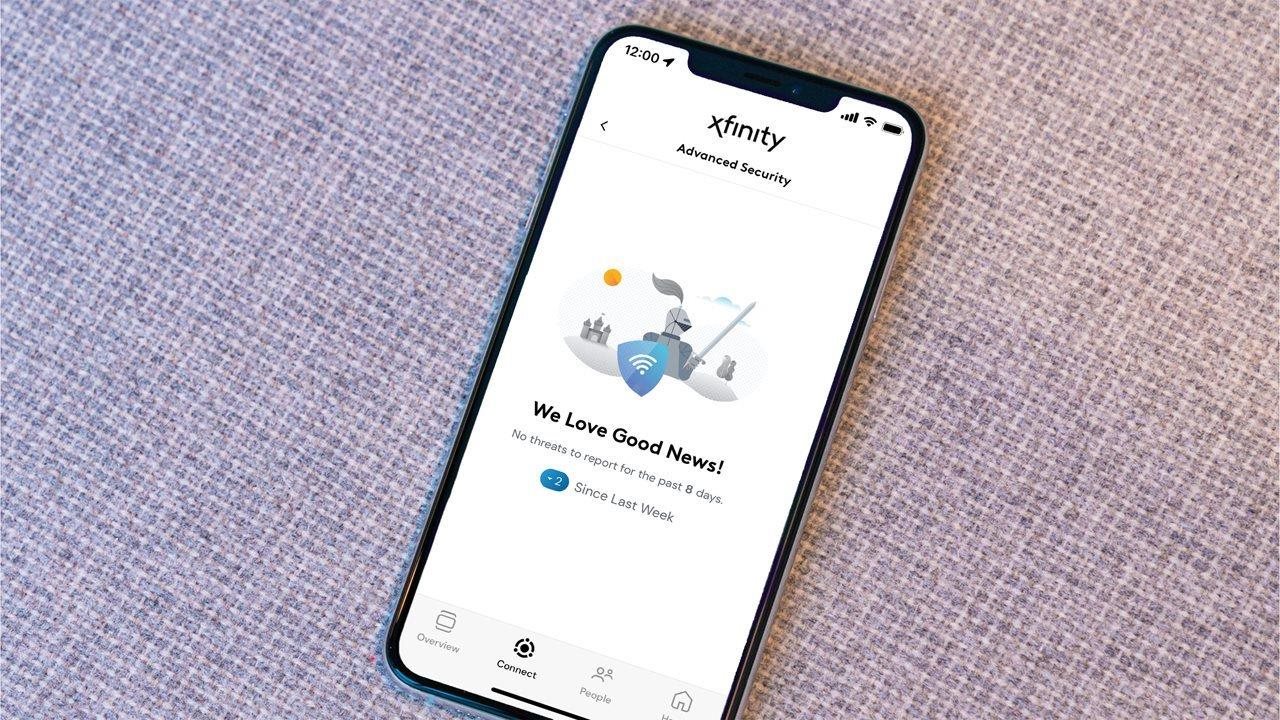
On average, Xfinity households have 15 connected devices, with power users averaging as many as 35. With so many connected devices, it can be difficult to keep track. More often than not, your family bought new devices, connected them to the home network, and neglected to disconnect the old ones. However, just because you’re not using your older devices regularly (or at all) doesn’t mean they aren’t security threats.

To secure your home network and accounts, it’s a good idea to take an inventory of all your devices regularly. You can easily use your internet provider’s apps and tools to check which devices are currently connected in your home. Find the devices you no longer use and erase any personal information they may have before recycling them.

5. Read up on phishing

Like G.I. Joe said, “Knowing is half the battle.” By educating yourself and your family on common phishing tactics, you can protect yourself from potential scams.

You may think you can easily spot a phishing scam, but according to the Xfinity report, only 39% of respondents said they could confidently explain what phishing is. Without knowing what it is and common tactics, you’re unlikely to be able to protect your household from scams. Also, many cybercriminals will impersonate a friend or family member or organizations like banks or schools to get you to divulge sensitive information.

Phishing emails can be very convincing, but there are some common ways to suss them out. Telltale signs of phishing include spelling errors in the subject line or email body, suspicious links or attachments within the email, tones of misplaced urgency, unfamiliar senders or slightly misspelled company names in the sender’s email address. If you have any doubts, reach out to the family, friend or organization the email is from to inquire about its legitimacy.

You have the power to protect your family online. Using these five tips, you can safeguard your devices and personal information in 2023.

Wave Hello to Wave Season: 4 Ways to Save when Booking a Cruise

2023-02-23T08:01:00

(BPT) – It’s Wave Season, or the time of year when cruise lines offer a range of promotions for travelers eager to shake the cold weather blues. Whether looking to book a solo trip, romantic couple’s getaway or a voyage for the whole family, there are many ways to secure good deals when hitting the high seas. For AARP members, a wide range of benefits and discounts can help you plan a cruise of a lifetime to a new or favorite travel destination.

“Recent research from Expedia Group shows that Americans’ desire to travel continues to increase in 2023, and going on a cruise is a great option for folks who want to visit multiple destinations without having to unpack every time. When booking during Wave Season, you can find special deals and offerings that may not be available during other times of the year,” said AARP Director of Travel Matthew Phillips.

There are many factors to consider when booking a cruise, including type, trip length, destination(s), and more. Regardless of your preferences, here are four ways you can keep your finances afloat as you plan to set sail:

Book a Multi-Stop Journey in One Place. When outside transportation is required to reach a preferred departure port, consider building your trip through a verified third-party site. Using a travel website to book your trip can make planning simpler by making multiple reservations at the same time, with the same travel company. When members book their trip through the AARP Travel Center Powered by Expedia, a one-stop shop where you can book the best cruise for your budget, they can also add any additional flights, hotels or rental cars you need. AARP members can earn a $50 Visa® Prepaid Card when they book a flight vacation package and receive up to $100 in extra onboard credits on select cruises to the Caribbean, Alaska, Europe and more.

A River Cruise to See More for Less. In the mood for a different type of voyage? A leisurely river cruise allows travelers to see a variety of sites and even multiple countries through one guided route. When AARP members book a trip to see some of the world’s most famous rivers through Collette Cruise Tours, they can save $50 per person. AARP members can always save $100 per member with Grand European Travel when booking a luxury, all-inclusive voyage to over 30 spectacular destinations in Europe, Egypt and Asia. And for a limited time, that savings goes up to an amazing $1,500 per person on a wide selection of river cruises.

A Land and Water Combo. For adventurers interested in traversing both the land and sea, a combined railway and cruise tour to a national park or historic city may be just the ticket. AARP Members can save 5% when booking a trip through Vacations By Rail, which offers more than 40 rail and cruise vacations ranging from the Rhine and Danube Rivers, France’s famous waterways, Alaska’s Inside Passage and trans-Atlantic crossings.

Stay Connected While Traveling. While one of the benefits of going on a cruise is to disconnect from life on land, it is important to still have access to those in your network back at home. When traveling abroad it’s important to choose a cell phone plan that is available in a variety of destinations without all the fees that might come with it. Members who sign up for the AT&T Unlimited PremiumSM Plan enjoy unlimited talk, text and data in and between the U.S., Mexico and Canada; as well as unlimited talk, text and high-speed data in 19 Latin American countries at no extra cost. Plus, with the Unlimited Premium plan, you can save $10 per line per month as well as receive up to $50 in waived activation and upgrade fees.

Regardless of where you go on vacation and how you get there, don’t forget to optimize your next trip by taking advantage of the benefits and savings available to AARP members. And if you’re ready to book that cruise getaway, learn more about discounts available to members by visiting aarp.org/membership/benefits/campaigns/cruise/.