Three things to know about gut health in America

2024-11-12T08:03:00

(BPT) – Have you ever felt uncomfortable after a meal? Maybe you know that certain foods upset your stomach, so you avoid them altogether. Gut issues are more common than you think with more than half (62%) of Americans having experience with occasional gut issues, according to the 2024 Habits and Healthspan Survey sponsored by Amway. In fact, one in three adults is experiencing a common gut issue right now!

1. Gut health is a significant issue in the U.S.

Your gut does more than just digestion. Did you know it’s foundational to overall health and wellbeing? That’s because there are trillions of bacteria in your gut that make up your microbiome. About 70% of your immune system is located in the gut and a balanced gut microbiome helps support not just digestive health, but also your immune system.

You might be surprised to know that emerging science indicates your mood might even be linked to your gut microbiome. Neurotransmitters like serotonin are produced in the gut, which can affect our mood.

  • 42% of survey respondents say they or someone close to them have experienced a gut issue that a doctor was unable to properly diagnose.
  • Common gut issues seem to be more prevalent among younger Americans with 54% of respondents ages 18 to 34 years reporting that they or someone they know had undiagnosed gut issues, compared to 38% of those over age 35.
Collage made of two images. One image of people putting their forks into a plates full of vegetables and the other photo is of a family of four enjoying a outdoor walk together. The type above the photos says

2. A lack of education is a major factor in America’s gut gap.

Stress, pollution, poor diet and lack of sleep all can negatively impact your gut’s good bacteria causing an imbalance.

However, the gut microbiome is still not well understood.

  • Less than half (41%) of Americans feel they understand what constitutes a healthy gut biome.
  • This gap is even wider among older adults aged 55 to 70, with only 28% feeling confident about their gut health knowledge.

Maintaining a balanced diet, exercising and staying hydrated can support gut health and a balanced gut microbiome. However, studies show supporting gut health takes consistent effort over several weeks to several months.

As research progresses, scientists are learning more about how to support the gut. Here’s what you can do. In addition to your diet, probiotics — good bacteria — can support your microbiome. You can also use other supplements designed for daily use and that provide plant-based ingredients, fiber and prebiotics to help support your gut health and your gut microbiome.

3. Overarching healthy habits build a foundation for gut health.

By establishing healthy habits early in life, we can proactively help support our gut and ultimately support our healthspan. Just like any resolution, the key is to be consistent over the long term.

Establishing healthy habits from a young age is a great approach to health & wellness. Of course, maintaining these habits for the long term can be hard to do, but that’s why community is so important.

  • Only 36% of adults ages 18 to 70 who had engaged in healthy lifestyle behavior within the past 12 months say they started their healthy lifestyle behaviors because they learned it at a young age from a parent or loved one — and not in response to a pressing health issue.

Surrounding yourself with family, friends and like-minded individuals creates an environment where knowledge is exchanged, accountability is encouraged and a supportive network is woven into the fabric of daily life.

Taking control of supporting your gut.

The findings from this year’s Habits and Healthspan Survey highlight two critical areas of concern: the prevalence of gut health as an important issue for consumers and the knowledge gaps. Education and long-term habit formation are the keys to supporting overall gut health. By addressing these gaps and building healthy lifestyle behaviors — with the support of those around us — we can promote health and wellbeing for all. For more information, visit AmwayGlobal.com.

3 reasons younger Americans have an easier time maintaining healthy habits

2024-11-12T08:03:00

(BPT) – Most parents agree that it’s important for children to establish healthy habits before they turn 18 years old. Building a strong foundation and taking a preventive approach to health early on will help people avoid illness and improve our healthspan, or the number of years spent in good health.

Simple, right?

Well, findings from Amway’s 2024 “Habits and Healthspan” survey of U.S. adults reveal that different generations have varying success in long-term habit formation.

Overall, only 29% of adults carried over healthy habits learned from their childhood.

  • Within this group, 46% of 18- to 34-year-olds started healthy habits because they learned to do so at a young age, compared to only 31% of those ages 35 to 70.
  • A shocking 57% of adults admit they only started healthy habits because their doctor advised them, or because they had health issues already that had to be addressed.

Amway scientists are delving into why different generations have varying degrees of success maintaining healthy habits and are using this survey data to identify the three factors that impact different generations’ ability to maintain these behaviors for the long term.

Collage of two photos. One photo has a couple with their two children eating snacks on the couch and the other photo shows a child doing yoga with a parent. The photos have type that says

1. The internet and social media are helping you get healthy.

Between the internet and social media, younger generations have access to more health and wellness information from a young age than any generation before them. TikTok, Instagram, Facebook, X. Between these platforms and more, social media hosts a wealth of health and fitness influencers who promote a healthy lifestyle and make information more engaging and relatable.

  • 24% of 18- to 24-year-olds were influenced to engage in healthy habits from social media compared to only 9% of 35- to 70-year-olds. There is an even larger drop in older generations (55- to 70-year-olds) where a mere 3% were influenced by social media.

2. Getting by with a little help from your friends.

Having a community of like-minded friends focused on achieving a healthier lifestyle and improving healthspan creates a sense of support and accountability. These communities exist both online and in the real world.

  • 33% of Americans aged 18 to 24 engaged in healthy habits thanks to the encouragement of a friend, compared to only 25% of 35- to 70-year-olds.

Together, you can share your goals, experiences and expertise in a collective knowledge pool and encourage long-term habit formation.

3. Financial disparities play a role.

Lower-income households can encounter barriers when it comes to instilling healthy habits in their children.

  • 31% of Americans with a household income under $50k learned their healthy habits at a young age compared to 40% of those with a household income over $100k.

There are many reasons why income can impact your ability to teach your family healthy habits early on in life. Healthy food is often more expensive than processed or fast foods, leaving many to opt for the cheaper option as opposed to the healthier choice. These households also may not have access to affordable fitness resources such as organized sports, gym memberships or fitness programs, making it harder for them to afford structured physical activities for their kids.

Putting findings into action

These findings from the Habits and Healthspan survey reflect a generational shift, with younger individuals more likely to have been taught healthy habits. By understanding what factors influence your ability to create and maintain healthy lifestyle behaviors over the course of your life, you can instill these practices in future generations and prevent health issues before they arise.

4 reasons why parents should consider an online school

2024-11-12T05:01:00

(BPT) – Are you considering enrolling your child in an online school? Virtual schooling has changed the educational landscape, offering students an innovative and somewhat customizable path to learning and exploration. This format of schooling also provides families with the ability to structure their days outside of traditional school constraints and broadens access to advanced courses and unique curriculums.

Of course, switching your student from a brick-and-mortar school to an online school is a big decision. To help you decide if online school is right for your family, check out these four benefits.

1. Unique and Advanced Learning Opportunities

For students seeking challenging coursework and specialized subjects, online schooling may be the best option. Instead of being tracked into a standard curriculum, they can explore advanced academic material or unique course offerings to reach their full potential. An online school can allow students to pursue academic interests that could not be served in a brick-and-mortar school. Course offerings in subjects such as advanced math, philosophy, college-level physics and time period-specific literature can grow your child’s academic passions.

An institution like Stanford Online High School (OHS) serves as an entry point into educational exploration beyond a standard curriculum. Stanford OHS offers rigorous middle school and high school classes as well as 32 college-level courses to challenge students at every level.

2. Different Online School Formats

Online education is offered in a wide spectrum of formats, allowing for tailored learning experiences that suit various family needs. With the option for live or recorded classes, intimate discussion seminars or lectures with thousands of students, and short-term or yearlong classes, your family’s needs will dictate which approach to online education fits you best — whether a structured application-based format or open online education.

Stanford OHS provides live, synchronous courses where students engage directly with their instructor and a small group of classmates via video and audio. This structured approach allows for active participation in class discussions and collaboration in small-group breakouts. At schools with live, synchronous class meetings like Stanford OHS, getting to know the instructor, making friends with other students, and completing group projects enrich the online class experience. The interactive nature of Stanford OHS supports real-time questions from students and feedback from instructors, building an exciting social community across grade levels, countries and cultures.

3. Global Community

Online schools draw students from all over the world. Your child will have the opportunity to interact with peers from diverse backgrounds and cultures, broadening their horizons and making friendships that can last a lifetime.

Stanford OHS prides itself on being a global community with students from 48 U.S. states and 45 countries around the world. Collaborative projects and seminar-style discussion classes give your child the opportunity to become a global citizen and see the world from viewpoints different from their own.

4. Enhanced Lifestyle Autonomy

In-person education can limit where your family lives, travels and spends time. A key benefit of online education is that it provides families with the freedom to choose where to live without disrupting their child’s education. Whether you decide to move for better job opportunities, a change in climate or to live closer to extended family, online schooling allows your child to remain in the same school after a relocation. Your student can also maintain their schooling if they need to travel for a significant extracurricular activity such as a sport or artistic pursuit. Beyond academics, online schooling empowers families to pursue the possibilities beyond the constraints of traditional school hours.

Interested in exploring online schooling? Visit ohs.stanford.edu/take-tour to learn more.

Holiday humbug because of allergies?

2024-11-12T00:01:00

(BPT) – The magic of a snowy winter’s day and the joy of savoring holiday meals with friends and family can easily dissolve if you suffer from allergies or asthma. All of that sneezing and sniffling and coughing and wheezing can make you as grumpy as Scrooge.

“The winter holidays of Christmas, Hanukkah and Kwanzaa are a joyous time for many of us, but that joy can turn into frustration if you have allergies or asthma,” says allergist James Tracy, DO, president of the American College of Allergy, Asthma and Immunology (ACAAI). “It’s a common misconception that allergens disappear after the first hard freeze. People can suffer year round, and the holidays can be especially taxing.”

Here are some tips from ACAAI for enjoying winter weather and the holidays with allergies and asthma.

Bundle up outside. Making holiday memories with family means outdoor activities like sledding, ice skating on a frozen pond and building a snowman. Do it all this year, but don’t forget a face mask or scarf if you or your child has asthma. Cold, dry air can be a trigger. Keep asthma flares at bay with a cozy scarf around your mouth and nose, and get out there and throw some snowballs!

Indulge in the bounty of the season … carefully. Half the fun of holiday parties are tables loaded with the special dishes everyone brings. Savory stews, salads, latkes like your grandma used to make, your mother’s mac and cheese, desserts of all kinds. Don’t worry about the calories this once — but make sure you know what you’re eating if you or your children suffer from food allergies. It’s easy for allergens to slip into food someone else has prepared, so when in doubt, bring dishes you know your family can enjoy.

Prep for staying at grandma’s house. Many people travel for the holidays. Whether you’re staying at a hotel or with family or friends, remember there could be triggers like dust mites, mold and pet allergens. Make sure to pack your medicine, including injectable epinephrine, and bring your own pillow or dust mite-proof pillow cases.

Reconsider scented candles. Love a pine- or spice-scented candle filling your home with holiday aromas? You might want to rethink that. Scented candles and air fresheners can be an asthma trigger.

A snowstorm of sniffles? See an allergist. If your child is seemingly bringing home bug after bug during the holiday season, they might have undiagnosed allergies. It could be anything from pet allergies to dust mites to mold, and a host of other triggers. They can even be allergic to the Christmas tree! Have your child tested for allergies by a board-certified allergist. Knowing what they’re allergic to is the key to controlling symptoms and helping them enjoy the holidays (and every day) a whole lot more.

Uncouple from the bustle. The holidays can be a busy, hectic time with parties to host and gifts to buy and school performances to attend. But stress can make asthma symptoms worse. This year, slow down, take a deep breath, listen to favorite music and enjoy the simple things that the holidays are all about.

If you suffer from allergies or asthma, or suspect that you do, see a board-certified allergist. Allergists are trained to diagnose and treat your symptoms, and to work with you to create an individual action plan. To find an allergist in your area, use the ACAAI allergist locator tool.

About ACAAI

The ACAAI is a professional medical organization of more than 6,000 allergists-immunologists and allied health professionals, headquartered in Arlington Heights, Ill. The College fosters a culture of collaboration and congeniality in which its members work together and with others toward the common goals of patient care, education, advocacy and research. ACAAI allergists are board-certified physicians trained to diagnose allergies and asthma, administer immunotherapy, and provide patients with the best treatment outcomes. For more information and to find relief, visit AllergyandAsthmaRelief.org. Join us on Facebook, Pinterest and Twitter.

3 ways you can help tackle food insecurity this holiday season

2024-11-12T02:01:00

(BPT) – While some people are pulling out their favorite family recipes this holiday season, millions of others are wondering where they will get their next meal. More than 44 million people, including 1 in 5 children, experience food insecurity each year, according to the USDA’s annual Household Food Insecurity in the United States report. This staggering number includes anyone who doesn’t have enough food to eat and people who are unsure of where their next meal is coming from. Food insecurity is more than just an empty plate, it’s a crisis that affects the health, education and well-being of our communities.

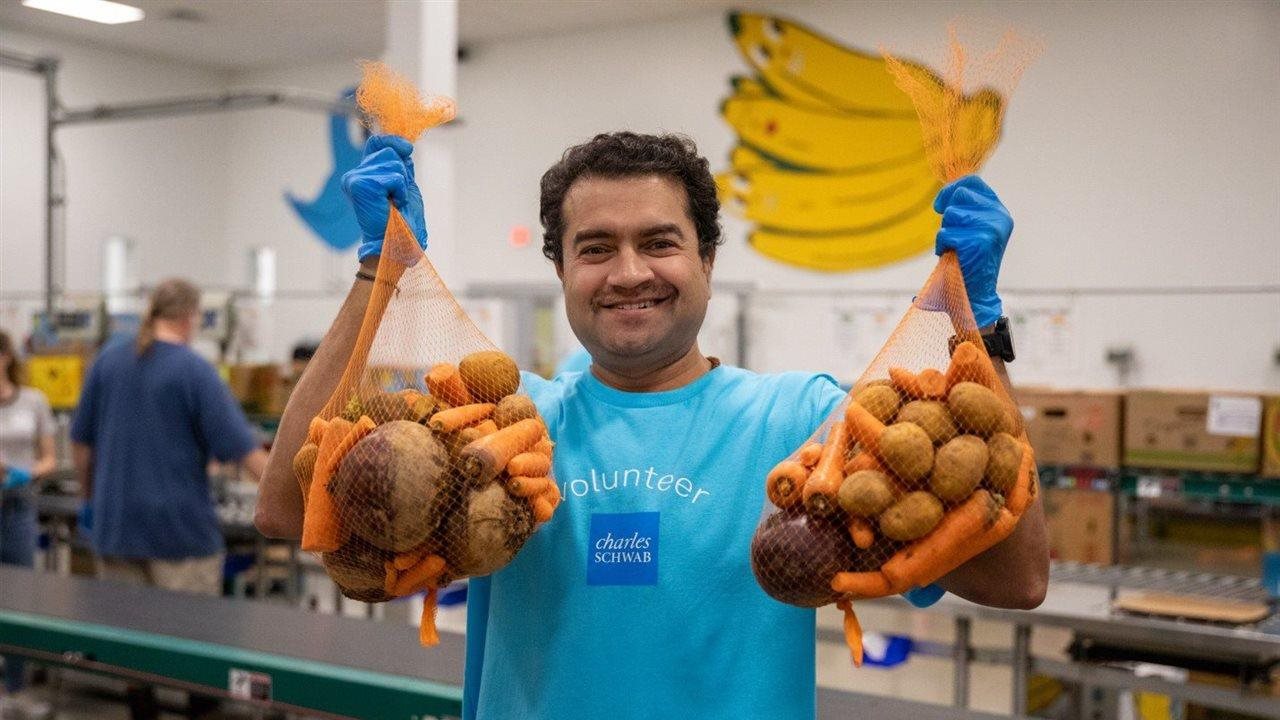
This critical need is one reason Charles Schwab has committed employee volunteers and financial resources to help provide hunger relief this holiday season. “When you start the day with a nutritious meal, it’s so much easier to focus on the things that will help you achieve in school, excel at work, and thrive in life,” said Kristine Dixon, managing director of Charles Schwab Community Affairs. “At Charles Schwab, one way we help build stronger communities is by working with local food banks and hunger relief organizations to help make a meaningful difference in so many lives.” Given its pervasive nature, food insecurity needs champions in all corners. As you prepare for the upcoming holidays, here are a few ways you can help address hunger relief and support your neighbors.

Donate to a local food bank

Inflation has driven up the cost of groceries, stretching paychecks thin and leaving more Americans struggling to make ends meet. Compounding that, 40% of food banks face a budget deficit, making it even harder to meet increasing community needs. Donating basic food items is a great way to help bridge the gap.

Most food banks accept dry packaged and canned food donations that are nonperishable and not expired. This can include items like canned soup, canned fruits and vegetables, pasta and rice. Some locations also accept personal care items like toothbrushes and shampoo if they are unopened and in their original packaging.

If you’re not sure what to donate, monetary donations can go a long way. This funding can help food banks to stock exactly what they need, reduce waste, and help finance their organization.

Volunteer your time

The gift of your time can also be crucial, as most food banks rely on volunteers to keep their programs running smoothly and ensure that items are distributed to those in need. Volunteering responsibilities can include everything from loading food into boxes, serving hot meals to community members, delivering food, or packing meal kits.

Volunteering may seem like a big commitment, but by setting aside just a few hours, you can make a meaningful impact for families in your community who need support this holiday season.

Learn more about community initiatives

Food banks aren’t the only organizations working to tackle food insecurity, and organizations nationwide are teaming up to address this issue. Thousands of Charles Schwab employees will volunteer with Harvest Pack, a humanitarian hunger relief nonprofit, to pack nearly one million nutritious meals that will be donated to families in need across the country.

“One in ten Americans lives in a household with food insecurity,” said William McNally, executive director of Harvest Pack. “It’s a pervasive issue, and through the support of companies like Charles Schwab that are deeply invested in their local communities, we can make sure every family has a nutritious meal on the table.”

While no single person can solve the challenge of food insecurity, collective action — driven by companies, community leaders, nonprofits, volunteers and neighbors — can make a meaningful difference. As you prepare for the holiday season, consider how you can help your neighbors through donations, volunteering and community outreach.

(1124-VT8T) This material contains links to content that is available on third-party websites. Please note that Schwab does not endorse these sites or the products and services you might find there.© 2024 Charles Schwab & Co., Inc. All rights reserved. Member SIPC.

Protect your health for the holidays with a flu shot

2024-11-11T08:01:00

(BPT) – Holidays can bring cheer, stress … or a little (or a lot) of both. One way to help ensure more cheer and less stress is to stay healthy. That’s why CDC recommends staying up to date on your vaccines to help protect against respiratory illnesses, including flu. Getting an annual flu shot can reduce your risk of getting flu and make your symptoms milder if you do get sick.

A flu shot is especially important for children and adults with certain chronic medical conditions — such as asthma, heart disease, diabetes, or history of stroke — who are at higher risk of developing serious flu-related complications. During the 2023–2024 flu season, about 90% of people hospitalized with flu had at least one chronic medical condition. Flu can make certain pre-existing chronic medical conditions worse, even if they are well-managed. And although people with chronic conditions are at a higher risk of serious flu outcomes, they are historically under-vaccinated.

How does having a chronic medical condition increase your risk from flu? Find out more and learn why it’s important to protect your health (and holiday cheer!) with a flu vaccine:

Flu and people with asthma

People with asthma are at higher risk of developing flu-related complications. Flu can trigger asthma and worsen asthma symptoms by causing further inflammation of the airways and lungs. People with asthma are more likely to develop pneumonia after getting sick with flu than people who do not have asthma.

Flu and people with heart disease or a history of stroke

In past flu seasons, about half of adults hospitalized with flu had heart disease. Studies have shown that flu illness is associated with an increase in heart attacks and strokes. Additionally, people with heart disease and those who have had a stroke are at higher risk of developing serious flu complications.

Flu and people with diabetes

Flu can make managing diabetes more complicated by making it harder to control blood sugar levels. About 30% of adults hospitalized with flu during recent seasons reported having diabetes.

Protect yourself against flu today.

A flu vaccine is the best way to protect against flu and can help take flu illness from wild to mild. Now is a great time to get vaccinated; flu most commonly peaks in February and significant activity can continue into May. Learn more about flu and chronic conditions and speak with your health care provider to find out the best way to protect yourself against flu.

5 simple tips to help prevent GERD from spoiling your holiday meals

2024-11-11T11:01:00

(BPT) – Summer is over which means holiday season is upon us! With the holidays come many festive, food-centric celebrations, making it a great time to be aware of food-related health conditions that can affect your ability to enjoy the holidays. As you break bread with friends and family, there’s a good chance you might overindulge, which can cause acid reflux and heartburn.

Some heartburn after eating a heavy meal is not uncommon. However, if you regularly experience persistent acid reflux even after returning to your normal eating habits, you may be dealing with something more serious: gastroesophageal reflux disease (GERD).

What is GERD?

GERD is one of the most prevalent gastrointestinal (GI) diseases, with approximately 1 in 5 U.S. adults living with this condition. Depending on the severity, GERD can cause heartburn, regurgitation, difficulty eating and drinking and damage to the esophageal lining, and may limit your social and physical activities.

There are two main types of GERD people can develop. About 30% (or roughly 20 million Americans) suffer from Erosive GERD, also referred to as erosive esophagitis. Erosive GERD occurs when stomach acid damages the lining of the esophagus.

The other main type — and the largest subset of this prevalent GI disease — is Non-Erosive GERD, which affects about 45 million U.S. adults. People with Non-Erosive GERD may experience reflux-related symptoms, such as heartburn and regurgitation, but no acid-related damage to the esophagus.

Without effective management, uncontrolled reflux can lead to serious complications and burdensome symptoms.

Lifestyle changes to help manage GERD

GERD doesn’t have to spoil your holiday plans. Lifestyle changes may help manage GERD symptoms, so that you can enjoy the holidays with your loved ones.

The International Foundation for Gastrointestinal Disorders (IFFGD), an organization created to inform, assist and support people affected by GI disorders, recommends these five helpful tips to manage your acid reflux and relieve heartburn during the holidays and beyond.

1. Avoid certain foods and drinks

Not all foods cause GERD, but some foods and drinks may trigger or worsen GERD symptoms. These might include:

  • High-fat foods
  • Chocolate
  • Peppermint
  • Onions
  • Citrus and tomato products
  • Caffeine
  • Carbonated beverages

GERD food triggers vary from person to person. Start with this list and keep a journal of other foods and drinks that exacerbate your acid reflux.

2. Chew non-mint gum

Strangely enough, non-mint gum can help manage your GERD symptoms. Chewing gum can increase saliva production and reduce the amount of acid reflux.

3. Avoid alcohol

Alcohol can irritate and weaken your lower esophageal sphincter, setting off reflux symptoms. While this doesn’t happen to everyone, it may be best to pass on wine or spiked eggnog during large family feasts.

4. Sit up during and after a meal

Don’t slump at the dinner table! While eating and after the holiday meal, sit up straight. If you can, take a short walk after dinner to encourage gastric juices to flow down instead of up.

5. Avoid eating immediately before lying down

It may be tempting to take a nap after a large holiday meal. However, when you lie down, your lower esophageal sphincter has trouble preventing stomach contents from traveling up the esophagus. Avoid lying down for at least two hours after eating a full meal to help avoid triggering GERD.

Talk to your doctor about effective GERD treatments

In addition to these steps you can take to help manage GERD symptoms this holiday season, there are also several medication options available, including antacids, histamine-2 receptor antagonists (H2RAs), proton pump inhibitors (PPIs), and a new class of treatment called potassium competitive acid blockers (PCABs). When it comes to GERD, there is no one-size-fits-all treatment. Talk to your doctor about what lifestyle changes and GERD medication may be right for you. To learn more about GERD and treatment options, visit aboutgerd.org.

© 2024 Phathom Pharmaceuticals. All rights reserved.

11/24 US-PHAT-24-0121

Comfort and joy: Mealtime tips for stress-free holiday hosting

2024-11-11T08:15:00

(BPT) – What do you love most about the holidays? Chances are it’s quality time with friends and family, nostalgic comforts like a crackling fireplace on a chilly night and the comforting flavors you enjoy this time of year.

Fortunately, making those special holiday moments happen when your life is busy can be easier and less stressful if you take a little time to plan ahead. You’ll feel ready to entertain family and friends with good cheer thanks to these easy tips and recipes.

Stock your pantry

Start by taking inventory of your kitchen and clear out unwanted items, then create a list of staples you’ll need for cooking and baking — think spices, nuts and assorted beverages. A well-stocked fridge and pantry will help reduce your stress and make your holiday entertaining seamless.

Sides you can count on

Whether you’re hosting or visiting others, Bob Evans® dinner sides help you enjoy everyone’s favorite beloved comfort foods without the hassle. Mix-and-match comfort food favorites like ready-to-heat Mashed Potatoes, Mashed Sweet Potatoes and Sliced Glazed Apples are delicious served as is or incorporated into seasonal recipes that will have everyone asking for seconds. And the best part? They’re ready in minutes — with quicker cleanup, too — so you’ll have plenty of time to enjoy the festivities.

Here’s some recipe inspiration for your holiday meal and party planning.

Homestyle comfort with Mashed Potatoes

A favorite on any dinner table, this popular holiday side is downright delicious on its own, or if you want, dress it up with extra seasonings and herbs to add your own culinary style. Mashed potatoes are so versatile you can even use them as the base for a dip, like this herby and lemony Greek Potato Dip that’s oh so fresh and serves as a tasty appetizer.

Greek Potato Dip
Prep time: 20 minutes; cook time: 20 minutes; servings: 8

Ingredients
1 cup slivered almonds
1/4 cup olive oil
5 tablespoons lemon juice
4 cloves garlic
1 24-ounce package Bob Evans Original Mashed Potatoes
1 diced green onion
1 tablespoon minced parsley
1 tablespoon minced dill
18 ounces baked pita chips

Instructions
Preheat oven to 400 degrees F.
Process almonds, olive oil, lemon juice and garlic in food processor until a paste forms. Spoon into large bowl.
Add mashed potatoes, green onion, parsley and dill. Stir until blended.
Spoon into 1-quart baking dish. Bake 20-25 minutes or until thoroughly heated.
Serve with pita chips.
Garnish with fresh dill, if desired.

Sweet and Savory Mashed Sweet Potatoes

Speaking of versatile, you can’t go wrong serving sweet potatoes as either a savory side or in a dessert recipe. For example, this casserole makes an ideal accompaniment for your Thanksgiving (or other holiday) table or as the perfect welcome for guests at a festive brunch.

Sweet Potato Casserole with Streusel Topping
Prep time: 15 minutes; cook time: 35 minutes; servings: 6

Ingredients
2 22-ounce packages Bob Evans Mashed Sweet Potatoes
2 lightly beaten large eggs
3 tablespoons honey
1 1/2 teaspoons ground cinnamon, divided
1/4 teaspoon ground nutmeg
1 cup packed brown sugar
1/3 cup all-purpose flour
1/2 cup melted butter
1 cup chopped pecans

Instructions
Preheat oven to 350 degrees F.
Heat potatoes according to package directions and spoon into a large bowl.
Add beaten eggs, honey, half a teaspoon of cinnamon and nutmeg, stirring until blended.
Spoon into a lightly greased 11×7-inch baking dish.
Stir together brown sugar, flour, melted butter and remaining cinnamon until blended.
Stir in pecans and sprinkle over sweet potato mixture.
Bake 30-35 minutes or until streusel is golden brown.

Delightfully Sweet Sliced Glazed Apples

Everyone’s favorite fall and winter fruit has taken on a whole bunch more flavor with this delightful side. If you’re ready to transform it into a special dessert, check out this sweet and tangy recipe that’s bound to become a family favorite. Serve this fruity dumpling dish with a scoop of ice cream or enjoy it as a treat on its own.

Cinnamon-Apple Dumplings
Prep time: 25 minutes; cook time: 35 minutes; servings: 6

Ingredients
1 14-ounce package Bob Evans Sliced Glazed Apples
1/2 cup raisins
1/2 cup cranberries
1 package frozen puff pastry, thawed
1/4 cup caramel dip
1 large egg, lightly beaten
1/2 cup melted butter
1/2 cup packed brown sugar
1/2 teaspoon ground cinnamon
1 teaspoon vanilla extract
1 1/2 quarts vanilla ice cream

Instructions
Preheat oven to 350 degrees F.
Mix Bob Evans apples, raisins and cranberries in a bowl.
Unfold pastries and roll each into a 12-inch square.
Cut each pastry into six 4 x 6-inch rectangles.
Divide apple mixture among centers of each pastry square.
Top each with about 1 teaspoon caramel dip.
Brush edges of pastry with beaten egg.
Bring edges of pastry up, seal and twist tops to completely enclose filling.
Put filled pastries in lightly greased 2 1/2-quart baking dish.
Stir together melted butter, brown sugar, cinnamon and vanilla and brush over pastry bundles.
Bake 35-40 minutes or until pastries are deep golden brown.
Remove, cool and serve with ice cream.

Make your season brighter with less prep, less mess — and a lot more flavor. You’ll be ready to relax and enjoy any holiday meal or get-together when you’re stocked up with a variety of tasty sides this year.

Find these Bob Evans products to stock your holiday kitchen plus more recipe inspo at BobEvansGrocery.com.

Today’s Veterans: 5 Former Army Soldiers Making an Impact After Service

2024-11-11T07:01:00

(BPT) – With 18 million Veterans living in the United States today, Veterans Day is not only an opportunity to recognize the men and women who have served the country, but also celebrate their successes after service.

Military service and life afterwards is often shrouded in misconceptions. Many of us are unaware of the experiences and skills that Veterans carry. Often minimized to a negative stereotype, Veterans are so much more than the big screen and headlines would have you believe. Veterans are not only servicemembers from generations past, but they are also professionals in their prime doing amazing things for their communities and careers, whether as entrepreneurs, students, or innovative leaders at Fortune 500 companies.

In recognition of Veterans Day and honoring those who dedicated their lives to service, read on to learn how a few standout Veterans are using the experiences and skills they learned in the Army to succeed in their next phase of life.

From the Court to the Classroom

Marshall Plumlee is proof that by joining the Army, you don’t have to choose between your career and your passions. Following in his brothers’ footsteps, Plumlee attended Duke where, under the legendary Coach K, he won a national championship for college basketball while also serving as a member of the school’s ROTC program.

Marshall Plumlee in military uniform and coach K together on a basketball court.
Marshall Plumlee made it all the way to the NBA before choosing to pursue his dream of becoming an Army Ranger.

He went on to the NBA to play for the New York Knicks and Milwaukee Bucks while continuing to serve in the New York Army National Guard, but never gave up on his dream of becoming an Army Ranger. His desire to be a part of something bigger than himself led him to become an Active Duty Army Soldier in 2018, and eventually fulfill his goal of completing Ranger School. After serving two combat deployments in Afghanistan and a five-year career in the Army, he utilized Army education benefits to obtain an MBA from Harvard Business School and transition into the civilian workforce at the financial services firm, Blackstone.

Home Management Made Easy

After meeting at West Point, Gabe and Lindsey Chrismon commissioned into the Army where they learned the value of repetition, grit, and the willingness to learn — skills that would be integral in their careers as entrepreneurs. After leaving the Army in 2020, the Chrismons co-founded the company MyHome, an all-in-one home management app that centralizes scheduling, communications, and payments for at-home services.

Smiling Gabe and Lindsey Chrismon standing in front of a house.
The skills that Gabe and Lindsey Chrismon learned in the Army have prepared them for their careers as entrepreneurs.

In the Army, Lindsey was the first woman to pilot the special operations aircraft AH-6 Little Bird, an experience that she says helped to build her confidence and decision making, noting that the test of judgement, intuition, and ability to process information quickly has translated seamlessly to the entrepreneurship world. Gabe also believes that even short-term service will bring long-term benefits and credits the Army with helping him build relationships and networks that have been invaluable as a founder.

Turning a New Page

Born in the Philippines, Tif Marcelo became inspired by her grandfather and a trip to the homeland to join the Army at 17 in hopes of finding another family unit as close-knit as her own. With a four-year scholarship through Army ROTC, Marcelo began her college career at the University of San Francisco in 1994 and commissioned into the Army as a nurse, aligned with her empathetic, compassionate, and caring traits.

Tif Marcello smiling against a white backdrop
Tif Marcelo became a bestselling author and has written more than 11 novels following her Army service.

Marcelo left the Army as a first lieutenant and entered civilian nursing, and soon after realized her true passion was to become an author. Today, she is a best-selling author with more than 11 novels centered around the strength of families, the endurance of friendship, and heartfelt romances, taking inspiration from her Army husband and four children. She hosts The Stories to Love Podcast and is the USA Today bestselling author of In a Book Club Far Away, Once Upon a Sunset, The Key to Happily Ever After, which was a Target Diverse Book Club pick, The Holiday Switch, and the Heart Resort and Journey to the Heart series.

Uplifting Fellow Veterans

Once working as a Chamber of Commerce executive with an MBA, Althea Williams defied the norm and embraced her calling to join the Army at 39 years old, where she found opportunities to meet new people, travel the world, and challenge herself physically, mentally and academically. After nearly 8 years of service and multiple deployments, Williams ultimately retired following an injury.

Althea Williams wearing her Army jacket and sitting on a flight of stairs.
Althea Williams started She Vets It to uplift and empower female veterans to build solid foundations for their post-military lives.

With firsthand knowledge of the challenges that Soldiers can experience when transitioning to civilian life, Williams found purpose in helping fellow Veterans build the skills they need to navigate life beyond the uniform. She founded She Vets It, a community, documentary series, and podcast connecting women Veterans, military spouses, and dependents with resources they need to succeed on topics like mental health and wellness, career transitions and entrepreneurship. The community reminds women Veterans — with their unique blend of resilience, discipline, and perspective — that they can make a lasting impact after service.

For many Veterans, serving is just the starting point for a life spent making a difference. The skills, relationships, and experiences taught throughout Army service can be transferred seamlessly into a variety of careers.

It is also part of the Army’s mission to continue to care for Soldiers and their families even when their service ends, by providing access to a wide range of benefits that help ease the transition into life after service, including career counseling, tuition assistance, homebuying benefits, medical coverage, and counseling services. And the community of Veterans throughout the country and world support each other during their service and beyond.

This Veterans Day, take time to learn about the lives of real Veterans turning their Army experience into impact for their careers and their communities.

Groundbreaking Research Helps Dogs Communicate with Words

2024-11-08T13:05:00

(BPT) – Imagine a world where your dog could tell you exactly what they want — not through barks, tail wags, or pawing at the door, but by using words. With grant funding from Purina, the University of California San Diego is conducting groundbreaking research to explore whether dogs can use soundboards with buttons that “speak” words to express themselves, revolutionizing how pets and humans communicate.

You may have already come across viral videos of dogs pressing buttons to say words like “play,” “outside,” or even “I love you.” This phenomenon has captured the public’s imagination. Now, with a $200,000 grant from Purina, UC San Diego’s Comparative Cognition Lab is taking this concept to the next level. The research aims to uncover whether dogs can learn to use these buttons to communicate more complex thoughts, and how far their cognitive abilities can stretch.

“This research partnership is so exciting because it may provide us with a new way to ask questions about pet behavior,” said Dr. Annie Valuska, Ph.D., principal scientist on Purina’s pet behavior team. “We’re hoping to generate some really interesting new insights and ultimately understand our pet dogs even better.”

The soundboards used in the study are equipped with buttons programmed with words like “walk,” “potty,” or “food.” As dogs press these buttons in different situations, scientists hope to understand whether they are merely associating the button with a specific action or if they are forming more complex thoughts, like combining words to express needs and desires. Could a dog eventually say something like “outside now” or “more play”? That’s what the research aims to find out.

Dr. Federico Rossano, Ph.D., director of UC San Diego’s Comparative Cognition Lab, sees even broader potential in the research. “We explore how soundboards may allow pets to communicate about their wants, needs, and the world around them in new and unique ways, and we are interested in learning more about how Augmentative Interspecies Communication (AIC) tools could strengthen the bond between pets and their humans.” By exploring these communication pathways, researchers hope to gain a deeper understanding of animal cognition and improve the overall well-being of pets.

Purina’s investment in this field isn’t new. In 2022, Purina awarded FluentPet, a San Diego-based startup that develops sound-button technology, the grand prize in their Pet Care Innovation Prize competition. FluentPet’s work combines cognitive science with practical tools that enable pets and humans to “talk” to each other. This aligns with Purina’s larger mission of using science and innovation to improve pet care.

This partnership with the UC San Diego Comparative Cognition Lab could have far-reaching implications. Beyond giving pets a “voice,” it could pave the way for more citizen science studies, where pet owners worldwide contribute to data collection by training their dogs to use soundboards at home. The hope is that this research will lead to insights that improve pet care, health, and happiness on a global scale.

For dog lovers, the idea that pets could soon be having conversations with their owners is as thrilling as it is groundbreaking.