6 smart snacking ideas for busy moms

2018-02-26T08:01:00

(BPT) – Whether you have a new baby, toddler, big kid or teen, life is busy when you have kids. From play dates to playoffs, busy moms need to stay fueled to feel their best. However, being so busy can mean forgetting about healthy snacking. Fortunately with a few tips and tricks, eating right on the go doesn’t have to be difficult.

The first step is to be prepared before hunger strikes. Stock up on plastic or stainless steel containers that are easy to tote in purses or backpacks. Then, make a shopping list so your fridge and cupboards are full of wholesome snacks. By removing temptation of junk food, you make it easy to snack well.

Here are six easy (and tasty!) snack ideas for busy moms. No matter where your day takes you, you’ll be ready with nutrient-rich snacks easy for eating on the go.

1. Cheese

To feel full fast, reach for snacking cheese. Wisconsin-made Great Midwest Cheese has Mild Cheddar, Colby Jack and Pepper Jack Cheeses available in snack-sized cubes, perfect for on-the-go fuel. Every cheese is hand-crafted in small batches, using only the purest, certified hormone-free milk for a smooth, natural, consistent flavor sure to satisfy.

2. Edamame

You probably munch on edamame when visiting your favorite sushi restaurant, but these pods are perfect for travel, too. Packed with protein but low on carbs, they are a great healthy alternative to chips when you have a hankering for something salty. You can buy frozen varieties to pack and they’ll thaw in your container of choice so you’re ready when hunger pangs strike.

3. Fruit

Packed with vitamins and minerals, fresh produce is always a smart choice. Bananas may be an easy choice, but they can bruise quickly in a bag. Instead, consider portable options less likely to bruise such as apples or easy-to-peel tangerines. Try pairing fruit with individually-wrapped snack portions of Great Midwest Gouda or Mild Cheddar Cheese and you’ll feel full for hours.

4. Nuts and seeds

Raw, unsalted nuts are high in protein and healthy fats. Stock up on mixed varieties or just your favorites, such as almonds, walnuts or cashews. Seeds are another easy go-to for snacks. Sunflower seeds are full of vitamin E and come in a variety of flavors (just keep an eye on salt levels in the ingredient lists and consider opting for low-sodium varieties).

5. Jerky

For your carnivorous cravings with a protein punch, consider packing jerky for snacking. Beef and turkey jerky aren’t just for weight lifters. These shelf-stable snacks last for a long time and are easy to pack in a purse and grab on the go. If you want to control the ingredients and experiment with flavors, consider making your own at home!

6. Cereal

Moms everywhere pack up containers of cereal for their babies and toddlers for a quick and easy snack. But what about for yourself? Your favorite cereal can serve as a snack throughout the day when you pack a container and bring it in your tote. Opt for high-fiber, low-sugar varieties to keep you fueled and full without the sugar crash later.

Bonus idea: Water

Water may not count as a snack, but it’s important to keep a bottle always by your side. Many people confuse hunger with thirst, so if you stay hydrated, you might find you have fewer snack cravings. If water is too bland for you, try adding a healthy flavor boost with a few slices of fruit or cucumber.

Regular healthy snacking helps give you the energy you need to keep up with your kids and helps level your moods. Nobody wants a hangry (hungry + angry) mom whose patience is thin because her stomach is grumbling! Plan ahead and focus on smart snacking to be the best mother you can be.


5 simple things you can do to promote literacy at home and beyond

2018-02-26T07:01:00

(BPT) – What was your favorite childhood book? Chances are, you can come up with a title right away. That’s because books create powerful memories of stories and characters that inspire kids’ imaginations and will be treasured for a lifetime.

Unfortunately, some children grow up with limited access to books, meaning they’re unable to create those memories so many people take for granted. A lack of books in the home is also linked to lower reading scores and less success in school, according to research by the Family and Community Engagement Research Compendium. Even more concerning, an Annie E. Casey Foundation report found students who can’t read proficiently by third grade are four times more likely to leave school without a diploma than proficient readers.

Society as a whole pays a high price for low literacy. It costs the U.S. at least $225 billion each year in non-productivity in the workforce, crime and loss of tax revenue due to unemployment, according to the National Council for Adult Learning.

Here’s the good news: this problem does have a solution. Having books in the home has been proven to improve children’s reading performance, cause them to read more frequently and for longer lengths of time, and improve overall attitudes toward learning.

It’s clear that promoting literacy in your home and in your community are worthwhile investments of your time and money. Wondering where to start?

Build reading into the routine: When the kids are small, it’s easy for many parents to create the nightly ritual of story time. Don’t stop just because they’ve started school and are reading on their own. Commit to sitting down every night to read together. Or, make reading into an event the whole family can enjoy by reading a chapter book out loud. When the kids see you reading books too, you set a great example.

Ask questions: Asking children questions while you read together helps them develop critical thinking skills. For example, you might ask, “How is the family in this book like our family?” or “The girl in this book likes to swim. What do you like to do?”

Give books as gifts: The next time you celebrate a holiday or child’s birthday, consider giving the gift of a book — especially a title or two that you loved growing up. Be sure to make time to read at least one of them together. It’s a great way to bond.

Share, share, share: One way to spread literacy is to help make books more available in your community. Every year or so, go through your book collection with the kids and decide which titles should be given a new home. They can be donated to schools and public libraries, or given to other groups that make books available for free or little cost to young readers. Even better, when you buy a book, purchase a second copy to donate or give away.

Support literacy causes: Between Feb. 26 and April 15, there’s an easy — and delicious — way you can promote literacy. Add a “topping of literacy” to your next Pizza Hut order and your contribution will go directly to the company’s fundraising campaign “The Literacy Project,” which benefits recognized nonprofit, social sector leader First Book.

You can also inspire others to read by entering a Pizza Hut sweepstakes for the chance to win a trip that will bring your favorite book to life. Go to Instagram or Twitter and share the title of your favorite book, and why it touched your life. Be sure to tag @PizzaHut in your post and use the hashtag #HelpStartANewChapter #sweepstakes to enter.


5 tips to keep allergy sufferers from dreading spring

2018-02-26T06:01:00

(BPT) – From flowers poking through the ground to ditching heavy winter parkas, it’s easy to look forward to spring. Unless, of course, you have allergies. Then, the path to warmer weather and additional daylight could be marked with watery eyes, sneezing and a runny nose. Makes it hard to be excited, right?

It doesn’t have to.

While spring carries its own concerns for allergy sufferers everywhere, there is relief. Now is the perfect time to set plans in place to help ease your allergy symptoms before they begin.

“People think they’re doing everything they can to battle spring allergies,” says allergist Bradley Chipps, MD, president of the American College of Allergy, Asthma and Immunology (ACAAI). “But many still find themselves under siege from pollen and other allergens that appear once the weather starts to warm up. What they don’t realize is that by following a few simple rules they can make life a lot more pleasant, and their allergies more bearable.”

As you start your spring allergy planning, keep these five tips from ACAAI in mind. Use them and your spring will be filled with flowers and breezes, not coughing and sneezes.

1. It may not only be allergies. In some cases the symptoms you are experiencing may not be caused by allergies alone but by another complication such as asthma. Research shows two-thirds of people with asthma also suffer from allergies, making symptoms worse during the spring season. If your symptoms include a persistent cough or feeling winded quickly, asthma could be the cause of your trouble. If this sounds familiar, consult your allergist. Your allergist can help identify the source of your asthma and help treat your allergies to manage your symptoms.

2. Take a deep dive for spring cleaning. Spring cleaning is a must for many people, but if you suffer from allergies, it’s even more important. Clearing dust and cobwebs can ease your sneezing, but for better results, roll up your sleeves and give your home a deep scrub. A thorough cleaning can eliminate allergens such as dust mites and mold, and clear the air.

3. Start your relief early on. Don’t wait for your eyes to begin watering before taking your allergy medicine. Start your medications at least two weeks before the season begins, and they will already be in your system when you really need it.

4. Clean your air effectively. When looking for support to clean the air in your home, don’t choose an ionic air filter. These filters require more airflow to operate properly than most homes are able to provide. Instead choose a HEPA room air cleaner rated with a Clean Air Delivery Rate. If you have central air, change your filters every three months and use filters with a MERV rating of 11 or 12 to keep your air as clean as possible.

5. Resist the urge to breathe in fresh air. After months cooped up indoors, you want a fresh breeze, but before you open your windows, beware. Opening windows allows pollen and other debris into your home where they can settle in your carpet or upholstery. As hard as it can be, you’re better off keeping your windows closed during peak allergy season. Use your air conditioning to regulate your home’s temperature instead.

For people with allergies, spring’s annual arrival feels like a mixed blessing. By using the tips above, you can ensure that you have everything you need to make spring great. And you’ll do so with less of the coughing and sneezing that can go with it.


Chef Jose Garces focuses on quality and versatility at this year’s sold-out South Beach Wine and Food Festival

2018-02-23T08:25:00

(BPT) – There are few foods that span a variety of diverse culinary styles more than fresh pork. Fresh pork is known by both leading chefs and home cooks as a flavorful, versatile solution for any night of the week.

Smithfield Fresh Pork is proud to partner with the National Pork Board and 20 award-winning chefs at this year’s South Beach Wine and Food Festival (SOBEWFF). These chefs will create high-quality pork dishes for attendees featuring Smithfield Prime Fresh Pork, an all-natural premium line of fresh pork. Each recipe will showcase the superior quality and versatility of the Smithfield Prime collection and inspire consumers to cook with only the best ingredients at home. Event-goers will have the opportunity to experience these recipes at the following NPB-sponsored events: Tacos After Dark on Thursday, February 22; Burger Bash on Friday, February 23; Spanish Dinner on Saturday, February 23; Swine, Wine & Spirits and Coca-Cola Beachside BBQ, both on Sunday, February 25.

Chef Jose Garces, one of Smithfield’s Chef Partners, will host two pork-centric events at SOBEWFF. Garces, a James Beard award winner and Iron Chef, prefers to cook with Smithfield Prime Fresh Pork due its high quality and flavor.

“As a chef, there is nothing more important to me than the quality of the ingredients I choose for my dishes,” said Garces. “That is why I love to work with Smithfield Prime Fresh Pork. They understand that quality leads to flavor and flavorful dishes create the best experiences and memories.”

The most discerning chefs, championship pitmasters and home cooks alike seek quality, flavorful fresh pork, and that is why they trust Smithfield Prime Fresh Pork. Smithfield Prime Fresh Pork is a line of premium, all-natural fresh pork that is certifiably 20 percent more tender than other leading brands of all-natural pork. The Smithfield Prime collection is hand-trimmed and sourced from America’s most trusted farms, using a specialty breed of Duroc hogs and some of the most stringent quality standards in the industry. Thus, Smithfield Prime Fresh Pork products naturally have exceptional color, increased marbling and enhanced flavor, creating an elevated eating experience.

You can catch Chef Garces in action at the Spanish Dinner event taking place Saturday, February 24; and at the Coca-Cola Beachside BBQ on Sunday, February 25. For those who want to take a page out of Chef Garces’ book and try their hand at cooking up one of his signature dishes, below is a recipe he crafted specially for Smithfield.

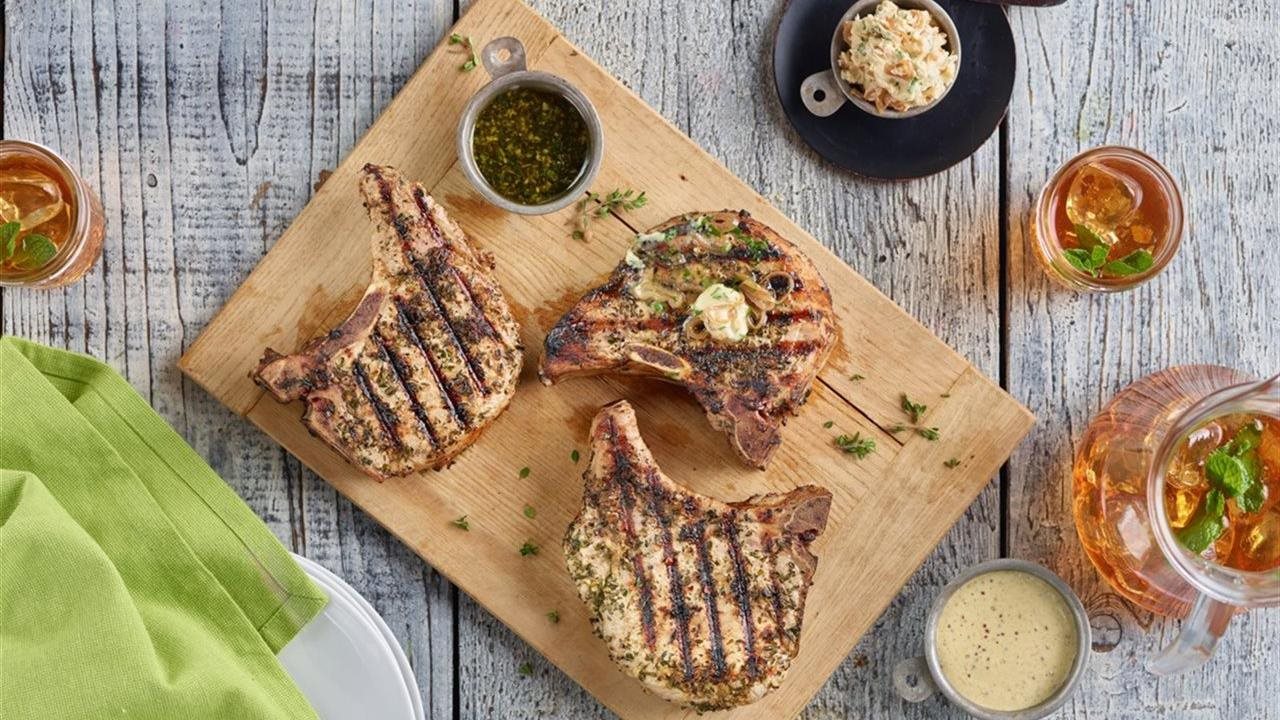
Grilled pork chops with cognac butter, mustard aioli and mushrooms

For the pork chops:

4 Smithfield(R) Prime Bone-In Pork Chops (1-inch thick)

1 cup extra virgin olive oil

1/4 cup finely chopped fresh thyme

1/4 cup finely chopped fresh rosemary

1/4 cup finely chopped garlic

Directions:

Mix oil, thyme, rosemary and garlic in large mixing bowl. Add pork chops and coat thoroughly. Cover and refrigerate at least 2 hours and up to 24 hours. Heat grill to medium using hickory wood charcoal. Remove chops from marinade and grill 7 to 9 minutes per side until internal temperature reaches 145 F to 160 F. Remove from heat and immediately brush with cognac butter. Let stand 3 minutes before serving.

For the cognac butter:

1 cup good-quality cognac

1/2 cup thinly sliced shallots

1 cup butter, room temperature

1/4 cup chopped fresh parsley

Directions:

Combine cognac and shallots in a small saucepan. Simmer until cognac is reduced by two-thirds. Strain and let cool. Mix together with butter and parsley; let stand at room temperature until ready to use.

For the mustard aioli:

3 eggs

1 cup Dijon mustard

1/4 cup lemon juice

1/2 cup whole grain mustard

3 cups vegetable oil

Directions:

Combine eggs, Dijon mustard and lemon juice in food processor or blender. Blend until smooth. Slowly drizzle in vegetable oil, while food processor is running, until emulsified. Remove from processor and fold in whole grain mustard. Season to taste.

For the mushrooms:

2 lbs. mixed fresh wild mushrooms (such as chanterelle, hen of the woods, porcini and morel)

1/4 cup extra virgin olive oil

1/4 cup finely chopped fresh thyme

1/4 cup finely chopped fresh rosemary

1 tablespoon lemon juice

Directions:

Toss together mushrooms and olive oil. Place in grill basket and grill until tender and cooked through, turning occasionally. Remove from heat and toss with remaining ingredients. Serve immediately.

This recipe yields four servings; total prep time is 25 minutes (plus two hours marinade time), and total cook time is expected at 35 minutes.

Visit SaborSmithfield.com for more of Chef Garces’ recipes and inspiration for your next meal and to learn more about Smithfield’s quality and freshness. And visit sobewff.org for more details on the South Beach Wine and Food Festival. For more information about National Pork Board, visit porkteinspira.com.


Childhood vaccine rates increase but more parents also are refusing

2018-03-06T08:01:01

(BPT) – Childhood and adolescent vaccination is considered by many to be one of the greatest public health accomplishments of the 20th century, but based on the results of a new study by the Blue Cross Blue Shield Association (BCBSA), there is still more work to do to ensure children and teens are protected against the diseases vaccines were developed to eradicate.

The Blue Cross Blue Shield: Health of America Report shows childhood vaccination rates climbed 12 percent among young commercially insured members. Data shows 69 percent of young BCBS members born in 2010 were up-to-date on their CDC-recommended vaccinations by the age of 2 years and 3 months compared to 77 percent of children born in 2013.

The study also found that the rate of documented vaccine refusal — in other words, doctors charting parental refusal of vaccines for their children — went up by nearly 70 percent for children born in 2013 compared to those born in 2010 (4.2 percent versus 2.5 percent, respectively).

The result of vaccine refusal can be dangerous, not only for the child who is vulnerable to diseases like measles and diphtheria, but for the community at large.

It played itself out in Minnesota last year, when a measles outbreak in the Twin Cities exceeded the total number of cases reported in the entire U.S. the year before. Health officials didn’t have to look far for the cause. Spread of the highly infectious disease started in the state’s Somali-American community.

According to the Minnesota Department of Health, the vaccination rate among Somali-American children dropped from the high 80s to a low of 42 percent last year in response to the anti-vaccine movement’s targeting efforts, fueling the outbreak. But the disease wasn’t confined to the Somali community. It spread throughout the Minnesota public school system as well, infecting non-vaccinated children.

The disease is nothing to take lightly. At the low end, it causes fever, runny nose, cough, sore throat and a rash, but it can be deadly, spawning pneumonia, blindness and even encephalitis. One especially alarming complication lurks in the brain for years after a person has recovered and mysteriously reawakens, causing seizures, coma and death. No one who has contracted that complication has survived.

Low uptake of HPV vaccine

It’s not just childhood vaccines that parents are refusing. According to the BCBSA report, only 29 percent of adolescents received a first dose of the human papilloma virus (HPV) vaccine before their 13th birthday.

The HPV vaccine rates lag far behind other adolescent vaccines, meningococcal and Tdap, which have rates of 72 percent and 82 percent, respectively.

And that’s a problem. According to estimates from the Centers for Disease Control and Prevention, 31,500 people die every year from cancers caused by HPV.

It’s a heartbreaking statistic, especially because the American Cancer Institute estimates that, if all teens were vaccinated against HPV, cervical cancer would be eliminated within one generation.

What parents can do

The key to protecting children and teens from diseases like measles, rubella and HPV is vaccination, according to the CDC.

Talk to your child’s doctor about the safety and benefits of vaccination, if you have any doubt.

Vaccinate your children according to the CDC-recommended Seven-Vaccine series: Diphtheria, Tetanus and Pertussis (DTaP), Heamophilus Influenza (Hib), Hepatitis B (Hep B) Polio (IPV), and Measles, Mumps and Rubella (MMR).

Vaccinate your adolescent against HPV, Meningitis and DTaP.

For more information, or to download the Health of America report, visit www.bcbs.com/healthofamerica.


Keeping roads clear: The sand vs. salt debate

2018-02-22T13:03:00

(BPT) – Winter maintenance practices often lead to debates over different methods and materials used to keep roads clear. One often-heard argument is that road authorities should go back to using sand or abrasives for winter maintenance, instead of using salt.

But how does sand compare to salt?

Sand alone does not melt any snow or ice. Any time melting has been associated with sand, it is because a small amount of salt (about 10 percent or less) is typically included in the stockpile to stop the sand from freezing. It is sometimes said that some melting occurs because the color of the sand creates excess solar heating, but that is minimal compared to the normal solar heating occurring on roads.

Sand does provide a temporary increase in friction. However, to supply that increase in friction, it must be located between the tires of the vehicles on the road and the snow or ice on the road. Studies have found that the friction increase due to sand disappears after 10 to 20 vehicles have driven over it at highway speeds. So, the benefits of sand in terms of increasing friction can be fleeting in high-speed and high-traffic situations.

In addition, to get the friction benefits of sand, it must be applied at higher rates than salt. This means that trucks must be refilled more often, and when a truck is in the yard being refilled, it is not out on the road system plowing and applying materials.

Some believe that there is no environmental impact from the use of sand, but when abrasives like sand settle in river beds, they choke off access of aquatic species’ eggs to oxygen, reducing their value as spawning grounds, potentially putting the breeding of certain fish species at risk.

The other danger is to air quality. As cars drive over the sand and other abrasives, these get ground up and become dust. The cities of Denver, Colorado, and Washoe County, Nevada, where air pollution is a concern, require that abrasives used be vacuumed up no more than 72 hours after the end of the storm. This cleanup adds to the cost of using abrasives.

This debate matters because we need roads to be free of snow and ice in the winter. A study by Global Insights indicated that when roads are impassable because of snow or ice, a state can lose between $300 million and $700 million in economic activity per day. A study from Marquette University has shown that a safe and sustainable snowfighting program that uses road salt in an appropriate manner will reduce accidents by up to 88 percent.

When properly applied at the right place, at the right time and in the right amount, road salt has been shown to be the most effective, economic and environmental way to keep roads passable and people safe in the winter.


Ideas to help you reap big rewards from your garden

2018-03-05T11:41:00

(BPT) – Get active outdoors with a hobby more satisfying than binge-watching another television series. As a pastime, gardening can help you eat delicious, more flavorful food while transforming your patio or yard into a colorful hangout for butterflies and bees.

Many people don’t realize how easy it is to have a fresh supply of crisp veggies, fragrant herbs or fresh-grown flowers. Whether you have a balcony, rooftop or patio, gardening is a hobby that quite literally allows you to harvest big rewards.

One of the most exciting parts of gardening is deciding what to grow. With thousands of plants to choose from — flowers, vegetables and herbs — a small pot of soil can be a canvas for creativity.

To find the most popular flowers and plants this year, we checked in with Ball Horticultural Company, a global leader on all things gardening, to see what the top trends are in 2018.

Strong and colorful

When spring arrives, we all crave color and warmth to celebrate the end of winter. To get that wow factor — and get it fast — try planting flowers that grow and fill in quickly and thrive in extremes. The Megawatt Begonia brings magnetic color even in shaded spaces. It’s also a low-maintenance option if you’re new to gardening. Likewise, the Echinacea Sombrero Sangrita is a perennial flower that returns each year with stunning red blossoms.

For foodies who want to show off

Every chef knows the secret to tasty cooking is great ingredients. For many gardeners, the truly magical combination is finding that edible veggie that looks as good as it tastes. Take 2 Combos combine two sweet pepper plants with a touch of heat and beautiful orange and yellow fruit. There’s also a combo of a slicer and cherry tomato perfect for small spaces and for snacking and cooking. Speaking of peppers, a new, attractive variety is Candy Cane Red Pepper. It has green fruit striping that ripens to red and offers up crisp, sweet flavors, much like a candy cane!

A refuge for bees, butterflies and beyond

There are dozens of reasons people choose to garden: fresh food, interior and exterior decoration, relaxation, stress reduction and more. One emerging trend is that people want to make their garden a destination for pollinators like bees, butterflies and hummingbirds. A few captivating flowers that attract these beautiful and helpful creatures are:

* Lucky Star Pentas — Provides butterflies summer-long flower clusters in eye-catching colors

* Copper Prince Ornamental Millet — This thriller makes a dramatic statement with foxtail plumes that birds feast upon

* SuperBlue Lavender — A deeply colorful and fragrant bee magnet

Gardening helps you relax and decompress. What’s more, there is a huge amount of satisfaction involved in seeing your vegetables and flowers grow. Follow these trends and watch your plants blossom and beautify your home and yard. After all, we could all use a little more color in our lives.


Swap these 4 food fads with nutritious kitchen staples

2018-02-22T10:01:00

(BPT) – With new so-called “healthy” food trends popping up all the time, it’s hard to keep track of what’s actually good for your health and what’s just a fad. Luckily, new research continually shows consumers which fads to ditch and which kitchen staples stand the test of time and should be kept in our diets. For example, did you know that coconut oil, a recent consumer favorite in health and beauty circles, has been found in a new study to actually increase cholesterol?

If you are looking for simple changes that have a big impact on nutritional health, consider clearing some unhealthy eating habits from your diet. Here are a few health fads that aren’t as nutritious as you may have heard, and helpful swaps that can benefit your health.

Cooking with coconut oil

Over the last few years, coconut oil has gained prominence on grocery store shelves, in the news and on social media. Long considered a multipurpose beauty oil, coconut oil began to make its way into recipes, and consumers hoped its health benefits extended to the kitchen. However, a recent study has found that coconut oil increases cholesterol. Adding corn oil to one’s diet, on the other hand, was found by the study to result in better cholesterol levels compared with coconut oil. Similarly, a previous study published in The Journal of Clinical Lipidology found that corn oil can help lower cholesterol two times more than extra virgin olive oil. With a high smoke point, versatile usage and a neutral flavor, corn oil makes a great staple for any pantry.

Juice diets and cleanses

While it’s important to include fruits and vegetables in your diet, “cleansing” your body with a diet limited to cold-pressed juices won’t provide enough essential vitamins and minerals for a healthy diet. According to research by the National Center for Complementary and Integrative Health, there is no real evidence that juice cleanses work. The human body is great at keeping the good stuff in and filtering out the bad, and a varied diet is important for maintaining energy throughout the day. Plus, according to Vive Nutrition, juice diets tend to make people feel hungrier and lead to overeating. If cold-pressed juices are something you enjoy, go ahead and include them in addition to your meals.

Skipping dessert

Everything in moderation! Indulging every once in a while is an important part of a balanced diet. Harsh dietary restrictions, especially on the foods you love, may lead to short-term results, but aren’t sustainable in the long run, according to research by the National Center for Biotechnology Information. Rather than cutting sugar completely, avoid binges by allowing yourself a treat every once in a while on a cheat day to maintain balance in your diet.

Snacking on granola bars

Packed with whole grains, granola bars seem like the perfect healthy snack, but many contain an unhealthy amount of added sugar, which creates a caloric and less-than-nutritious food choice. In fact, according to a survey in the New York Times, less than 30 percent of nutritionists would call granola a healthy food. Replacing granola bars with healthier options like whole nuts will greatly benefit your health. This snack choice is less sugary, more filling and full of omega-3 fatty acids, which are shown to reduce the risk of chronic diseases.

With contradicting information about health coming out daily, it’s important to research the facts to learn which tips are fads and which are truly good for you. By making these diet swaps that benefit your body, you can start the year as your healthiest self ever.


Couple Inspires Others with Progressive Forms of Multiple Sclerosis (MS)

2018-03-14T11:31:01

(BPT) – More than 20 years ago, as Jennifer Digmann focused on completing her coursework and graduating from college, she began experiencing numbness in her hands and feet and eventually double vision.

After several visits to her primary care doctor, an ophthalmologist and finally a neurologist, she received the diagnosis: multiple sclerosis (MS).

Today, Jennifer lives with a progressive form of MS, a chronic disease that often strikes in the prime of life, has no cure and is the leading cause of non-traumatic disability in young adults. Progressive forms of MS are the most debilitating. Like others who are affected, Jennifer’s symptoms have continued to worsen over time and her level of disability has increased.

Approximately 400,000 people in the U.S. are living with MS, according to the Multiple Sclerosis Association of America. Up to 15 percent are diagnosed with a progressive form of the disease (called Primary Progressive MS), and the majority of those diagnosed with Relapsing MS will transition to a progressive form later in life, according to the National Multiple Sclerosis Society.

For Jennifer, handling her sadness and fear and accepting her diagnosis was almost as challenging as her symptoms. People living with progressive forms of MS tend to experience more difficulties with walking and remaining in the workforce, and they require more assistance with everyday activities, according to the National Multiple Sclerosis Society.

Progressive forms of MS remain frustratingly difficult to treat, primarily because doctors do not fully understand why the disease progresses. Also, many clinical trials for new medicines have been unsuccessful. More research is needed to better understand the underlying biology driving this condition, as well as to develop additional treatment options.

On March 28, 2018, the first ever Progressive MS Day was celebrated by several MS advocacy groups and state governments around the country. This annual day of awareness was created with the goal of recognizing people living with progressive forms of MS, offering support, highlighting resources, programs and services, and, most importantly, calling for further research to advance their care and reduce disability.

Jennifer and her husband, Dan, who himself lives with Relapsing MS, count themselves among the most enthusiastic supporters of Progressive MS Day. As a couple, the Digmanns have dedicated their lives to inspiring and helping others living with MS by sharing their own experiences and perspectives through their blog and radio show.

“My life is not perfect always, but it’s pretty darn good. This disease, my multiple sclerosis, doesn’t hold me back,” says Jennifer.

Seeing the challenges that Jennifer faces with her condition made Dan excited about Progressive MS Day. “Finally, there’s something for people with the progressive forms of MS. Now, hopefully, that opens the door for more awareness and resources, and that’s why a day like this is pivotal,” says Dan.


Living a Rare Life: Could Your Family History Unlock the Mystery of a Rare, Life-Threatening Condition?

2018-03-13T16:07:01

(BPT) – Imagine your family carried the gene for a rare, life-threatening condition, but didn’t know it?

For generations, members of Angel’s family experienced fatigue, nerve pain, numbness in limbs, dizziness, shortness of breath and chest pain, but were unable to determine the cause. The answer was hereditary ATTR (hATTR) amyloidosis, a progressive, debilitating, life-threatening condition that typically runs in families.

“Early on, my family used to call hATTR amyloidosis ‘the curse’ because no one knew what it was and those who had it experienced a wide variety of symptoms and misdiagnoses,” Angel said. She witnessed firsthand how the condition, which affects approximately 50,000 people worldwide, can devastate a person’s quality of life.

“I watched my grandfather go from building houses and doing construction to being wheelchair bound and bedridden.”

Angel’s family’s experience was recently chronicled in “Living a Rare Life,” a new downloadable booklet sharing their personal account about how they’ve been living with this condition across generations. Like many rare conditions, hATTR amyloidosis varies from individual to individual and is often misdiagnosed because its wide array of symptoms, like shortness of breath, numbness of fingers and toes, constipation/diarrhea and headaches, resemble other, more common conditions.

While the degree and severity of symptoms vary from person to person, hATTR amyloidosis can lead to significant disability and a shortened life expectancy. Obtaining an early and accurate diagnosis is critical.

While Angel tested negative for the condition, she has taken an active role serving as an advocate and caregiver for her family. “The first step to managing a hereditary condition is knowing your family health history and identifying gaps in knowledge about genetic disorders,” said Angel. “Today my mom and many of her siblings are battling hATTR amyloidosis, but now we know how to recognize the symptoms and better manage them.”

Here are a few of Angel’s tips to begin conversations with your loved ones about your health history:

  1. Initiate a Dialogue. Having open and honest conversations about family health history may play a role in identifying symptoms sooner, reaching an accurate diagnosis sooner and allowing your loved ones to take control of their health.
  2. Speak to a Genetic Counselor. Genetic counseling can help your family members understand their chances of inheriting a rare disease gene mutation and become familiar with the testing process. A counselor can help your family to understand potential issues related to genetic testing, like insurance, determine if genetic testing is appropriate and help make sense of results once they are obtained.
  3. Become an Advocate. As an advocate, you can be your family’s most valuable resource for learning about a genetic condition. For some family members, it may be helpful for them to know that they have support throughout the journey of the condition. Building a support system can help the entire family continue to make educated decisions.

If you, or someone in your family, experience symptoms consistent with those of hATTR amyloidosis, talk to your doctor and visit hATTRBridge.com for information and resources like the “Living a Rare Life” booklet.

* Angel is partnering with Alnylam Pharmaceuticals to increase awareness of hATTR amyloidosis.