Consider alternatives to opioids to manage pain after surgery

2018-01-22T12:01:00

(BPT) – If you’re having surgery, you can expect to be sore and uncomfortable for a few days, whether you’re recovering at home or in the hospital. But it’s best to limit opioids or avoid them altogether, opting for alternatives to manage pain and discomfort, recommends the American Society of Anesthesiologists (ASA).

Unfortunately, many patients leave the hospital following surgery with a prescription for 30 or more highly addictive opioid pills (e.g., Vicodin, hydrocodone and oxycodone), and about 6 percent are still using them three months or longer after the procedure.

“Nobody needs a prescription for 30 or 50 opioids, and even those who are in major pain should only take them for a day or two,” said ASA President James D. Grant, M.D., M.B.A., FASA. “There are effective alternatives. Many people don’t need opioids at all or at least should drastically reduce the amount they take.”

Addiction can start after taking only a few opioids. More than 2 million Americans abuse these medications, which can create a feeling of euphoria and make the body believe the drug is necessary for survival. Since 2000, opioid overdose deaths in the U.S. have increased 200 percent.

Don’t take that chance. ASA offers advice for coping with pain and discomfort as you recover from surgery.

* Ask about alternatives – Only take opioids when you are in extreme pain. Medications such as ibuprofen (Motrin), naproxen (Aleve) and acetaminophen (Tylenol) can help with pain and soreness. While it’s never a good idea to rely on any type of pain pills for too long, these medications are not addictive and are far less risky than opioids.

* Manage your expectations – Everyone feels pain differently, but soreness and discomfort after surgery are normal and will improve within a day or two. These sensations are less severe than pain, which is usually sharp or intense. You usually don’t treat muscle soreness after a hard workout with an opioid, so if you are sore, and not in severe pain, try ibuprofen or naproxen.

* Be an active participant in your own care – While you are in recovery, the nurse will ask you if you are in pain and if so, how much. Be descriptive in explaining how you feel. If you are in major pain, ask that the opioid prescription be written for a small amount, and only take them for a day or two, three at most. Unused pills can fall into the wrong hands. In fact, more than half of people who misuse prescription painkillers get them from a friend or relative. Your pain will improve significantly within a few days whether or not you take opioids.

* Be aware of other downsides to opioids – Opioids cause severe constipation and often don’t manage pain as well as people expect. Additionally, they can cause hyperalgesia, or an increased sensitivity to pain.

“The opioid crisis is huge and affects everyone, rich and poor, male and female. It’s got to stop, and reducing opioid use during recovery after surgery is a big part of the solution,” said Dr. Grant. “Those who are in continued severe pain after surgery should ask a physician anesthesiologist or other pain specialist about alternative strategies to manage pain, including exercise, nerve blocks and non-opioid medications.”

ASA is committed to ending opioid abuse and has launched several initiatives to combat the epidemic. For more information, review ASA’s National Pain Strategy.

To learn more about the critical role physician anesthesiologists play before, during and after surgery, visit asahq.org/WhenSecondsCount.


What you should know to prepare for a blood test

2018-01-22T08:01:00

(BPT) – A new survey reveals Americans are not aware of what to report prior to a blood test. Only half (52 percent) believe it is very important to report use of supplements to their healthcare provider before getting a blood test.

With recent interest in the use of supplements like biotin as beauty treatments, it’s especially critical for consumers, doctors and lab personnel to talk before blood tests because very high doses of supplements could interfere with some test results.

The possibility of interference in blood testing is low, but if you’re taking high-dose biotin for hair, skin or nail health, for example, it is best to inform your doctor before a blood test. Just as you may need to fast before certain types of tests, you may need to hold off on taking supplements like biotin for at least eight hours before blood work.

The survey, commissioned by Roche Diagnostics, also found that most Americans (85 percent) expect their physician to provide complete instructions on how to prepare for a blood test.

“Many factors — from stress, to prescription medication, to vitamins — can affect blood test results, so it’s important to be proactive in communicating about medicines or supplements you’re taking rather than waiting to be asked,” said Dr. Emily Jungheim, associate professor of obstetrics and gynecology at Washington University School of Medicine in St. Louis.

Ask your healthcare provider about ways to prepare for blood tests. Here are some simple tips to follow:

* Write down all your prescription medicines the night before a blood test so you can share up-to-date information with the lab technician or your doctor.

* Also report vitamins, supplements, nutraceuticals and any over-the-counter medications.

* Know the doses of the medicines and supplements you are taking. The dose matters. You may not be aware that 5 mg of biotin per day, for example, is equal to the amount of biotin in 100 capsules of a typical daily multivitamin.


Living with Ulcerative Colitis: Shedding Light on Unspoken Challenges [Infographic]

2018-01-22T08:01:00

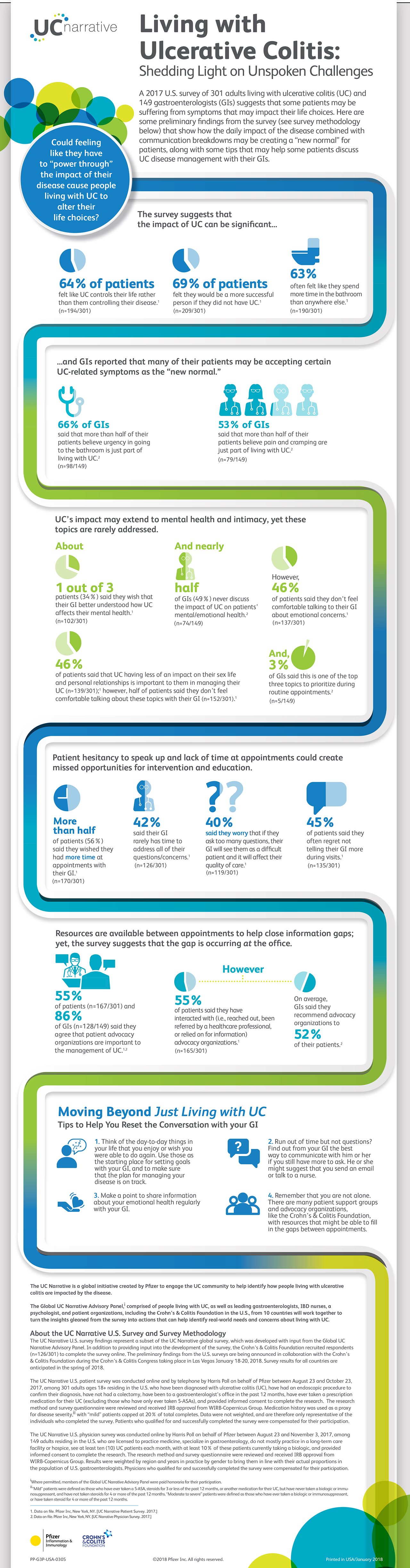
(BPT) – A 2017 U.S. survey of 301 adults living with ulcerative colitis (UC) and 149 gastroenterologists (GIs) suggests that some patients may be suffering from symptoms that may impact their life choices. Here are some preliminary findings from the survey (see survey methodology below) that show how the daily impact of the disease combined with communication breakdowns may be creating a “new normal” for patients, along with some tips that may help some patients discuss UC disease management with their GIs.


Why probiotics should be part of your routine in 2018

2018-02-01T09:01:00

(BPT) – At the turn of the calendar, many people begin taking action on what they plan to accomplish in the new year. Some have resolved to take up a new hobby, to save more money, to travel and, of course, to improve their health.

New eating plans and gym memberships are common steps people take toward their health goals, but there are other effective ways to improve your health — like adding probiotics to your daily regimen. You’ve likely heard of probiotics before, but do you know how they benefit your health and how to select the right one for you? This article can help.*

What is a probiotic?

Before delving into how probiotics can help your body, let’s first explain what they actually are. In the simplest terms, probiotics are the good bacteria (live microorganisms) that live inside your digestive tract and help your body to function properly. There are many different types of probiotics, and each one performs a different function in your digestive system.*

The billions of bacteria that live inside your digestive tract are often called “microflora,” or more correctly, “microbiota,” and the environment that they work together to create inside the body is called the microbiome. Maintaining proper balance within your microbiome is crucial for overall health.*

How do probiotics help?

The beneficial bacteria in the digestive tract are influenced by a variety of factors such as stress, medication use, traveling and poor diet. Therefore, it is important to prioritize diet and lifestyle to maintain proper gut ecology. Probiotics are also effective for maintaining healthy populations of beneficial bacteria. Numerous clinical studies have shown probiotics have positive effects on health, including assisting in the digestion of food and the absorption of nutrients and contributing to immune system health. Some studies have suggested that certain beneficial strains may also support brain function.*

Probiotics in your diet

Probiotics are found in many foods you may enjoy every day including yogurt, kefir and sauerkraut. However, due to food processing and packaging, maintaining the stability and potency of the live beneficial bacteria in these foods can be a challenge. Including probiotic supplements in your routine ensures a consistent dose to help you and your family maintain optimal health.*

Finding the right probiotic supplement for you

Probiotic supplements can help support health at any age — from infancy to adulthood. When it comes to selecting the probiotics for you and your family, the best options are those that are formulated based on clinical research. Genestra Brands offers a comprehensive line of clinically studied, effective probiotic strains that have been recommended by doctors for more than 20 years. With more than 25 gluten-free, non-GMO formulas, Genestra Brands’ probiotics offer personalized support to help make your New Year’s resolution of becoming a healthier you that much easier.*

Before you begin taking any type of probiotic, speak with your doctor and/or pharmacist about whether they are safe and right for you.

To learn more about probiotics designed with you in mind, visit genestrahmf.com.

* These statements have not been evaluated by the Food and Drug Administration. This product is not intended to diagnose, treat, cure or prevent any disease.


Healthy half-time snacking tips from a pro

2018-01-17T14:33:00

(BPT) – Healthy snacking and making good food choices can be difficult any time of the year, but it can be especially tough during the big game. Business Insider reports that only 80 percent of people who start a New Year’s resolution keep that resolution through February. This happens to correspond with the biggest football game of the year and the common food temptations that go along with it — chicken wings, chips and salsa, pizza, not to mention beer.

Bryan Snyder, registered dietitian and nutrition director for the Denver Broncos, who is responsible for keeping the year-round nutrition strategies for the team’s players on track, also knows the pitfalls for the fans. “I advise people trying to eat healthier to follow a sustainable meal plan.”

Snyder describes a sustainable meal plan as one that allows some flexibility to have a meal here and there that might have a higher calorie intake.

“I often see people go from eating a poor diet and choosing unhealthy snacks, in combination with not exercising, to all of a sudden deciding to work out every day and eat perfectly every meal. The issue that can arise from that behavior is that it isn’t a sustainable plan, and it doesn’t allow any room for those big game snacks.”

Snyder’s recommendation is to find a nice middle ground. Allow yourself to sneak in some of those not-so-healthy calories on game day, but also give yourself some healthier options that you can have while keeping a guilt-free conscience.

Snyder’s snack of choice? Pistachios. “Pistachios are loaded with antioxidants and fiber, which will help you feel full and prevent you from overeating during the big game, and give you an immune system boost as well.”

Other healthy options are pita chips with hummus, vegetables with vegetable dip, bison or turkey burger sliders, popcorn, baked sweet potato fries, or a cup of turkey chili. For those who can’t imagine game day without wings, Snyder suggests baking the wings instead of deep-frying to replace some of the unwanted and unnecessary fats.

“Oftentimes we want to eat healthier, but we simply don’t know what to eat,” says Snyder. “All of these options are healthy swaps for satisfying game day enjoyment.”

Snyder recommends, too, having a backup plan if you’re going over to someone else’s house to watch the game, as this can be one of the biggest pitfalls to straying from a diet. “Don’t give yourself an excuse to eat poorly. Take along some portable healthy snacks — such as healthy bars, trail mix or pistachios — to be sure you have options and don’t indulge in hours of unhealthy snacking.”

While it is certainly understandable and sometimes difficult to eat healthy during the big game, it is something that can be done with the right planning and preparation, according to Snyder.

“One other common misconception about healthy snacking is that you have to sacrifice great taste,” warns Snyder. “Follow this game plan, and I guarantee you won’t.”


American Heart Month: The ideal time to take smart steps to control cholesterol

2018-02-01T08:01:00

(BPT) – February is American Heart Month, the perfect time to take a serious look at your heart health. One important aspect of managing your heart health is keeping your cholesterol levels within a healthy range. With a few smart steps, you can help support your heart health today and well into the future.

Dr. Shawn Dhillon, medical director at Calvert Medical Group in Baltimore, believes that managing heart health begins with strengthening the doctor-patient relationship. It’s through open, honest conversation that people can best manage their cholesterol levels to support a healthy heart.

“It’s critical for patients to have an open dialogue about a management plan,” says Dr. Dhillon. “It’s also important for physicians to properly explain conditions and treatment options to patients, and equally important for patients to listen. Talking and forming a partnership helps ensure success.”

In the US, more than 100 million American adults have high cholesterol, which can lead to hard, thick buildup (plaque) forming in your arteries, causing them to narrow and slowing down and even blocking the flow of blood to your heart. This is dangerous because blood carries oxygen to the heart and brain. If enough oxygen doesn’t reach your heart, you may feel pains in your chest, and if blood supply is completely blocked to any part of your heart, it can cause a heart attack.

To help encourage a healthy lifestyle, Dr. Dhillon often suggests therapeutic lifestyle changes before recommending any medication. This may start by looking at dietary changes that increase intake of soluble fiber and decrease intake of trans and saturated fats.

Dr. Dhillon also recommends increased exercise, which works the heart and encourages weight loss. For those who need to reduce cholesterol levels, The American Heart Association (AHA) recommends 40 minutes of moderate to vigorous exercise or activity 3 to 4 times a week.

“If cholesterol levels still do not improve to where we want them to be after trying lifestyle changes for an adequate amount of time, we supplement with a statin medication,” says Dr. Dhillon.

Statins are prescription drugs that can help people manage cholesterol levels. LIVALO® (pitavastatin) is a statin medication that, along with a heart-healthy diet and regular exercise, can improve overall cholesterol levels while having a lower risk of certain unpredictable drug interactions compared to other statins.

Some people may experience side effects when starting a statin. “It’s important to record any symptoms and discuss them with your healthcare provider,” according to Dr. Dhillon. “Everyone has a different tolerance level for statins,” he says. “Sometimes the body needs time to adjust to the new medication. You may experience muscle aches or fatigue but by working with your doctor you can make adjustments — perhaps trying a lower dose or trying a different type of statin — so that you can find a treatment that works for your unique needs.”

While speaking with your doctor, ask if LIVALO is right for you. LIVALO lowers cholesterol levels by targeting the enzyme that plays a central role in the production of cholesterol. LIVALO is metabolized, or processed, in the liver differently than most other statins and may be less likely to interact with other medications. Because of the way LIVALO is metabolized differently than most statins, patients are able to eat grapefruit or drink grapefruit juice, both of which can potentially interfere with the action of some other prescription drugs.

Important Safety Information for LIVALO® (pitavastatin) tablets

Who should NOT take LIVALO?

LIVALO is not right for everyone. Do not take LIVALO if:

  • You have a known allergy to LIVALO or any of its ingredients.
  • You have active liver problems, including some abnormal liver test results.
  • You are nursing, pregnant or may become pregnant, as it may harm the baby.
  • You are currently taking cyclosporine or gemfibrozil.

What is the most important information I should know and talk to my doctor about?

  • Call your healthcare provider or get help right away if you experience any symptoms of an allergic reaction, such as rash, itching, or hives.
  • Muscle problems may be an early sign of rare, serious conditions. Tell your doctor right away if you have any unexplained muscle pain, weakness, or tenderness, particularly if accompanied by malaise or fever, or if these muscle signs or symptoms persist after discontinuing LIVALO.
  • Serious liver problems have been reported rarely in patients taking statins, including LIVALO. Your doctor should do liver tests before you start, and if you have symptoms of liver problems while you are taking LIVALO. Tell your healthcare provider right away if you feel more tired than usual, have a loss of appetite, upper belly pain, dark-colored urine, or yellowing of the skin or eyes.
  • Tell your doctor about all your medical conditions and medications you take including nonprescription medicines, vitamins, or herbal supplements.
  • Increases in blood sugar levels have been reported with statins, including LIVALO.
  • Tell your doctor about your alcohol use.

What are the most common side effects of LIVALO?

The most common side effects of LIVALO in clinical studies were:

  • Back pain
  • Constipation
  • Diarrhea
  • Muscle pain
  • Pain in the legs or arms

This is not a complete list of side effects. Talk to your healthcare provider for more information.

You are encouraged to report negative side effects of all drugs to the FDA. Visit www.fda.gov/medwatch or call 1.800.FDA.1088.

How should I store and take LIVALO?

  • Store LIVALO tablets at room temperature, in a dry place, and out of the reach of children.
  • LIVALO can be taken at any time of day, with or without food.
  • Swallow the tablet whole. Do not split, crush, dissolve, or chew.

Other important information I should know about LIVALO.

  • LIVALO has not been studied to evaluate its effect on reducing heart-related disease or death.
  • LIVALO is available by prescription only.

For additional information please see the full Prescribing Information or visit http://www.livalorx.com.

© Kowa Pharmaceuticals America, Inc. (2017) – LIV-RA-0109


3 formerly misunderstood foods now a part of a well-balanced diet

2018-02-01T06:01:00

(BPT) – Throughout history, misconceptions, misinformation and popular culture have influenced Americans’ eating habits. Many foods that were previously eaten daily are now considered unhealthy. Conversely, some foods that were thought to be “bad for you,” are now considered nutritious.

“Nutrition is exciting. Just about every day there is new research about how certain foods work in our body,” says Registered Dietitian and Nutritionist Dawn Jackson Blatner. “Over time as research is done, foods that were once considered unhealthy can be found to actually play a key role in healthy diets.”

What historically “unhealthy” foods are now considered wholesome? Blatner provides some examples:

Eggs

Shunned for many years, eggs were believed to be bad for heart health due to high cholesterol levels. However, numerous studies have shown that intake of dietary cholesterol has little influence on blood cholesterol levels. In fact, the Harvard School of Public Health states that the biggest influence on blood cholesterol level is the mix of fats and carbohydrates in your diet — not the amount of cholesterol you take in from food.

Today, eggs are part of a healthy diet — so much so that recently the country’s leading weight loss service announced that eggs are now included on its zero points list. Keep in mind, though, that not all eggs are created equal. When shopping for eggs, look for Eggland’s Best eggs, which have significantly more nutrition than ordinary eggs.

“Many health and nutrition organizations are finally recognizing eggs for the nutrient powerhouse they are,” says Blatner. “Eggland’s Best eggs have six times more vitamin D, more than double the omega-3s and more than double the vitamin B12 of ordinary eggs, making them the best egg option to maximize your nutritional intake.”

Nuts

Snacking on nuts today is typically considered a healthy way to keep hunger pangs at bay, but it wasn’t always that way. Nuts used to have a bad reputation for being high in fat and calories, and were often avoided, especially for people who wanted to lose weight.

Today, many nuts are considered the ideal nutritious snack as they contain heart-healthy monounsaturated fats. For example, the versatile almond is relatively low in calories when compared to other nuts and has more calcium than other varieties, according to Health.com. Plus, almonds are rich in fiber and vitamin E, an important antioxidant.

“Nuts can make a great snack or wonderful addition to recipes,” says Blatner. “The one thing to be mindful of is sodium intake. Opt for raw nuts or dry-roasted varieties. These are minimally processed and typically won’t contain the salt and oils you’ll find in other varieties.”

Carbohydrates

Due to empty calories and low nutritional value, cutting carbs has been at the heart of diet fads for decades. The problem with this is that it assumes all carbs are equal, which is false.

“The important thing to realize is there are high-quality and low-quality carbs,” says Blatner. “Instead of shaming all carbs, focus on high-quality sources of carbohydrates that fuel the body and give you energy — skip the refined grains like white bread and focus on whole grains.”

Want to try a recipe that uses some of these formerly misunderstood foods? Blatner shares one of her favorites.

Eggland’s Best Spinach & Avocado Egg Sushi

Makes two servings.

Ingredients:

2 Eggland’s Best Eggs (Large), 1 tablespoon milk, 1 dash of salt, 1 dash of ground black pepper, 1 large whole wheat tortilla (12 inch), 1/2 avocado (mashed), 1 cup fresh baby spinach

For the spicy sauce:

Mix 2 tablespoons plain Greek yogurt, 1 tablespoon Sriracha (or other hot sauce) and 1 teaspoon milk in a small bowl.

Directions:

Coat a 10-inch nonstick pan with cooking spray and heat on medium-low heat.

In a bowl, whisk together eggs and milk and season with salt and pepper.

Pour egg mixture into pan and cover with a lid. Do not scramble! Cook until set (about 3-4 minutes), flip and finish cooking (about 1-2 minutes).

Lay tortilla flat and spread with avocado, leaving a 2-inch border around the edges.

When eggs are finished cooking, place in the center of the tortilla and top with spinach.

Start at one end and roll tightly, but gently.

Coat the same skillet with nonstick spray and warm on medium-high heat.

Place roll seam-side down on skillet and brown slightly on both sides. Remove and allow to rest for 1-2 minutes.

Using a serrated knife, slice 1-inch pieces, drizzle with spicy sauce and serve with chopsticks.


6 ways to help a grieving friend or family member

2018-01-16T08:01:01

(BPT) – When someone you know loses a friend or family member, it’s not easy deciding when and how best to respond. You may find yourself unsure of what to say or do. Sometimes a simple phrase such as, “I’m sorry for your loss,” can be extraordinarily meaningful.

Here are six helpful tips from 1-800-Flowers.com’s Celebrating A Life online resource on how to console a loved one during their time of grief:

Listen

Allowing a grieving person to express how they feel can be a huge help. Try to listen without offering advice or interrupting. Letting people share memories and talk about their loved one can be a part of the healing process.

Be specific when offering help

Make a specific commitment to being with the person who needs you. Offering assistance with day-to-day matters can be very comforting, but be sure to offer something specific, such as, “I’m coming over with groceries on Saturday.” That way, you’re offering help without placing the burden on the grieving person to figure out what to bring and when.

Navigate social media appropriately

When acknowledging the news of a loss, stick with the communication medium through which you initially received the information. If the news came by phone call, return the call. If you learned about the death through social media, it is appropriate to reply on social media, just be sure to keep your message brief on public pages. More detailed expressions of sympathy should be conveyed in private posts.

Be patient

It is normal for people who are grieving to experience a range of emotions. It takes time to heal, so be patient and allow them to grieve at their own pace.

Send a card

Show your concern and support by sending a card. Take the time to put your own personal message inside.

Don’t minimize their pain

It is important to keep the focus on the grieving person. Resist the urge to share stories of times that you’ve lost a loved one. Let your friend or family member share their own stories and memories.

1-800-Flowers.com has been helping customers express sympathies for more than 40 years. Now, the company has created an online sympathy hub for tips and advice, directly from experts, on how best to express sympathy and condolences. Topics include Appropriate Sympathy Etiquette Across Different Religions, How to Write a Eulogy, How to Create a Memory Garden, and Sympathy Etiquette and Social Media.

The site serves as a resource for people in their time of need and is intended to make their experience a little easier to manage. People need to have a greater understanding of how to help their friends, family and co-workers in coping with a loss.

For more information, visit www.1800flowers.com/sympathyadvice, or call 1-800-Flowers.com’s Sympathy Customer Service line at 866-538-2259.


Eating healthy has never been more delicious

2018-02-14T16:21:00

(BPT) – Yoga mats, kale salads, fitness trackers, standing desks and gym memberships. It seems like everywhere you look, people are taking strides to get healthier. And with good reason.

In the U.S., 37.9 percent of adults aged 20 and older suffer from obesity, and heart disease accounts for one out of every four deaths. Despite these harrowing numbers, many people have difficulty embracing a heart-healthy lifestyle, especially when it comes to food.

Part of the reason for this is that too often people think that eating right involves a list of what you cannot eat.

It’s easier to focus on all the things you can eat.

As February is American Heart Month, it’s a perfect opportunity to consider how easy and delicious it is to stick to a heart-healthy diet.

Embrace convenience

Sometimes, at the end of the day you just want a quick meal. Unfortunately, most fast food options and restaurants don’t offer heart-healthy options.

Fortunately, Sun Basket, a rapidly growing healthy meal kit service, has developed a recipe each week that meets the American Heart Association’s(R) Heart-Check guidelines for a heart-healthy diet, and conveniently delivers them right to your door.

Sun Basket’s Heart-Check certified recipes have undergone meticulous evaluation to ensure each recipe meets the American Heart Association’s(R) strict nutrition guidelines for a main dish, with each serving having:

* No more than 500 calories

* No more than ≤ 3.5 grams of saturated fat

* No more than 600 mg of sodium

* A serving from at least two of the following food groups: Meat, poultry, fish, dry beans, eggs or nuts; fruits and vegetables; milk, yogurt or cheese; bread, cereal or pasta

* No added sugar and no trans fats

Eat deliciously

There’s a widespread misconception that a heart-healthy diet involves giving up all meat and snacks and only eating kale and whole grains.

That’s far from the truth. Many of the best cuts of meat are also ideal for a heart-healthy diet and can satisfy the most ardent carnivore. Pork tenderloin, skinless chicken and turkey breasts are naturally lean, while fatty fish, like salmon, trout and tuna, are loaded with omega-3 fatty acids.

As far as snacks go, it’s really just a matter of embracing things like fresh fruit with low-fat yogurt, vegetables and hummus, or a savory mix of nuts like almonds, walnuts and pistachios.

The list goes on, but the point is that a heart-healthy diet doesn’t have to be limiting; rather, it’s full of delicious food.

Shopping is easy

So how do you know if something meets the nutritional standards you need to maintain a healthy heart? You don’t need to be a nutritionist for this. Simply look for the American Heart Association’s(R) iconic Heart-Check mark on food packages when you ship, and you’ll instantly know it meets the Association’s recommendations to be part of a healthy eating pattern.

Try it and see

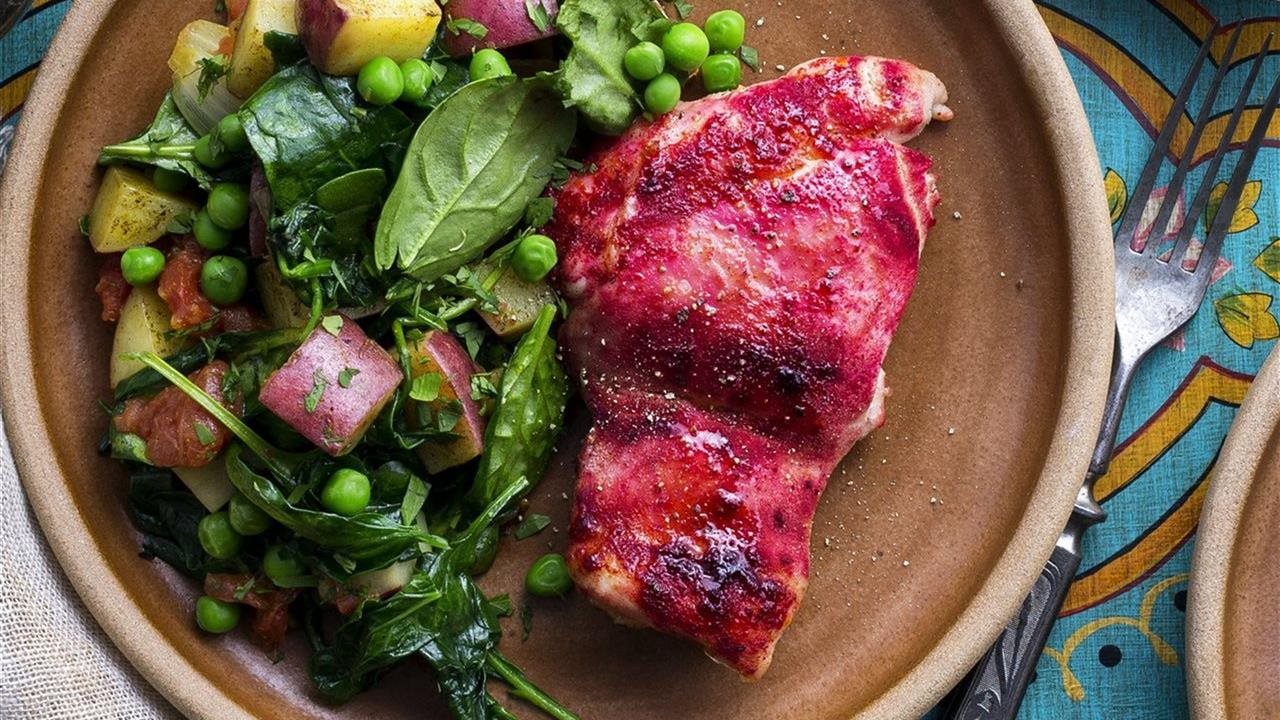
Still not convinced about how delicious and easy it is to follow a heart-healthy diet? Check out this recipe for Sun Basket’s Tandoori-style chicken with Bombay curried potatoes.

In your box you’ll receive:

2 to 4 boneless skinless chicken thighs

Tandoori spice blend

1 onion

Potatoes

4 sprigs of fresh cilantro

1 teaspoon curry powder

1 cup vegetable broth

1/2 cup diced tomatoes

2/3 cup peas

1 1/2 ounces baby greens

1. Prep and cook the chicken

Preheat oven to 425 degrees.

Pat the chicken dry with a paper towel. Season generously with salt, pepper and the tandoori spice blend.

Place the chicken on a pan lined with foil and roast at 425 degrees for 15 to 20 minutes. Halfway through, turn it over.

2. Prep the Bombay potatoes

Chop 3/4 cup of onions.

Scrub potatoes and cut into 1/2-inch by 1/2-inch pieces.

Coarsely chop the cilantro for garnish.

3. Cook the Bombay potatoes

In a large frying pan warm 2 to 3 teaspoons oil over medium-high heat. Add the onion, season with salt and pepper, and cook until starting to soften. Stir in the curry powder and cook until fragrant, about 1 minute.

Add the potatoes, vegetable broth and tomatoes. Bring to a boil, reduce to a vigorous simmer, cover and cook between five and seven minutes.

Uncover and cook until the liquid has thickened and the potatoes are tender.

Stir in the peas and cook for about two minutes.

Stir in the greens and cook until just wilted.

Transfer the chicken and Bombay potatoes to individual plates, garnish with the cilantro.

Serve and enjoy.

Eating right shouldn’t be a chore. With Sun Basket’s Heart-Check certified recipes, it’s never been easier to enjoy a heart-healthy meal.