6 simple yet effective ways to prevent a lithium-ion battery fire

2026-08-25T07:01:00

(BPT) – You may not know what a lithium-ion battery is by name, but you likely have more than a few in your home and use them every day. These rechargeable batteries power smartphones, laptops, e-bikes, electric vehicles, power tools, toys and even home energy systems.

Lithium-ion batteries store energy more densely than traditional batteries, and they’re quite powerful. However, this same power source can put your home at risk. When damaged, improperly charged or overheated, lithium-ion batteries can enter thermal runaway and spark, explode or catch on fire.

Fortunately, you have the power to protect yourself and your loved ones from these risks. All you have to do is take charge of battery safety.

Protecting your household, one step at a time

UL Research Institute’s Fire Safety Research Institute understands the specific risks lithium-ion batteries present when handled incorrectly. That’s why it has created Take C.H.A.R.G.E. of Battery Safety, a public safety education campaign that highlights six research-based ways to prevent lithium-ion battery fires. These steps may sound simple, but each small action you take can help create a safer home, reduce your risk of a lithium-ion battery fire, and protect your family today and tomorrow.

1. Choose certified products

Prioritize your safety by selecting lithium-ion battery-powered devices that are certified by a nationally recognized testing laboratory to ensure they meet key safety requirements.

2. Handle lithium-ion battery-powered devices with care

Always follow manufacturer guidelines and use the provided charger for lithium-ion battery-powered devices. Avoid modifying batteries or chargers and charge your devices in safe environments away from extreme temperatures, direct sunlight and flammable materials.

For larger devices, such as e-bikes, charge in a location that does not block your exit path from your home and away from sleeping areas. Ideally, you should charge e-bikes outside of your home. Refrain from overnight charging of large devices.

3. Always stay alert for warning signs

Regularly inspect devices for any signs of damage, such as swelling or punctures. Be aware of unusual sounds like hissing or popping. Watch out for excessive heat or a strange odor. White or gray wispy smoke indicates there is immediate danger of fire. If you notice any of these warning signs, stop using the device immediately.

4. Recycle devices and batteries properly

Responsibly dispose of old or damaged batteries and devices by taking them to a designated battery recycling center. Never discard batteries, chargers or battery-powered devices in regular trash bins.

5. Get out quickly if there’s a fire

From the first sign of a problem, you could have less than one minute to escape a fire from a large lithium-ion battery-powered device. Know the warning signs to look and listen for and get out if you see or hear them. Follow your home fire escape plan to leave immediately, closing doors behind you as you exit and call 911.

6. Educate others on safe practices

Help protect your friends and loved ones by sharing how they can Take C.H.A.R.G.E. of Battery Safety, so that others can identify potential risks and charge safely.

Are you ready to take charge?

The power of Take C.H.A.R.G.E. is that it is an easy way to remember fire safety actions that you can adopt in your everyday life. By implementing these guidelines in your home, you can significantly reduce risk and create a safer environment for your whole family. For more information on lithium-ion battery safety, visit BatteryFireSafety.org.

Say goodbye to millennial gray and hello to the new neutrals

2026-08-25T06:01:01

(BPT) – For years, cool grays defined the clean, modern home aesthetic. Walls, floors, cabinets, siding and stone accents all came in shades of “millennial gray.” But trends are shifting. Now, homeowners are abandoning the grays that ruled interior and exterior design since the mid-2010s for softer, warmer, more inviting neutrals.

A growing desire for a warmer, cozier palette

According to Westlake Royal Building Products’ 2026 Trendline report, gray interiors have declined as homeowners’ interest in warm neutrals has increased. In fact, the report found that searches for “neutral color palettes” have increased 10 times since 2021, while Pinterest searches for “warm neutrals” are up more than 85% year over year.

So, what does this look like in practice? Instead of cool grays and stark whites, homeowners are embracing shades of off-white, soft cream and warm greige. These versatile hues create spaces that feel inviting and grounded while maintaining a polished, contemporary look.

Fortunately, embracing this warmer palette doesn’t require a complete home makeover. One of the easiest ways to introduce warmth, texture and timeless appeal is with manufactured stone, whether it’s featured on an interior accent wall, fireplace surround or exterior façade.

How to achieve the new neutral look

Choosing the right manufactured stone is about more than just color. The profile, texture and tone all work together to create spaces that feel warm, inviting and timeless.

Dutch Quality Stone, a leading manufacturer of manufactured stone veneer under the Westlake Royal Building Products family of brands, offers two new colorways — Soft Barley and Summer Plains — that embrace the shift toward warmer neutrals. Offered across several stone profiles, the colorways make it easy to incorporate warmth, texture and timeless appeal throughout the home.

For homeowners drawn to creamy neutrals with subtle warmth, Soft Barley delivers a soft, sun-washed look that pairs beautifully with natural materials like wood and metal, as well as deeper accent tones.

null

Choose Soft Barley in Rough Ashlar for a striking, classic profile of dressed stones. Rough Ashlar offers stones of varying sizes and textures that can add authenticity and depth to indoor and outdoor areas. Consider using this stone to surround your living room fireplace and create a floor-to-ceiling hearth. This indoor feature will instantly make a room feel welcoming and warm, even when the fireplace is off.

null

Alternatively, you can choose Soft Barley in the Weather Ledge profile to create a textural, aged fireplace surround that creates moderate shadow relief for added visual depth and intimate ambience. This stone profile in the warm neutral colorway is also well suited for building full or partial exterior wall facades, entryway columns and door frames, instantly adding curb appeal to your home.

Homeowners seeking a dynamic, earthy yet refined colorway should opt for Summer Plains. Rooted in the natural rhythm of open landscapes, Summer Plains can make a space feel grounded and expressive at the same time. Because this colorway blends sandy browns, cool grays and deeper blue-gray tones, it offers homeowners a natural transition from millennial grays to warm neutrals while enhancing texture and visual movement.

For example, Summer Plains in Dutch Quality Stone’s Tuscan Ridge profile captures the look of traditional Italian stone masonry while complementing modern designs indoors and out. In the kitchen, its combination of large rubble shapes and ledge stone adds texture and dimension to accent walls or backsplashes, creating a brighter, more open feel. Outdoors, Tuscan Ridge in this warm neutral brings character to entryways and enhances outdoor living spaces with rugged-looking architectural features.

Like Soft Barley, Summer Plains also comes in the Weather Ledge profile, leaning into a linear, layered look ideal for homeowners who want texture with a streamlined feel.

Bringing this trend home

Not sure where to begin? Westlake Royal’s Design Canvas makes it easy to explore the possibilities. The digital design tool lets you upload your own images and experiment with different combinations. You can visualize exterior updates and see how warm neutral palettes could look in your living room, kitchen, porch, patio or other areas of your home.

To learn more about Dutch Quality Stone and explore its warm neutral colorways, visit DutchQualityStone.com.

Appliances that pull double duty, so you don’t have to

2026-08-24T08:07:00

(BPT) – Key takeaways:

Today’s home cooks are looking for kitchen appliances that do much more than cook food. They’re seeking smart appliances with intuitive features that save time, reduce cleanup and make everyday meal prep inherently more efficient.

It’s part of a broader shift in how Americans are using their kitchens. According to the National Kitchen & Bath Association’s 2026 Kitchen Trends Report, 100% of surveyed industry professionals agree that lifestyle-enhancing features will be popular over the next three years, as kitchens become more personalized, multipurpose hubs.

Smart tech-enhanced appliances like Samsung’s Bespoke kitchen appliances now pull double duty, simplifying everyday cooking with smart innovations that make your daily routine easier. Here are four important features to look for in smart kitchen appliances:

1. Capture smoke, steam and odors with DualVent Technology

Are you frustrated with the smoke and heavy steam that permeate your kitchen while cooking and linger long after dinner? You’re not alone. The surge in urban living, evolving work-from-home habits and growing health awareness have led to an uptick in demand for kitchen appliances that keep indoor air cleaner. This has more and more people actively seeking ventilation and cooking technologies that eliminate grease, smoke and cooking odors to maintain healthier, fresher living spaces.

Traditional over-the-range microwaves can vent some of the smoke and vapor from your kitchen, but you may still find that they stick around, along with stubborn cooking smells. To tackle smoke, steam and odors during and after cooking, look for a microwave that works twice as hard with dual vents. Samsung’s new Bespoke Over-the-Range Microwave with DualVent Technology combines a powerful front-burner vent — where most cooking happens — with standard bottom vents for a fresher, more comfortable kitchen.

The dual-vent system pulls smoke and steam away from the front and back burners simultaneously, which is especially useful during high-heat cooking and large-meal prep when you have multiple pots and pans heating at once. Compared to conventional over-the-range microwave models without DualVent, Samsung’s Bespoke model captures up to three times more cooking smoke.

Best of all? There’s no need for manual adjustment. The powered vent cover automatically opens when ventilation is activated and closes when turned off for added convenience.

2. Cook smart and faster with sensor technology

Getting the timing just right in the microwave can be tricky. Every dish heats differently, which means preset cooking times don’t always deliver the best results. Thankfully, Samsung’s Bespoke Over-the-Range Microwave with DualVent Technology eliminates the guesswork.

Samsung NSE90H63S Electric Range with over the counter micro-wave in a modern style kitchen.

Instead of stopping, adjusting and restarting the microwave, the model’s Sensor Cook detects the moisture released by your food and adjusts the cooking time and power level accordingly. And thanks to the microwave’s 2.1-cubic-foot capacity, you can cook large dishes and family-sized meals with ease.

Smart tech-enhanced appliances like Samsung’s Bespoke kitchen appliances now pull double duty, simplifying everyday cooking with smart innovations that make your daily routine easier.

3. Cook multiple dishes in an oven that’s designed to flex

If you live in a busy household or are a frequent entertainer, you know that multitasking in the kitchen is essential for a successful meal. Whether you’re preparing a weeknight dinner or an elaborate holiday feast, you can save time and effortlessly cook two dishes at once — even if the recipe calls for different temperatures — with Samsung’s new Bespoke Smart Slide-In Range with Flex Duo™ Oven and Dual True Convection.

Samsung Bespoke Smart Slide-In Range with Flex Duo™ Oven and Dual True Convection in the kitchen.

The spacious oven comes with a removable divider, allowing you to seamlessly split it into two independent cooking zones with separate temperature controls. Available in both gas and electric models, this flexible dual-by-design oven maximizes oven space and streamlines meal timing, so you never have to compromise between roasting savory vegetables or baking a sweet dessert.

Pro tip: Want to speed up meal prep? The Flex Duo Oven features a no-Preheat Air Fry Max mode. It’s the ultimate shortcut for serving wholesome, crispy family meals on a tight weeknight schedule.

4. Enjoy connected convenience with smart tech integration

Smart connectivity has become one of the most sought-after features in today’s kitchen appliances, as more consumers expect their devices to work together as part of a connected home rather than as standalone products. Demand is being fueled by features like smartphone integration, voice control, remote monitoring, personalized automation and energy management that make everyday cooking more convenient. That’s why Samsung’s Over-the-Range Microwave with DualVent Technology and Flex Duo Oven are part of the brand’s intelligent SmartThings ecosystem.

Using the Auto Connectivity feature, the microwave can pair directly with the oven range, automatically activating the hood fan and lighting the moment the cooktop turns on. You can also use the SmartThings app to control the microwave remotely, explore personalized recipes and monitor energy usage right from your smartphone for a streamlined, stress-free experience.

Your kitchen appliances should work just as hard as you do. When they pull double duty, they make everyday cooking easier, no matter your skills or schedule.

Samsung’s Bespoke Over-the-Range Microwave with DualVent Technology and Bespoke Smart Slide-In Range with Flex Duo™ Oven and Dual True Convection are available to purchase now. To learn more about the Bespoke line, visit Samsung.com.

All photos courtesy of Samsung

Fall looks better from the water: 5 reasons to extend boating season

2026-08-24T08:11:00

(BPT) – Summer may get most of the attention when it comes to boating, but the fun doesn’t have to end when seasons change. With quieter waterways, cooler temperatures and vibrant scenery, fall offers an often overlooked way to enjoy time on the water.

“There’s something magical about experiencing fall from the water that you can’t get during the height of summer,” said Maggie Maskery, director of communications for Discover Boating. “It’s a chance to slow down, take in the sights from a different point of view and turn an ordinary day into a seasonal escape with your favorite people.”

Discover Boating, the go-to resource for all things boating, including expert tips, safety essentials, helpful tools like Go Boating Today and Boat Finder, explores why boating belongs on your fall bucket list.

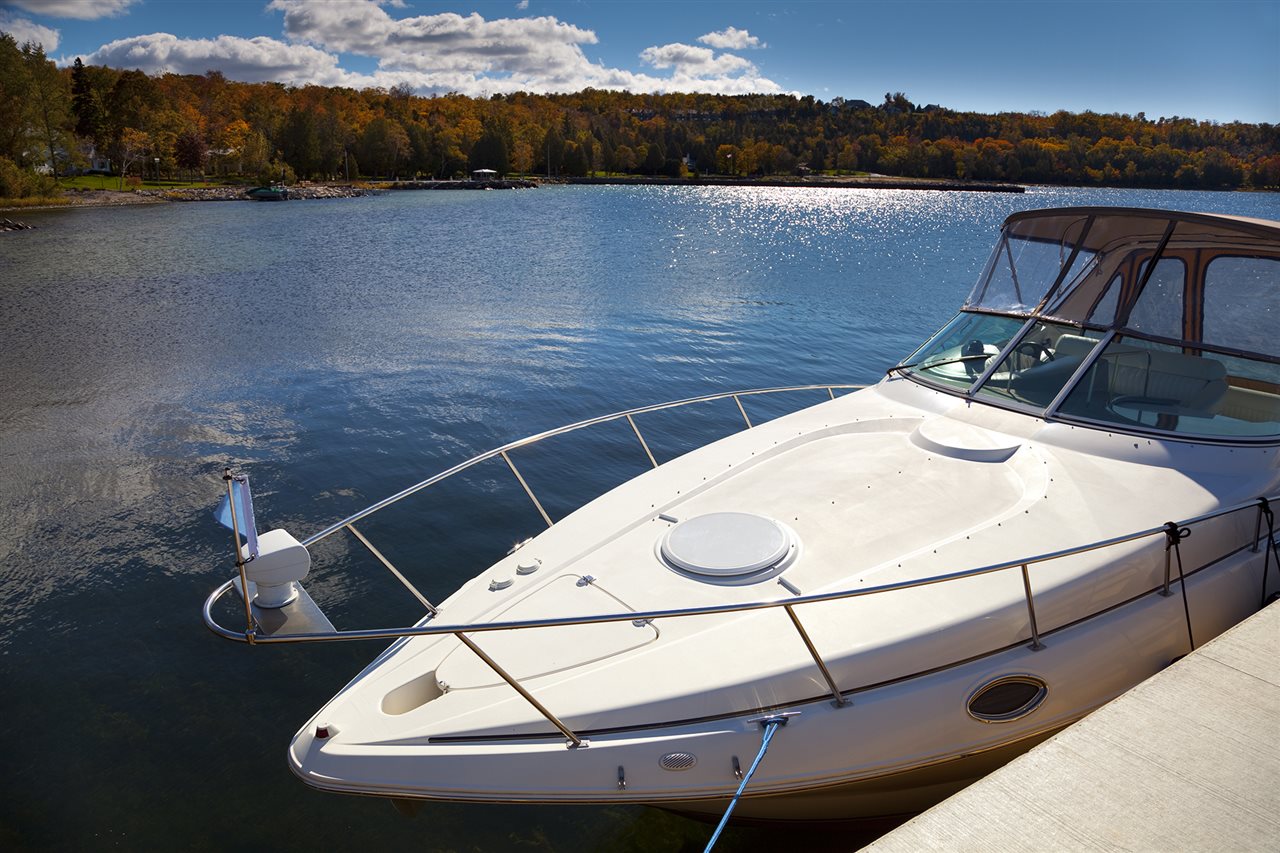
See fall colors from a new perspective. Leaf-peeping is even more spectacular from the water. Vibrant reds, oranges and golds lining the shoreline create views that simply aren’t possible from the road. Pack a camera, warm apple cider and a cozy blanket for a picture-perfect day.

Boat by a dock and Fall colored shoreline.

Soak up the crisp autumn air. Cooler temperatures can make fall boating especially comfortable, particularly in regions where summer brings intense heat and humidity. A brisk breeze and fresh air can feel invigorating. Be sure to check the weather forecast before leaving the dock and continue monitoring conditions throughout the day.

Enjoy quieter waterways. As summer vacations wind down and children return to school, there are shorter waits to get on the water and more room to explore at a leisurely pace. Popular destinations that are bustling during the summer feel like hidden gems in the fall.

Reel in fall fishing opportunities. For many anglers, cooler weather brings some of the year’s most anticipated fishing. Lakes, rivers and coastal waterways across the country offer seasonal opportunities for anglers of all experience levels.

Cruise to a fall festival. Arriving by boat can turn a favorite autumn event into a mini getaway. Many waterfront communities and marinas host seasonal celebrations ranging from seafood festivals to harvest and wine events.

As daylight hours shorten and temperatures change, remember to dress in layers, wear a properly fitted life jacket and check the weather and sunset time before heading out.

Senior man wears a coat and dog wears a life jackey while on a boat.

For more practical guidance, explore Discover Boating’s new boating safety video series to enjoy stress-free, fun-filled boating adventures.

If you’re just getting your feet wet, rentals, charters and boat clubs offer flexible ways to get started without a long-term commitment. Visit DiscoverBoating.com for more fall inspiration, simple ways to get on the water and how-to information. Ready to find your dream boat? Check out a boat show near you. Be sure to tag @DiscoverBoating and use #SeeYouOutHere to share your fall boating adventures.

What the Threat of Frontier AI Tells Us about Enterprise Modernization

2026-08-24T05:01:00

(BPT) – Key takeaways

  • The vulnerabilities inside legacy systems of large organizations are no longer hidden.
  • While Y2K forced organizations to confront decades of accumulated code, frontier AI is forcing the same reckoning.
  • The organizations responding fastest are the ones that have built the capacity to correct vulnerabilities at machine speed.

You have a password manager, or you don’t. You use two-factor authentication on some accounts but not others. You read the breach notification email, change the password and move on. Most of us trust that the systems we depend on (our banks, our health records, our social platforms, our employers) are doing the work in the background.

But they’re not. Or rather, they can’t anymore. A new generation of artificial intelligence, capable of scanning entire enterprise estates in hours, has fundamentally changed the problem. The vulnerabilities buried inside legacy systems for decades, the technical debt that every large organization carries, are no longer hidden. To anyone with access to the right models, these flaws are thrown into sharp relief. The audit that used to take weeks now takes hours, and the people tasked with defending these systems are no longer the ones finding the vulnerabilities first.

This is what some in the industry describe as a new Y2K moment, though the comparison is less about the threat than the reckoning it forces. Y2K had a known deadline, a known fix, and years of coordinated global response. Engineers went in to patch one thing (the date field) and discovered a catastrophe’s worth of brittle, tangled code no one fully understood. The frontier AI moment offers no such certainty.

The defining feature of this moment is a structural mismatch: offense now moves at machine speed while defense still moves at the speed of human review and scheduled maintenance. The deadline is unclear, the scope expands faster than fixes can be deployed, and the response is being navigated company by company. The true parallel is that both moments expose the cost of deferred modernization. Y2K forced organizations to look honestly at decades of accumulated code. This time, adversaries are running the audit in real time.

The new bottleneck in threat detection

Sand running trhough an hour glass. Cognizant says it is important to  remediate vulnerabilities at machine speed.

For all the urgency the moment demands, the organizations responding fastest are not the ones with the best threat detection. They are the ones with the capacity to remediate vulnerabilities at machine speed.

Detection has stopped being the constraint. A good security team with the right tools can find vulnerabilities in hours. What determines survival is what happens next: the ability to prioritize, patch, and deploy fixes faster than threats accumulate. Remediation capacity is now the bottleneck. When discovery outpaces repair, the backlog of known but unpatched flaws grows faster than teams can close it, and that patch queue itself becomes the attack surface: a published list of openings an adversary can work through while defenders wait for a maintenance window. Closing that remediation-velocity gap is the capability that now separates resilient organizations from exposed ones. That capacity is not something you buy from a single vendor. It requires orchestrating across the stack: linking defense, intelligence, and modernization at scale.

The same forcing function that has made security a board-level concern is reopening conversations about modernization that have stalled for years. In recent Cognizant research, 73% of Global 2000 leaders identified cybersecurity as a major driver of legacy modernization, the joint-highest rating alongside reducing operating costs.[1] For two decades, the case for enterprise modernization was made in the language of efficiency, cost, and competitive advantage. These arguments were easy to resist. Like patching your roof before a storm hits, the work that prevents catastrophe rarely feels urgent until the danger is right in front of you.

Like patching your roof before a storm hits, the work that prevents catastrophe rarely feels urgent until the danger is right in front of you.

The frontier AI moment is changing that calculation. The cost of waiting is no longer abstract. It’s measurable and increasingly visible in the form of a continuously expanding attack surface that legacy systems cannot defend. What was once a productivity argument is now a survival argument. And leaders know they are behind. Half of Global 2000 leaders say the current pace of progress in updating defense systems is not yet fast enough.[1]

What does frontier AI modernization look like now?

IT professional looking at patterns on multiple computer screens. Cognizant says AI-driven defense systems now detect and respond in milliseconds

In the age of frontier AI, modernization is no longer a program run alongside cybersecurity. It is cybersecurity, expressed at the architectural level. Each vulnerability is a symptom; the aging architecture that let it persist is the underlying condition. Patching the symptom without modernizing the architecture leaves the condition in place, which is why remediation at scale and modernization are the same work.

Three patterns are emerging across organizations moving fastest. The first is the systematic retirement of legacy systems that cannot be defended at scale. Unsupported platforms are not merely operational risks; they are mapped terrain for adversaries. The second is the embedding of zero-trust principles (identity, segmentation, encryption) as platform fundamentals rather than incremental fixes. The third is the deliberate design of operations that can withstand AI-era threats, including the inventories, baselines, and governance frameworks autonomous systems require.

These aren’t new ideas. What is new is that the frontier threat has made them unavoidable. The scope of the problem is forcing the scope of the solution. No single company, no product vendor, no single-service firm, can orchestrate this alone. Closing the remediation-velocity gap means making endpoint defense, data security, threat intelligence, incident response, and architectural modernization work as one system, with governance holding throughout. A point tool secures its own layer; only an orchestrating partner can engineer the whole. It is the work of an AI builder: the party that integrates capability across an ecosystem and embeds it into how an enterprise actually operates.

In financial services, AI-driven defense systems now detect and respond to anomalous activity in milliseconds, often before customers notice anything unusual. In healthcare, modernized claims platforms protect patient data while accelerating reimbursement. In retail and logistics, architectures built for security by design allow responsive experiences without exposing underlying systems to risk.

None of this is what most consumers think about when they tap a card or open an app. But it is the reason the experience works.

Recognizing threat in digital transformation

AI deep learning machine.

The frontier AI moment is not ultimately about cybersecurity. It is about how the digital economy must be rebuilt to remain trustworthy in a faster and more contested environment.

Y2K was a test run. It taught a generation of leaders that infrastructure matters, that technical debt comes due, and that coordinated effort can avert catastrophe. The frontier era is the real thing. The organizations that come through it well will be the ones that recognize the threat as also the moment.

The work is happening. Most people will never see it. That is the point. But the window to do it is not open indefinitely. The enterprises that close the gap before their adversaries reach parity are the ones that will define trust in the decade ahead.

_______________

[1] Cognizant, “Legacy modernization and the AI timeline.” Available at: cognizant.com/us/en/insights/insights-blog/legacy-modernization-mandate-ai-timeline

How to create thriving communities? Develop more ‘third places’

2026-08-24T08:01:00

(BPT) – Beyond home and the workplace, people need spaces to gather, meet new people and just hang out. These are known as “third places”: public parks, libraries and community centers, plus retail spaces, like coffee shops, bookstores and restaurants, and downtowns and main streets where people can socialize.

Many Americans today feel more lonely and isolated, navigating increased disconnection caused by screens and social media, plus cultural shifts that began during COVID. Nearly half of Americans (44%) say there’s no local coffee shop, bar, restaurant or park they visit regularly, and only 1 in 4 who live near potential gathering spots go there weekly.

Survey data shows that neighborhoods with multiple third places report higher levels of sociability. People who interact with neighbors at regular community spots are more likely to feel a sense of connection in their communities. Nearly half the residents in those communities report talking with someone they didn’t know well at least once monthly, according to the American Community Life Survey. That’s nearly twice as high as those living in areas without many third places.

These third places improve neighborhood cohesion and give people a reason to cross paths with those from different walks of life. Downtowns are one of the clearest examples of this in action. A thriving main street is a cluster of third places. The coffee shop, the bookstore, the diner, the plaza that hosts festivals. These main streets give people a reason to linger, run into a neighbor or strike up a conversation.

Today, states like Michigan are supporting efforts to nurture and create these crucial spaces and downtowns.

Community revitalization drives impact

Revitalization projects often showcase their environmental or safety benefits first, but their effect on local businesses is just as significant and often harder to quantify. Creating third places pays off not only in residents’ health and quality of life but also in increased foot traffic and local reactivation.

Because community development is one of the clearest paths to creating more third places and opportunities for human connection, the Michigan Economic Development Corporation (MEDC) offers numerous programs and grants toward this goal that support the unique vision of each community and empower local residents to design and implement solutions that build vibrant, diverse and resilient downtowns.

Creating opportunities for main street

Across Michigan, 24 communities are working through the Michigan Main Street program to revive their commercial districts, and the results show up in both foot traffic and investment dollars. Downtown Lansing has welcomed 116 new businesses and over $123 million in private investment since 2010. Grand Haven has drawn nearly $30 million in private investment and 110 new businesses since 2005. And in Howell, a downtown revitalization effort logged more than 62,000 volunteer hours and earned recognition as USA Today’s Best Main Street in 2024.

The results extend well beyond balance sheets. When a downtown becomes a place worth visiting again, residents show up, filling storefronts and connecting with one another.

Building up main street businesses

Small businesses are often what turn a storefront into a third place, the coffee shop or bakery where people linger, not just transact. The MEDC’s Match on Main program provides reimbursement-based grant funding of up to $25,000 per project to support new and expanding place-based small businesses.

Doozers, a popular bakery in downtown Ishpeming, restored a space in the historic Gossard Building with the support of a Match on Main grant, turning a home-based cookie-making venture into a bustling spot for people of all ages to hang out and enjoy sweet treats, complete with a kids’ play area.

“It’s nice having a third space,” said the bakery’s owner Claire Morgan-Heredia. “When I grew up, I went to the library six days a week and just hung out there or a coffee shop. We wanted to add to the community with our space. A variety of third spaces is good, so that the community foundation remains strong.”

Community spaces as third places

Not every third place is a business. Some are simply public: a park bench, a plaza, a farmers market stall. The Public Spaces Community Places program, created in partnership with the Michigan Municipal League, matches community crowdfunding campaigns dollar-for-dollar up to $50,000 for projects like parks, plazas, markets and other public gathering spaces. The match kicks in only after the community has met the project’s fundraising goal.

Since 2014, this program has:

  • Helped fund 421 projects across Michigan, backed by over 77,000 community members.
  • Crowdfunded more than $16.9 million, leading to $14.7 million in matched funding.
  • Created or redeveloped 25.9 million square feet of public spaces.

In St. Johns, the Fantasy Forest crowdfunding project transformed a beloved aging playground to be universally accessible, providing freedom of play to all children and families. Meanwhile, in Alpena, crowdfunding for the Besser Museum’s Discover Northeast Michigan History Exhibit turned an outdated exhibit space into an experience that takes visitors from the Big Bang to Big Industry, providing opportunities to learn about Northeast Michigan’s heritage in a family-friendly environment.

Through programs like Public Spaces Community Places, communities and the MEDC are equally invested in creating, improving and transforming spaces for all to enjoy.

With investments like these, states like Michigan are helping to support more opportunities for community connection and business development. Learn more about ways revitalization projects can support thriving communities through third places at MichiganBusiness.org.

Five important lessons rescue dogs can teach you

2026-08-21T23:01:00

(BPT) – Every dog has a story, and each story offers a priceless life lesson. For Lee Asher, founder of The Asher House animal sanctuary, his pack of over 50 dogs (as well as a few cats, a horse, and a pig) teaches him something new every day. Now, he’s sharing his wisdom with the world.

In his book, Saved by the Pack: How 50 Dogs Helped Me Find My Purpose, Asher introduces readers to his furry family members and the lessons each of them has taught him. This beautifully illustrated book is filled with personal and honest stories that animal lovers and pet owners will treasure. Read on to discover a small sampling of the canine wisdom you’ll find between the pages.

null


1. Never judge a book by its cover.

Some dog breeds get a bad rap, which can make people reticent to adopt them. But each dog is more than just their breed. For example, Rain, a young dalmatian, was virtually unadoptable because of her breed’s reputation for biting and moodiness.

“When I told people I was rescuing a dalmatian, for the first time I was warned against adopting a dog,” Asher says. “When I rescue pit bulls, I hear a lot of ‘Thank goodness, pit bulls are so misunderstood.’ But with a dalmatian, all I heard was, ‘I don’t know if that’s such a good idea.'”

Rain did exhibit some of these negative breed traits. When Asher took her leash for the first time, she attempted to bite him. Thankfully, Asher recognized her behavior for what it was—a sign of fear. He didn’t let her initial behavior deter him. He stayed calm and led with confidence. Over time, he proved to Rain that he was safe, earning her love and trust. Now, she’s a regular member of the pack.

“Don’t hang on to first, second, or even third impressions,” Asher says. “Important things take time, patience, open-mindedness, and the courage to wait.”

null


2. Don’t be afraid to take a risk.

Would you adopt a dog that constantly tried to run away? Such a risky pup would make most people shy away, but Asher took on the challenge when he adopted Ken, a handsome all-white mixed breed with some husky in him.

Ken’s reputation as an escape artist made him a high-risk adoption. However, Asher found a kindred spirit in Ken and decided to bring him home.

“I knew the risks I was taking in adopting Ken given his history,” Asher says, “but I was sure I could save him and provide the type of life and freedom he wanted and deserved.”

When Ken arrived at the sanctuary, Asher made sure to take him everywhere on a leash to help him get comfortable in his new home and with his new pack. Now, Ken is a dog that won’t leave Asher’s side.

“The truth is, Ken wasn’t running away. He was running to something: the home that could meet his needs, that trusted him, and that he could trust,” Asher says. “I’ve given him his freedom, and in return, he always comes back.”

null


3. Believe in second chances.

When animal control found Ray, they assumed the worst about this German shepherd. She and another dog had run away from a bad situation and were found next to a third dog who was deceased, leading animal control to believe that she or the other dog was to blame.

Ray also was severely anxious and wasn’t outgoing. Combined with her story, Ray’s anxiety made many people believe she was a dangerous dog and a liability. But her history didn’t stop Asher from giving Ray a home.

“Here’s the reality: No one saw the situation unfold or the circumstances that led to one dog’s death,” Asher says. “And the staff [of the Humane Society for Tacoma and Pierce County] saw no signs of aggression in Ray at all. What they saw was a beautiful, frightened girl.”

Asher’s belief in second chances paid off. Now, Ray is thriving at the sanctuary and has bonded strongly with Asher and her new pack.

“I don’t make a dog’s history its identity. Every dog is treated like they were born the day we meet. I learn what I need to know through my own experience of them rather than from what I’ve been told. Honestly, we should practice this more with our human companions too.”

4. Practice selflessness.

Putting another’s needs above your own can be difficult, especially when it means letting go. Asher learned this lesson when he adopted Nacho, a 12-week-old pit bull.

Asher had previously raised a puppy, a rottweiler named Doug, among the pack. But he quickly learned that bringing a young dog, especially a male, into a pack of five or more dogs was incredibly challenging. However, Asher’s love for Nacho and his grief from a recent dog’s passing made him ignore his instincts.

“Unfortunately, it took only a month for me to acknowledge I wouldn’t be able to keep Nacho forever,” Asher says. “At just a couple of months old, he was already challenging the other dogs. I was worried he was going to develop bad habits, or worse, risk his and the pack’s safety. I didn’t need to learn a hard lesson twice.”

In the end, it was his love for Nacho and the rest of his pack that pushed Asher to do the right thing and put the dogs’ needs above his own desires. Nacho now lives in a quieter home with a family who can give him the time and training he needs to be the best version of himself.

“[Nacho’s] thriving in his forever home, with no behavior issues—proof I made the right decision,” Asher says. “I’ve had to learn the hard way that it doesn’t matter if I want to keep a dog, if it’s my dream dog, or if I’m grieving another soul. I always have to do what’s best for the dog in front of me and for the pack.”

null


5. Have a sense of humor.

If laughter is the best medicine, then Asher gets multiple doses a day thanks to Tommy, the pack’s class clown.

When they first met, Asher was dealing with the immense pressure and expectations of opening a dog sanctuary. However, Tommy’s goofy teeth and silly, stubborn personality brought the right amount of levity to combat Asher’s worries.

“Tommy reminded me to slow down and enjoy the moment,” Asher says. “I’ll never forget the day I toured him around the property, only to have him sprint into the freezing cold rock quarry and swim laps. Chasing him into the water, fully clothed, I laughed harder than I had in ages. His goofy spirit brought light back into my days. He became a source of humor, gratitude, and hope.”

Tommy’s presence serves as a reminder to Asher and others of the heart and fun a rescue dog can bring to someone’s life.

Want to learn more lessons from Asher’s pack of rescue dogs? Pick up a copy of Saved by the Pack by visiting Books.Disney.com/Book/Saved-By-The-Pack.

All photos courtesy of Aaron Huey/National Geographic.

Expert recommendations for how to weather a summer outage

2026-08-21T15:29:00

(BPT) – Outages aren’t a matter of if, but when. If you live in an area where summer storms and heat waves can take out local power, it’s time to consider how to power your home no matter how long the grid goes dark.

What’s the easiest solution? According to Beau, a former licensed electrician and now an in-house product expert at Jackery, the answer is simple: buy a home backup system.

Throughout his career, Beau has answered many of the same questions from homeowners considering purchasing a home backup battery. Below are his answers to some of the most common ones.

Q: Do I really need a home backup?

If you’ve considered buying a home backup system but have been putting it off, consider what you’ll have to deal with if the power goes out tomorrow.

Without an independent power source, you risk going without food, air conditioning, communication and other essentials. Because blackouts can last hours, days or even weeks, now is the best time to buy home backup before the alert hits your phone.

Q: Is home backup worth the cost?

Yes. A home battery is a small investment with a fast payback. In fact, a home backup battery can pay for itself the first time it protects food. During a multiday outage, you can lose hundreds of dollars’ worth of groceries when the fridge stops running and have to spend hundreds more to replace what you lost.

Q: How long can a home backup run my home?

I field this one question more than any other, and I always answer the same way: It depends on your household. Home backup systems come in different sizes and capacities. How long one can run will depend on what you need to keep powered during an outage.

For example, families with young kids will need to prioritize keeping the refrigerator running and having a way to cook food. Pet owners may prioritize keeping their home cool during a heat wave, while remote workers may focus on keeping laptops, monitors, routers and phones powered.

Q: How do I know what size home backup I need?

The right home backup system is the one sized around your actual priorities. Now that you know what you couldn’t live without during a blackout, match those needs to the right portable power stations, solar generators or home backup battery.

If you only need to run a few plugged-in essentials, a smaller home battery backup may be enough. However, if you want to keep a refrigerator, internet equipment and family basics running longer, step up in capacity. If you want circuit-level or whole-home coverage, plan for a larger system and a transfer switch.

Q: I need to stay connected no matter what. What should I look for in a power station?

For remote workers or homeowners focused on connectivity, I’d suggest the HomePower 1000 v2. This power station offers 1500W output, enough power to keep a laptop running for 57 hours, and features sub-10 ms switchover and built-in 3 kV of surge protection for modems, routers and computers. And thanks to Jackery Priority Routing, you can rest easy knowing that you can preserve your networking gear’s capacity during long outages.

Q: During a long blackout, I want to make sure I have enough power to keep my whole family comfortable. Do I need to get a large-capacity power station right away?

For families who want a power station that grows with their needs, I’d recommend the HomePower 2000 Plus v2. The power station starts at a 2048Wh baseline capacity, enough to power a refrigerator for up to 48 hours, and expands to 12kWh with additional batteries.

Like the HomePower 1000 v2, it features Jackery Priority Routing, which automatically protects critical devices as the battery drains. When you need more power, hook up the station to portable solar panels, where it can fully recharge in about three hours.

Q: Can I power my whole home at once?

One hundred percent full, whole-home coverage with no compromise is very costly. But you don’t need everything in the event of an outage, and you certainly don’t want to overpay for backup. For backup that covers multiple rooms simultaneously, you’ll want to look at systems that connect to your home circuits via a transfer switch. Jackery’s bestseller, the HomePower 3600 Plus, is a great option for households that want to be prepared for longer outages. It delivers 3600W output and 3584Wh capacity, expandable up to 21kWh, which allows you to keep large home appliances like a refrigerator powered for up to 14 days.

This home backup solution connects to home circuits through a Manual Transfer Switch, offers sub-10ms UPS switching, runs at about 30dB (as quiet as a library), provides six recharge methods and is built to last on a 6000-cycle battery rated for 16-plus years. The HomePower 3600 Plus is also a great option for RV adventures.

Jackery 5000 home backup system in a garage with a door that leads to a family having dinner in the kichen.

For larger homes with high energy needs, I’d recommend our largest and most powerful backup option, Jackery’s Solar Generator 5000 Plus. When paired with the Jackery Smart Transfer Switch (STS), you get more control and automation over up to 12 30-amp circuits. The Jackery app shows you exactly what you are using on each circuit and puts control at your fingertips. The STS also opens up many options for load management and grid arbitrage, helping lower utility bills in areas where power is more expensive and will also help keep the appliances that are most important powered for the longest amount of time. Up to two Solar Generator 5000 Plus units can pair with the Jackery STS, increasing the continuous output to 14,400W and surge up to 28,800W.

It also features eight recharge methods, high-voltage solar compatibility, full AC recharge in 1.7 hours, 0ms UPS switching, Jackery App monitoring, an 11-plus-year battery lifespan, and a five-year warranty, so you can count on it to power your home through outages in any season for years to come.

Don’t wait for a blackout to get serious about home backup

When you break it down, Beau’s plan for how households can prepare for a summer storm or heat wave is simple: buy home backup now, figure out what you couldn’t live without, and match it to the right product. To learn more and find the right home backup that fits your home needs, visit Jackery.com.

11 fall traditions and new adventures at The Beach

2026-08-21T10:43:00

(BPT) – If you’re looking for a warm-weather fall escape this year, head to Myrtle Beach, South Carolina, where coastal traditions, local flavor and memory-making events keep the season glowing. Locals agree that The Beach is at its best during autumn, when the Grand Strand comes alive with surfing witches, music festivals and cook-offs the whole family can enjoy. With unexpected experiences and one-of-a-kind ways to celebrate, fall at The Beach offers a getaway that’s wonderfully different from the expected.

Below are just a few of the beloved traditions and new experiences you can enjoy this fall in the Myrtle Beach area.

1. Loris Bog-Off Festival

On Oct. 17, downtown Loris — located at the northern end of The Beach — will host the 47th annual Loris Bog-Off Festival. The festival celebrates the region’s signature chicken bog — a Lowcountry dish featuring a flavorful mix of rice, chicken, smoked sausage and closely guarded seasonings. What began in 1980 as a cooking contest has evolved into an annual tradition that brings together family recipes, live entertainment and local vendors, culminating in a grand fireworks finale.

2. Witches Sunrise Surf

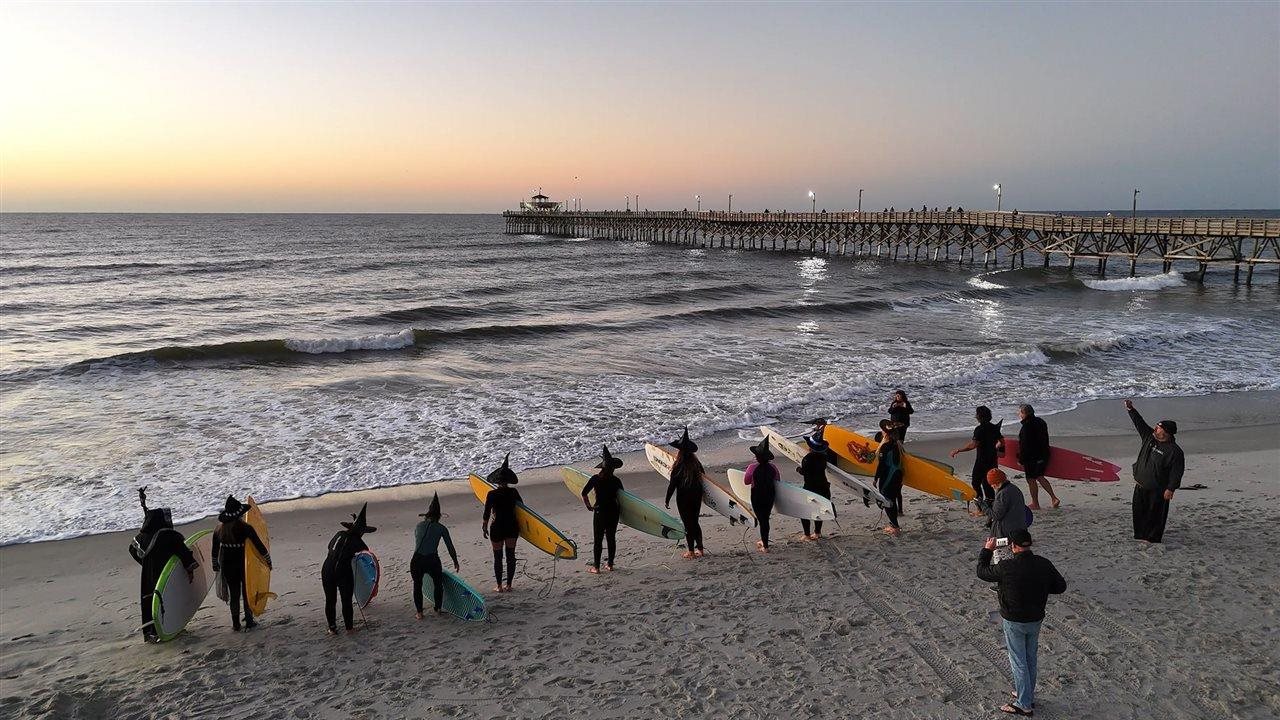
That same morning, visitors can head to North Myrtle Beach to witness the fifth annual Witches Sunrise Surf. Costumed surfers will paddle into the Atlantic to ride the waves, flying upon surfboards to greet a beautiful fall day. This playful Halloween twist is one of the area’s most delightful and unexpected coastal traditions, and it will have you setting your alarm early to watch the sunrise behind a coven of black hats and broomsticks.

3. Conway: City of Halloween

For more Halloween fun, take a short drive inland to Conway, a historic river town that officially renames itself the City of Halloween, S.C. Throughout October, you can walk Conway’s downtown and take in the sights of jack-o’-lantern trees, floating witch hats, oversized creatures, immersive lighting and family-friendly happenings. If you plan to visit on Oct. 17, make sure to take the family to see the town’s Graveyard Grand Prix Coffin Race, where locals race homemade, human-powered “coffins” through downtown.

4. Patriots Day Festival

Visit Little River — the oldest of the Grand Strand’s 14 communities — on Sept. 12 to celebrate the town’s Patriots Day Festival. This event honors service members and first responders while also raising funds for a memorial reef, a diving and fishing destination and coral restoration effort. The reef gives this new event an added sense of purpose that connects celebration, service and coastal environment stewardship.

5. Little River Waterfront Fright Nights

If you’re lucky enough to visit Myrtle Beach Sept. 24-Oct. 31, you can be among the first to experience the new Little River Waterfront Fright Nights. This six-week Halloween experience offers visitors plenty of spooky spectacles to choose from, including the Trail of Fear, waterfront decor, a haunted house, a costume contest and pirate-themed ‘Boos’ cruises along the Intracoastal Waterway.

6. NMB Live!

Music lovers, mark your calendar on Sept. 26 for the inaugural NMB Live! festival. This event brings three stages of free music to Main Street in North Myrtle Beach during the SOS Fall Migration, a celebration of the Carolina Shag dance held Sept. 18-27. The timing connects something new with a tradition that began in Ocean Drive’s dance clubs in the late 1930s. Named South Carolina’s official dance in 1984, the shag continues to be a vibrant part of North Myrtle Beach through lessons, competitions and celebrations.

7. Purdy Center

Visit Brookgreen Gardens — voted one of the top 10 Best Public Gardens in the U.S. — as it enters its first fall with the newly opened Purdy Center. This spacious venue and conservatory gardens feature a light-filled Great Hall, changing botanical displays and a floor-to-ceiling tropical Green Wall.

8. Harvest Home Weekend

Have double the fun by visiting Brookgreen Gardens Oct. 3-4 for Harvest Home Weekend. Families can enjoy traditional fall activities such as picking their annual pumpkin, building and taking home their very own scarecrow, getting lost in a hay maze, creating a festive craft and enjoying an Autumn Creek Adventure amid the sculpture gardens and Lowcountry landscape.

9. Myrtle Beach Songwriters Festival

Nov. 13-14, head to downtown Myrtle Beach for the new Myrtle Beach Songwriters Festival. This two-day event is a walkable celebration of original music, storytelling and coastal culture. Enjoy musical performances from more than 50 singer-songwriters and poets from across the country performing their original work in intimate listening-room settings in multiple venues. Produced by Songs That Save Foundation, the event will support local children and families through Backpack Buddies.

10. Jazz Fest

This year, jazz enthusiasts can help celebrate the 10th anniversary of the Myrtle Beach Jazz Fest on Oct. 16-18 in Myrtle Beach. During this three-day celebration, the spacious event grounds will feature nearly two dozen live jazz performers, along with a variety of food options and cultural experiences.

11. Crazy Sister Marina

Myrtle Beach’s pleasant fall weather means there is still plenty of time for an adventure on the water. Visit Murrells Inlet and book an excursion with Crazy Sister Marina, a fishing charter, water sports and tour company that gives visitors unique ways to stay on the water well into the fall season, including dolphin-and-sea-life cruises, guided kayak tours, jet ski rides and half-day deep-sea fishing trips. Make sure to stay after sunset and experience a children’s pirate sunset adventure, a Full Moon Ghost Stories Cruise and a Murder Mystery Dessert Cruise.

Your next beach vacation starts this fall

Whether you’re seeking a quick weekend getaway or a longer stay, fall in Myrtle Beach offers every type of traveler a warm-weather escape that celebrates the best of autumn and the Grand Strand’s unique communities. For trip ideas, lodging offers and a comprehensive event calendar, visit VisitMyrtleBeach.com.

Why Some Wedding Guests Are RSVPing No

2026-08-21T09:01:00

(BPT) – Key takeaways

  • A recent Accredited Debt Relief survey found that eight in 10 people with at least $10k in unsecured debt— like credit cards, personal loans, medical debts and certain student loans skipped at least one event or activity in the last year, including weddings.
  • The cost is as emotional as it is financial. According to the survey, 68% of respondents feel anxiety when receiving an invitation.
  • A BBB-accredited debt consolidation program can help you take back control of your finances and allow you to say yes to important celebrations.

If you’re considering skipping a loved one’s wedding, you’re not alone. Weddings can be expensive for guests, too, not just the happy couple.

Leading up to the big day, there’s a laundry list of expenses: buying an outfit, paying for travel and a hotel room, purchasing a gift and arranging childcare. Given the cost of attending, it should come as no surprise that some Americans are skipping a loved one’s wedding due to already struggling financially.

Why RSVPs are not a simple yes or no

Debt reshapes social life, relationships and everyday decisions. For Americans carrying serious unsecured debt, attending social events is no longer a simple yes-or-no decision. Every invitation comes with a quiet financial calculation. Many are navigating a third RSVP option they rarely say out loud: I want to be there, but I cannot afford what saying yes will cost me.

To better understand how debt impacts a person’s life, Accredited Debt Relief and Drive Research conducted a survey of 2,000 U.S. adults with at least $10k in unsecured debt. The survey found that nearly eight in 10 respondents skipped at least one event or activity in the past year because of debt, including:

  • A wedding
  • A group trip or vacation
  • Dinner, concert or night out
  • Birthday or anniversary celebration
  • Holiday celebration with family
  • Milestone party (shower or graduation)

Debt reshapes social life, relationships and everyday decisions. For Americans carrying serious unsecured debt, attending social events is no longer a simple yes-or-no decision.

Saying no to an important event like a sibling’s wedding, a niece’s graduation or a lifelong friend’s birthday can be incredibly painful and take an emotional toll. According to the survey, 68% of respondents feel anxiety when receiving an invitation because they worry about the cost, and 57% worry that their debt makes them seem like a bad friend, partner or family member.

The stigma and privacy concerns surrounding debt may also make it harder to explain why an invitation is declined. In fact, 58% have made up a nonfinancial excuse to skip events they couldn’t afford to protect their privacy rather than admit they are struggling. Not only are these Americans carrying debt, but they’re also carrying the emotional weight of guilt and embarrassment.

How you can move forward with the right support

You don’t have to keep missing major life celebrations because of debt. One way you can break the cycle and regain control of your finances is through debt consolidation.

When you sign up for a BBB-accredited debt consolidation program like one through Accredited Debt Relief, you can replace high minimum payments across multiple accounts with one, lower monthly payment. With more room in your monthly budget, you can start building a financial life that lets you say yes to joyous occasions with friends and family more often.

Every situation is different, and the right option depends on your unique financial situation. To get a free debt evaluation that won’t affect your credit score and see what options are available to you, visit AccreditedDebtRelief.com/Free-Quote.