5 ways older adults can exercise in the heat like a senior athlete

2023-07-03T12:15:00

(BPT) – It’s vital to stay active as you age, but how can you keep working toward your fitness goals during the sweltering summer heat? Exercising outdoors as the temps — and humidity — climb may be not only uncomfortable but can risk conditions like heat stroke and heat exhaustion. If you’re beginning any exercise program, it’s also best to check with your healthcare provider first.

Before heading out for a brisk power walk or a lively game of pickleball this summer, Andi Kwapien, a SilverSneakers National Trainer who will be teaching SilverSneakers classes from this year’s National Senior Games, offers tips that hold true whether you’re a competitive athlete or just staying active for your overall health.

1. Be informed

When planning outdoor activities, make sure to check the weather. Your local news station or the National Weather Service can help you decide if it’s a good day to spend outside. Check not only the temperature and humidity but also the air quality where you live. If there are signs it could be hazardous for you to spend much time in the great outdoors, consider an indoor alternative.

2. Pace yourself

Fitness experts advise warming up and cooling down before and after a workout. Start at a slower pace at first, then cool down gradually a few minutes before you end your session, followed by gentle stretching. Choose activities that are easy to do anywhere and that you can adjust to your own pace, such as walking, or that require less strenuous exertion and strength while keeping you active and cool, such as water exercises.

Know your limits and listen to your body’s signals. According to the Mayo Clinic, it can take time for your body to get used to the heat, so start nice and easy, and lower your expectations for how long and hard you exercise. Take breaks, especially if you feel overheated, lightheaded or out of breath.

3. Try an organized exercise program

Getting involved in a fitness program provides many benefits, including expert advice and instruction, plus opportunities to enjoy the social and mental health benefits of fitness.

For example, SilverSneakers® by Tivity Health® is a health and fitness program for adults 65+ and is included for free in many Medicare Advantage plans. It includes live, online fitness classes, on-demand videos and access to a network of up to 22,000 fitness locations nationwide, including community fitness locations.

SilverSneakers is sponsoring the 2023 National Senior Games presented by Humana from July 7-18, 2023, in Pittsburgh, Pennsylvania, to cheer on the more than 11,500 seniors competing. SilverSneakers has 18 million eligible members nationwide, and supports physical activity for all fitness levels, from beginners to seasoned athletes. As part of the National Senior Games, SilverSneakers will offer on-site workouts and special events from the games through SilverSneakers LIVE and will be the presenting sponsor of Pickleball and Power Walk events.

As a member, you can access multiple locations, and use the SilverSneakers GO mobile app to be active wherever and whenever you choose to work out. Learn more at SilverSneakersLetsGo.com.

4. Stay hydrated

Always keep water or beverages containing electrolytes (like sports drinks) nearby anytime you’re working out, especially out in the heat. Take sips often, even before you feel thirsty, to help you regulate your temperature and replace moisture lost through sweating. The American Heart Association recommends drinking before, during and after your workout to help prevent health problems that could be exacerbated by dehydration.

5. Prepare for heat and sun

The Mayo Clinic also recommends taking other precautions outdoors in the summer, like wearing light-colored, loose-fitting clothing and avoiding exertion during the hottest time of day (from around noon through 3 p.m.) To avoid too much sun exposure, stay in the shade when possible, wear a wide-brimmed hat and apply sunscreen. You may need to reapply it after swimming or sweating.

Using these tips should help you stay active even when it’s hot outside. Commonsense measures can help you enjoy your favorite activities, no matter what the weather.

5 ways to help keep your kids healthier over the summer

2023-07-03T07:01:00

(BPT) – While summertime is wonderful for kids — full of playtime and new experiences — it can be challenging for parents to maintain healthy routines for them. Between schedule disruptions and longer days, helping kids stick to important habits for their well-being — like sleep and personal hygiene — can be tough. But with a few simple choices, parents and caregivers can reinforce positive routines, even during the summer.

Here are some tips to help your children focus on healthier habits this summer.

1. Make sure they get their zzz’s

Even when kids don’t have school, frequent changes in waking and sleeping schedules can be disruptive for children, who need a good night’s sleep to function well. No matter what’s happening during the summer, try to keep the same sleeping and waking times — even on weekends — so everyone gets their essential restorative sleep. The CDC recommends kids aged 6-12 get 9-12 hours of sleep per night, and teens aged 13-18 need 8-10 hours.

Create a simple bedtime routine appropriate for your kids’ ages (brushing teeth, reading a story, taking a bath) and stick to it every night.

2. Snack smarter and stay hydrated

Making sure kids eat well can also be challenging during the summer. Fortunately, it’s also the best time of year to boost servings of fruits and veggies. Visit pick-your-own orchards, farmers markets or even grow some produce so kids can learn more about healthy foods — and taste them when they’re at their peak freshness and flavor.

Make the foods you want them to eat accessible. For example, keep bowls of fruit or other healthy snacks on the counter, and store pre-cut fruits and veggies in easy-to-open, see-through containers at your kids’ eye level in the fridge, so they’re the first things they notice when hunting for snacks.

It’s also crucial to stay hydrated. Give your kids sturdy water bottles filled with fresh, cold water (and ice!) to take along, wherever they’re headed. When temps are hot and kids are active, encourage them to take frequent water breaks, even before they feel thirsty. It can be all too easy to get involved in playing and forget to hydrate.

3. Encourage consistent oral hygiene

Oral hygiene is vital, and according to the Mayo Clinic is a window to a person’s overall health. At minimum, kids should be flossing and brushing at least twice daily to help ensure they are taking good care of their teeth and gums. For extra protection for children six and older, they should also use dentist-formulated TheraBreath for Kids, a new great-tasting anti-cavity oral rinse in three certified-organic flavors: Grapes Galore, Strawberry Splash and Wacky Watermelon. With no dyes or added colors, these vegan and gluten-free mouthwashes are powered by fluoride to strengthen children’s teeth and enamel, help them fight cavities and prevent tooth decay.

“It can be challenging to ensure children maintain good oral health habits, and many parents struggle to find products that are healthy and safe,” said Dr. Harold Katz, dentist and founder of the TheraBreath brand. “Combining the expertise of a dentist and the care of a parent, we’re proud to introduce the new TheraBreath for Kids, for parents looking for safe and effective oral care products for their children.”

4. Stay active

The CDC recommends children have 60 minutes of physical activity each day, so be sure to provide plenty of opportunities for outdoor play. Kids feeling bored? Set up lawn games like badminton or bean bag toss — or create an obstacle course or scavenger hunt. Hot outside? Run through the sprinkler, visit a pool or head to the beach. Make sure to keep sunscreen handy to minimize exposure to UV rays.

Joining your kids in active play can be especially fun and motivating. When did you last go on a family hike or bike ride? Or consider playing tourist by visiting area parks or outdoor attractions together.

5. Keep their brains healthy, too

You can help prevent the “summer slide” in learning by keeping children engaged in reading throughout the summer. Participating in local library programs, reading to and with your child, providing age-appropriate books and incentives for reading every day can help keep their minds active when they’re out of school.

Even though kids are on summer vacation, that doesn’t mean all their healthy habits have to go out the window. Keep the most important habits for optimal well-being as part of your family’s routine, all summer long.

7 Coastal Cues for Your Home

2023-06-30T14:33:00

(BPT) – Are you yearning to get back to the sun and sand? If you’re drawn to the seaside style of coastal design, why not bring the look to your own home? The keys to achieving a beachy vibe include incorporating a light palette, strong lines, and natural materials, like cypress. Here are seven ideas to transform your house from just another on the block to a staycation dream home with coastal flair.

Grand Entrances

First impressions matter, so go grand in your entryway and make a bold design statement. Tongue-and-groove pecky cypress can create a striking ceiling treatment with unique texture. Framing the area in cypress boards with a contrasting finish can add depth and dimension, while hiding recessed lighting and defining the space.

Cozy Spaces

Beach homes are made to bring people together and open concept floorplans do just that. Vaulted ceilings and open shelving — crafted from a beautiful wood like cypress — can add even more openness to a great room filled with cozy seating options. And custom built-ins and cabinetry — utilizing the same material — not only tie multiple spaces together, they also provide storage solutions to keep clutter out of site and out of mind.

Dreamy Kitchens

When it comes to coastal kitchens, choosing a limited material palette and finishes will keep the heart of your home looking clean and fresh. Real American Hardwood® cabinetry will offer lasting value and durability. And selecting a species like cypress will add subtle style, along with character and beauty to be cherished for generations to come.

Bold Beams

Architectural details, such as exposed beams, are a popular design trend that can add function and style to any room. Pairing cypress beams with a pecky cypress ceiling and cabinetry can provide a dramatic setting for a gathering spot, like a home bar.

Fabulous Feature Wall

Open and airy spaces with abundant daylighting are staples in beach house design. With expansive windows and less wall space, installing cypress millwork to create a feature wall can evoke nautical charm — and double as a work of art. Take advantage of the wood’s natural beauty and elevate its grain pattern with a stain that enhances the room’s décor.

Serene Sleeping Quarters

For families with multiple kids, the words “calm” and “peaceful” may seem like an unattainable luxury. That doesn’t mean you can’t create a serene bedroom that sleeps two or more! Bringing in materials and details used in other spaces, like cypress millwork, will provide continuity from room to room. See, calm and peaceful, even if there’s occasional chaos.

Waves of Color

Crisp white walls with a pop of color are a classic coastal look. And while painting a wall with a tranquil turquoise or breezy blue is often a go-to, why not choose to celebrate the natural hues of real wood? Adding a patterned cypress accent wall, finished with a rich stain, can provide intriguing color with aesthetic warmth.

For more inspiring coastal cues to add a beachy vibe to your home, visit www.CypressInfo.org.

It’s not too late to prioritize your eye health

2023-06-30T22:59:00

(BPT) – At age 22, Gail Devers was living her dream. She was a senior in college, already an American record holder in the 100-meter hurdles and on her way to competing at her first Olympic Games in Seoul, Korea. Then suddenly, it became evident something was off. Within a couple of months, Gail went from posting her personal best to running slower than ever before, causing her to miss the Olympic finals. Soon, Gail had lost nearly 40 pounds, her skin was flakey, her hair was thinning and she was suffering from pain in her eyes, too.

Eager for answers, Gail met with a multitude of doctors, all who said: nothing was wrong, she was stressed, she’d peaked too early with her training, or worst of all, she was imagining things. With no answer in sight and her track career on hold, Gail’s physical health began to take an emotional toll. She stopped leaving her house, covered up all the mirrors and just wanted to black out the world. Her body and eyes had changed so much to where she didn’t recognize the person staring back at her. But even in the toughest moments, Gail was determined to find answers and come back even stronger.

Nearly three years later, Gail was finally diagnosed with Graves’ disease, an autoimmune condition where the thyroid becomes overactive and produces more thyroid hormones than necessary, also known as hyperthyroidism. “The diagnosis was both a relief and a turning point, as I had the motivation to take the next step in my health journey,” Gail said. “I still had my goals and dreams, and as someone who knows hurdles, I decided this was just another one I had to figure out how to get over.”

With Graves’ disease finally under control and with a lot of grit, determination and support from coaches, family and friends, Gail qualified for the Barcelona Olympic Games, where she won her first of three Olympic gold medals. Yet, Gail continued to suffer from her eye symptoms. Gail’s eyes were bulging, irritated and dry, and she couldn’t close them fully when she slept.

For decades, Gail learned to live with her eye symptoms. “It got so bad, there were times I couldn’t even see the hurdles in front of me,” Gail added.

It would take 30 years before Gail was finally diagnosed with Thyroid Eye Disease, also known as TED; a separate but related condition to Graves’ disease, that requires separate care and treatment. “In all that time, not a single doctor mentioned that I was at risk for another condition or that my eye symptoms were separate from Graves’,” said Gail.

Now, Gail manages her eye symptoms with a team of doctors — a TED Eye Specialist, an ophthalmologist with special training in diagnosing and treating TED, and an endocrinologist who continues to manage her Graves’ disease.

It’s Not Too Late

As a mentor to the next generation of athletes and an impassioned health advocate, Gail is determined to pass along her knowledge to help others. “Whether you’ve been living with Graves’ disease for a long time like me, or were recently diagnosed, it’s not too late to know your risk for TED, learn the signs and symptoms, and take action if necessary.”

Signs and Symptoms of TED

  • Dry or gritty feeling in your eyes
  • Feeling like something’s stuck in your eyes
  • Watery, teary eyes
  • Redness
  • Eye pain and pressure behind your eyes
  • Bulging eyes and/or swollen eyelids
  • Eyelid retraction (pulled back eyelids)
  • Misaligned eyes (eyes point in different directions)
  • Sensitivity to light
  • Blurry and/or double vision
  • Loss of vision/color vision (occurs in a small number of patients)

For people living with a thyroid condition

  • Know you’re at an increased risk of developing TED
  • If you notice any changes in your eyes, write them down and bring those notes to your appointments
  • Make an appointment with a TED Eye Specialist at the first signs of any changes in your eye symptoms and request a comprehensive eye exam. Find a TED Eye Specialist near you at TEDdoctors.com.

5 Lifestyle and Nutrition Tips for Managing Occasional Stress

2023-06-29T11:03:00

(BPT) – Occasional stress can send your mind and body into overdrive and can create significant challenges to maintaining general wellness. It often interferes with restful sleep, healthy normal digestion or simply being able to quiet the mind; all of which can take a toll on your wellbeing.

“When it comes to supporting occasional stress management, as well as health and general wellness, safe and effective strategies should be priority number one. I recommend first trying these lifestyle and nutrition methods,” explains Dr. Chris Lee, who is a Doctor of Chiropractic (D.C.) and specializes in the neuropsychology of wellness. “In fact, there are a number of options that work — and come with bonus benefits.” According to Dr. Chris Lee, the following options are safe, easy to do, and have additional advantages:

1. Be Mindful

Racing thoughts are a common symptom for those suffering with occasional stress, but there are techniques that can help focus these thoughts. For example, try setting a goal-oriented daily routine that you can achieve. Establishing reasonable expectations for yourself, as well as for the people in your support network, can help you gain traction in your mental health goals. On that same note, list building is another tip that can help keep you from feeling overwhelmed. When you take time to prioritize actionable items with start and finish dates, the bigger picture seems a lot more manageable.

Bonus Benefit – Once you get your routine fine-tuned, you’re likely to have more free time to try other cognitive coping mechanisms, like meditation. The power to dial down the chaos of life and simply be present is a learned skill. In fact, the regular practice of meditation not only calms your mind, but it can have a positive effect on your physical health including lower blood pressure and improved sleep.

2. Get Supplemental Support

Supplements are an easy way to ensure you’re getting essential nutrients and to help maintain or support your health. Standard Process®, a leading whole food-based nutritional supplement company has a number of product offerings formulated to help balance your mood, including Ashwagandha Forte and Drenamin®.

Ashwagandha Forte is an herbal supplement that contains Ashwagandha root which is used traditionally as a rejuvenating tonic for stress*. As a nervous system relaxant, it calms the mind and soothes the nerves*. Drenamin® is a supplement for adrenal support that promotes healthy adrenal gland function, maintains energy production and helps maintain emotional balance*.

Bonus Benefit – Besides aiding in supporting a balanced mood, Drenamin® encourages a healthy response to everyday environmental stresses and supports the body’s natural immune system response function*.

3. Get Moving

Exercise can be an extremely helpful tool in managing occasional stress. Why? One theory is because the mind is distracted during exercise. Additionally, physical activity releases endorphins which help us to feel happier and more content. And while sticking with an exercise regimen can seem daunting, starting slow and building up your fitness level gradually helps with sustainability. Small changes, like taking the stairs at work or walking the dog for another lap around the block, are great ways to start. In fact, walking is one of the best forms of exercise out there. It’s free, low impact, can be done indoors or outdoors and can be done with friends.

Bonus Benefit – Not surprisingly, daily exercise has a wide range of added benefits, according to the National Institutes of Health. This includes improved mobility, weight management and lowering the risk of heart disease, to name just a few.

4. Sleep Clean

Healthy sleep aids in healthy stress management; however, occasional stress can hinder restorative sleep. Thankfully, there are ways to support restful sleep. Clean sleep, or sleep hygiene, is a practice that prepares your mind and body for bedtime. Clean sleep tips include only using your bed for sleep, going technology-free for at least an hour before bedtime and sticking to a consistent sleep schedule. Creating a sleep routine programs your brain and internal body clock for rest. This helps your mind and body create a rhythm that can sustain energy and focus throughout the day.

Bonus Benefit – A regular sleep pattern also helps support healthy normal blood sugar levels. When we are low on sleep, we often reach for refined carbohydrates — or sugar, but sleeping enough at night can curb these cravings.

5. Pinpoint the Problem

Acupuncture is a centuries-old technique used to treat many conditions, including alleviating stress. This Chinese-based medicine involves the insertion of fine needles at strategic points on the body. Stimulating different points provides various therapeutic benefits; for example, some points encourage the release of serotonin. When serotonin is at a normal level, you feel focused and calm.

Bonus Benefit – Pain and occasional stress often go hand in hand, but acupuncture is one way to manage both at the same time. There are several ways in which acupuncture potentially helps to decrease pain. For example, it can increase blood flow to the tissue, bringing nutrients and oxygen to stimulate healing.

“Prioritizing your health is crucial,” continued Dr. Chris Lee. “The above tips are just some of the ways you can improve your overall well-being and find the strength to better navigate your daily health goals.”

*These statements have not been evaluated by the Food and Drug Administration. These products are not intended to diagnose, treat, cure, or prevent disease.

It is time to review low blood sugar emergency plans: Make sure your child with diabetes is safe at school

2023-06-30T08:01:00

(BPT) – As the back-to-school season approaches, parents and caregivers of children with diabetes should review emergency plans for treating low blood sugar emergencies. With children spending a lot of time at school, it’s important to have a good plan in place — so your child and those around them have the tools they need to treat low blood sugar quickly and safely. It is important to review and update your child’s diabetes medical management plan at the start of every school year. This includes making sure you have a plan in place for low blood sugar emergencies.

Once you have reviewed and updated your child’s low blood sugar emergency treatment plan, it’s important to work with the school health team to create a supportive environment that is at the ready. Hypoglycemia treatment plans should educate school staff on recognizing signs and symptoms, as well as how to respond to them. It should clearly outline the proper use of each tool in the emergency kit, such as glucose tabs, juice, soda and glucagon, and when to use them.

When it comes to glucagon, the type in your child’s kit matters. Ready-to-use glucagon treatment options enable simpler administration during very low blood sugar emergencies. Your child may need help from an untrained bystander, making it critical to have a tool anyone can administer.

Gvoke HypoPen® is designed for such situations, with 99% of trained and untrained users successfully administering it in a study with simulated emergency conditions.[1] In just two simple steps, it brings very low blood sugar levels back to normal quickly and safely.[2]* Make sure your child’s treatment plan includes Gvoke HypoPen®, the ready-to-use rescue pen that anyone can administer.[1],[2]

“I want my son’s school to be able to take good care of him while he’s in their hands. That’s why I’ve trained them on how to use Gvoke® for severe lows.” — Nicole, mother to a son who lives with type 1 diabetes.

*People are considered to be out of a low blood sugar event when their blood sugar rises to 70 mg/dL or higher.[3]

INDICATION AND SAFETY SUMMARY

GVOKE is a prescription medicine used to treat very low blood sugar (severe hypoglycemia) in adults and kids with diabetes ages 2 years and above. It is not known if GVOKE is safe and effective in children under 2 years of age.

WARNINGS

Do not use GVOKE if:

  • you have a tumor in the gland on top of your kidneys (adrenal gland), called a pheochromocytoma.
  • you have a tumor in your pancreas called an insulinoma.
  • you are allergic to glucagon or any other inactive ingredient in GVOKE.

GVOKE MAY CAUSE SERIOUS SIDE EFFECTS, INCLUDING:

High blood pressure. GVOKE can cause high blood pressure in certain people with tumors in their adrenal glands.

Low blood sugar. GVOKE can cause low blood sugar in certain people with tumors in their pancreas called insulinomas by making too much insulin in their bodies.

Serious allergic reaction. Call your doctor or get medical help right away if you have a serious allergic reaction including:

  • rash
  • difficulty breathing
  • low blood pressure

COMMON SIDE EFFECTS

The most common side effects of GVOKE in adults include:

  • nausea
  • vomiting
  • swelling at the injection site
  • headache

The most common side effects of GVOKE in children include:

  • nausea
  • low blood sugar
  • high blood sugar
  • vomiting
  • abdominal pain
  • headache
  • pain or redness at the injection site
  • itching

These are not all the possible side effects of GVOKE. For more information, ask your doctor. Call your doctor for medical advice about side effects. You are encouraged to report side effects of prescription drugs to the FDA. Visit www.fda.gov/medwatch, or call 1-800-FDA-1088.

BEFORE USING

Before using GVOKE, tell your doctor about all your medical conditions, including if you:

  • have adrenal gland problems
  • have a tumor in your pancreas
  • have not had food or water for a long time (prolonged fasting or starvation)
  • have low blood sugar that does not go away (chronic hypoglycemia)
  • are pregnant or plan to become pregnant
  • are breastfeeding or plan to breastfeed

Tell your doctor about all the medicines you take, including prescription and over-the-counter medicines, vitamins, and herbal supplements.

HOW TO USE

  • Read the detailed Instructions for Use that come with GVOKE.
  • Use GVOKE exactly how your healthcare provider tells you to use it
  • Make sure your relatives, close friends, and caregivers know where you store GVOKE and how to use it the right way before you need their help.
  • Act quickly. Having very low blood sugar for a period may be harmful.
  • Your healthcare provider will tell you how and when to use GVOKE.
  • After giving GVOKE, your caregiver should call for emergency medical help right away.
  • If you do not respond after 15 minutes, your caregiver may give you another dose, if available. Tell your healthcare provider each time you use GVOKE. Low blood sugar may happen again after receiving an injection of GVOKE. Your diabetes medicine may need to be changed.

HOW TO STORE

  • Keep GVOKE in the foil pouch until you are ready to use it.
  • Store GVOKE at temperatures between 68°F and 77°F.
  • Do not keep it in the refrigerator or let it freeze.

Keep GVOKE and all medicines out of the reach of children.

For more information, call 1-877-937-4737 or go to www.GvokeGlucagon.com.

Please see patient information here.


[1] Valentine V, Newswanger B, Prestrelski S, Andre AD, Garibaldi M. Human factors usability and validation studies of a glucagon autoinjector in a simulated severe hypoglycemia rescue situation. Diabetes Technol Ther. 2019;21(9):522-530.

[2] Gvoke [prescribing information]. Chicago, IL: Xeris Pharmaceuticals, Inc; 2023.

[3] American Diabetes Association. 6. Glycemic targets: standards of care in diabetes-2023. Diabetes Care. 2023;46(Suppl 1): S97-S110.

It is your health…own it

2023-06-30T17:01:00

(BPT) – Having recently recognized National Cancer Survivor Month, when we celebrate the stories of the brave men and women who have fought and survived this unexpected and life-altering news of cancer diagnosis, it seems an appropriate time to discuss a key component of what might make more individuals diagnosed with cancer fall into the category of a survivor. First and foremost is early detection. Finding cancer in its early stages is one of the best and most cost-effective ways to improve one’s treatment options and overall survival rate. Wellness check-ups and health screenings aren’t just for older people. Everyone, including young people, can benefit from regularly seeing their doctor to discuss their health and have any recommended screenings or tests.

Unfortunately, many people delayed or avoided health care throughout the COVID-19 pandemic. However, data is showing a rebound in outpatient visits.1 That is the good news.

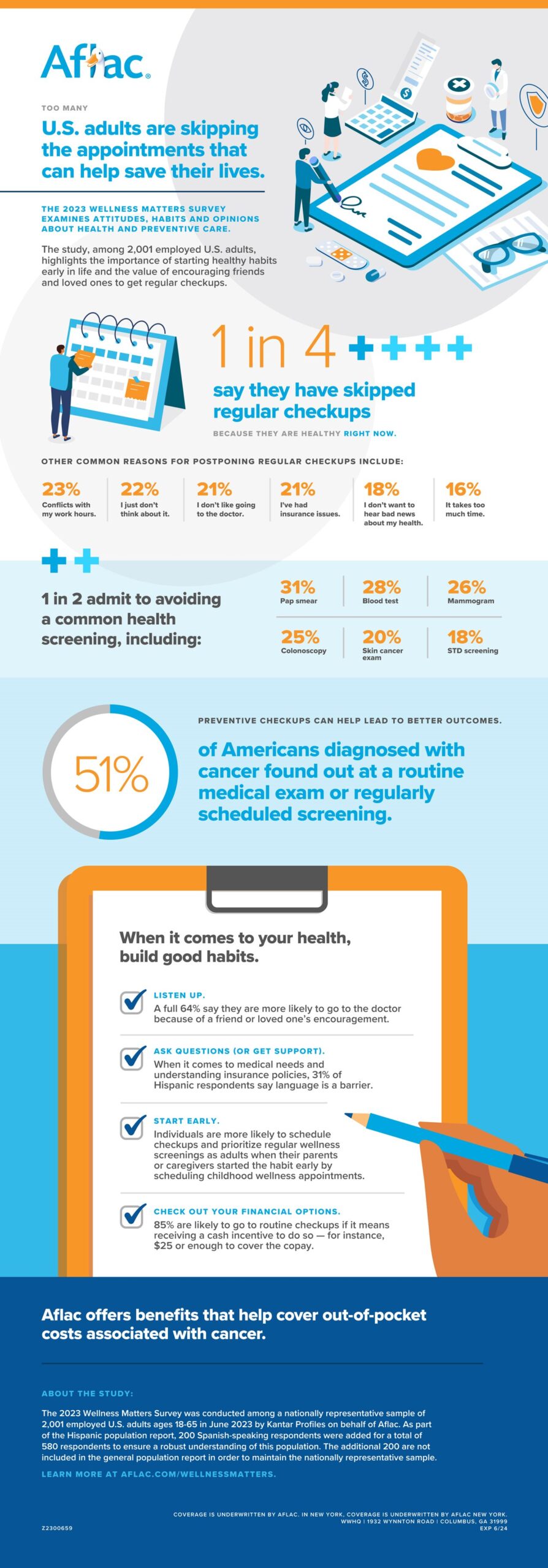
So why is this important? Because regular wellness check-ups and screenings help to improve early detection of serious illness. Not only does early detection increase the patient’s odds for more treatment options, but it also can help reduce overall costs and lead to a better overall outcome. And this is something that we can all benefit from, regardless of age, demographic or background. According to a new Wellness Matters Study of 2,201 Americans conducted by Aflac:

  • 1 in 4 respondents say they have skipped a regular checkup because they feel healthy.
  • 1 in 2 admit to having skipped a common health screening.

Yet at the same time, 51% of respondents diagnosed with cancer say they discovered it at a routine medical exam or a regularly scheduled screening, showcasing the value of having a policy that helps cover this type of medical visit.

So what can we do? Well, first of all, we can take care of our own health and, second, we can encourage our friends and families to develop good habits. That same survey indicates that 35% of Americans are likely to go to a routine checkup if a friend or loved one encourages … or, in some cases, nags … them to go. Secondly, 85% said they are more likely to go if it meant receiving a cash incentive to do so. National Cancer Survivor Month put the focus on this issue. Now, let’s keep it going and make a difference. Let’s take control of our healthcare.

For more information about the wellness matters survey visit aflac.com/WellnessMatters.

1 Impact COVID-19 Outpatient Visits 2020: Visits Remained Stable | Commonwealth Fund

2 Aflac (2023). Wellness Matters Survey. The 2023 Wellness Matters Survey was conducted among a nationally representative sample of 2,001 employed U.S. adults ages 18-65 in June 2023 by Kantar Profiles on behalf of Aflac. As part of the Hispanic population report, 200 Spanish-speaking respondents were added for a total of 580 respondents to ensure a robust understanding of this population. The additional 200 are not included in the general population report in order to maintain the nationally representative sample.

Aflac’s family of insurers include American Family Life Assurance Company of Columbus, American Family Life Assurance Company of New York, Continental American Insurance Company, and Tier One Insurance Company.

Aflac | WWHQ | 1932 Wynnton Road | Columbus, GA 31999

Z2300669 EXP 6/24

7 wellness expert-backed ways to prepare for a summer weekend away

2023-06-30T12:01:00

(BPT) – Summer is the time for exploring new places, spending time outdoors and relaxing in the sun. Whether you are heading to the beach or to the mountains, it is important that you prioritize wellness in whatever ways you can and prepare in advance for a weekend away, keeping your personal health and nutrition in mind. NYT bestselling author and podcast host Max Lugavere is sharing his seven steps to prepare for a successful weekend trip that prioritizes well-being and incorporates his go-to healthy snack: almonds.

1. Get those ZZZ’s

The beginning of a great trip starts the night before. Sleep sets the tone for the way we feel throughout the day, so make sure to get enough hours, especially if you have a big day ahead. Most adults require on average 7-9 hours each night.

2. Fuel up with a nutrient-dense breakfast

You’ve heard it before, breakfast is the most important meal of the day, and a non-negotiable before spending a day out and about. Protein is a must in my breakfasts. One staple for me are almonds, which contain 6 grams of protein and 4 grams of fiber per serving, along with 13g of unsaturated fat and 1g saturated fat. This makes them a perfect food to amp up Greek yogurt, cottage cheese and other high-protein faves.

3. Hydrate, hydrate, hydrate

Don’t forget to drink fluids (and eat hydrating foods). My goal is to always replace fluids and electrolytes lost, which varies based on the amount and type of exercise I partake in, any sessions in the sauna, the weather and my overall diet at the time. Listen to your body and keep drinking liquids (without added sugar!) and eating water-rich whole fruits and vegetables. Sometimes I even add electrolytes — highly recommend! When gearing up for a weekend on the go, your water bottle is your best buddy.

4. Pack a satiating snack

To maintain sustained energy levels, I grab almonds to snack on throughout the day. Almonds are a natural, whole food that will keep you full and are low in sugar, so no need to worry about your energy crashing.

5. Get some sun, but don’t overdo it

We need some direct sun exposure to create vitamin D, get a nice healthy glow, and even help generate nitric oxide which can keep our cardiovascular system healthy. But there’s no need to burn, which causes photoaging. I like to eat foods rich in skin-protecting astaxanthin (such as wild salmon) and antioxidant vitamin E (from almonds, for example). I also always keep a mineral-based sunscreen on hand if I anticipate overexposure. Trust me, your skin will thank you by the end of the weekend!

6. Any movement is good movement

You don’t have to go on a long and steep hike to get the most out of a summer weekend. Walking offers many benefits for your health, so depending on how you’re feeling, it’s totally okay to choose this low impact and sustainable option, and don’t forget to bring your water and a post-workout snack.

7. Bring activities

Whether setting out for a beach day, a hike or sightseeing, I always pack a book, game or other activity. If you have any downtime, you’ll be so much happier you can initiate in a group activity or pursue a passion, rather than resorting to scrolling on your phone.

From the beach to the mountains, summer is the season of adventure and of snacks, but feeling good throughout a weekend trip comes down to making nutrient-dense choices! That’s why when I’m preparing for a day out and about, I’m packing almonds. Convenient and filling, almonds have 6g of protein and 4g of fiber in each serving, perfect for midday refuels. When energy levels are high, spirits will be too!

Are you ready to incorporate healthy habits into your summer routine and beyond? By utilizing Max’s tips above, you’ll surely be able to have your best summer yet. Check out almonds.com for more information on how you can kick-start your wellness routine this summer.

Creating new brands to conquer everyday problems

2023-06-29T15:55:00

(BPT) – What do more than 70% of consumers have in common? They all hate bugs. According to a recent survey, bugs bother a staggering 71% of Americans.[1] Yet, for more than a half a century, there were no “truly new” options for consumers when it came to pests until P&G Ventures reimagined the future and created a new brand, Zevo.

P&G Ventures is dedicated to growing new spaces for Procter & Gamble (P&G) that are outside of the Company’s current categories, including pest control, therapeutic skin care, pet parenting and automotive.

“We talk to thousands of consumers, spend time with them, shop with them, go to their homes, understand their pain points, test and retest, and then find a way to solve it,” said Mike Jensen, senior vice president, R&D, P&G Ventures. “We’re on a relentless pursuit — in fact, we’re obsessed with finding completely new ways to solve daily problems — problems that people had given up on or were forced to settle for trade-offs.”

P&G Venture’s first brand to go national, Zevo, skyrocketed to success, securing a coveted spot on Circana’s 2022 Top 25 New Product Pacesetter list. With 6 in 10 Americans doubting the efficacy of natural insect repellents,[2] Zevo emerged driving consumer choice with child- and pet-safe solutions inspired by plants’ own bug-fighting abilities.

From its new On-Body Mosquito + Tick Repellent to its Insect Killer Sprays and Flying Insect Traps, Zevo brings new-to-the-world solutions that are not just incrementally better. Combining a deep understanding of consumers’ needs for non-greasy, odorless solutions with the latest discoveries in science and technology, the experts at Zevo designed products, using naturally occurring amino acids and a blue and UV light system — ensuring that consumers don’t have to sacrifice safety, efficacy or comfort. Finally, nearly two-thirds of Americans[3] who have had to prematurely end outdoor excursions due to bothersome insects have solutions.

Helping keep homes free from pests is only the beginning. P&G Ventures is rethinking other categories where consumers had been left with solutions that were mediocre at best.

Beyond these cutting-edge pest control solutions, P&G Ventures is pairing the mastery of P&G with the passion and magic of entrepreneurs, innovators and creators to design products that deliver superior and irresistible performance that drive consumer choice in other spaces, including therapeutic skincare, pet parenting and automotive categories. And P&G Ventures has its sights on continuing to grow new spaces that are outside P&G’s current categories.

Visit P&G Ventures where brands are born, to find out how they’re solving unmet consumer needs with trailblazing household products, like Zevo.


[1] Maru/Blue on behalf of Citizen Relations and Zevo, April 2023

[2] Survey conducted by Wakefield on behalf of P&G Ventures in April 2023, with a panel of 1,000 Americans ages 18 and older.

[3] Survey conducted by Wakefield on behalf of P&G Ventures in April 2023, with a panel of 1,000 Americans ages 18 and older.

3 ways your antiperspirant can help improve your well-being

2023-06-29T16:07:00

(BPT) – Constantly worrying whether you’re sweaty or smelly is as much an emotional challenge as it is a physical one, but sweaty pits don’t have to put a damper on your mood this summer. While it may seem (and feel) gross at times, everyone sweats, and body odor often follows. So, what can we do about it?

Many women go to great lengths to hide sweat and odor like wearing dark colors, putting panty liners or pads in their armpits, using men’s deodorant and even keeping their arms down by their sides. “For many people, excessive sweating and the fear of visible sweat stains and body odor can lead to social anxiety,” said Dr. Evan Rieder, one of three American physicians to be dual board-certified in psychiatry and dermatology. “If left unaddressed it can take an emotional toll.”

Psychodermatology studies the intersection between skin health and mental health and can be useful in understanding how pit problems can affect well-being. Luckily, with a little mindfulness and a reliable antiperspirant like Secret Clinical, stressing over sweat and odor will be a thing of the past.

Not all sweat is created equal

Your body makes three different types of sweat — stress, heat and activity sweat. When you’re hot or active, your body releases sweat made of salt and water to cool you down. But when you’re stressed, your body releases sweat that feeds odor-causing bacteria on the skin, creating that distinctive BO smell that can make you feel self-conscious. “For many people stress sweat smells the worst,” said Rieder, “so I recommend using a clinically proven antiperspirant that fights all three types of sweat and provides long-lasting odor protection.”

The mind-body-sweat connection

Ever been nervous before an important presentation, started sweating and couldn’t seem to stop? That’s an example of the mind-body-sweat connection. “Sweating is your body’s natural response to stress, heat and activity,” said Rieder, “but excessive sweating can substantially affect your quality of life and negatively impact emotional well-being.” Secret Clinical fights all three types of sweat and provides 72 hours of clinically proven sweat and odor protection so you’ll be covered no matter what the day brings.

Take control and keep your stress a secret

While it might be hard to eliminate all of life’s stressors, knowing your personal triggers can help you mitigate stress-related sweat and odor. Remember that managing your emotional well-being can impact your physical health and help you enjoy the warmer months to the fullest.