Navigating Medicare: 5 allies who can help

2018-02-16T12:01:00

(BPT) – Enrolling in Medicare for the first time or starting coverage under a new plan? It might bring you back to that first day starting a new job. You knew some of the basics, but you also knew there was a lot more to learn. More than likely, you got help from colleagues who have been around for a while and helped show you the ropes.

Don’t worry. With Medicare, you have the same kind of knowledgeable support. You’ve got a team on your side that can help make navigating the health care system easier. Goodbye hassles, hello helpers.

Here are five allies in your corner:

1. Your Primary Care Physician. This physician is the “go-to” doctor who provides guidance on your health care needs, taking the time to really get to know you, your medical history and your health goals. Think of your Primary Care Physician as the “quarterback” of your medical team — someone who can take charge of knowing the ins and outs of your health status and help drive decisions to get you on the right track and keep you there.

2. A caregiver. Perhaps the “unsung hero” of your health care team, caregivers are the ones you know you can count on — the ones you know are there to offer support and care for you, whenever you need it. Whether a family member, neighbor, friend or professional assistant, these are the people in your life who help you along the way. Their assistance can span everything from bringing you to appointments or getting prescriptions filled to making meals or offering emotional support.

3. Your pharmacist. This team member keeps an eye on the medications you take — prescription and over-the-counter — to make sure they work safely together. Your pharmacist is a great person to talk with about how medications are making you feel and answer any questions you have on topics including what side effects to expect, what to do if you miss a dose, or how to store your meds.

4. An insurance agent. Original Medicare. Medicare Supplement. Part D. Medicare Advantage. There are many options and decisions to make when it comes to your Medicare coverage, and a licensed insurance agent can help you find the right plan, or plans, for you. Once you’ve selected a plan, you can also always call your agent to ask questions if your health or coverage needs change or if your plan changes from year to year.

5. Your insurance company. Within your insurance company, there are more people than you likely realize who are working hard on your behalf to ensure you get the medical care and support you need. Insurers can offer tools, resources and support that can help you live a healthier life.

For more information to help you navigate Medicare, visit MedicareMadeClear.com.


5 things your doctor may not have told you about heart disease

2018-02-20T07:01:00

(BPT) – Every day your heart beats an estimated 100,000 times to move 2,000 gallons of blood through your body. That equates to more than 2.5 billion beats in your lifetime! It’s no surprise heart health is a priority for many people, especially considering that heart disease is so common.

One in four deaths in the United States is caused by heart disease. More than 610,000 people die of heart disease in the U.S. every year, making it the leading cause of death for both men and women, according to the Centers for Disease Control and Prevention.

You know you need to eat a nutritious diet, exercise and avoid smoking. However, there’s a lot more you need to know to protect yourself and your family. Consider these five surprising things your doctor may not have told you about heart disease.

Heart disease can be caused by a genetic disorder

You may never heard of familial hypercholesterolemia (FH), a common, but inherited genetic disorder that causes heart disease. FH affects approximately one in 250 people worldwide, but currently 90 percent of people born with this genetic condition are not diagnosed. Individuals with FH have a high amount of low density lipoprotein (LDL) or “bad” cholesterol in their blood from birth. This lifelong burden of cholesterol is a major reason why FH leads to very early and severe heart disease. The good news is that FH is manageable if detected and treated early in life. If high cholesterol and early heart disease runs in your family, learn more at thefhfoundation.org.

Many heart attacks occur outside the hospital

About 47 percent of sudden cardiac deaths occur outside a hospital, according to the CDC. This suggests that many people with heart disease don’t recognize or act on early warning signs.

Heart attacks have several major warning signs and symptoms:

  • Chest pain or discomfort.
  • Upper body pain or discomfort in the arms, back, neck, jaw or upper stomach.
  • Shortness of breath.
  • Nausea, lightheadedness or cold sweats.

Know the signs. Trust yourself. If you have any of these symptoms or sense something is just not right, call 911.

Heart disease affects young people

Many people think heart disease occurs in old age, but it can affect people of all ages. Even if you or your family members are 30 years old or younger, you could be affected, especially if you have risk factors like high cholesterol or a family history of heart disease. Keep in mind, each child with a family member with FH has a 50 percent chance of inheriting the disorder, which is present since birth. Untreated individuals with FH have up to a 20 times increased lifetime risk of early heart disease, yet 90 percent of people with FH are undiagnosed, according to the FH Foundation.

Children (even infants) can have high cholesterol

Many adults are regularly screened for high cholesterol, but it’s not as common for children to be screened, although the American Academy of Pediatrics recommends that all children between the ages of 9 to 11 be screened for high cholesterol. These guidelines also recommend screening for FH as early as age 2 years if there is a family history of high cholesterol, early heart disease or known FH. Talk to your children’s doctor about screening. FH is characterized by an LDL-C level of over 190 mg/dL in adults, or over 160 mg/dL in children. FH may also be confirmed with a genetic test, although this is not necessary for diagnosis.

You can maintain a healthy heart at any age

Being diagnosed with high cholesterol, heart disease or even FH is not a death sentence. Every person’s health considerations are unique, but by working with your doctor, you can come up with a plan to help manage your health and maintain the strongest heart possible. This could include lifestyle changes and medications to manage the LDL cholesterol level in the blood. The key is to keep asking questions, learn about your specific health needs and stay dedicated to your heart health plan.


New Treatment Option for People With Cystic Fibrosis

2018-02-20T12:01:00

(BPT) – For patients with cystic fibrosis (CF) 12 years and older with certain mutations

At 17 years old, Taylor Brown is a straight-A student balancing a 10-hour work week and competitive dancing. She is also one of approximately 30,000 Americans living with cystic fibrosis (CF), a progressive genetic disease that makes it difficult to breathei.

Taylor has been taking a combination of medicines to treat and manage her disease since her diagnosis when she was six days old. In the U.S., approximately 1,000 people are diagnosed with CF each yeari. CF is a disease you are born with.

“Cystic fibrosis has always been a part of my life, but I don’t let it define me,” said Taylor. “I’m still able to do the things I love, like competitive dancing and advocating for other people with cystic fibrosis.”

There is no cure for the life-shortening disease, but therapies are available for some people that target the underlying cause of CFii. CF is caused by a reduction in the quantity and/or function of cystic fibrosis transmembrane conductance regulator (CFTR) proteins resulting from gene mutations that leads to the buildup of mucus in organs, such as the lungsi.

After talking with her treatment team and family, Taylor participated in a clinical trial for SYMDEKO™ (tezacaftor/ivacaftor and ivacaftor). SYMDEKO was recently approved by the Food and Drug Administration (FDA) for the treatment of cystic fibrosis (CF) in patients aged 12 years and older who have two copies of the F508del mutation or who have at least one mutation in the CF gene that is responsive to SYMDEKO.

“SYMDEKO is a new treatment option that helps the body’s CFTR proteins work better,” said Patrick Flume, M.D., Director of the Cystic Fibrosis Program at the Medical University of South Carolina. “Scientific innovations have enabled medicines to target cystic fibrosis at its root. I encourage patients and their families to work with their doctors to understand how these developments may help them.”

SYMDEKO is made up of two medicines that work to help increase the quantity and function of CFTR protein in certain people with CF. The FDA approval of SYMDEKO was based on results from two global Phase 3 trials in approximately 750 patients, which demonstrated the safety and efficacy of SYMDEKO in people with CF ages 12 and older who had certain mutations in the CFTR gene.

“I’m excited about new discoveries and research in cystic fibrosis, because they have a very real impact on my life and the lives of others with cystic fibrosis,” said Taylor.

Indication and Important Safety Information for SYMDEKO tablets (tezacaftor 100 mg/ivacaftor 150 mg and ivacaftor 150 mg)

What is SYMDEKO (tezacaftor/ivacaftor and ivacaftor)?
  • SYMDEKO is a prescription medicine used for the treatment of cystic fibrosis (CF) in patients aged 12 years and older who have two copies of the F508del mutation, or who have at least one mutation in the CF gene that is responsive to treatment with SYMDEKO.
  • Talk to your doctor to learn if you have an indicated CF gene mutation.

It is not known if SYMDEKO is safe and effective in children under 12 years of age.

Important Safety Information

Do not take SYMDEKO if you take certain medicines or herbal supplements such as:
  • antibiotics such as rifampin (Rifamate®, Rifater®) or rifabutin (Mycobutin®)
  • seizure medicines such as phenobarbital, carbamazepine (Tegretol®, Carbatrol®, Equetro®) or phenytoin (Dilantin®, Phenytek®)
  • St. John’s wort

Talk to your doctor before taking SYMDEKO if you take any of the medicines or herbal supplements listed above.

Before taking SYMDEKO, tell your doctor about all of your medical conditions, including if you:
  • have or have had liver problems
  • have kidney problems
  • are pregnant or plan to become pregnant. It is not known if SYMDEKO will harm your unborn baby. You and your doctor should decide if you will take SYMDEKO while you are pregnant
  • are breastfeeding or planning to breastfeed. It is not known if SYMDEKO passes into your breast milk. You and your doctor should decide if you will take SYMDEKO while you are breastfeeding

SYMDEKO may affect the way other medicines work, and other medicines may affect how SYMDEKO works.

Tell your doctor about all the medicines you take, including prescription and over-the-counter medicines, vitamins, and herbal supplements, because the dose of SYMDEKO may need to be adjusted when taken with certain medicines.

Especially tell your doctor if you take:
  • antifungal medicines such as ketoconazole (e.g., Nizoral®), itraconazole (e.g., Sporanox®), posaconazole (e.g., Noxafil®), voriconazole (e.g., Vfend®), or fluconazole (e.g., Diflucan®)
  • antibiotics such as telithromycin (e.g., Ketek®), clarithromycin (e.g., Biaxin®), or erythromycin (e.g., Ery-Tab®)
What should I avoid while taking SYMDEKO?
  • SYMDEKO can cause dizziness in some people who take it. Do not drive a car, use machinery, or do anything that needs you to be alert until you know how SYMDEKO affects you.
  • Avoid food or drink that contains grapefruit or Seville oranges while you are taking SYMDEKO.
What are the possible side effects of SYMDEKO?
SYMDEKO can cause serious side effects, including:
  • High liver enzymes in the blood have been reported in people treated with SYMDEKO or treated with ivacaftor alone. Your doctor will do blood tests to check your liver:
    • before you start SYMDEKO
    • every 3 months during your first year of taking SYMDEKO
    • every year while you are taking SYMDEKO
  • Your doctor may do blood tests to check the liver more often if you have had high liver enzymes in your blood in the past.
  • Call your doctor right away if you have any of the following symptoms of liver problems:
    • pain or discomfort in the upper right stomach (abdominal) area
    • yellowing of your skin or the white part of your eyes
    • loss of appetite
    • nausea or vomiting
    • dark, amber-colored urine
  • Abnormality of the eye lens (cataract) in some children and adolescents treated with SYMDEKO or with ivacaftor alone. If you are a child or adolescent, your doctor should perform eye examinations before and during treatment with SYMDEKO to look for cataracts.
The most common side effects of SYMDEKO include headache, nausea, sinus congestion, and dizziness.

These are not all the possible side effects of SYMDEKO. Call your doctor for medical advice about side effects. You are encouraged to report side effects to FDA at 1-800-FDA-1088.

Please click here to see the full US Prescribing Information for SYMDEKO.

To learn more about SYMDEKO, visit www.SYMDEKO.com.

i Cystic Fibrosis Foundation. About Cystic Fibrosis. Available at https://www.cff.org/What-is-CF/About-Cystic-Fibrosis/. Accessed February, 2018.
ii Pettit, RS and Fellner C. CFTR Modulators for the Treatment of Cystic Fibrosis. P T. 2014 July; 39(7): 500-511. https://www.ncbi.nlm.nih.gov/pmc/articles/PMC4103577/.

© 2018 Vertex Pharmaceuticals Incorporated | VXR-US-23-00149 | 02/2018


7 ways to stay committed to your fitness goals

2018-02-20T13:01:00

(BPT) – In January, when many people make New Year’s resolutions to get fit, they’re full of energy and excitement to start and see results.

But by the end of February, that intensity and interest start to slip. Gold’s Gym has identified this as the Fitness Cliff, or the time that gym check-ins begin to gradually decline.

To help fight against the urge to slow down or quit, Gold’s Gym has declared Feb. 22 to be Commitment Day. On that date, Gold’s Gyms across the country will offer free workouts and classes along with resources to help people stay on track. But you can take action right now to make it easier to recommit to your fitness resolutions.

1. Create a plan

Everyone’s fitness journey is different, and with a personalized plan of attack, you’re more likely to get the results you want. Work with an expert to develop a routine that’s best for your current fitness level, body type, age and health history.

“Simply planning to make your resolution part of your schedule makes a significant difference,” says Dempsey Marks, a Gold’s Gym fitness expert. “Our lives can get very busy, so writing a weekly workout plan on Sunday that includes days, times and workouts will help keep you focused, organized and accountable.”

To help you get started, anyone who recommits to their goals on Feb. 22 at Gold’s Gym will receive a free 30-day fitness plan from a certified personal trainer.

2. Eat well

Just because you kill it on the treadmill or in the weight room doesn’t mean you can eat whatever you want with no consequences. Food is fuel — learn what to put into your body that will help it perform its best.

Remember, eating three to four hours before your workout will deliver energy to your muscles and help you avoid low blood sugar levels. And eating after a workout will replenish the fluids and carbohydrates your body just burned off.

3. Find an accountability partner

Having at least one workout buddy is good motivation to keep you showing up, push you to work hard and encourage you to keep striving toward your goals. Plus, it’s great to have someone to celebrate with when you reach those fitness milestones.

Commitment Day is the perfect time for you and a pal to get started — bring a friend in to Gold’s Gym for free workouts and classes on Feb. 22.

4. Be adaptable

We get it: Life happens. If you can’t make it to the gym because your car broke down or you’re traveling, it can be tempting to take a break from your fitness routine.

With a digital personal training app like GOLD’S AMP™, you’ll always have an option for workouts at home or on the road. You can choose a coach-guided workout — including outdoor walking and running workouts, stretching and bodyweight exercises — to take anywhere and pair it with the perfect exercise playlist.

5. Just breathe

A fit lifestyle doesn’t happen overnight; don’t get frustrated if things are slow to start or if you hit a plateau. Let yourself rest, think positively and be patient. Getting stronger takes time and effort, and you’re putting in the work that will lead to results later.

6. Avoid the comfort zone

If it’s getting too easy, it’s time to reassess your routine. Don’t be afraid to try a different piece of equipment, lift that heavier weight or join a new group exercise class.

“It’s easy to get stuck in your comfort zone because it’s comfortable!” Marks says. “But with fitness, it’s especially important to avoid the comfort zone to challenge your body in new and unique ways. Plan a new workout every other week by switching up the equipment and machines or go for that personal record. It’ll help to avoid boredom and lead to greater physical gains.”

7. Set an example

Your efforts don’t go unnoticed. Whether or not you realize it, you’re inspiring someone else with his or her own fitness. Use that to give yourself a boost when you need it.

Take Gold’s Gym Challenge winner Ellie Carter, whose two young sons were moved by her efforts to get back in shape.

“Every time we’d go to Gold’s, the boys would say, ‘We’re going to the gym, and Mommy is going to get strong,’” she says. “[Kids] do what we model, so I definitely want to keep encouraging fitness.”

Read Ellie’s success story and find more inspirational stories like it.


Poison safety tips to keep your family safe this winter

2018-02-21T15:01:00

(BPT) – According to the Centers for Disease Control and Prevention, there are approximately 2 million poisoning incidents per year within the U.S., and more than 90 percent of these occur within the home. This winter, keep your family safe by learning more about the potential for poisoning, how to prevent it and how to get help if an incident occurs, most notably by calling the Poison Help line at 1-800-222-1222.

Follow these tips to have a healthy and safe winter season:

1) Know which winter items are poisonous. There are many household items in use during the winter that may pose a specific poison risk, including antifreeze and snow salt.

Antifreeze is a poisonous liquid used in cars. It has a sweet taste that children and animals like. If even a little is swallowed, it can be harmful and can cause kidney damage and death. Keep antifreeze, household cleaners and all chemicals in the containers they came in with a tight cap and keep away from children and pets. Before throwing away an antifreeze container, be sure to rinse it with water and replace the safety cap.

Salt used on driveways and sidewalks in winter can harm a pet or child if eaten. Store such salt out of reach and in a locked cabinet.

2) Keep your home warm — and safe. Carbon monoxide (CO) is a poisonous gas that has no color, odor or taste. The risk for CO poisoning increases in the winter, as the use of fuel-burning devices increases. Sources of CO include gas furnaces, gas water heaters, gas stoves, gas ovens, kerosene space heaters, wood and gas fireplaces, wood-burning stoves, power generators and car engines. These devices make CO, primarily when they are not working properly or are not used in a properly ventilated space.

Signs of CO poisoning are similar to flu and other cold-weather-virus symptoms, including headaches, nausea, vomiting, dizziness and confusion. To prevent CO poisoning, have at least one CO detector in your home. The best places for a CO detector are near bedrooms and close to furnaces. Have your heating system, vents and chimney checked every year by experts. Always follow product instructions for installing and repairing appliances that burn fuel, and never burn charcoal inside a house or garage. Additionally, do not use a gas oven to heat a house or apartment or use unvented fuel-burning devices indoors. Finally, never run a car in a closed garage.

3) Don’t let winter cold and flu season become more serious. Be sure that all medication, including over-the-counter cold medicine, is kept in locked cabinets, away from children and pets. Also, avoid mercury poisoning by using digital thermometers instead of glass mercury thermometers, which can break in a child’s mouth. Stay with children when taking their temperature. Spilled mercury should be cleaned up properly as it is a hazardous waste.

4) Save the number, save a life. The Poison Help line is your first line of defense against poisoning deaths and injuries. By dialing 1-800-222-1222, you will be connected to a local poison center staffed by trained, professional experts who can help you right away. Save the number in your phone today so you have it if you need it. You can also visit the Poison Help website at www.poisonhelp.hrsa.gov for more information on poison prevention.


Forward-thinking programs get kids to eat better

2018-02-22T06:01:00

(BPT) – They say that breakfast is the most important meal of the day. But for millions of low-income children across the country, the low-cost or free lunch they get at school is the most nutritious, most filling meal they will eat.

In 2016, over 30 million kids across the U.S. received low-cost or free lunches at their school. With such a wide-ranging impact, school meal programs play a huge role in the well-being of our nation’s young people.

According to Wilder Research, nearly one in six children in the state of Minnesota live in food-insecure households. Many of these kids rely on school lunch to get the nutrients they need. To make sure these needs are met, one school district in the state has been blending nutrition with trends in popular culture to create a dynamic program that is getting kids excited about healthy food while also creating better eating habits.

Jr. Iron Chef

Question: In an urban school district, how can the idea behind a popular television show be used to raise awareness of healthy meal options?

In essence, this is what happened when Miguel Lopez, a seventh-grader at Anwatin Middle School, along with seven other teams and 16 other students, competed alongside eight professional chefs in one of Minneapolis Public Schools’ “Jr. Iron Chef” competitions.

Modeled after the popular television show, where teams compete to create the most appetizing dish, this three-year-old program was designed in cooperation with Cargill to teach students about good nutrition and meal preparation. Students from across the district were invited to compete — just as popular celebrity chefs on TV do — in live cooking competitions.

“This night was not so much about the competition, but about what these students have learned about how to prepare good meals on their own,” said Minneapolis Public Schools’ Director of Culinary and Wellness Services, Bertrand Weber. “We wanted to apply the Iron Chef concept to help improve our students’ health and well-being. Yes, it was a cool night, but the hope is that they will go home and do this for themselves and their families versus choosing less healthy meal options.”

While the Jr. Iron Chef competition was getting students all over the district revved up, Cargill and Minneapolis Public Schools were weaving another popular culinary trend into the district’s nutrition and wellness programs: food trucks.

Nutrition on wheels

Parked outside the venue where Jr. Iron Chef was held was a shiny, new food truck purchased with a recent $75,000 grant from Cargill to Minneapolis Public Schools. This is the school district’s second food truck. The first one hit the road in 2013 and became so popular that it quickly exceeded capacity.

The trucks are staffed by the school district’s nutrition and culinary staff, to bring nutritious meals to students, especially when school is not in session.

The trucks also appear at district-run wellness seminars and cooking demonstrations.

“The value of these food trucks has been recognized by Minneapolis Public Schools and the U.S. Department of Agriculture (USDA),” said Cargill Vice President of Corporate Responsibility Michelle Grogg. “It’s been a successful strategy that community and state partners have found to improve their capacity to reach food-insecure children when school is in and out of session.”

In the summer of 2017, Minneapolis Public Schools served approximately 400,000 free meals and snacks to Minneapolis youth. This coming summer, Minneapolis Public Schools’ two food trucks will operate at a total of eight summer feeding sites in conjunction with community youth and physical activity programming.

A new example

As school lunch plays such an important role for millions of urban, low-income students, the importance of steering these kids toward eating more nutritious, wholesome meals cannot be overstated. Though it can be hard to get kids excited about fruits and vegetables, the creative and forward-thinking programs put on by the Minneapolis Public Schools point in a fun, and promising, direction.

“It’s great to see two popular trends in food being applied to the nutritional needs of our students,” says Grogg. “We hope it doesn’t stop here and we hope other communities around Minnesota and the U.S. learn from our successes.”


Technology can help people manage Type 2 diabetes in real time

2018-02-22T09:01:00

(BPT) – There is no disputing that digital health technology and connected devices can produce massive amounts of data. But that data, on its own, is not always particularly useful.

The real value comes from translating that data into personalized and actionable information and putting it into the hands of people, in real time, whose health might depend on those facts and figures.

UnitedHealthcare Medicare Advantage members with Type 2 diabetes may be eligible to utilize new wearable technology to help monitor their glucose levels 24/7 via the convenience of a cell phone. They can also connect directly with a health coach to seek individual support, share information and make behavior changes to improve their health.

Announced in mid-January with DexCom, Inc., the leader in continuous glucose monitoring, at the Consumer Electronics Show in Las Vegas, this innovative pairing — high-tech, real-time wearable monitors with direct access to diabetes coaches — will be available to eligible plan participants across multiple regions throughout this year.

Here’s how the blend of high-tech and high-touch care supports people managing Type 2 diabetes:

1. Dexcom’s Mobile Continuous Glucose Monitoring System (CGM) technology consists of a sensor — usually worn on the abdomen — that continuously reads glucose levels just beneath the skin.

2. A transmitter sends the data to a smartphone, which processes and displays updated data every five minutes and can reveal relationships between eating, exercise and blood sugar that are difficult to observe with only test strips and a glucose meter.

3. Diabetes coaches help participants interpret the transmitted data and give guidance on how to change behavior pertaining to nutrition and exercise to help keep glucose levels in a safe range.

4. Participants also receive an activity tracker to help them understand and act upon data gathered by the wearable device.

5. Glucose data summaries can be shared with participants and their primary care providers to help foster better care coordination, which ideally may result in increased glucose control, reductions in medications and an empowered approach to managing diabetes.

“With more than 27 million people nationwide living with Type 2 diabetes, there is urgent need to address this epidemic in new ways,” said Brian Thompson, CEO of UnitedHealthcare Medicare & Retirement. “Continuous glucose monitoring can be a game changer for people enrolled in our Medicare Advantage plans, as the data can be translated into personalized information that can be acted upon in real time.”

To learn more about UnitedHealthcare Medicare Advantage plans, visit UHCMedicarePlans.com.

Plans are insured through UnitedHealthcare Insurance Company or one of its affiliated companies, a Medicare Advantage organization with a Medicare contract. Enrollment in the plan depends on the plan’s contract renewal with Medicare.

Y0066_180216_124040 Accepted


Swap these 4 food fads with nutritious kitchen staples

2018-02-22T10:01:00

(BPT) – With new so-called “healthy” food trends popping up all the time, it’s hard to keep track of what’s actually good for your health and what’s just a fad. Luckily, new research continually shows consumers which fads to ditch and which kitchen staples stand the test of time and should be kept in our diets. For example, did you know that coconut oil, a recent consumer favorite in health and beauty circles, has been found in a new study to actually increase cholesterol?

If you are looking for simple changes that have a big impact on nutritional health, consider clearing some unhealthy eating habits from your diet. Here are a few health fads that aren’t as nutritious as you may have heard, and helpful swaps that can benefit your health.

Cooking with coconut oil

Over the last few years, coconut oil has gained prominence on grocery store shelves, in the news and on social media. Long considered a multipurpose beauty oil, coconut oil began to make its way into recipes, and consumers hoped its health benefits extended to the kitchen. However, a recent study has found that coconut oil increases cholesterol. Adding corn oil to one’s diet, on the other hand, was found by the study to result in better cholesterol levels compared with coconut oil. Similarly, a previous study published in The Journal of Clinical Lipidology found that corn oil can help lower cholesterol two times more than extra virgin olive oil. With a high smoke point, versatile usage and a neutral flavor, corn oil makes a great staple for any pantry.

Juice diets and cleanses

While it’s important to include fruits and vegetables in your diet, “cleansing” your body with a diet limited to cold-pressed juices won’t provide enough essential vitamins and minerals for a healthy diet. According to research by the National Center for Complementary and Integrative Health, there is no real evidence that juice cleanses work. The human body is great at keeping the good stuff in and filtering out the bad, and a varied diet is important for maintaining energy throughout the day. Plus, according to Vive Nutrition, juice diets tend to make people feel hungrier and lead to overeating. If cold-pressed juices are something you enjoy, go ahead and include them in addition to your meals.

Skipping dessert

Everything in moderation! Indulging every once in a while is an important part of a balanced diet. Harsh dietary restrictions, especially on the foods you love, may lead to short-term results, but aren’t sustainable in the long run, according to research by the National Center for Biotechnology Information. Rather than cutting sugar completely, avoid binges by allowing yourself a treat every once in a while on a cheat day to maintain balance in your diet.

Snacking on granola bars

Packed with whole grains, granola bars seem like the perfect healthy snack, but many contain an unhealthy amount of added sugar, which creates a caloric and less-than-nutritious food choice. In fact, according to a survey in the New York Times, less than 30 percent of nutritionists would call granola a healthy food. Replacing granola bars with healthier options like whole nuts will greatly benefit your health. This snack choice is less sugary, more filling and full of omega-3 fatty acids, which are shown to reduce the risk of chronic diseases.

With contradicting information about health coming out daily, it’s important to research the facts to learn which tips are fads and which are truly good for you. By making these diet swaps that benefit your body, you can start the year as your healthiest self ever.


Keeping roads clear: The sand vs. salt debate

2018-02-22T13:03:00

(BPT) – Winter maintenance practices often lead to debates over different methods and materials used to keep roads clear. One often-heard argument is that road authorities should go back to using sand or abrasives for winter maintenance, instead of using salt.

But how does sand compare to salt?

Sand alone does not melt any snow or ice. Any time melting has been associated with sand, it is because a small amount of salt (about 10 percent or less) is typically included in the stockpile to stop the sand from freezing. It is sometimes said that some melting occurs because the color of the sand creates excess solar heating, but that is minimal compared to the normal solar heating occurring on roads.

Sand does provide a temporary increase in friction. However, to supply that increase in friction, it must be located between the tires of the vehicles on the road and the snow or ice on the road. Studies have found that the friction increase due to sand disappears after 10 to 20 vehicles have driven over it at highway speeds. So, the benefits of sand in terms of increasing friction can be fleeting in high-speed and high-traffic situations.

In addition, to get the friction benefits of sand, it must be applied at higher rates than salt. This means that trucks must be refilled more often, and when a truck is in the yard being refilled, it is not out on the road system plowing and applying materials.

Some believe that there is no environmental impact from the use of sand, but when abrasives like sand settle in river beds, they choke off access of aquatic species’ eggs to oxygen, reducing their value as spawning grounds, potentially putting the breeding of certain fish species at risk.

The other danger is to air quality. As cars drive over the sand and other abrasives, these get ground up and become dust. The cities of Denver, Colorado, and Washoe County, Nevada, where air pollution is a concern, require that abrasives used be vacuumed up no more than 72 hours after the end of the storm. This cleanup adds to the cost of using abrasives.

This debate matters because we need roads to be free of snow and ice in the winter. A study by Global Insights indicated that when roads are impassable because of snow or ice, a state can lose between $300 million and $700 million in economic activity per day. A study from Marquette University has shown that a safe and sustainable snowfighting program that uses road salt in an appropriate manner will reduce accidents by up to 88 percent.

When properly applied at the right place, at the right time and in the right amount, road salt has been shown to be the most effective, economic and environmental way to keep roads passable and people safe in the winter.


Chef Jose Garces focuses on quality and versatility at this year’s sold-out South Beach Wine and Food Festival

2018-02-23T08:25:00

(BPT) – There are few foods that span a variety of diverse culinary styles more than fresh pork. Fresh pork is known by both leading chefs and home cooks as a flavorful, versatile solution for any night of the week.

Smithfield Fresh Pork is proud to partner with the National Pork Board and 20 award-winning chefs at this year’s South Beach Wine and Food Festival (SOBEWFF). These chefs will create high-quality pork dishes for attendees featuring Smithfield Prime Fresh Pork, an all-natural premium line of fresh pork. Each recipe will showcase the superior quality and versatility of the Smithfield Prime collection and inspire consumers to cook with only the best ingredients at home. Event-goers will have the opportunity to experience these recipes at the following NPB-sponsored events: Tacos After Dark on Thursday, February 22; Burger Bash on Friday, February 23; Spanish Dinner on Saturday, February 23; Swine, Wine & Spirits and Coca-Cola Beachside BBQ, both on Sunday, February 25.

Chef Jose Garces, one of Smithfield’s Chef Partners, will host two pork-centric events at SOBEWFF. Garces, a James Beard award winner and Iron Chef, prefers to cook with Smithfield Prime Fresh Pork due its high quality and flavor.

“As a chef, there is nothing more important to me than the quality of the ingredients I choose for my dishes,” said Garces. “That is why I love to work with Smithfield Prime Fresh Pork. They understand that quality leads to flavor and flavorful dishes create the best experiences and memories.”

The most discerning chefs, championship pitmasters and home cooks alike seek quality, flavorful fresh pork, and that is why they trust Smithfield Prime Fresh Pork. Smithfield Prime Fresh Pork is a line of premium, all-natural fresh pork that is certifiably 20 percent more tender than other leading brands of all-natural pork. The Smithfield Prime collection is hand-trimmed and sourced from America’s most trusted farms, using a specialty breed of Duroc hogs and some of the most stringent quality standards in the industry. Thus, Smithfield Prime Fresh Pork products naturally have exceptional color, increased marbling and enhanced flavor, creating an elevated eating experience.

You can catch Chef Garces in action at the Spanish Dinner event taking place Saturday, February 24; and at the Coca-Cola Beachside BBQ on Sunday, February 25. For those who want to take a page out of Chef Garces’ book and try their hand at cooking up one of his signature dishes, below is a recipe he crafted specially for Smithfield.

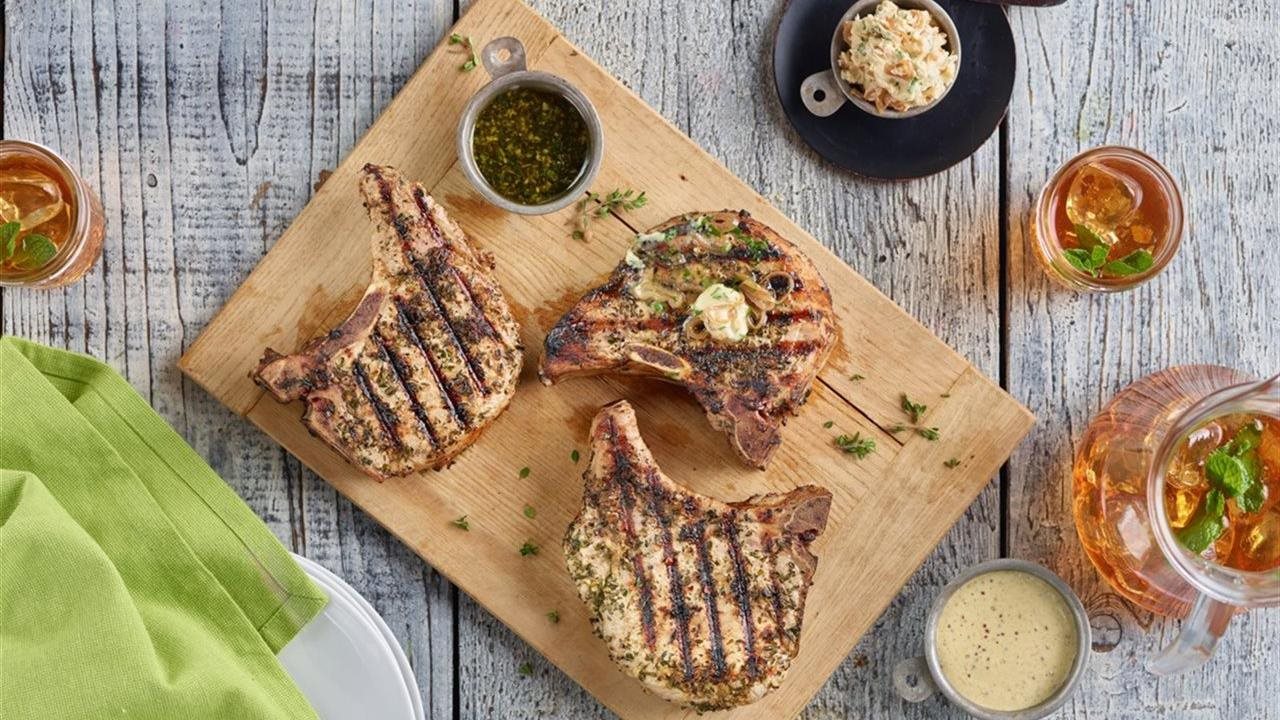
Grilled pork chops with cognac butter, mustard aioli and mushrooms

For the pork chops:

4 Smithfield(R) Prime Bone-In Pork Chops (1-inch thick)

1 cup extra virgin olive oil

1/4 cup finely chopped fresh thyme

1/4 cup finely chopped fresh rosemary

1/4 cup finely chopped garlic

Directions:

Mix oil, thyme, rosemary and garlic in large mixing bowl. Add pork chops and coat thoroughly. Cover and refrigerate at least 2 hours and up to 24 hours. Heat grill to medium using hickory wood charcoal. Remove chops from marinade and grill 7 to 9 minutes per side until internal temperature reaches 145 F to 160 F. Remove from heat and immediately brush with cognac butter. Let stand 3 minutes before serving.

For the cognac butter:

1 cup good-quality cognac

1/2 cup thinly sliced shallots

1 cup butter, room temperature

1/4 cup chopped fresh parsley

Directions:

Combine cognac and shallots in a small saucepan. Simmer until cognac is reduced by two-thirds. Strain and let cool. Mix together with butter and parsley; let stand at room temperature until ready to use.

For the mustard aioli:

3 eggs

1 cup Dijon mustard

1/4 cup lemon juice

1/2 cup whole grain mustard

3 cups vegetable oil

Directions:

Combine eggs, Dijon mustard and lemon juice in food processor or blender. Blend until smooth. Slowly drizzle in vegetable oil, while food processor is running, until emulsified. Remove from processor and fold in whole grain mustard. Season to taste.

For the mushrooms:

2 lbs. mixed fresh wild mushrooms (such as chanterelle, hen of the woods, porcini and morel)

1/4 cup extra virgin olive oil

1/4 cup finely chopped fresh thyme

1/4 cup finely chopped fresh rosemary

1 tablespoon lemon juice

Directions:

Toss together mushrooms and olive oil. Place in grill basket and grill until tender and cooked through, turning occasionally. Remove from heat and toss with remaining ingredients. Serve immediately.

This recipe yields four servings; total prep time is 25 minutes (plus two hours marinade time), and total cook time is expected at 35 minutes.

Visit SaborSmithfield.com for more of Chef Garces’ recipes and inspiration for your next meal and to learn more about Smithfield’s quality and freshness. And visit sobewff.org for more details on the South Beach Wine and Food Festival. For more information about National Pork Board, visit porkteinspira.com.