2021-06-03T16:01:00
(BPT) – –

Brandpoint Health
2021-06-03T16:01:00
(BPT) – –
2021-06-03T11:31:00
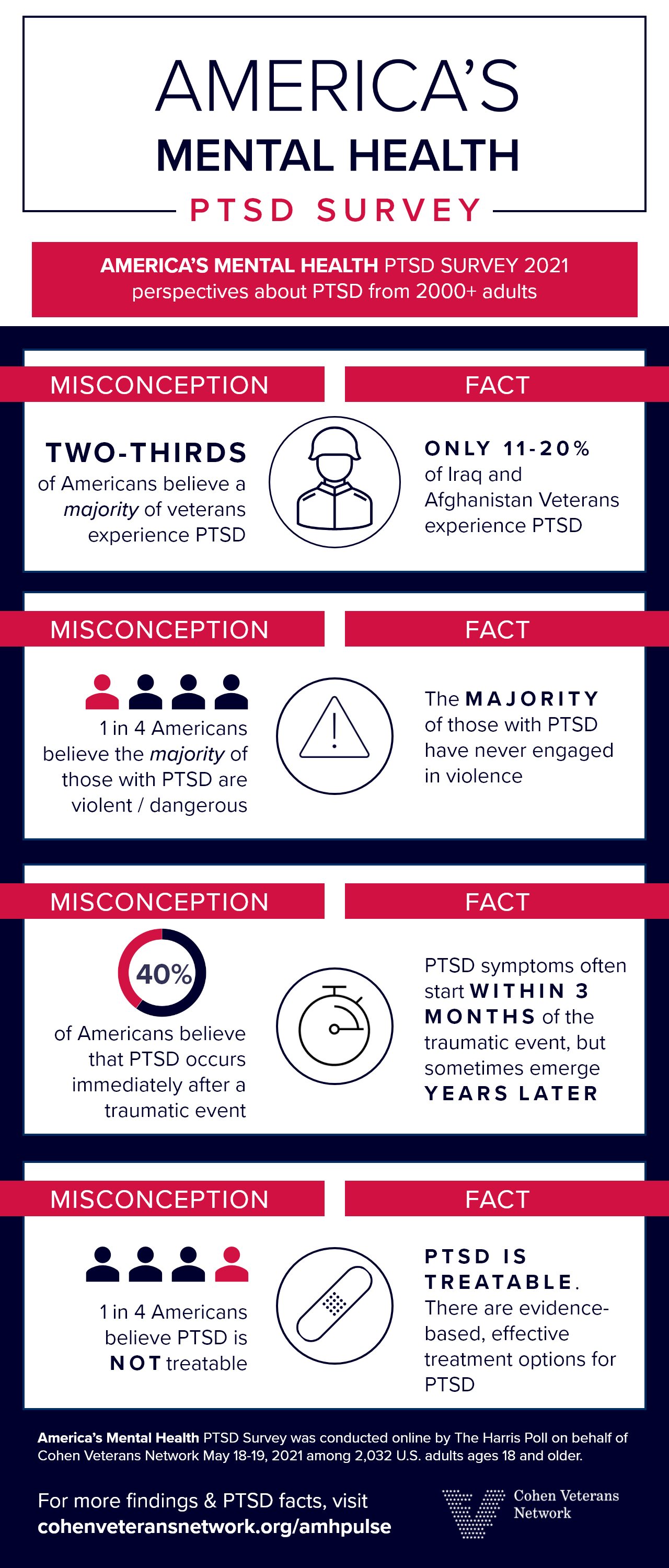
(BPT) – As June marks PTSD Awareness Month, a new survey reveals Americans’ strong misconceptions about the disorder. America’s Mental Health PTSD Pulse Survey looked at Americans’ general knowledge and understanding of Post-Traumatic Stress Disorder (PTSD). The survey was conducted by The Harris Poll on behalf of Cohen Veterans Network (CVN), a not-for-profit philanthropic organization that serves post-9/11 veterans, military families and active duty service members through a nationwide system of mental health clinics. From symptoms to treatment, CVN shares some key findings along with comparative facts.
2021-06-01T05:01:00
(BPT) – Our nation reported more mental health stress in 2020, but there was not a corresponding increase in people seeking mental health treatment, according to the inaugural State of the Nation’s Mental Health report.
However, there were two conditions for which diagnoses and treatment grew in 2020: anxiety and PTSD for adults. These findings support the results of a recent study showing that four out of 10 U.S. adults reported symptoms of anxiety or depression in 2020, up from one in 10 in 2019.
The report’s findings, based on behavioral health plan claims from 27 million people in the United States, reflect the pandemic disconnect between feeling stressed and depressed and being diagnosed and seeking treatment.
Two groups had the largest overall downturn: younger children and older adults. One possible reason for the drop in children’s diagnoses is that they spent less time with teachers, coaches and other mentors during the pandemic. The Silent Generation — people 75 and older — may not have used telehealth services as much as other groups and delayed getting healthcare appointments.
The State of the Nation’s Mental Health report showed the following drops in 2020 rates for those treated for mental health diagnoses compared to those treated in 2019:
The results of the study are supported by data from IngenioRx, a pharmacy benefits manager. While the overall use for depression medications was up in 2020, much of that increase is due to existing users being better about taking their medications as prescribed, according to IngenioRx medication data. New users of these medications increased at the same rate as 2019.
“It’s not surprising that the COVID-19 pandemic has affected people’s mental health,” commented Neil Leibowitz, MD, JD, Chief Medical Officer, Behavioral Health, at Beacon Health Options, a leading behavioral health services company. “However, because people aren’t seeking services at a rate we would expect them to, it’s a reminder that we all need to understand what people are going through and do what we can to make sure they get care. We encourage people to get the COVID-19 vaccine to protect their physical health. Likewise, we need to encourage people to practice self-care and get treatment to protect their mental health.”
Many healthcare professionals think the pandemic will affect our nation’s mental health for years to come. Nearly three out of four mental health specialists and primary care doctors estimate that the mental health effects from the pandemic will last up to three years or longer, according to an Anthem Inc.-commissioned survey.
The pandemic has highlighted the importance of mental health for doctors and patients alike. Nine out of 10 of surveyed providers reported they are more aware of their patients’ mental health challenges. Also, 70 percent said their patients have been more willing to bring up mental health issues during appointments.
“There is no doubt that 2020 was the most difficult of years,” said Dr. Leibowitz. “However, the year presented us with an opportunity. This reported uptick in awareness shows promise that attitudes concerning mental health are changing. I don’t think we have yet to see the end to mental health stigma, but assuming this data reflects a larger national trend, 2020 led us closer to an openness around discussing mental health.”

2021-05-27T08:13:00
(BPT) – This article is sponsored by Otsuka America Pharmaceutical, Inc. and Lundbeck, for which Dr. Maguire is a paid consultant.
May marks Mental Health Awareness Month in the United States, a time to educate the public on various mental or behavioral health issues while reducing the stigma that many people, including those living with major depressive disorder (MDD), still experience. Research shows that an estimated 17.3 million American adults suffer from MDD. MDD, also known as depression, is a serious mental illness characterized by symptoms that last at least two weeks, can cause significant functional impairment, and can occur on and off throughout a person’s lifetime.
“People living with depression may experience a range of symptoms ranging from persistent sadness and anxiety to feelings of emptiness and hopelessness. Additionally, they may feel irritable, have difficulty concentrating or witness changes in appetite or weight,” says Dr. Gerald Maguire, a leading psychiatrist and Professor and Chair of Psychiatry and Neuroscience at University of California, Riverside School of Medicine. “Not everyone who is depressed will experience every symptom – every patient is different – and that’s why it is important to communicate individual symptoms with a doctor to determine a treatment plan that is best for them.”
Dr. Maguire explains that depression, which is one of the most common mental illness in the United States, can affect anyone and does not have a single cause. However, there are effective treatment options that can help.
“Treatment looks different for every patient. It may include psychotherapy, medications such as antidepressants, add-on therapies or a combination of these approaches over a period of time, as decided by a patient and their health care provider,” says Dr. Maguire.
Despite taking an antidepressant – which the is the most common first-line treatment for depression – many patients still suffer from depressive symptoms. This is sometimes called “partial response.” This means that a patient may have made some progress with their current treatment regimen, but still struggles with lingering symptoms of depression.
“Nearly two-third of patients taking an antidepressant may experience a partial response. If patients are continuing to experience depressive symptoms on an antidepressant, I strongly encourage them to speak with their health care team. It’s essential that patients keep providers informed about their symptoms so that providers can make dosage adjustments, switch medications, or include add on therapies, as needed,” says Dr. Maguire.
REXULTI® (brexpiprazole) is a prescription medicine used to treat major depressive disorder in adults. REXULTI is used with antidepressant medicines, when their healthcare provider determines that an antidepressant alone is not enough to treat their depression. For adult patients taking an antidepressant for at least two months, but aren’t seeing the progress they hoped for, adding REXULTI to their antidepressant medication may help reduce their depression symptoms – without giving up the progress they’ve already made with their current antidepressant.
REXULTI may cause serious side effects, including an increased risk of death in elderly people with dementia-related psychosis and risk of suicidal thoughts or actions. Please read the IMPORTANT SAFETY INFORMATION below.
“Mental Health Awareness Month serves as a great reminder to patients and providers alike that frequent and open communication is a vital aspect of any care plan,” says Dr. Maguire. “For patients suffering from depression, specifically those who may be taking an antidepressant and are still experiencing symptoms of depression, it is important that they know they are not alone and that adjustments to medications, which may include the addition of REXULTI, may provide improved symptom relief.”
Dr. Maguire also advises patients to engage their health care team if they have any concerns or notice any changes in their mental health.
Learn more at www.rexulti.com.
INDICATION and IMPORTANT SAFETY INFORMATION for
REXULTI® (brexpiprazole)
INDICATION:
REXULTI is a prescription medicine used to treat:
It is not known if REXULTI is safe and effective in people under 18 years of age.
IMPORTANT SAFETY INFORMATION:
Increased risk of death in elderly people with dementia-related psychosis. Medicines like REXULTI can raise the risk of death in elderly who have lost touch with reality (psychosis) due to confusion and memory loss (dementia). REXULTI is not approved for the treatment of patients with dementia-related psychosis.
Antidepressant medicines may increase suicidal thoughts or actions in some children, teenagers, or young adults within the first few months of treatment. Depression and other serious mental illnesses are the most important causes of suicidal thoughts or actions. Some people may have a particularly high risk of having suicidal thoughts or actions. Patients on antidepressants and their families or caregivers should watch for new or worsening depression symptoms, especially sudden changes in mood, behaviors, thoughts, or feelings. This is very important when an antidepressant medicine is started or when the dose is changed. Report any changes in these symptoms immediately to the doctor. REXULTI is not approved for the treatment of people younger than 18 years of age.
Do not take REXULTI if you are allergic to brexpiprazole or any of the ingredients in REXULTI. Allergic reactions have included rash, facial swelling, hives and itching, and anaphylaxis, which may include difficulty breathing, tightness in the chest, and swelling of the mouth, face, lips, or tongue.
REXULTI may cause serious side effects, including:
|
|
|
If you or your family members notice that you are having unusual urges or behaviors, talk to your healthcare provider.
|
|
Do not drive a car, operate machinery, or do other dangerous activities until you know how REXULTI affects you. REXULTI may make you feel drowsy.
Before taking REXULTI, tell your healthcare provider if you:
Tell your healthcare provider about all the medicines you take or recently have taken, including prescription medicines, over-the-counter medicines, vitamins and herbal supplements.
REXULTI and other medicines may affect each other causing possible serious side effects. REXULTI may affect the way other medicines work, and other medicines may affect how REXULTI works.
Your healthcare provider can tell you if it is safe to take REXULTI with your other medicines. Do not start or stop any medicines while taking REXULTI without talking to your healthcare provider first.
The most common side effects of REXULTI include weight gain and an inner sense of restlessness such as feeling like you need to move.
Tell your healthcare provider if you experience abnormal muscle spasms or contractions, which may be a sign of a condition called dystonia.
These are not all the possible side effects of REXULTI. For more information, ask your healthcare provider or pharmacist. Call your doctor for medical advice about your health or medicines, including side effects.
You are encouraged to report side effects of REXULTI (brexpiprazole). Please contact Otsuka America Pharmaceutical, Inc. at 1-800-438-9927 or FDA at 1-800-FDA-1088 (www.fda.gov/medwatch).
Please read U.S. FULL PRESCRIBING INFORMATION, including BOXED WARNING, and MEDICATION GUIDE, for REXULTI.

2021-05-27T13:43:00
(BPT) – This article was sponsored and developed by Neurocrine Biosciences.
As we’ve been living through this global pandemic for more than a year, we’ve seen an uptick in people experiencing mental health challenges. Research from the KFF Health Tracking Poll has shown that stress and worry related to the pandemic have had a negative impact on mental health, taking an emotional toll on 53% of adults in the U.S.
Some people living with a mental health condition may experience other associated conditions, like tardive dyskinesia (TD), an involuntary movement disorder that may develop after a few months of taking certain medications to treat bipolar disorder, schizophrenia, depression and anxiety.
Steve, a Fort Worth, Texas, native and happily married father of five, is one of the one in five adults in the U.S. who lives with a mental health condition. In his early 30s, he started noticing bipolar disorder symptoms and found he was withdrawing from society, while also struggling with substance abuse.
Steve was later diagnosed with bipolar disorder, depression and anxiety. He sought treatment and was prescribed a variety of medications, which helped manage his mental health conditions. But about four years ago, his wife noticed his involuntary facial movements.
Steve said: “My wife would say, ‘Why do you do that with your mouth?’” But Steve wasn’t aware of these movements. So, what was happening?
TD is a real, chronic condition that affects approximately 600,000 people in the U.S. The uncontrollable movements of TD may be disruptive to people’s lives due to the symptoms themselves and the impact they have on emotional and social well-being.
After being shown a video of himself singing karaoke, Steve realized just how pronounced his involuntary facial movements were.
“This is when it hit me that my mouth movements did not look normal,” said Steve. “I was ashamed about how my mouth was moving. The symptoms really ruined my self-esteem and confidence for a while.”
Steve previously heard about TD and thought his symptoms might fit the condition, so he made an appointment with his psychiatrist, who confirmed the diagnosis.
He asked his psychiatrist about INGREZZA® (valbenazine) capsules, a prescription medicine to treat adults with the uncontrollable movements of TD, as a potential treatment option. After talking with his doctor and reviewing the benefits and side effects, including the most common side effect of sleepiness, they decided INGREZZA, a simple one capsule, once-daily treatment regimen, was a good choice for him. After taking INGREZZA, he was happy to see the medication was working for him.
Steve shares his story because he believes there should no longer be a stigma attached to talking about mental health and that there are treatment options available for those with TD.
Steve’s reduction in movements following treatment helped him emotionally and physically. “My confidence is much better,” said Steve. “I smile more. I feel that I look better.” Now that Steve is able to treat his TD, he is passionate about raising awareness of the condition and letting patients know that, with help, they can manage their uncontrollable movements.
To learn more about TD and INGREZZA, talk to your doctor or visit INGREZZA.com for more safety information.
See Important Safety Information Below
Important Information
Approved Use
INGREZZA® (valbenazine) capsules is a prescription medicine used to treat adults with movements in the face, tongue, or other body parts that cannot be controlled (tardive dyskinesia).
It is not known if INGREZZA is safe and effective in children.
IMPORTANT SAFETY INFORMATION
Do not take INGREZZA if you:
INGREZZA may cause serious side effects, including:
|
|
|
Tell your healthcare provider right away if you have a change in your heartbeat (a fast or irregular heartbeat), or if you faint.
Before taking INGREZZA, tell your healthcare provider about all of your medical conditions including if you: have liver or heart problems, are pregnant or plan to become pregnant, or are breastfeeding or plan to breastfeed.
Tell your healthcare provider about all the medicines you take, including prescription and over-the-counter medicines, vitamins, and herbal supplements.
The most common side effect of INGREZZA is sleepiness (somnolence). Other side effects include changes in balance (balance problems, dizziness) or an increased risk of falls, headache, feelings of restlessness, dry mouth, constipation, and blurred vision.
These are not all of the possible side effects of INGREZZA. Call your doctor for medical advice about side effects. You are encouraged to report negative side effects of prescription drugs to the FDA. Visit MedWatch at www.fda.gov/medwatch or call 1-800-FDA-1088.
Please see accompanying INGREZZA full Product Information.
This article was sponsored and developed by Neurocrine Biosciences Inc. Steve was compensated by Neurocrine Biosciences to share his story.
©2021 Neurocrine Biosciences, Inc. All Rights Reserved. CP-VBZ-US-1475 05/2021

2021-05-26T16:17:00

(BPT) – For most teens, “HS” is just another way to refer to high school. When Selina was in 10th grade, HS would come to stand for a little-known disease with a different set of challenges: Hidradenitis Suppurativa (HS).
HS is a chronic, inflammatory skin condition that causes painful bumps in sensitive, private areas of the body. For Selina, HS initially appeared in her groin, then underarms, which she dismissed as razor bumps or ingrown hairs that would appear and disappear. Four years later, when she was 19, the bumps were so painful that she decided to seek medical attention at a walk-in clinic. The clinic staff didn’t know how to properly treat the flare, failing to numb her appropriately to drain and lance the bumps. Selina left with no answers or diagnosis, only physical scars, emotional wounds and a fear of ever seeing a doctor again.
After three more years of suffering through agonizing pain, Selina saw a surgeon who diagnosed her with HS. “He didn’t tell me anything about HS, but he said the name. Baby steps!” said Selina. After years of trial and error, countless doctors, surgeries and remedies, Selina was finally connected with a provider that understood her condition and could help her be more than her disease.
Selina’s story reflects the reality of the nearly 200,000 Americans who live with HS, yet many people, including physicians, are unfamiliar with the disease.
HS is not caused by a person’s lifestyle choices. It stems from an imbalance in the body’s immune system, causing inflammation throughout the body. This inflammation causes swelling and added pressure on hair follicles, leading to painful bumps or boils that can leave scars and deep “tunnels” under the skin over time.
While some physicians are aware of HS, there are dermatologists who specialize in diagnosing and treating this inflammatory skin condition — they can explain the condition and help recommend a treatment plan based on a patient’s experience.
“Avoiding the doctor for too long is one of my biggest regrets. Everyone deserves proper care and I’ve realized there are treatments that can help,” Selina said.
As a way to share her journey and address the emotional impact of HS, Selina began sharing humorous memes on Instagram with the hope that others in the community could relate, and noted that, “followers have told me the page is a light in an otherwise dark situation.” Selina shared three tips that she wishes she would have known far earlier in her HS journey.
Partnering with a dermatologist who specializes in HS can lead to individualized care. If you think you might have HS or feel like you need more help in managing your disease, ask questions and don’t feel as though you have to accept the first answer — or the first doctor you visit.
“Research the condition and HS-treating specialists, and reach out to others in the community for support,” said Selina. “If I could go back in time, I wish I would have done my due diligence to seek out the best care possible from the start.”
While the right dermatologist can make a difference, you are your own best advocate. The effects of living with HS are beyond skin deep, and it’s important to communicate to your dermatologist not only the physical burden, but emotional impact as well. Advocate for a life that is more than your disease.
“Don’t accept feeling miserable when there are dermatologists and a number of treatment options that can help,” Selina said. “I’m shy but knew I had to advocate for myself.”
Finding appropriate care can be frustrating. Scheduling dermatologist appointments during flares and times of need may lead to open, honest discussion about how those symptoms may be affecting you.
“Living with HS brings out strength that people don’t even realize is there,” said Selina. “It’s so important that if it’s negatively impacting your life, speak up and don’t give up until you have found the care you deserve.”
Visit nobsabouths.com to find an HS-treating dermatologist and tips for making the most of your dermatologist appointments.
Sponsored by AbbVie.
2021-05-26T08:01:00

(BPT) –
Did you know that symptoms such as irregular heartbeat, chest pain, or light headedness could be indicators of a potentially serious condition?1 Although these symptoms could be perceived as minor, they could be due to atrial fibrillation, also known as AFib, or another condition. AFib is the most common type of irregular heartbeat, so it’s important to be familiar with the symptoms and risk factors, although only a healthcare provider can make a proper diagnosis.1 Check out these four AFib facts to help familiarize yourself with AFib symptoms and to boost your knowledge of the condition to better help determine if you or a loved one should talk to a healthcare provider.
1. AFib is the most common type of irregular heartbeat.1
Even though AFib is the most common type of irregular heartbeat, it can potentially be serious given it is associated with an increased risk of stroke.1 AFib occurs when the upper chambers of the heart beat irregularly and do not pump all of the blood to the lower chambers, causing some blood to pool and potentially form clots.1,2
2. AFib increases a person’s risk of stroke by ~5 times.3,4
If a clot breaks loose, it can travel through the bloodstream to the brain and lead to a stroke.2 Those with AFib are approximately five times more likely to experience a stroke, which makes the condition potentially serious.3,4 AFib-related strokes are likely to be more severe than strokes that result from other conditions.1,3,5
3. There are a variety of symptoms related to AFib.1
AFib symptoms may include irregular heartbeat, heart palpitations, shortness of breath, chest pain, light headedness or fatigue, among others, and can be evidence of a potentially serious condition such as AFib.1 These symptoms can also be associated with other conditions not related to AFib. Only a healthcare provider can determine whether these symptoms indicate AFib or another condition.
4. It is estimated that by 2030, approximately 12 million people in the U.S. will have AFib.3
In 2021, approximately 8.7 million people in the U.S. are estimated to have AFib and it is projected that the condition is growing in prevalence as the U.S. population ages, with approximately 12 million people in the U.S. projected to have AFib by 2030.6 It’s important to be aware of the risk factors for AFib, including but not limited to advancing age, heart disease and high blood pressure, as they increase the chances of developing the condition.1
AFib is no minor matter due to an increased risk of stroke associated with the condition.1 Being proactive about your health and seeking medical attention early may help reduce the chance of AFib leading to something more serious, so if you are experiencing symptoms, talk to your healthcare provider by phone, online or in person — this is no time to wait.
To find out more information about AFib, visit https://www.notimetowait.com/afib-explained.

References:
2021-05-21T16:41:01
(BPT) – Feeling itchy, sneezy and congested? If you or a family member find your allergies are worse this year — or if you have allergy symptoms for the first time — you are not alone. The Allergy and Asthma Foundation of America reports over 50 million people suffer from allergies nationwide, and a large portion of those are seasonal sufferers. Spring brings mostly tree pollen, summer sees grass allergies flare up and weeds flourish in the fall. Climate change, especially warmer temperatures, has been causing higher pollen counts and longer pollen seasons, according to a study published in the Proceedings of the National Academy of Sciences in the United States of America.
Whether you are one of the many chronic allergy sufferers or you’re noticing symptoms for the first time, you know how irritating — and even debilitating — allergies can be.
The causes of allergies can be as varied as the symptoms, and many people with allergies have more than one type of allergy.
How to reduce allergens in your home
Finding relief throughout allergy season may involve proactive measures to reduce your exposure to outdoor allergens. Tactics recommended by the Asthma and Allergy Foundation of America and the Mayo Clinic include:
How to treat your allergy symptoms
You may have tried a number of over-the-counter allergy medications already — with mixed results — or you may be overwhelmed at the many options available, leaving you unsure where to start. The trial-and-error approach to allergy medications can be frustrating and make you feel like there is no real solution.
However, there now exists a new, personalized approach to treating allergies from allwell that is more holistic, taking into account your specific symptoms and experience. To start, simply take their online assessment to find your own customized regimen. With your results, allwell creates a 3-step allergy therapy plan as unique as you are. Depending on your particular symptoms, your allergy therapy kit will contain products specifically designed to defend, rescue and soothe your body, which is on high alert fighting environmental allergens.
To add to the convenience for you, after taking the assessment and reviewing your personalized kit, you can order it online to be delivered directly to your home.
If your symptoms worsen or cause you concern, it’s always a good idea to consult your primary healthcare provider.
Ready to find your allergy relief? Visit getallwell.com.

2021-05-20T09:01:00
(BPT) – Spring has sprung, and for many of us, that means the start of bothersome allergy symptoms. In fact, between 30 and 60 million Americans are affected by environmental allergies each year,[1] making it one of the leading causes of chronic disease in the U.S. Allergies are caused by the body’s immune system overreacting to substances in the environment, causing symptoms like a runny nose, sneezing, congestion or sinus pressure.[2]
One of the more common environmental allergy triggers is ragweed pollen. Ragweed plants grow wild in most areas in the U.S. from August through November and produce pollen, a powdery substance made up of grains that help fertilize other ragweed plants. One ragweed plant can release up to one billion pollen grains into the air that can end up in your nose, eyes or mouth, potentially triggering an allergic reaction.[3]
The good news is that if you or your children suffer from certain allergies, like ragweed pollen, there is a treatment option that works differently from allergy medicines like antihistamines, decongestants and nasal sprays that just treat symptoms once they occur. They can work quickly to relieve bothersome symptoms but don’t address the allergy’s trigger and often cause side effects that can be a problem for some people. That’s where allergy immunotherapy, or AIT, comes in. AIT works with the body naturally to treat the underlying cause of allergies. It trains the immune system gradually to stop attacking allergens, eliminating or significantly reducing symptoms.[4] There are two types of AIT: subcutaneous immunotherapy (SCIT), which are injections administered just under the skin, often called allergy shots; and sublingual immunotherapy (SLIT), given as a fast-dissolving tablet under the tongue.
“For many years, allergy shots were the only option for AIT. They contain extracts individually mixed by an allergy specialist based on a person’s allergy triggers and are administered in the allergist’s office,”3 said David I. Bernstein, FAAAAI, FACAAI, FACP, MD, University of Cincinnati College of Medicine, Bernstein Clinical Research, and ALK-Abelló, Inc. spokesperson. “Unfortunately, not everyone has the time for weekly visits to the doctor and some may be hesitant to receive shots. Sublingual immunotherapy tablets are a newer form of AIT to treat certain allergens, including ragweed pollen, that offer a daily, oral option for people suffering from these types of allergens.”
RAGWITEK® (Short Ragweed Pollen Allergen Extract) is an FDA-approved prescription allergy medicine taken daily in the form of a quickly dissolving tablet you place under your tongue. The first dose is taken at the doctor’s office, but then the tablet can be taken at home.3 RAGWITEK can be prescribed to allergy sufferers from the ages of five to 65. RAGWITEK is taken for about 12 weeks before the ragweed pollen allergy season and throughout ragweed allergy season. RAGWITEK is NOT a medication that gives immediate relief for symptoms of ragweed allergy.
Seek an Early Diagnosis
Although ragweed pollen will not appear until late summer, now is the best time to start talking to your allergy specialist about RAGWITEK. Starting treatment early gives your body time to become less sensitive in preparation for the ragweed pollen season helping reduce your symptoms and need for allergy medications. Ragweed pollen season varies regionally, and typically peaks in mid-September in the U.S.[5]
If you or your child suffer from seasonal allergies, now is the time to see an allergy specialist who can usually determine what allergens trigger symptoms during an office visit.
“There are effective and safe treatment options available for people with allergic rhinitis, but the key is to see an allergy specialist for an evaluation and accurate diagnosis,” Dr. Bernstein noted. “An allergist can do simple in-office tests to determine what exactly a person is allergic to and recommend treatment that will be most effective for that individual and fits with their lifestyle and treatment preferences.”
For more information about allergies and one AIT treatment option, visit www.RAGWITEK.com
Important Safety Information for RAGWITEK
RAGWITEK is a prescription medicine used for sublingual (under the tongue) immunotherapy to treat ragweed pollen allergies that can cause sneezing, runny or itchy nose, stuffy or congested nose, or itchy and watery eyes. RAGWITEK may be prescribed for persons 5 through 65 years of age who are allergic to ragweed pollen.
RAGWITEK is taken for about 12 weeks before the ragweed pollen season and throughout ragweed pollen season.
RAGWITEK is NOT a medication that gives immediate relief for symptoms of ragweed allergy.
Important Safety Information about RAGWITEK
You are encouraged to report negative side effects of prescription drugs to the FDA. Visit www.fda.gov/medwatch or call 1-800-FDA-1088.
Please read the accompanying Medication Guide for RAGWITEK, including the information about severe allergic reactions, and discuss it with the doctor. The physician Prescribing Information also is available.
[1] Tran NP, Vickery J, Blaiss MS. Management of rhinitis: allergic and non-allergic. Allergy Asthma Immunol Res. 2011;3(3):148-156.
[2] Mayo Clinic website. Allergies. Overview. Available at: https://www.mayoclinic.org/diseases- conditions/allergies/symptoms-causes/syc-20351497. Accessed August 8, 2019.
[3] Allergy and Asthma Network. Ragweed Allergy. Available at https://allergyasthmanetwork.org/allergies/pollen-allergy/ragweed-allergy/?gclid=CjwKCAjwhMmEBhBwEiwAXwFoEQ-3vjefiVLTThu0LSp9x-uGv6R0BBfeqIkMSwEKZpEDKp17G2loXRoCzZcQAvD_BwE. Accessed on May 5, 2021
[4] ALK-Abelló A/S. May 2018. Use your own immune system to treat the cause of your allergies. U.S.A.
[5] Ragweed Allergy. American College of Allergy, Asthma & Immunology. https://acaai.org/allergies/types/ragweed-allergy. Accessed May 5, 2021.

2021-05-17T11:25:00
(BPT) – The sun goes up; the sun goes down. When it’s too dark, you flip on a switch. When it’s time for bed, you turn it off. Most people don’t put much thought into the role that light plays in their life, thinking of it in a solely functional manner. However, research shows that the benefits of light — particularly natural light — go far beyond facilitating sight. When used correctly, it can help improve focus, productivity, sleep and health.
The profound benefits of light
Light has a significant effect on biological functions and is central to well-being. For example, exposure to daylight affects sleep quality, efficiency, alertness, mood and growth. Conversely, lack of natural light can have the opposite impact and contribute to sluggishness, sadness, irritability, fatigue and lack of focus. Some medical conditions result from limited light exposure: seasonal affective disorder (SAD) and acute myocardial infarction (AMI) are two examples, occurring more frequently during the darker months of the year.
Modern humans spend most of their time indoors, but solving these issues isn’t as easy as turning on the light in a room because not all types of lights are equal. Dynamic lighting that mimics natural light is one of the best ways to get the benefits of natural light when inside and can be helpful in a variety of spaces, from the home and the office to fitness and health centers.
Independent studies have shown that dynamic lighting has many possible applications. For example, dynamic lighting has been used to help premature babies go home faster and professional hockey teams have gained a range of performance advantages in training, game preparation and recovery. Now dynamic lighting is being used to help people in their homes and where they work.
The development of personalized lighting systems
Being inside the majority of the day and often in front of screens inhibits the body’s natural ability to synchronize with sunlight. The desire to solve this problem by harnessing the potential of dynamic lighting led illumination technology company BrainLit® to develop BioCentric Lighting™.
“Natural variation of light is essential for humans and this need hasn’t changed despite our changed behaviors of spending more time indoors,” said BrainLit CEO Niclas M. Olsson. “BioCentric Lighting is the only system currently available that can fully promote the circadian alignment by synchronizing our biological needs with solar time through personalized lighting.”
How does this personalized daylighting system work?
“BioCentric Lighting is a smart lighting system based on the latest scientific knowledge of human anatomy and our personal response to light,” explained Olsson. “It is a self-learning system that integrates LED luminaires, sensors, Internet of Things (IoT) controls, artificial intelligence and cloud computing to simulate the biological benefits of the sun.”
A specific example is the BrainLit Alven™ light that can be used at home or in commercial settings. Each luminaire has a wide range specification to be able to expose people to healthy light. These luminaires are controlled and adjusted by the light controller, which sends control signals to all luminaires based on algorithms and related data gathered from the sensors in the environment. This unique patented system uses feedback to personalize lighting for optimum benefits that include:
Improved sleep: Light is a key factor in humans’ circadian rhythm, which is the sleep/wake cycle. A disrupted circadian rhythm can cause poor sleep and even some sleep disorders. BrainLit’s BioCentric Lighting System helps balance circadian rhythms to help you sleep well and feel more rested when you wake.
Improved productivity: BrainLit’s BioCentric Lighting System contributes to the balancing level and timing and production of the activation hormone cortisol and the sleep hormone melatonin. This helps contribute to better sleep when it’s time to rest and higher alertness when it’s time to be awake.
Alertness and focus: Daylight has an alerting effect on the brain. BrainLit’s BioCentric Lighting System stimulates the natural production of the activation hormone cortisol during the day by mimicking variations of daylight indoors, improving cognition, drive and creativity.
Immune support: Mimicking daylight indoors benefits many physiological processes vital to good health, including the immune system, metabolism, blood pressure, heart rate and body temperature.
“BioCentric Lighting can be personalized based on specific needs, making it useful for so many different situations,” said Olsson. “It can be used at training centers to help athletes thrive. It can be used at manufacturing plants to help night-shift workers stay alert. It can be used in health care centers to help patients recover. The possibilities are virtually endless.”