Reach your body goals with the fastest non-invasive body sculpting treatment

2022-05-18T06:01:00

(BPT) – Squats, planks, crunches, and cardio, leg days, keto, and fad diets, who has time to keep up? It’s no question that achieving your body goals can be overwhelming and time-consuming. It can be a challenge for most to find the right fitness and health habits that work with your schedule as you balance coming back into the office or adjusting your home life routine.

If it’s one key lesson we learned from the pandemic or recovering from burnout it’s that our time is valuable. We have become more tech forward in our search to simplify and get things done faster. The good news — this new societal expectation has brought a surge in tech innovation in fitness and aesthetic solutions.

Treatment options that can reduce fat and help tone in 15 minutes sound futuristic, but body and muscle sculpting has improved dramatically in the last few years and top aesthetic providers have caught on.

According to Irena Azaraev, owner of BYou Laser Clinic with locations in Brooklyn, New York, and Oceanside, Long Island, “With non-invasive truSculpt® iD by Cutera® we can reduce body fat on the areas that are a problem. The treatment is adjustable to comfort level, there is virtually no recovery time, and we can achieve an average of 24% fat reduction in just one treatment1,2. Our clients can get back to their normal activities immediately after the treatment.”

She continues, “truSculpt iD is ideal for both women and men looking to tackle that trouble area without surgery, scars or anesthes­ia. For optimal results, and to treat areas like the tummy, we love combining it with truSculpt flex for muscle toning. This is called the truBody treatment.”

For a busy person a truBody treatment can be a game-changer! With only one 15-minute truSculpt iD and four quick truSculpt flex treatments, a patient can easily complete a truBody session in under a month. Dr. Dan Hatef, of Hatef Aesthetics in Nashville, Tennessee, sees celebrities, influencers and top patients who love the quick time frame.

“truBody is great for those who have a hard time reaching their body goals despite their efforts through dieting and regular exercise. The abdomen is one of the most popular treatment areas in my practice as it is the most stubborn area of fat,” he says.

“We also see plenty of patients who are avid gym-goers looking to push past their limits. A lot of our fit patients have hit a muscle plateau in which their progress slows or they stop seeing results altogether. truSculpt flex is a great solution for this as the different treatment modes target and stimulate the muscles in multiple directions. This causes muscle confusion which helps eliminate plateaus. Our patients are wowed when we tell them that truSculpt flex simulates 54,000 crunches in one session,” says Hatef.

After reviewing the outcomes on truSculpt.com the results speak for themselves. Anything that can help focus on what makes us happy, healthy, balanced and confident is worth investing in. Looking for a truBody provider in your area? Visit truSculpt.com for more information and to get connected with a practice.

1 Taub A, Bartholomeusz J. Ultrasound Evaluation of a Single Treatment With a Temperature Controlled Multi-Frequency Monopolar Radio Frequency Device for the Improvement of Localized Adiposity on the Abdomen and Flanks. J Drugs Dermatol. 2020;19(1):28-34

2 Somenek MT, Ronan SJ, Pittman TA. A Multi-Site, Single-Blinded, Prospective Pilot Clinical Trial for Non-Invasive Fat Reduction of the Abdomen and Flanks Using a Monopolar 2 MHz Radiofrequency Device. Lasers Surg Med. 2021 Mar;53(3):337-343

3 key ways to prepare your home for an extra-long pollen season

2022-05-12T12:01:00

(BPT) – Warm weather brings people outdoors where they are greeted with sunshine and breezes, as well as allergens like tree, grass and weed pollen. This is a big problem if you have allergies or asthma, and to make matters worse, research shows allergy season is starting earlier and lasting longer than usual.

“Climate change is causing longer and more intense allergy seasons,” explained Kenneth Mendez, CEO and president of the Asthma and Allergy Foundation of America (AAFA). “Warmer temperatures start the spring pollen season sooner and the first freeze, which stops ragweed growth, a major fall allergen, happens much later. Higher levels of CO2 (carbon dioxide) caused by pollution also creates more intense releases of pollen.”

Allergies are a serious public health concern, Mendez stressed. Good indoor air quality is an important part of a healthy living space, and it is a particular concern for the 25 million Americans living with asthma and the more than 50 million Americans experiencing various types of allergies each year. About 24 million Americans have seasonal allergic rhinitis, more commonly referred to as “hay fever.” Pollen is a major cause.

Common symptoms of seasonal allergic rhinitis include:

  • Sneezing
  • Stuffy nose (nasal congestion)
  • Runny nose (usually a thin, clear discharge)
  • Red and watery eyes
  • Itchy nose, eyes, ears or mouth
  • Swelling around the eyes

“While you can’t control the air outside, there are many effective ways you can help prepare your home for pollen season and help improve your indoor air quality, so everyone can breathe easier,” said Dr. John McKeon, CEO of Allergy Standards Limited (ASL), an international certification organization. “Allergy and asthma control truly begins at home.”

To help you prepare your home for the extended pollen season, Mendez and McKeon share their most effective strategies:

Be selective and look at labels

When shopping, you probably look for home items that are designed for people with allergies or asthma. The problem is many products claim to be hypoallergenic, but there are no regulations on how that term can be used, so often it’s only as a marketing ploy. People with asthma and allergies need products and services that are backed by science because their health depends on it.

The asthma & allergy friendly® Certification Program is a unique, groundbreaking collaboration between AAFA and ASL. The program scientifically tests household products against strict standards, and those that pass earn the CERTIFIED asthma & allergy friendly® mark. Certified products include air cleaners, air filters, bedding, cleaning products, flooring, paints, vacuum cleaners, washing machines and more. Learn more at: AAFA.org/Certified.

Monitor pollen counts closely

During allergy season it’s important to manage your exposure to pollen to ensure as little as possible is brought into the home. This can be challenging as any time you’re outside microscopic allergens are in the air and can collect on your clothes, skin and hair.

Start by using an app that tracks local pollen counts, so you can know when pollen counts are high, and you can limit your outdoor activities. If you do need to spend time outside, try to avoid peak pollen periods, which typically happen midday. Early morning and evening may be better options as pollen counts may be lower. Furthermore, wear sunglasses and cover your hair when outside to keep pollen out of your eyes and hair.

Protect your home from pollen

In addition to monitoring pollen counts and being mindful about time outdoors, keep your windows closed during high pollen days and use central air conditioning or air cleaners with a CERTIFIED asthma & allergy friendly® filter and/or HEPA filtration. Keep windows closed when driving in a vehicle as well.

If you spend time outside, change and wash your clothes when you get home. If you have pets, wipe them off with a towel before they enter your home. For yourself, bathe and shampoo your hair (or cover it when outside) daily before bed to remove pollen and keep it from your bedding. Once a week, wash bedding in hot water and detergent, and dry in the clothes dryer or inside, rather than outdoors on a line.

Although allergy seasons are starting earlier and lasting longer, that doesn’t mean you can’t take practical steps to prepare your home for pollen season. With these tips you can help improve your indoor air quality and limit pollen from entering your home.

Potential new options for those living with primary biliary cholangitis (PBC)

2022-05-09T07:01:00

(BPT) – Do you have primary biliary cholangitis or know somebody who does? If so, you know that people living with PBC, a chronic, serious and potentially life-threatening liver disease, are frequently challenged by symptoms of their disease, including pruritus (itching) and fatigue,1 which may be debilitating for some patients.

PBC patients have an increased risk of liver cancer and liver-related mortality as the disease progresses, and may eventually need liver transplantation.2,3,4 Many people with PBC don’t reach their treatment goals or cannot tolerate their current treatment. Alternative treatment options are still needed.

A clinical research study called RESPONSE is evaluating the investigational drug seladelpar for people with PBC who have not achieved their recommended treatment goals or cannot tolerate their current treatment. Seladelpar has not been approved by the United States Food and Drug Administration and clinical trials are ongoing.

RESPONSE: A clinical research study of an investigational drug for PBC

RESPONSE is a phase 3 clinical research study of seladelpar, an investigational drug for people already diagnosed with PBC who have been taking ursodeoxycholic acid (also known as UDCA or ursodiol) and don’t have adequate results or cannot tolerate UDCA. In this study, the goal is to find out if seladelpar can improve PBC-related blood laboratory tests and can improve symptoms of PBC, such as itching.

You may be able to participate in RESPONSE if you meet the following requirements:

  • You are an adult 18 to 75 years old (inclusive)
  • You have been diagnosed with PBC
  • You have been on a stable and recommended dose of Ursodeoxycholic acid (also known as UDCA) for the past 12 months or don’t have adequate results or cannot tolerate UDCA
  • You have blood laboratory test results in the following range: alkaline phosphatase (ALP) levels at least 1.67 times the upper limit of normal (ULN) AND bilirubin less than two times the ULN

If you qualify for and participate in RESPONSE, you will receive seladelpar (the investigational drug being evaluated in this study), or placebo, and UDCA (if applicable). You will also receive study-related care from a study doctor with experience treating people with PBC, and study-related medical tests.

The RESPONSE study will also ask participants who enter the study to consider a biopsy at baseline and end of treatment. The biopsy is voluntary and performed only if it is considered safe by the study doctor. All study medication and study-related care will be at no cost to participants in RESPONSE.

Seladelpar: An investigational drug with the potential to address unmet need in PBC

Seladelpar is a novel drug candidate closely related to other FDA approved drugs such as fenofibrate (lipid lowering drug) and pioglitazone (type 2 diabetes drug) in development for the potential treatment of people with PBC. It controls metabolic and inflammatory pathways in the liver, muscle, fat, and intestinal tissues and the data supports the potential for seladelpar to improve bile production and secretion, the key mechanism involved in cholestastic pathology in PBC.

To date, more than 500 individuals have received seladelpar in clinical trials, with some being exposed to seladelpar beyond two years. Seladelpar has received Breakthrough Therapy Designation from the U.S. Food and Drug Administration (FDA) and Priority Medicine Designation from the European Medicines Agency (EMA) because it has the potential to serve key unmet needs for people with PBC. Data from Preclinical, Phase 2 and Phase 3 clinical studies provide support for the potential ability of seladelpar to decrease bile acid synthesis and inflammation, which are two of the central abnormalities observed in PBC.

For more information on the study, please visit PBCStudies.com.

1 National Institute of Diabetes and Digestive and Kidney Diseases. Symptoms & Causes of Primary Biliary Cholangitis. Updated March 2017. Available at National Institute of Diabetes and Digestive and Kidney Diseases. Definition & Facts of Primary Biliary Cholangitis. Updated March 2017. Available at https://www.niddk.nih.gov/health-information/liver-disease/primary-biliary-cholangitis/definition-facts. Accessed June 4, 2019.

2 Kaplan MM, Gershwin ME. Primary Biliary Cirrhosis. N Engl J Med. 2005;353(12):1261-1273.

3 Kumagi T, Heathcote EJ. Primary biliary cirrhosis. Orphanet J Rare Dis. 2008;3:1-17.

4 Lindor KD. Primary biliary cirrhosis. Hepatology. 2009;50(1):291-308.

How a new technology is bringing dialysis to the home

2022-05-09T09:01:00

(BPT) – Despite being a kidney disease patient for over 30 years, Dick Henry and his wife and care partner Liz still try to participate in their favorite pastimes like travel and golf. However, over the last five years, Dick struggled to enjoy his life to the fullest because of his seven-day-a-week peritoneal dialysis (PD) treatments.

“He was spending 75 hours a week on dialysis,” said Liz. “By June 2020, Dick had a peritoneal infection, followed by another more serious one which required a week of hospitalization. He was very sick and felt ill most days. He couldn’t do any of the things we used to enjoy doing together.”

Because of these infections, Dick’s health deteriorated to a point where he couldn’t continue with PD treatments, and due to the COVID-19 pandemic, in-center dialysis wasn’t a suitable option either.

“The decision was made easily and quickly that it was time to convert to hemodialysis from PD, and the timing was perfect because a system called Tablo had just become available for home use,” said Liz.

A growing need for at-home dialysis

Dick’s story is unfortunately a common one. Kidney disease is the ninth leading cause of death in the United States. The National Institute of Health estimates that nearly 786,000 Americans are living with end-stage renal disease (ESRD) today, a figure that is expected to grow to more than 2 million by 2030, dramatically increasing the number of people who rely on dialysis.

Dialysis is a life-saving treatment for patients with kidney failure, but it does come at the cost of a patient’s time and comfort. More than half a million Americans receive dialysis treatments three or more times per week, according to the National Kidney Foundation. Each session can take 3-4 hours, and most dialysis patients need to drive to a hospital or clinic for treatment. These treatments are time-consuming and take patients and their caregivers away from their homes and daily lives.

Growing in popularity in recent years due to the healthcare landscape and access to innovation, home dialysis treatments can help kidney patients have more flexibility and control over their treatments, and their schedule. And, while there are few physical limitations on who can receive dialysis at home, only about 13% of people who dialyze currently do, despite data indicating that patients do better on home compared to in-center hemodialysis. The good news is that many patient advocacy organizations and government policy initiatives are now hard at work to expand access to home dialysis—with patient, care partner, and healthcare provider education being key to increasing awareness and empowering patients with choice over their treatment. One of these is the 2019 Advancing American Kidney Health initiative, that established a goal of 80% of ESRD patients treated with either home dialysis or a kidney transplant by 2025.

Take back your time and your life

When Dick found out about Tablo, an at-home hemodialysis treatment, he felt hopeful. “When I heard there was a new hemodialysis machine on the market, I thought, ‘Here’s something that could really improve my life.'”

The Tablo Hemodialysis System is a significant technology advancement that improves the dialysis experience, and empowers patients to control when, where and how they dialyze. It is easy to learn and use with a touchscreen guiding you through every step, and fits effortlessly into your home.

The biggest difference Dick found was the length and frequency of his dialysis sessions. “Instead of spending 75 hours a week on dialysis, I was able to cut it down to 16.” He felt that the new at-home treatment allowed him to reclaim his life and get back to doing what he loves. “There was a time where I could hardly walk and I certainly couldn’t golf. Now, I’m playing golf several times a week.”

Liz found that switching to hemodialysis at home with Tablo made their lives more flexible. “Because it’s only four hours and we can dialyze at home, we can look at our calendars and plan his treatments week by week.” At-home dialysis gave Dick and Liz their free time back. Now they can travel again, take walks, make overnight trips to the coast, and visit their children and grandchildren.

Home dialysis doesn’t have to be complicated or time-consuming, and you can reclaim your independence so you can do the things you love with the people you care about. To learn more about Tablo and how it can help you take control of your dialysis treatment safely at home, visit TabloHomeNow.com.

Your weekend, your time: 5 great tips for shaking the Sunday blues

2022-05-05T14:07:01

(BPT) – Do you sometimes find yourself feeling less than optimistic as your weekend draws to a close each Sunday?

If so, you’re far from alone. Stats recently published on Inc.com indicate 81% of workers have experienced the “Sunday scaries” in anticipation of the work week ahead. Still, it’s important to fend off those encroaching feelings and preserve the quality of your Sunday afternoon, since weekends are generally intended to help people relax, rejuvenate and enjoy time with family and friends.

In that spirit, here are five suggestions to help energize your Sunday.

Be intentional about weekend plans. Plan ahead so you spend your weekend time doing what you really need or want to do — whether that involves resting, having adventures, spending quality time with family or completing projects — instead of simply waiting for things to unfold. Fulfilling your plan can help you feel more in control, ward off procrastination, provide a sense of accomplishment and eliminate any sense of having “wasted” your weekend.

Incorporate activities you love. Spend part of your weekend doing something you enjoy. It’s all too easy to get caught up in activities you feel you have to do — social obligations, errands, chores, volunteer commitments, etc. — that you never have time for the things that give you pleasure.

Maintain a cheerful environment. Instead of winding down your weekend in a space that’s cluttered, dark and stuffy, make sure your physical living area is neat, clean, well-lit and boosts your energy. A little scent therapy in the form of a candle, room spray or plug-in oil can be the mood boost; for example, the new Coastal Sunshine Citrus™ fragrance from Glade® is designed to energize your space by delivering a fresh breath of coastal air, a splash of citrus and a pop of pineapple.

Consider disconnecting from your phone and computer. Keep thoughts of work from encroaching on your weekend psyche by unplugging from your screens until Monday morning. Protect your mental and emotional space from the stress of the working world and focus on self-care instead, which can help you avoid career burnout and begin each work week renewed and refreshed.

Prioritize sleep and eating habits. Disregarding your normal patterns on the weekends — perhaps by skipping meals, overindulging in junk food, failing to stay hydrated or staying up until the wee hours — can easily backfire by Sunday night. Following healthy habits can enhance your general sense of well-being and set you up well for the start of your work week.

Sundays are a key part of every weekend, so don’t waste them thinking about Mondays. Strive for a healthy work-life balance by claiming each Sunday for yourself, your own pursuits and your own self-care.

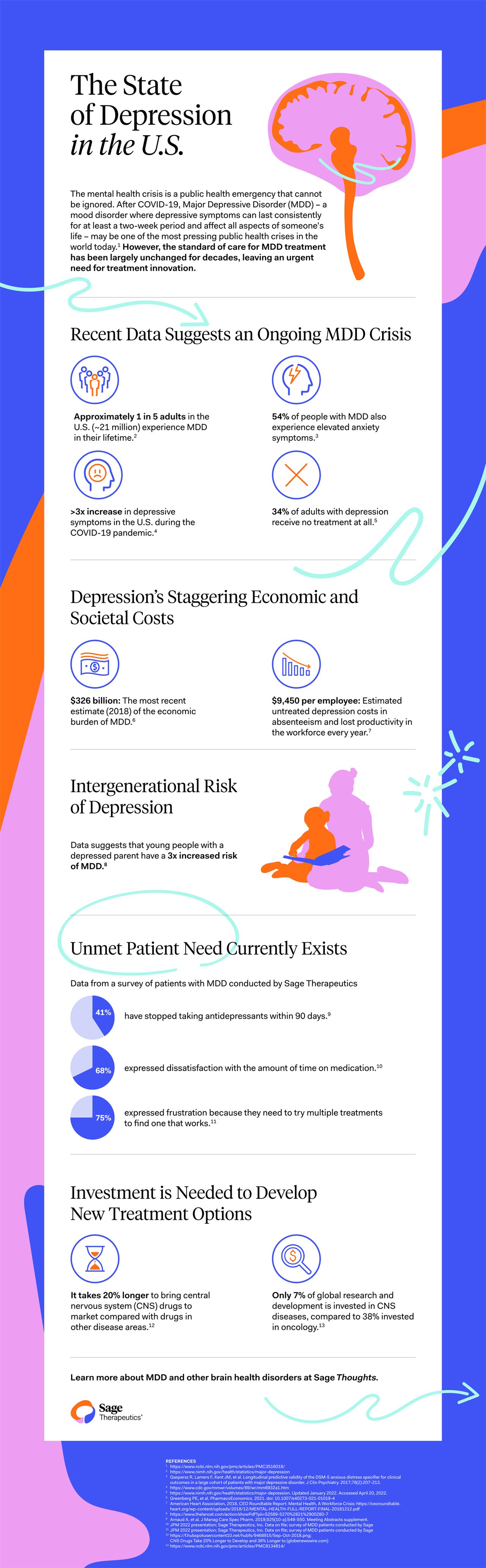
The State of Depression in the US [Infographic]

2022-05-05T07:01:00

(BPT) – The mental health crisis is a public health emergency that cannot be ignored. After COVID-19, Major Depressive Disorder (MDD) — a mood disorder where depressive symptoms can last consistently for at least a two-week period and affect all aspects of someone’s life — may be one of the most pressing public health crises in the world today. However, the standard of care for MDD treatment has been largely unchanged for decades, leaving an urgent need for treatment innovation.

The Hidden Cost of Debt on Your Mental Health and Tips to Overcome

2022-05-05T05:01:00

(BPT) – May is Mental Health Awareness Month and one of the biggest factors impacting mental health is the burden of debt. The Hidden Cost of Debt survey by National Debt Relief revealed that 70% of people believe that debt makes them feel like a black cloud hangs over them, in addition to one-in-three people reporting debt has led to an increase in anxiety and stress. What’s more, 69% of people said being in debt has made them withdraw from the things they love.

“It’s time to break the stigma and normalize having conversations about debt and its toll on mental health,” said Dr. Regine Muradian Psy.D. and National Debt Relief Financial Wellness Board Member. “Feeling isolated and alone is common for people facing financial problems, despite it being an experience shared by many Americans. People lose sleep, detach from friendships and feel hopeless.”

As inflation causes the cost of living to rise, more people are experiencing stress related to money. Dr. Muradian shares tips on the best ways to cope with and ultimately overcome the mental impact of debt.

1. Create a master plan and celebrate the steps along the way

Being in debt can make you feel helpless, overwhelmed and isolated. These feelings can significantly impact your mental health and feeling of self-worth. The first step to regaining control over your finances is establishing a plan that allows you to take ownership of your path to becoming debt-free.

Evaluate your total debt owed and break down the micro-steps you need to take to get to your goal of paying it all off. The good news is that there are organizations such as National Debt Relief that are able to help establish an affordable plan and be your supportive coach to regain your financial independence.

2. Prioritize yourself by practicing self-care

It’s important to remember that your debt does not define who you are. Carve out time for self-care that helps you feel happy and healthy. Some of the best self-care options don’t cost anything, so you simply need to dedicate time in your week to prioritize these activities.

Need some no-cost self-care ideas? Consider walking in a local park, reading a book, taking a long bath, meditating, drawing or calling a friend for a casual conversation.

3. Have transparent conversations with partners and family

The Hidden Cost of Debt survey found three in five Americans have considered putting off marriage to avoid inheriting their partner’s debt and 54% of people believe having a partner who is in debt is a major reason to get a divorce. Many people avoid conversations with partners because of the shame attached with debt.

While conversations around having babies or the prospect of marriage are commonplace at the start of serious relationships, debt and finances are often taboo. Being transparent and open to conversations about finding solutions can help build your relationship up rather than tear it down.

4. Don’t do it alone, find tools to help

Asking for help and finding a supportive community can build confidence and provide direction that makes a positive impact on your finances and mental health.

Take Michelle Ventura from Virginia Beach who found herself in more than $19,000 of debt following her divorce. Overwhelmed by outstanding credit-card bills and legal fees, she felt an immense amount of pressure to get out of debt for her personal well-being and her family’s livelihood.

On the brink of bankruptcy, Ventura sought support from National Debt Relief. Their team developed a plan and negotiated with creditors on her behalf, reducing her debt by $9,000, which allowed her to pay off her debt faster than she anticipated.

“Navigating debt as a single mom was incredibly challenging. I felt alone in this journey but working with National Debt Relief gave me the expertise and emotional support I needed to tackle my debt and conquer any obstacle I faced along the way,” said Ventura. “Being debt-free gave me back control of my life. Now I can focus on my family and the people who matter most.”

For support in navigating debt, please visit nationaldebtrelief.com or call 800-919-0828 to learn more.

5 easy tips for giving Mom the gift of self-care for Mother’s Day

2022-05-04T05:01:00

(BPT) – Your mother has done so much for you and your family, often putting everyone else’s needs before her own. This Mother’s Day, help remind your mom that self-care isn’t selfish — by finding her gifts that encourage her to put her own health and wellness first. And if you’re a mom, take time out for a little self-care, because whole begins with Mom — and when Mom’s taken care of, the whole family benefits.

Here are gift ideas to show your mom how much you care about her well-being.

1. Give the gift of nutrition

It’s easier to stay healthy and energized when you have tools to create nutritious recipes, including meals full of whole, natural ingredients that support your well-being. For example, Vitamix high performance blenders combine best-in-class design with unmatched power and precision to elevate the blending experience, making nutritious, whole-food eating easy. It’s an essential tool for busy moms to nourish themselves and their families, with the versatility to keep meals interesting.

Just in time for Mother’s Day, Vitamix is offering some of the biggest savings of the year to honor moms and make access to whole-food eating more attainable. Through May 15, you can save up to $100 on many Legacy and Ascent Series blenders; and Food Processor Attachment and Immersion Blender accessories are buy 1, save 20%/buy 2 or more, save 25%. You can also enjoy free shipping sitewide on orders of $100 or more.

Find ways to help support your mom’s health and wellness at Vitamix.com.

2. Help her find her Zen

Whatever way your mother seeks rest and relaxation, help her get there with gifts or experiences that are all about feeling more calm and centered. That could mean a new yoga mat, a soothing fragrance diffuser or a subscription to an online yoga class or meditation app.

3. Make her a spa-inspired smoothie

Here’s a great example of a tasty recipe that can be made in minutes and help your mom relax while simultaneously enhancing her health and wellness. Make sure to include these ingredients with your Vitamix gift so she can enjoy something delicious right away.

Vitamix Green Tea Smoothie

This invigorating blend of green tea, honey, mango and ginger will help jumpstart her day.

Yield: 3 Servings; Total Time: 10 minutes; Container Size: 64-ounce

Ingredients
3 cups green tea
1 piece fresh ginger root, 3/4″ slice, peeled
2 mango, peeled, seeded
2 dates, or 2 teaspoons honey, optional
2 cups ice cubes, divided

Directions
Place all ingredients into the Vitamix container in the order listed and secure the lid.
Start blender on lowest speed, then quickly increase to highest speed.
Blend 40-45 seconds, using the tamper to push ingredients toward the blades.

You can find this and other wholesome, nutritious recipes on Vitamix.com/what-you-can-make.

4. Treat your mom to a home spa day

You can give your mother the royal spa treatment in the comfort of her own home — and even join her. Set the scene with calming music and scents, then arrange for a home facial treatment you can share together. Using your Vitamix blender, like the Ascent® Series A3500, you can create nourishing face masks and scrubs to soothe your skin, as well as hair treatments using natural, whole ingredients.

5. Buy Mom a variety of whole foods

Help your mom “eat the rainbow,” making it easy for her to infuse colorful, healthy foods into her life by going grocery shopping for her. Look for a wide variety of fruits and veggies that resemble the rainbow so she can consume an array of tasty and healthful nutrients.

This Mother’s Day, remind your mom that R and R doesn’t have to take an entire day, but can be fit into easy moments that suit her busy schedule. Moms work hard to be there for the ones they love, so when it comes to the whole family feeling good, whole begins with mom.

The value of culturally competent care: How centering health equity can improve quality and lower costs

2022-04-29T08:01:00

(BPT) – By Daniel Sanchez, Director Diversity, Inclusion & Health Equity, UpHealth

As our healthcare system emerges from the COVID pandemic, the price of medical care is continuing to skyrocket. Care remains the number one driver of overall healthcare costs.

Efforts to maintain quality while reducing costs abound.

Yet, one of the most straightforward solutions is often overlooked: ensuring patients and providers communicate effectively and efficiently through qualified medical interpreters.

Language access for those with limited English proficiency is not only the right thing to do, it is a significant cost saver. When the patient and providers overcome language barriers in a timely and efficient manner, quality improves, and costs decrease.

The data tells the story: a study by The National Center for Biotechnology Information found that patients with limited English proficiency are four times more likely to misunderstand prescription labels and/or have a bad reaction to medication, and nine times more likely to misunderstand a medical encounter. These safety issues may contribute to the nearly 9% of the U.S. population at risk for an adverse event because of language barriers, according to the Agency for Healthcare Research and Quality. Patients that don’t receive culturally and linguistically appropriate care also have a significantly higher rate of hospital readmissions. These communication gaps directly translate to higher cost for the U.S. healthcare system, to the tune of more than $8 billion.

It’s a widespread problem. More than 25 million people in the U.S. are limited English proficient, yet language disparities continue to be common in healthcare. Although this accounts for about 9% of patients in the U.S., according to Migration Policy Institute National Center, that would benefit from receiving care in a language other than English, needless communication gaps are costing the entire healthcare system on a daily basis, and over the long-term.

The health care system is in need of change, but successful transformation doesn’t just happen. It requires purposeful intention like providing equitable care. And that starts with understanding who is moving through health systems. UpHealth’s Office of Diversity, Inclusion and Health Equity is helping health systems make that connection. And we know that while there are many factors associated with medical costs that are complex and difficult to solve, language access is not one of them.

For example, UpHealth’s Martti remote interpretation service is a telehealth solution to put patients and care teams in touch 24/7 with certified and qualified medical interpreters. Martti’s platform is now serving almost 200,000 patients a month across the United States, in 250 languages. All with the click of a button.

That said, language interpretation is simply our starting point. We partner with more than 2,100 healthcare venues nationwide using a holistic approach to language access which includes conducting comprehensive gap analyses, supporting the capture of REaL (Race, Ethnicity, and Language) data, embedding language interpretation into integrated care platforms, providing regulatory and compliance trainings, sharing best practices and more.

Our team of subject-matter experts serve as trusted advisors promoting health equity within and beyond the walls of every hospital we work with. And the return on investment is undeniable. Enabling Martti on any device within a hospital or clinic ensures language access from admission to discharge, and throughout the care continuum — cutting costs by more than 60%, and saving participating healthcare systems over $5.3 billion annually.

Health systems using Martti interpretation services have also seen remarkable growth in their relationships with patients and systemwide increases of focus on diversity, equity, and inclusion. Enabling language access and being able to reach limited English proficient and deaf or hard of hearing populations with telehealth is the future of healthcare and helps continue to keep communities safe, healthy and well informed.

It turns out investing in solutions that promote health equity makes good business sense. Culturally competent care translates directly to improved health and significant cost savings at the point of care, and throughout the care continuum.

Let’s play catch-up on routine childhood vaccinations

2022-04-29T07:01:00

(BPT) – For many of us, life over the past two years has been anything but routine. We missed out on playdates, reunions with loved ones, in-person school activities, sports — in some cases, even our children’s regular doctor visits, putting them at risk of not being up to date on their routine vaccinations for serious diseases like measles and whooping cough.

The Centers for Disease Control and Prevention (CDC) provides vaccines for nearly half of America’s children. Over the last two years, distribution of routine vaccines is down more than 10% compared to before the COVID-19 pandemic, which could mean an alarming number of children are vulnerable to vaccine-preventable diseases. Now is the time to get back to some of our routines, including well-child checkups and vaccinations.

Even before the disruptions of COVID-19, delays in routine vaccinations against vaccine-preventable diseases — particularly measles — have caused outbreaks. Getting children vaccinated following CDC’s recommended vaccination schedule can help protect against outbreaks and allows children to be protected before they may be exposed to potentially life-threatening diseases.

You have the power to protect your child’s health through vaccination. You and your child’s doctor can make a plan to ensure your child gets back on track and stays on track with their vaccinations — so your child is ready for school and play.

There are resources available to help answer your questions about your child’s regular checkups and routine vaccinations, such as:

Which vaccines does my child need?

Check out CDC’s easy-to-read Child & Adolescent Immunization Schedule to see the vaccines recommended for each age and the diseases they prevent. If your child missed a vaccine, use CDC’s Catch-up Immunization Schedule to help catch them up as soon as possible.

Are routine childhood vaccines safe?

Vaccines are safe and effective for children to receive at the recommended age at the recommended doses.

Did you know your child may be eligible for free vaccines?

The Vaccines for Children (VFC) program can help. VFC provides free vaccines to children who qualify. About half of American children younger than 19 years old receive VFC vaccines. Ask your doctor if your child qualifies.

Now is the chance to play catch-up on the things we’ve been missing out on. Help protect your child’s health as they get back to their routines by ensuring they are caught up on their well-child checkups and routine vaccinations.

Learn more about routine childhood vaccination and other ways to keep your child healthy by visiting www.cdc.gov/vaccines/routine.