Calling on ACIP to address disparities in flu vaccinations

2022-02-17T09:31:00

(BPT) – By Thomas Triomphe, Executive Vice President of Vaccines at Sanofi

While flu seasons can vary in severity, one thing is clear: older adults bear the greatest burden from severe complications of seasonal flu. Year over year, about 90% of flu-related deaths and 50-70% of influenza-related hospitalizations occur in adults aged 65 and older. The higher risk for severe flu-related complications in older adults can be attributed to weakened immune systems and the presence of underlying chronic health conditions. Although what’s not apparent within these data is the disproportionate impact of severe complications from seasonal flu on older adults from racial and ethnic minority groups. This month, the CDC’s Advisory Committee on Immunization Practices (ACIP) is evaluating data so that it can provide clearer guidance for flu vaccines for these populations.

Black and Hispanic older adults (65-74) with the flu are more likely to be hospitalized and admitted to an intensive care unit, compared with White adults of the same age. Additionally, minority communities may have higher susceptibility to flu infection caused by a higher likelihood of living in multi-generational housing, a greater reliance on public transportation and a reduced ability to work from home.

Compounding the higher rates of hospitalization and susceptibility to exposure is the disparity in flu vaccination rates: among individuals from racial and ethnic minority communities, the rates of flu vaccination are lower than that of Whites. Additionally, there’s lower uptake of flu vaccines in older adults receiving low-income subsidies or living in rural areas.

What’s more, while everyone can get a flu vaccine with low (or no) out-of-pocket cost, not all vaccines offer the same protection, especially for older adults. A study published in NEJM showed that the only available high-dose vaccine specifically designed for people 65 years and older was 24% more effective in preventing flu in adults over age 65 compared with a standard-dose vaccine. A separate study published in the Lancet found that adults over 65 who received that same high-dose vaccine had a lower risk of hospital admission versus adults over 65 who received a standard-dose vaccine, especially those living in long-term care facilities. Yet despite this, flu vaccine recommendations do not distinguish between flu vaccines available for adults 65 years and older.

When it comes to older adults from minority populations, an article published in The Lancet showed that among adults over 65 who received a flu vaccine, those from racial and ethnic minority groups were 26-32% less likely to receive the high-dose vaccine. The same study also showed that older adults with chronic diseases were less likely to receive a high-dose vaccine than those without a chronic disease diagnosis. Guidance designating a preferred flu vaccine for older adults could avoid unnecessarily compromising the health of these older adults who are already at higher risk for severe flu-related complications.

Frequent doctor’s visits are associated with a higher uptake of flu vaccination in older adults, although they are not associated with a higher chance that the patient receives a high-dose flu vaccine.

Perhaps some pharmacies or doctor’s offices don’t stock the high-dose vaccine, or perhaps they don’t know there’s one high-dose vaccine that offers greater protection for an older population. Without a clear recommendation by ACIP, some communities, especially those with higher minority populations or those in rural areas, may not purchase or stock enough high-dose flu vaccines, thus missing the potential to lower the burden of disease for older adults in these settings.

Flu vaccination is one of the most important tools we have for protecting the public’s health, especially for older adults from racial and ethnic minority groups who may suffer the greatest burden. ACIP has the ability to make a distinction between influenza vaccines by supporting a recommendation for the use of high-dose influenza vaccine in this vulnerable population to help address this disparity. The data is clear: older adults, especially those from minority communities, may be at a disadvantage when it comes to flu vaccination. We need to make sure this disadvantage is addressed before the individual goes to their doctor or enters the pharmacy to receive their flu shot — following the science that shows flu vaccines aren’t all the same would be a meaningful step.

Thomas Triomphe is the Executive Vice President of Vaccines at Sanofi. Thomas leads the company’s vaccines research and development, industrial and commercial operations and drives the teams’ commitment to prevention against infectious diseases, with a portfolio encompassing seasonal influenza vaccines, pediatric combinations, adolescents & adults boosters, meningitis and travel/endemic vaccines, as well as the development of the first preventive intervention against respiratory syncytial virus for all infants and vaccines against COVID-19.

To better protect older adults from the flu, we need to follow the science

2022-02-17T17:21:03

(BPT) – By Elaine O’Hara, Head of North America Commercial Operations for Vaccines at Sanofi

Older adults have different needs and biology than younger adults: the aging process affects metabolism, weakens the immune system, and increases the likelihood of underlying chronic illnesses. While the seasonal flu can cause severe complications in anyone, these biological changes put older adults at higher risk for more severe complications and affect how the immune systems of older adults respond to flu vaccines.

In fact, recent data showed an estimated 70-85% of flu-related deaths and 50-70% of flu-related hospitalizations occurred in adults 65 years and older. Complications from the flu can exacerbate quickly without therapeutic treatment in the early stages of infection. More serious complications can include bronchitis, pneumonia, and multi-organ failure in people with underlying chronic diseases. There are also other risks that may not be as obvious: flu can increase the risk of heart attack by three to five times and stroke by two to three times in the first two weeks of infection for adults over 65. This results in a six-fold higher risk of dying from the flu and flu-related complications.

In older adults, flu vaccines formulated for the general adult population known as standard dose may not provoke a strong enough response to flu. To combat this, a vaccine formulated specifically for older adults, known as high dose, contains four times the antigen, the part of the vaccine that helps your body build up protection against flu viruses, and is intended to generate a better immune response to vaccination in older adults, resulting in better protection against flu.

And the science has proven this. A study published in NEJM showed that the only available high-dose vaccine was 24% more effective in preventing flu in adults over age 65 compared with a standard-dose vaccine. A second study published in the Lancet found that adults over 65 who received that same high-dose vaccine had a lower risk of hospital admission versus adults over 65 who received a standard-dose vaccine, especially those living in long-term care facilities.

The problem is: older adults don’t know to ask for the vaccine with the formulation that’s best for their body. They rely on their doctors and pharmacists to make that choice for them. And doctors and pharmacists look to the guidance from health authorities on making those decisions. Today, those guidelines aren’t as clear as they need to be and there’s an opportunity to make specific recommendations on vaccines proven to best protect older Americans.

We know an annual flu vaccine is the most important way to protect older adults from the most serious complications of the flu. This month, the CDC’s Advisory Committee on Immunization Practices (ACIP) is evaluating data so that it can provide clearer guidance for flu vaccines to ensure older adults have the best chance at fighting the flu and lowering their overall burden of disease. We must follow the science to protect older adults from preventable severe illness.

Elaine O’Hara is Head of North America Commercial Operations for Vaccines at Sanofi. She is committed to contributing to the development of vaccinations that continue to positively impact lives across the globe.

Now’s the time: Why clearer recommendations are needed for flu vaccines

2022-02-17T09:31:00

(BPT) – By Michael Greenberg, MD, MPH, Vice President and North America Medical Head of Vaccines at Sanofi

Public health agencies have one objective above all others — keeping people healthy. Vaccines are the greatest example of a public health tool with profound impact on reducing illness and death from infectious diseases, like seasonal flu.

Every year, all eligible Americans are encouraged to get vaccinated against seasonal flu to prevent millions of illnesses and flu-related doctor’s visits. For those at higher risk of severe flu-related complications, like older adults, the message to get a flu vaccine is even more pressing.

But what if there was a flu vaccine with proven effectiveness at protecting this vulnerable population? Shouldn’t we ensure older adults are getting this vaccine? This month, the CDC’s Advisory Committee on Immunization Practices (ACIP) is evaluating data so that it can provide clearer guidance for flu vaccines for these populations.

As it stands, the flu vaccine recommendations do not distinguish between flu vaccines available for adults 65 years and older. The recommendations just state that everyone eligible should get their shot. However, there is one flu vaccine available that is specifically formulated for older adults that includes more antigen to stimulate stronger immune response, making it a true high-dose vaccine. With more antigen — the part that helps your body build up protection against flu viruses — this flu vaccine may provide better protection against flu than standard dose vaccines, which are generally administered in populations under 65.

Flu prevention in the form of a high-dose vaccine is important for older adults because they suffer the greatest burden from seasonal flu. Older adults represent the majority of flu-related hospitalizations and account for six times the number of deaths from flu-related complications compared to all other age groups combined. Older adults are particularly at risk of cardiovascular and respiratory complications. There is a 10x increased risk of heart attack during the week after influenza detection and an 8x increased risk of stroke in the days following an influenza infection.

To help reduce this burden, we need to give older adults better protection and to specifically recommend the only available and approved high-dose vaccine versus a standard dose for the over 65 population. In fact, a study published in NEJM showed that this high-dose vaccine was 24% more effective in preventing flu in adults over age 65 compared with a standard-dose vaccine. A separate study published in the Lancet found that adults over 65 who received that same high-dose vaccine had a lower risk of hospital admission versus adults over 65 who received a standard-dose vaccine, especially those living in long-term care facilities.

Older adults know the importance of flu vaccines — adults over 65 get vaccinated at higher rates than the rest of the population — but they may not be aware which flu vaccine is best for their body and why. Patients look to their doctors and pharmacists to have their best interests in mind, but doctors and pharmacists look to guidance from public health authorities to make the best decisions based on the available science. Why not help ensure the best possible health conditions for older adults during flu season by designating a priority flu vaccine in this population?

The time to make a change is now. For over 10 years flu vaccine guidance hasn’t changed, but this month, there’s an opportunity to continue the conversation and make meaningful recommendations to impact communities most at risk. ACIP should recommend the priority high-dose flu vaccine for older adults to avoid exacerbating the burden of flu on the individuals who suffer most each year.

Michael Greenberg, MD, MPH is Vice President and North America Medical Head of Vaccines at Sanofi. With nearly 30 years of experience in medicine, Dr. Greenberg is an experienced medical adviser who wants to spread awareness of the importance of vaccination in protecting public health.

How to Choose the Best Skincare Products for Healthy, Glowy Skin

2022-02-16T06:01:00

(BPT) – With all the skincare products out there, and more popping up all the time, it can be very confusing to figure out what you need. Between the different acids, vitamins and antioxidants, most of us can’t decipher what’s on the labels without a chemistry degree.

A breakthrough skin health brand has introduced a new concept in skincare that aims to take some of the guesswork out of the process. It’s called Dr.Age®.

According to Dr.Age founder, plastic surgeon Nikolaos Metaxotos, M.D., Ph.D., “My approach to medical aesthetics is to achieve maximum efficacy with minimum disruption of the natural functions of the skin. Every part of the face and body has different properties and needs that cannot be addressed with all products and treatments. Dr.Age aims to micro-manage all skin needs with the precision and efficacy of a plastic surgeon and to approach each goal individually.”

The Dr.Age philosophy is based on the way a plastic surgeon would analyze your face. Every anatomical region of the face has different qualities and needs that must be addressed in a unique way, according to Dr. Metaxotos.

Veteran beauty writer and editor Cheryl Kramer Kaye in New York City shares her insights on skincare trends. “As a writer, it’s my job to keep an eye on the hottest ingredients and big-picture market shifts, like the current moves toward clean beauty, sustainable packaging and minimalism. But as a consumer, I just want to know what works. What impresses me about Dr.Age is that the brand skillfully incorporates trend with the tried and true. The brand’s team of medical experts is committed to high-quality ingredients chosen based on proven science and performance rather than popularity.”

So, what ingredients should you look for in facial skincare products to really make a difference in your skin?

Here are five to know:

Antioxidants

These potent ingredients, including vitamin C, vitamin E, vitamin A, and polyphenols derived from plants, help protect the skin’s surface from oxidative damage caused by free radicals and environmental aggressors like UV rays and pollution.

Find it in Dr.Age Microlift Face Serum that softens wrinkles and improves uneven skin tone. $130 USD + Tax

Hyaluronic Acid

Hyaluronic acid in our skin attracts moisture and can hold up to 1,000 times its weight in water. It also gives skin its plumpness and spring.

Find it in Dr.Age Hyaluronic Acid H20 Facial Spray that refreshes and hydrates all skin types. $61 USD + Tax

Niacinamide

Also known as vitamin B3, this powerful antioxidant improves skin texture and tone, and minimizes lines, wrinkles and pigment changes. Its anti-inflammatory properties also help to prevent redness.

Find it in Dr.Age Prime Age Line Smoother that targets signs of aging including dehydration, collagen, elastin and thinning skin. $159 USD + Tax

Peptides

Found in all human cells, peptides are essential for your skin’s structure and function, and they stimulate collagen boosting.

Find it in Dr.Age 3D Contour Face Serum, a concentrated silky serum that targets skin firmness and elasticity. $176 USD + Tax

Arbutin

Arbutin is a gentle skin brightener used to prevent extra production of melanin. It can fade hyperpigmentation, including age spots, acne scars and melasma.

Find it in Dr.Age Skin Perfector Face Cream, a super-charged age-reversing cream. $121 USD + Tax

“The Dr.Age skincare range features a limited array of moisturizers, peels, masks, ampoules and exclusive luxe serums formulated with innovative results-driven ingredients that can change the quality of your skin with continued use,” says Bonnie Marting, DNP, ARNP, Director of Medical Aesthetics at Anushka Spa in West Palm Beach, FL. “I appreciate that the essential ingredients were selected in collaboration with plastic surgeons and cosmetic chemists for their potency, safety and efficacy.”

All Dr.Age products are paraben- and GMO-free and have not been tested on animals. Wherever ingredients originating from palm are used in our formulations, they are derived from sustainable resources. Also, 15 out of 17 Dr.Age products are vegan.

To find Dr.Age products and protocols, visit https://www.doctor-age.com/ and Amazon.

Follow Dr.Age @dr.age_official.

Actress and TV Personality Sherri Shepherd Shares Her Three-Step Plan for Managing Diabetes

2022-02-16T10:19:00

(BPT) – Growing up, Sherri Shepherd was very familiar with diabetes. Her family and community called it “the sugar,” a non-threatening name for a serious condition that ended up taking her mother’s life. “The sugar” was something that sounded sweet, but later turned her life upside down — thankfully, for the better.

While more than 34 million Americans[i] have some form of diabetes, when Sherri was diagnosed with pre-diabetes, she shrugged it off. Given everyone in her family had diabetes, she saw the diagnosis and the idea of living with the condition as a way of life — it simply seemed inevitable that she would develop it too. At the time, she didn’t realize the choices she was making about her diet and exercise could help change the course of her diagnosis.

A week ahead of starting a new and exciting career, as a co-host of The View, Sherri was officially diagnosed with type 2 diabetes, which is approximately 90 to 95% of all U.S. diabetes cases[ii]. As Sherri dealt with the nerves of starting this new career and chapter in her life, she also struggled with her new diagnosis. However, she made a promise to herself, and to her son, that she would take her diagnosis and her health seriously moving forward.

Taking a no-nonsense approach to her diagnosis, Sherri’s doctor armed her with a comprehensive treatment that included new and healthy habits that ultimately taught her how to manage her diabetes through diet and exercise. The immediate and proactive plan led to a shift in Sherri’s life she never thought possible, a shift to the healthiest life she has ever lived. Now, Sherri follows a three-part plan to manage her diabetes and maintain the healthy lifestyle she has grown accustomed to.

Planning Healthy Meals with Just a Plate

One way Sherri manages her diabetes is by following the “plate method.” She fills half her plate with low-glycemic foods like green salads, veggie slaws and grilled peppers and onions. Next, one-fourth of her plate is filled with whole grains, starchy vegetables or beans, like fresh peas, savory black beans, hummus or brown rice. Finally, the remaining quarter of her plate is a lean protein, like grilled salmon, chicken breast or spicy tofu. “I used to never eat vegetables unless they were covered in cheese,” said Shepherd, “but I found with my new diet there can be fun ways to make delicious, healthy meals.”

15 Minutes a Day: A Guide to Staying Active

Sherri is also committed to staying active. On days when she can’t make it to the gym, she has set a minimum goal of 15 active minutes, no matter what. Throughout the day, Sherri looks for ways to get active while doing household activities. Whether it’s vacuuming the house or cleaning out a closet, working in her garden or riding a bike, she’ll sneak in lunges while moving around the house or do pushups against the kitchen counter while cooking a healthy meal. Sherri says that looking for new ways to get her body moving keeps her motivated to meet those 15 minutes a day.

Know Your Numbers

Finally, Sherri has made it a habit to stay on top of her glucose levels. She recently switched to using a continuous glucose monitoring system which provides her with minute-by-minute glucose readings, real-time alarms letting her know when her glucose is too high or low and time in range reports so she understands what’s happening inside her body throughout the day. After choosing the FreeStyle Libre 2 from Abbott, she is now leveraging the system’s mobile app to help her see how her diet and exercise positively affect her glucose levels in real time, on the go and right from her phone.

By committing to her three-part plan of diet, exercise and knowing her numbers, Sherri has brought her HbA1c levels down to a healthy 5.4%. “I want to show others living with diabetes that nothing is written in stone. It hasn’t always been easy, but I’m living proof that not only can you manage type 2 diabetes — you can thrive in spite of it, if you put in the work,” said Shepherd.

For more information on the FreeStyle Libre system and to request a free sample, visit www.freestyle.abbott/us-en.

Indications and Important Safety Information

FreeStyle Libre 2 system: Failure to use FreeStyle Libre 2 system as instructed in labeling may result in missing a severe low or high glucose event and/or making a treatment decision, resulting in injury. If glucose alarms and readings do not match symptoms or expectations, use a fingerstick value from a blood glucose meter for treatment decisions. Seek medical attention when appropriate or contact Abbott at 855-632-8658 or https://www.freestyle.abbott/us-en/safety-information.html.

Expecting More: One Man’s Psoriasis Journey to Clearer Skin

2022-02-16T07:01:00

(BPT) – If it were just one year earlier, Paul wouldn’t have had the guts to strike up a conversation with a woman in the lobby of their office building – an interaction that would lead to 19 years of marriage. He would have lacked the confidence because of what he now knows was an undiagnosed case of moderate to severe plaque psoriasis – a chronic inflammatory skin condition that causes itchy, red, flaky and sometimes painful patches, known as “plaques,” to appear on the skin.

Paul’s journey with this issue began 30 years ago when the plaques spread to cover most of his body.

“It became so bad I wasn’t going out, and I wasn’t even attempting to date because it was all over my face,” says Paul.

Despite living in a warm climate, Paul wore pants and long-sleeved shirts to avoid uncomfortable questions or stares from strangers. Recognizing his symptoms were having a significant impact on him physically and emotionally, he finally reached out to a dermatologist for help treating his plaque psoriasis.

Paul cycled through many topicals and phototherapy, and started to become more social, even having the confidence to finally ask out his future wife. However, Paul wasn’t completely satisfied with the skin clearance. While his condition had improved, he still had some plaques on his skin.

Unwilling to settle, he sought care from a new dermatologist. Together, they decided to start treatment with SKYRIZI® (risankizumab-rzaa), a biologic medicine for adults with moderate to severe plaque psoriasis.

“Since beginning SKYRIZI, I’ve been pleased with my results,” says Paul. His story of achieving greater skin clearance with SKYRIZI when topicals and phototherapy weren’t enough echoes that of other plaque psoriasis patients. In clinical trials, 3 out of 4 people achieved 90 percent clearer skin at four months, after just two doses. Of those who achieved 90 percent clearer skin, nearly 9 out of 10 people sustained 90 percent clearer skin through one year.

SKYRIZI may cause serious side effects, including:

  • Serious allergic reactions: Stop using SKYRIZI and get emergency medical help right away if you get any symptoms of a serious allergic reaction.
  • Infections: SKYRIZI may increase your risk of infections. Before starting treatment, your doctor should check you for infections and tuberculosis. Tell your doctor right away if you have an infection or symptoms of one.

Do not use SKYRIZI if you are allergic to risankizumab-rzaa or any of the ingredients in SKYRIZI.

Also, tell your doctor if you plan to or recently received a vaccine.

Paul credits his skin clearance to partnering with his dermatologist like a teammate, ensuring he shared his treatment goals and how he felt about his results.

“It’s crucial to be your own advocate when working with your doctor by having clear goals and communicating openly. With appropriate treatment, clearer skin may be possible,” says Paul.

Dermatologist April Armstrong, MD, MPH, states there is no one-size-fits-all approach when it comes to psoriasis management but advises there are ways to help get psoriasis treatment right from the start.

“When creating a treatment plan with patients, we need to consider both disease severity and psoriasis symptoms. Establishing and maintaining an open, honest line of communication is essential because it ensures treatment plans will align with a patient’s changing needs and priorities,” she says.

Dr. Armstrong adds that doctors should consider how quickly and durably a treatment works, in addition to safety, dosing, and administration, to determine what will help meet the patient’s goals and preferences.

Like many people living with psoriasis, Paul prioritizes his time. With SKYRIZI, his dosing schedule is four times a year after two starter doses, which fits his lifestyle.

Paul admits he may never have met the love of his life if he hadn’t decided to advocate for himself and seek help for his psoriasis. He now knows firsthand the importance of finding care from a dermatologist specializing in psoriasis.

“With an understanding of my goals and preferences, and the risks and benefits of different treatment options, my doctor and I determined SKYRIZI was the right choice for me,” Paul states. “However, every patient needs to work with their doctor to find a treatment option that’s right for them.”

Paul’s story shows the value of being your own advocate and admitting when you want more clearance.

“Had it not been for speaking up, I never would have gotten the clearance I wanted.”

USE for SKYRIZI® (risankizumab-rzaa)

SKYRIZI is a prescription medicine used to treat adults:

  • with moderate to severe plaque psoriasis who may benefit from taking injections or pills (systemic therapy) or treatment using ultraviolet or UV light (phototherapy).
  • with active psoriatic arthritis (PsA).

Important Safety Information

What is the most important information I should know about SKYRIZI® (risankizumab-rzaa)?

SKYRIZI is a prescription medicine that may cause serious side effects, including:

Serious allergic reactions:

  • Stop using SKYRIZI and get emergency medical help right away if you get any of the following symptoms of a serious allergic reaction:
    • fainting, dizziness, feeling lightheaded (low blood pressure)
    • swelling of your face, eyelids, lips, mouth, tongue, or throat
    • trouble breathing or throat tightness
    • chest tightness
    • skin rash, hives
    • itching

Infections:

SKYRIZI may lower the ability of your immune system to fight infections and may increase your risk of infections. Your healthcare provider should check you for infections and tuberculosis (TB) before starting treatment with SKYRIZI and may treat you for TB before you begin treatment with SKYRIZI if you have a history of TB or have active TB. Your healthcare provider should watch you closely for signs and symptoms of TB during and after treatment with SKYRIZI.

  • Tell your healthcare provider right away if you have an infection or have symptoms of an infection, including:
    • fever, sweats, or chills
    • cough
    • shortness of breath
    • blood in your mucus (phlegm)
    • muscle aches
    • warm, red, or painful skin or sores on your body different from your psoriasis
    • weight loss
    • diarrhea or stomach pain
    • burning when you urinate or urinating more often than normal

Do not use SKYRIZI if you are allergic to risankizumab-rzaa or any of the ingredients in SKYRIZI.

Before using SKYRIZI, tell your healthcare provider about all of your medical conditions,
including if you:

  • have any of the conditions or symptoms listed in the section “What is the most important information I should know about SKYRIZI?”
  • have an infection that does not go away or that keeps coming back.
  • have TB or have been in close contact with someone with TB.
  • have recently received or are scheduled to receive an immunization (vaccine). Medications that interact with the immune system may increase your risk of getting an infection after receiving live vaccines. You should avoid receiving live vaccines right before, during, or right after treatment with SKYRIZI. Tell your healthcare provider that you are taking SKYRIZI before receiving a vaccine.
  • are pregnant or plan to become pregnant. It is not known if SKYRIZI can harm your unborn baby.
  • are breastfeeding or plan to breastfeed. It is not known if SKYRIZI passes into your breast milk.

Tell your healthcare provider about all the medicines you take, including prescription and over-the-counter medicines, vitamins, and herbal supplements.

What are the possible side effects of SKYRIZI?

SKYRIZI may cause serious side effects. See “What is the most important information I should know about SKYRIZI?”

The most common side effects of SKYRIZI include upper respiratory infections, feeling tired, fungal skin infections, headache, and injection site reactions.

These are not all the possible side effects of SKYRIZI. Call your doctor for medical advice about
side effects.

Use SKYRIZI exactly as your healthcare provider tells you to use it.

SKYRIZI is available in a 150 mg/mL prefilled syringe and pen.

This is not a complete summary of all safety information.

You are encouraged to report negative side effects of prescription drugs to the FDA. Visit http://www.fda.gov/medwatch or call 1-800-FDA-1088.

If you are having difficulty paying for your medicine, AbbVie may be able to help. Visit AbbVie.com/myAbbVieAssist to learn more.

Please click here for Full Prescribing Information and Medication Guide for SKYRIZI.

Globally, prescribing information varies; refer to the individual country product label for complete information.

Learn more about SKYRIZI at SKYRIZI.com.

Sponsored by AbbVie.

US-SKZD-210585

trouble breathing or throat tightness

5 ways to ensure wellness year-round

2022-02-16T05:01:00

(BPT) – With continued uncertainty stemming from the pandemic, maintaining overall wellness continues to be a priority for many to avoid burnout and languishing. If you’re feeling unsure how to navigate life during this time, consider upping your routine by consuming nutritious foods that pack a punch like almonds. Considering this, National Almond Day on February 16 is a great time to get started! Incorporating almonds into your routine has many benefits, including lowering one’s cholesterol levels (February also happens to be American Heart Month). As a registered dietitian, Natalie Rizzo personally likes to fuel her body with the proper foods but likes to remind others that wellness looks different for everyone. Natalie shares how she puts her best foot forward regularly with her nutrition tips and tricks, allowing you to live your best life (with almonds!).

1. Make the most of your mornings

I like to start my mornings with a green smoothie with almond milk — it really helps set the tone for the day and I can feel good about making healthy choices. If smoothies aren’t your thing, reach for some yogurt and get creative with your toppings like adding berries or almonds for an extra crunch.

2. Snack smart

Many may associate snacking with excess calories and potential weight gain, but it’s all about smart snacking. Almonds are my go-to source for when I need an “in-between” or “on-the-go” snack that I know will help satiate my hunger. Movie night? Mix almonds into your popcorn bowl. Looking for something sweet and crunchy? Reach for some dark chocolate covered almonds. Don’t be afraid to get inventive and find the snack that works for you and fills you up, without weighing you down.

3. Healthy skin from within

With the change in seasons and weather, give your skin the extra TLC it deserves. A simple tip to consider is eating and maintaining a healthy diet to help support healthier skin. Research has shown that eating two (one ounce) servings of almonds per day may help reduce wrinkles and skin pigmentation. What a tasty way to support your skin health!

4. Feel good energy boost

If you’re looking for a recharge for that mid-afternoon slump, consider natural energy boosters that will make you feel good. Almonds are rich in magnesium, a key nutrient to aid the production of energy in the body. One handful of almonds (about 23 almonds or one ounce) provides 20% of your recommended magnesium needs — ideal for when you’re looking for an extra pep in your step!

5. A good night’s rest

The importance of listening to your body and getting enough sleep cannot be overstated. Lack of sleep may disrupt your appetite, lower energy levels, and reduce overall physical and mental performance. If you find yourself restless at night, try sipping on something warm, like caffeine-free tea with almond milk — the creaminess and warmth will help comfort and set your mood.

Ready to make a change for the better? Try Natalie’s heart-healthy, delicious recipe, the Almond Crusted Broccoli, in celebration of National Almond Day and year-long wellness.

If you’re interested in exploring Natalie’s other go-to recipes, please visit almonds.com. Follow @californiaalmonds and @greenletes for more inspiration on how to stay on top of your A-game!

Expert Series: The Language of Health Equity: Expanding Providers’ Access and Delivery of Care Through Virtual Medical Interpretation

2022-02-15T23:01:00

(BPT) – –

By Andy Panos, President of Digital Health U.S., Martti by UpHealth

As the COVID-19 pandemic continues to put a spotlight on health disparities and unequal access to care, innovative solutions have emerged that are paving the way to better healthcare for everyone.

For decades, language access has been one of healthcare’s biggest challenges in the U.S. It is estimated that more than 25 million people living in the U.S. are considered limited-English-proficient (LEP) and may face significant language barriers when being treated by medical professionals.

The problem is simple, but the solution has been, until recently, almost impossible. Said succinctly, if patients can’t communicate with their doctors, they’re less likely to recover and more likely to return to care again and again. This means worse health and higher costs. What’s more, studies have found that language barriers don’t just affect the patient, they affect the healthcare providers’ satisfaction.

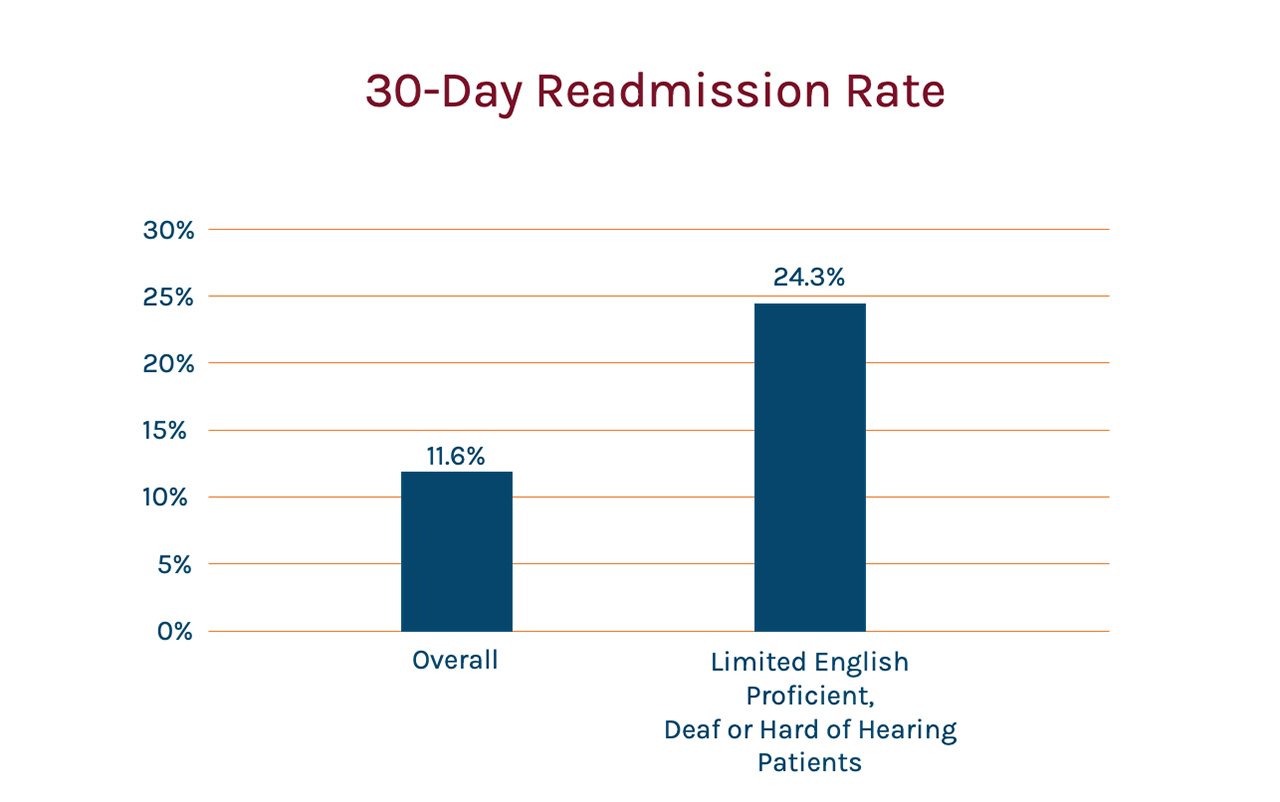
One key healthcare quality indicator — the 30-day hospital readmission rate — is more than double for those patients with limited English proficiency or who are deaf/hard of hearing.

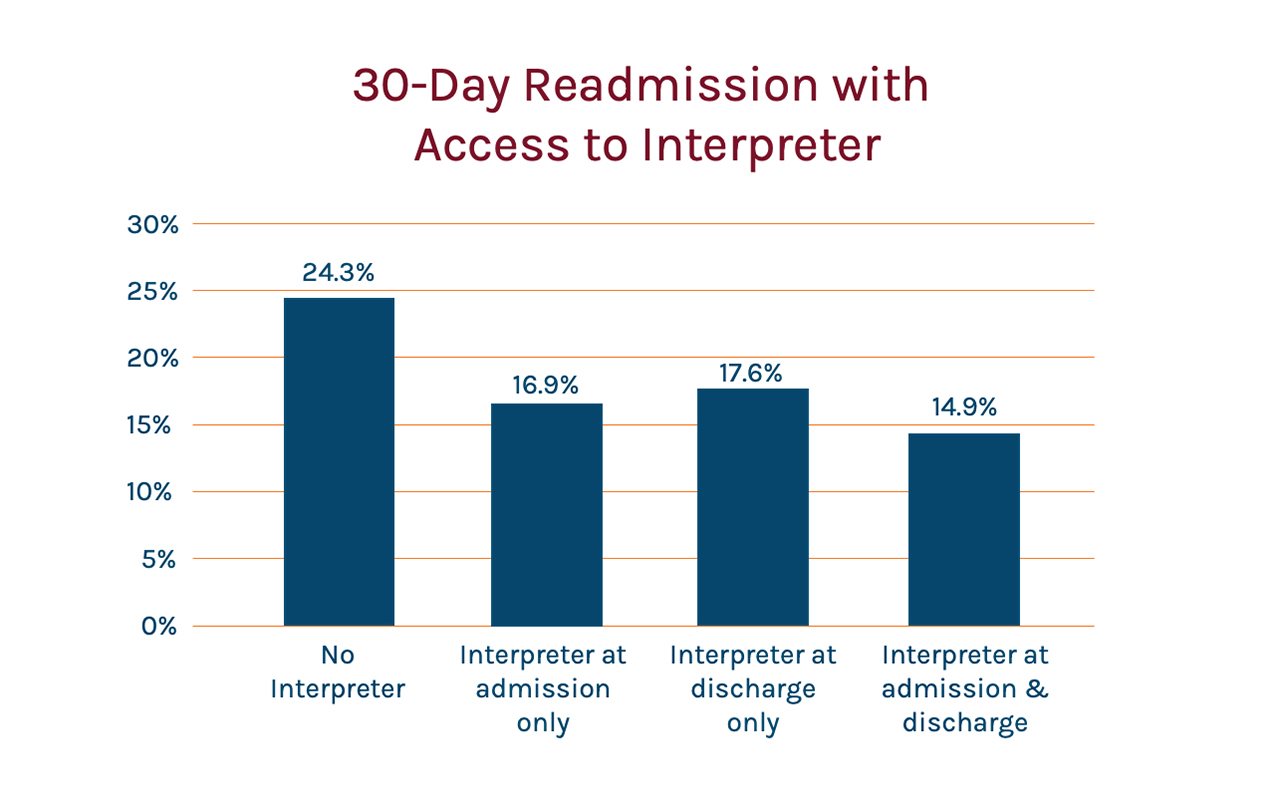
Yet, hospital readmission rates can be cut almost in half if language services are provided throughout the care continuum — from admission through discharge.

By using an integrated care technology platform with embedded language interpretation and translation, care teams can launch a video interpretation session with the simple click of a button. Interpreters are available within a matter of seconds.

For example, UpHealth’s Martti language interpretation service is now serving over 188,000 patients per month in over 250 languages. This number is up over 225% since March 2020 when COVID cases began rising, indicating increasing adoption of remote language interpretation.

Patients, family members and other caregivers can be added to a video session, allowing the care team user to have multiple touchpoints with one seamless interaction.

“With a [health] system as diverse as ours, having language access available at every point of care truly enhances the patient experience. That’s a huge win for us,” said Matthew A. Koenig, M.D., Medical Director, Telemedicine, Neurocritical Care Neurology, Queen’s Health Systems, Hawaii.

There is no doubt that managing the complex medical, behavioral health and social needs of patients, especially during a pandemic, requires culturally competent care that takes into account language needs.

With a healthcare workforce strained with the pandemic response, high-tech services that overcome disparities in access and empower providers at the point of care are a clear path forward.

Today, more than 2,000 health systems in the United States are using Martti, our digital care platform that can be optimized to seamlessly integrate culturally competent medical interpretation at the point-of-care.

As we emerge from a pandemic that has worsened health disparities, let’s work to have equal language access in every doctor’s appointment — for our patients, our providers, and our bottom line.

UpHealth’s Martti™ Telehealth platform is used to deliver telehealth with built-in remote language interpretation. Martti is integrated with UpHealth’s SyntraNet™, a comprehensive integrated care platform used by large health plans and population health programs in the U.S. and internationally.

Introducing the updated cuddly robotic companion that helps comfort children with sickle cell disease

2022-02-15T08:45:00

(BPT) – Aflac is expanding its My Special Aflac Duck program to offer the cuddly, animatronic companion — which has helped more than 13,000 children deal with the challenges of a cancer diagnosis — to kids with sickle cell disease. Hospitals, medical professionals and certified cancer and blood disorders organizations across the U.S. can now order My Special Aflac Duck, free of charge, for their pediatric patients, ages 3 and over, who are dealing with the harsh treatments often associated with sickle cell disease.

For families like the Guillorys, who were part of a pilot program conducted at the Aflac Cancer and Blood Disorders Center of Children’s Healthcare of Atlanta, it has been a powerful tool during a difficult time. Like the parents of one out of every 365 Black children born in America, they learned their son Sawyer was born with sickle cell disease — a painful, difficult and potentially deadly blood disorder that disproportionately affects African American families. “We were devastated,” said Shea Guillory. “I was at a loss for words.”

Children with sickle cell disease require constant hydration and consistent medication. They also contend with extreme susceptibility to cold temperatures. Stress and overexertion cause pain crises that can lead to hospitalization.

“Sickle cell disease, which is a terrible condition that primarily impacts the African American community, does not typically receive the attention that it deserves,” said Aflac Executive Vice President and General Counsel Audrey Boone Tillman. “Seeing the unique challenges that come with this diagnosis, we knew we had to expand the My Special Aflac Duck program to help provide comfort and companionship for the 100,000 Americans — many of whom are children — bravely facing this disease. These families need help, and if Aflac can provide some measure of relief for children with sickle cell, we are ready to take on that mission.”

Created in 2018 for children with pediatric cancer, My Special Aflac Duck and its companion app now also address the specific needs of children living with sickle cell disease, after more than a year of research and development.

For health care professionals, including child life specialists, My Special Aflac Duck helps reinforce care routines for children with sickle cell, including reminders to drink water, stay warm and eat well. For patients, the duck helps provide comfort and companionship when they receive treatments or experience pain crises. Its tailored resources include new physical tools, accessories, digital experiences via the duck’s app and custom packaging with instructions specific to sickle cell patients. Available free of charge, hospitals, medical professionals and certified organizations can order as many My Special Aflac Ducks as needed for their pediatric patients with cancer or sickle cell disease.

The physical and emotional burden — for both adults and children — of living with sickle cell disease is captured in an inspiring short film, “The Park Bench” that Aflac recently released. You can view “The Park Bench” here.

About the Guillory Family

The Guillory family’s care journey began at the Aflac Cancer and Blood Disorder Center of Children’s Healthcare of Atlanta. It was here that Sawyer received a bone-marrow transplant from his twin brother Saxton. The Aflac Cancer and Blood Disorder Center is the largest comprehensive sickle cell center in the U.S., caring for nearly 2,000 pediatric patients each year.

Sawyer’s My Special Aflac Duck, named Daxton after his twin brother, has been a companion at all his appointments, which was especially helpful during the isolating era of the pandemic.

“It is a wonderful tool,” Shea Guillory said. “My Special Aflac Duck gives us a way to talk to Sawyer about his health needs and helps him express his feelings about what he is going through. It has helped our family tremendously.”

To learn more about Aflac’s commitment to children facing sickle cell disease or to order My Special Aflac Duck, visit myspecialaflacduck.com/sicklecell.

Aflac | WWHQ | 1932 Wynnton Road | Columbus, GA 31999

Z2200095 EXP 2/23

A love story to inspire registrations and donations on National Donor Day

2022-02-14T06:01:00

(BPT) – Meet David and Linda:

Their first date was in Linda’s apartment, writing a Sunday school lesson while making beef stroganoff. Linda decided that day that she would marry David. While it took David a little longer, he was smitten and four years later they were married and living out their love story.

Eight years into David and Linda’s happily ever after, David noticed an alarming change in Linda. She had begun to experience extreme fatigue and vertigo, accompanied by mental fog and severe headaches. At David’s insistence, Linda visited multiple doctors, who, following routine blood work, diagnosed her with a rare, chronic blood cancer – polycythemia vera (PV), which eventually progressed into another rare blood cancer known as myelofibrosis (MF).

Linda’s MF was progressing at an extremely fast rate, which ultimately led to her oncologist sharing that the couple could expect to have three to five more years together – and that they should make the most of them. Facing this grave warning, David and Linda clung together and refused to give up. David committed himself to learning how to best care for Linda, promising her that he would do everything in his power to support her during this frightening time, while Linda focused inward on her strength in the face of this seemingly insurmountable obstacle.

With encouragement from their doctors, they began proactively looking into the possibility of an allogeneic stem cell transplantation (ASCT). The transplantation would have its own short-term and long-term risks, including a condition known as graft-versus-host disease (GVHD), but would be the only option available to save Linda’s life.[1] Luckily, they found a viable donor in Linda’s family and together, as they approach all things in life, Linda and David chose to move forward with the life-saving procedure.

See Something, Say Something

Six weeks post-transplantation Linda began experiencing rash-like symptoms and quickly reported it to her doctors. This was the first sign of Linda’s new condition – acute GVHD. This complication may occur post-transplantation and is primarily an inflammatory reaction, set off by the new immune cells from the donor (the graft) that are now inside the recipient’s body (the host).[2] Unfortunately for Linda, acute GVHD occurs in about 30% to 40% of people who receive cells from a donor.[2]

Since Linda’s GVHD was identified and caught at such an early stage, her healthcare team was able to fight it. Three months post-procedure, Linda was in remission and the couple returned home. Unfortunately, that was not the end of their journey with GVHD. During the next two years, Linda experienced two episodes of chronic GVHD. Each time Linda quickly told her medical team the moment symptoms began to emerge, allowing for swift action. David credits their quick acting to his wife’s well-worn adage, “See something, say something,” a rule they continue to live by.

Today, almost 5 years post-procedure, Linda is in complete remission. The couple credits their love and devotion to each other for carrying them through this difficult time, and today they continue to face the future, together.

While Linda and David caught her symptoms early and were able to act fast, it’s important to be aware of potential symptoms of GVHD post-transplantation. Being vigilant about changes in your own health or in the health of those you care for is an important component in keeping safe and staying healthy. For those impacted by GHVD, there are resources, like symptoms checklists, that offer helpful ways to monitor your own or a loved one’s symptoms post-transplantation. Additional resources are available at GVHDNow.com.

How you could save the life of a loved one or a stranger

David and Linda’s happily ever after was given more time through the assistance of several medical innovations, as well as the generosity of her family member’s stem cell donation. In honor of National Donor Day on February 14th, the couple encourages everyone to learn more about becoming a donor and joining Be The Match’s Donor Registry. It only takes one swab to save someone’s whole world – and you can play a part in similar love stories, like David and Linda’s.

© 2022, Incyte Corporation MAT-HEM-02741 02/22


[1] Reshef, R. (n.d.). Prevention of graft-versus-host disease. Hematology Oncology. Retrieved January 12, 2022, from https://www.hematologyandoncology.net/archives/october-2012/prevention-of-graft-versus-host-disease/

[2] Murray, J. (2017, November 22). Graft-versus-host disease (GVHD). The European Blood and Marrow Transplantation Textbook for Nurses: Under the Auspices of EBMT [Internet]. Retrieved January 12, 2022, from https://www.ncbi.nlm.nih.gov/books/NBK543657/