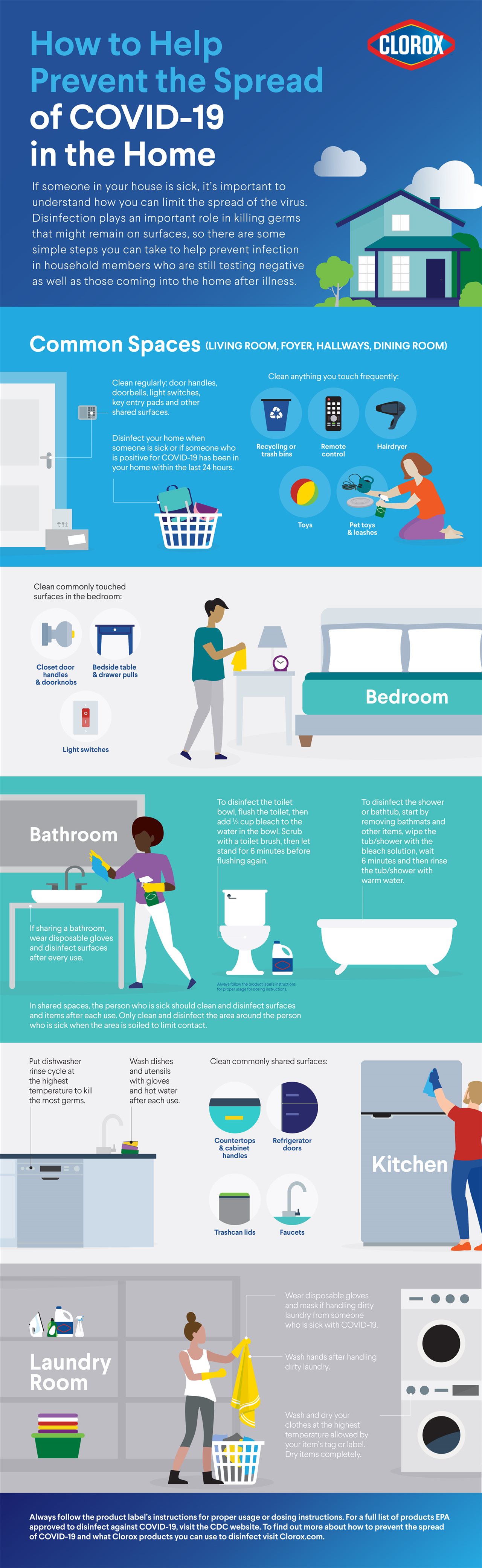
How to help prevent the spread of COVID-19 in your home [Infographic]

2022-01-28T09:41:00

(BPT) – If someone in your house is sick, it’s important to understand how you can limit the spread of the virus. Disinfection plays an important role in killing germs that might remain on surfaces. Clorox shares some simple steps you can take to help prevent infection in household members who are still testing negative as well as those coming into the home after illness.

5 key benefits of radiant heating systems

2022-01-25T17:30:45

(BPT) – As people look to make their homes healthier and more comfortable, interest in radiant heating systems has increased. A top home-improvement trend for 2022, these comfortable, energy-efficient heating systems have a variety of installation methods for new and existing homes.

Hydronic radiant heating systems work when warm water flows through flexible crosslinked polyethylene (PEX) pipes that can be installed under any floor covering, including carpet, tile, wood and linoleum. The radiant system heats spaces from the floor up, providing comfort, efficiency and improved indoor environmental quality (IEQ). Some benefits of radiant heat include:

  • Even temperature in spaces, with no hot or cold spots
  • Warmth remains at your feet instead of rising to the ceiling
  • Ability to zone the heating system throughout a home to maintain different temperatures, depending on room usage
  • Elimination of fans that circulate dust, pollen, odors and viruses for improved air quality
  • Quiet systems that enhance sound quality for a more peaceful home

Radiant heating systems can be used throughout a home for efficient temperature control. In gathering spaces like the living room, they can provide comfort even when relaxing on the floor. They make functional spaces like the kitchen and bathrooms cozier, and they remove the chill often associated with rooms such as basements or rec rooms.

Different options have modular components and accessories that allow systems to be installed easily and quickly no matter the circumstances of the home. Uponor is a provider of radiant heating systems with installation options that work for new-home construction or remodeling situations.

Radiant heat systems in new homes

In new homes, the staple-down method is a common installation practice. Installers use a special radiant piping stapler tool to fasten the flexible PEX piping to the surface. The staples go around the outside of the pipe to adhere it to the surface. After the pipe is completely fastened, a lightweight gypsum concrete is poured over the piping to create a smooth, solid surface for the flooring.

Another popular option for new homes that saves time is knobbed mats, like Fast Trak. The underside adhesive keeps the mats in place as the pipe is pressed between the knobs, by hand or foot, in the desired pattern. Finally, just like with the staple-down method, gypsum concrete is poured to create a smooth surface.

Radiant heat in remodels

If you’re interested in adding radiant heat to an existing home, there are alternative options that don’t require extensive flooring replacement or pouring concrete. For example, with a typical thickness of only a half-inch, wood-based radiant panels are a solution for residential remodel and retrofit applications.

How does this work? The wood panels feature a groove down the center for piping placement with an aluminum sheet on the bottom to transfer heat effectively. These panels fasten to the plywood subfloor for a minimal increase in floor height, plus there’s no moisture from concrete overpours.

Another option for existing homes or vacation properties is joist heating with aluminum panels called Joist Trak. These extruded aluminum panels install from underneath in the joist bays of the floor. It is an application for homes that have an exposed ceiling, such as an unfinished basement. This allows you to add radiant heat to the floor above without tearing up any floor coverings.

From increased comfort to a healthier home, energy efficiency and more, there are many reasons why radiant heating systems are a top home-improvement project. For more information on radiant heat and installation options for new and existing homes, visit uponor.com.

Got a case of winter doldrums? Yoga and meditation can help.

2022-01-21T15:11:00

(BPT) – Suffering from a case of “the blahs”?

The holidays are over. Our get-up-and-go is more of a sit-there-and-stay. Those resolutions? Maybe not working out so much. The days are shorter. We’re not getting as much sun. We’re isolated, we’re cold, we’re crabby.

Now what?

Recent studies have shown that Kundalini Yoga and meditation reduce stress and anxiety, helping to combat doldrums, blues, dumps, lows, and bummers.

Here’s the best part: It’s easy enough that anyone can do it, anywhere, any time. Which, when you’re feeling unmotivated, can be crucial.

3HO, an organization that promotes Kundalini Yoga and meditation worldwide, has instructions for dozens of “kriyas,” which are sets of practices — mainly simple breath control techniques and gentle postures — that are practiced to achieve a specific outcome.

The meditation described below is designed to lift your spirits by lowering the cortisol overproduced by your body when you’re under stress. According to Harvard Health Publishing, within just a week or two of regular meditation, you should see a noticeable change in your mood and stress level.

Start here.

Posture: Sit in a comfortable position with a straight spine. Lace your fingers together so that your fingertips find the space between the fingers of your opposite hand. Now extend your index fingers, press them together, and straighten them. Your thumbs should cross each other comfortably. Hold your hands at chest level.

Focus: Keep your eyes open. Focus on the tip of your nose.

Mantra: Chant Wahe Guru Wahe Jio. Don’t stress about the pronunciation. Imagine the word Wha coming from your bellybutton; the word Hey coming from your chest; and the word Guru coming from your lips. Follow the same sequence and rhythm for Wahe Jio.

Time: Continue for 3 minutes. (You can work up to 31 minutes, if you want to.)

End: Inhale and hold. Focus on the sound of the mantra. Exhale. Inhale, hold, and allow yourself to feel the source of your sadness. Exhale, and let it go.

Inhale, hold, and feel the preciousness of life.

Exhale, and let it go. Relax. That’s it!

It’s not hard to be kind to ourselves.

We should all do it more often.

For more information on Kundalini Yoga and other kriyas, visit 3HO.org. The winter blues should not be confused with Seasonal Affective Disorder (SAD). If you think you may be suffering from SAD, please talk to a medical professional for advice. If you or someone you know are having suicidal thoughts or feelings, call the National Suicide Hotline at 1-800-784-2433.

How to get a healthier home for under $100

2022-01-19T09:01:00

(BPT) – It’s as crystal clear as the air and water can be in your home: living in a healthier space is a top priority. From small projects to large remodels, homeowners are focused on how these upgrades might impact their health, while having a positive impact on the environment.

“Going green can be affordable when there are eco-friendly choices available no matter your budget,” said Christopher O’Rourke, Mercury Insurance Vice President of Property Claims. “Healthy home choices, especially for large renovations, may bring your homeowners cost down and save you money on insurance too.”

A healthier home starts with evaluating what needs routine maintenance and what products can be replaced with eco-friendly alternatives. Here are some healthy home improvement tips that you can begin with today.

1) Clean, fresh and safe air

According to the EPA, the air inside your home can be two to five times more polluted than the air outside. Air filters in your heating and cooling system work by drawing out pollutants like dust and pet dander. When they get dirty it makes it harder for this system to work efficiently. Routinely check your air filters for accumulated dirt and dust. Depending on what type of filter you need, HEPA filters can be replaced for as little as $25.

A simple project you can do at no cost is checking that all smoke and carbon monoxide detectors in your home work properly. Heating your home during winter increases the risk of fire and carbon monoxide poisoning. Checking the detectors around your home should be done routinely, especially during cold weather months.

2) Pure water

Water filters are a popular health-conscious home upgrade that can fit a range of budgets. The most popular types of water filtration are filtered pitchers that can start at $20. There are also under-the-sink, on-the-counter, and faucet-mounted filtration system alternatives depending on how large of an upgrade you want.

Water leak detection devices are another popular home improvement. These systems can notify you when a leak is detected and can shut off the water system if a major problem is found. Mercury Insurance offers a water leak detection discount to qualifying homes that are equipped with these systems. (Discount availability may be limited to certain states. Speak to a Mercury agent to confirm the coverages available in your state.)

3) Home supplies that are great at their jobs and easy on the environment

Over the years many consumers have been concerned about the ingredients found in conventional cleaning products, paints, flooring and building materials. Many have decided to replace them with products that are environmentally friendly. Look for products that are biodegradable and sourced from renewable resources instead of petroleum. Be wary of cleaners that claim to be all natural without clearly identifying their environmental benefits.

Painting: Whether you are doing a light touch up around your home or a large project, toxic paint could negatively impact the air quality of your living space. Look for options that are free of volatile organic compounds (VOCs) or are Green Seal or GreenGuard certified.

Replacing appliances: Always look for appliances that are LEED certified or STAR rated. These products are more sustainable and reduce energy usage. You may also qualify for a green homeowners discount through your insurance for having these appliances in your home.

Flooring: Look for eco-friendly options such as unfinished hardwood, stone or concrete, and carpets made of natural fibers. Make sure to use toxic-free adhesives to reduce the amount of chemicals in your home.

Building materials: If you are going to be replacing drywall or insulation, look for GreenGuard certified materials to avoid toxic chemicals such as formaldehyde or acetaldehyde that are commonly found in these materials.

Home improvements and routine maintenance can create a healthier living environment. This green trend is also good for your wallet, as Mercury Insurance will apply a 5% green home insurance discount to homeowners who provide proof of certification that their home has been certified as Green by the U.S. Green Building Council LEED for homes rating system or meets the requirements of the National Association of Home Builders Green Building Guidelines (NAHB). (Discount availability may be limited to certain states. Speak to a Mercury agent to confirm the coverages available in your state.)

Moving Forward After Heart Failure: Hear One Patient’s Journey

2022-01-10T08:01:00

(BPT) – One morning, five years ago, Robin woke up and could not get out of bed. Her fingers and toes were tingly and numb. Following a visit to the doctor, Robin learned that these symptoms were from lack of blood flow. She was diagnosed with heart failure.

Heart failure is a long-lasting condition in which the heart is unable to pump enough blood to meet the body’s needs for blood and oxygen. More than 6 million people in the U.S. are living with heart failure, and it is expected to impact nearly 8 million Americans by 2030. Each year alone, heart failure leads to about one million hospitalizations in the U.S.

Those who have faced a heart failure diagnosis know the experience can be overwhelming, particularly when the disease worsens over time and impacts people’s abilities to handle the day-to-day tasks they once could. People may also have to change their habits, which can be challenging. These changes include:

  • eating differently
  • remembering to take their medicines
  • paying closer attention to their bodies and heart failure symptoms
  • reducing stress

For some people, they find ways to navigate their condition with the determination to move forward after their diagnosis and incorporate a lifestyle that works for them.

“I didn’t know what was wrong with me as I had never felt that way before,” Robin recalled. “Now we know that it was my heart fluttering, instead of actually contracting and pumping.”

After hearing her diagnosis, Robin knew that working with her healthcare provider would be key to moving forward. For her that meant incorporating light exercise, a healthier diet, and tracking any new or worsening symptoms in consultation with her doctor.

At the Heart of the Matter: Moving Forward After Your Heart Failure Hospitalization is a program that supports people with chronic heart failure and their loved ones by offering educational information. Sponsored by Merck in collaboration with Mended Hearts®, the program was created to help people living with heart failure to better understand their condition and play a more proactive role in their care.

“You have bad days, but you have that inner strength to pull up your bootstraps and put one foot in front of the other to just do what you have to do to get through the next day. You have to remain positive and not let things get under your skin,” Robin remarked. “There’s a long list of things that patients can do on their own to help their doctor help them get better.”

For resources on living with chronic heart failure and to see more stories from patients like Robin, visit AtTheHeartOfTheMatter.com.

Are you experiencing winter allergies or is it something more serious?

2022-01-10T09:15:00

(BPT) – Winter is a great time to get cozy and enjoy indoor activities, but it can also cause winter allergies to flare up. According to Healthline, you’re more likely to spend more time indoors because of the colder weather, which increases your exposure to indoor allergens. Allergies cause your body to release histamine, which creates an inflammatory response, such as nasal inflammation.

Some of the most common indoor allergens that can trigger your winter allergies include:

  • Airborne dust particles
  • Dust mites
  • Pet dander
  • Mold

In addition to allergens, the winter season can also trigger sinus issues like excessive mucus production because of dry air and heating. All these triggers combined can cause chronic nasal inflammation, a condition called sinusitis. The Centers for Disease Control and Prevention reported that 28.9 million adults nationwide have been diagnosed with sinusitis.

If allergies and sinusitis cannot be adequately managed, they can lead to another condition, nasal polyps. Nasal polyps are inflammatory growths along the lining of nasal passages or sinuses. Nasal polyps can get irritated and swollen, partially blocking the nasal passages and sinuses.

Some of the symptoms of nasal polyps include

  • Nasal obstruction
  • Congestion
  • Loss of sense of smell

About 1% to 4% of people develop nasal polyps. The incidence of nasal polyps increases with age and is likely the greatest between 40 and 60 years of age.

Tips to keep in mind

You can take several preventative measures to decrease your chances of winter and indoor allergies, which can also lower your risk of developing sinusitis and nasal polyps.

According to the Cleveland Clinic, here are a few tips that can help you manage your winter and indoor allergies and may also help prevent nasal polyps:

  1. Follow your doctor’s instructions on taking your allergy and asthma medications, and address any changes in breathing through your nose with your doctor.
  2. Avoid breathing airborne allergens or irritants that lead to inflammation of your nose and sinus cavities.
  3. Practice good hygiene. Certain types of bacteria or viruses cause nasal and sinus infections, so be sure to wash your hands regularly.
  4. Use a humidifier in your home to help moisten your breathing passages.
  5. Use a saline nasal rinse or spray to remove allergens or other irritants that may cause nasal polyps.

Treatment options

If you do develop chronic sinusitis or nasal polyps, you have options. Several treatments can help, which range from lifestyle changes and over-the-counter remedies to prescribed medications and surgery. These treatments aim to reduce sinus inflammation, allow air to circulate well in your nasal passages and enable mucus to drain.

To decrease the size of your polyps, your doctor may prescribe an over-the-counter oral or injectable treatment. Other treatments include intranasal steroid sprays, nasal saline irrigation, oral steroids, and sinus surgery. While these treatments may bring you some relief, they’re not foolproof. Studies show that if an intranasal spray is used alone, only a relatively small amount of the medication reaches the sinus cavity. Oral steroids can be effective for short-term use, but they may cause systemic side effects in the long run. Also, after sinus surgery or sinus implants have been removed, nasal polyps can still return.

If conventional treatment options do not work for you or if nasal polyps return after surgery, the SINUVA (mometasone furoate) sinus implant may help. It is a prescription steroid-releasing implant that can treat nasal polyps in patients 18 years or older who have undergone ethmoid sinus surgery. This nonsurgical, in-office treatment is placed among the nasal polyps and provides targeted, continuous symptom relief up to 90 days, with a low rate of side effects. The product works automatically, which means users don’t have to remember to take it, which may help increase compliance.

To learn more information about SINUVA, including safety and precautions, visit Sinuva.com/Learn-More.

INDICATION

SINUVA Sinus Implant is a prescription steroid-releasing (mometasone furoate) implant indicated for the treatment of nasal polyps in patients 18 years or older who have had ethmoid sinus surgery.

IMPORTANT SAFETY INFORMATION

Who should not use SINUVA?

Do not use SINUVA if you are allergic to mometasone furoate or any ingredients of the implant.

What should I tell my doctor before receiving SINUVA?

Before you receive SINUVA, tell your doctor about all medical conditions you have including nasal/sinus problems (such as nasal ulcers or trauma), eye problems (such as glaucoma or cataracts), or any untreated fungal, bacterial, or viral infections.

What are the possible side effects of SINUVA?

Serious side effects of SINUVA can include:

  • Local reactions including nosebleed and injury to nerves or blood vessels in the nose/sinus.
  • Serious allergic reactions have happened in patients using mometasone furoate including rash, itching or swelling of the lips, face, tongue, and throat, and breathing problems. Call your doctor right away if you have any of these reactions.
  • Weakened immune system that may increase your risk of infections. Avoid contact with people who have contagious diseases such as chickenpox or measles. Call your doctor right away if you have been near someone with chickenpox or measles.
  • Adrenal insufficiency
    is a condition in which the adrenal glands do not make enough steroid hormones and can cause tiredness, weakness, nausea and vomiting and low blood pressure. Talk to your doctor if steroid effects such as Cushing Syndrome and adrenal suppression appear.

The most common side effects of SINUVA in clinical studies were bronchitis, cold symptoms, middle ear infections, headache, lightheadedness or dizziness, asthma, and nosebleeds. The following side effects have been identified during post-approval use of the SINUVA sinus implant. These events include implant migration, lack of efficacy, nasal pain, headache, and nosebleeds.

Tell your doctor if you have any side effects that bother you or don’t go away.

Risks related with the insertion and removal of SINUVA are similar to other endoscopic sinus procedures.

SINUVA is made from materials designed to soften over time and may fall out of the nose on its own as polyps decrease or if you sneeze or blow your nose forcefully. The implant will be removed 90 days after placement or earlier at your doctor’s discretion.

Contact your doctor immediately if you have any changes in vision, excessive nasal bleeding, symptoms of infection or symptoms suggesting that the implant has moved, such as irritation or a choking sensation in the back of the throat.

You are encouraged to report negative side effects of prescription drugs to the FDA. Visit www.fda.gov/medwatch, or call 1-800-FDA-1088.

For important risk and use information, please see Full Prescribing Information for SINUVA.

6 simple tips for a winning winter skincare routine

2022-01-06T14:15:00

(BPT) – Cold and dry weather can significantly impact skin, with some of the most common concerns being cracking, chaffed skin and flare-ups of conditions like dry skin and eczema. Especially if you spend time outdoors or participate in winter sports, it’s important to know the steps in a proper winter skincare routine to help keep skin hydrated, healthy and protected from UV rays during those harsh winter months!

Board-certified dermatologist Dr. Kiran Mian wants to share her top winter skincare tips to help you seal in hydration and keep your skin happy and healthy all season long!

Swap in seasonally appropriate products

“Just like a wardrobe, products in a skincare routine are seasonal,” said Dr. Mian. Unlike humid summer air filled with moisture, dry winter air dehydrates the skin, so preventing moisture loss is key to keeping skin healthy throughout the winter. Swap your moisturizer from a lotion to a heavier cream or ointment and use a gentle, hydrating cleanser.

Replenish the skin barrier with effective ingredients

“Cold, dry air and harsh winter conditions can cause a compromised skin barrier, resulting in skin that’s more susceptible to inflammation and moisture loss,” said Dr. Mian. “Our skin barrier contains ceramides, which function as the glue holding your skin cells together, sealing moisture in and keeping irritants out. So, when natural levels in the skin become depleted, it’s important to look for skincare products that contain ceramides to replenish your skin barrier. Remember that restoring and maintaining a healthy skin barrier is key all year-round but especially in the winter!”

Dr. Mian also recommends looking for products with hyaluronic acid, a key ingredient that helps attract and retain skin’s natural moisture. “If experiencing a winter itch due to dryness, look for a steroid-free topical anesthetic such as pramoxine hydrochloride to help combat itchiness,” said Dr. Mian.

Say goodbye to winter dry

An essential tip for winter skincare is preventing dryness before it happens, especially for areas most exposed to the winter elements, like hands. If dryness or cracking does occur, soothe irritated skin with a petrolatum-based balm like CeraVe Healing Ointment. This skin protectant is formulated with three essential ceramides and hyaluronic acid to provide intense hydration and help restore the skin’s barrier to relieve chafed, chapped or cracked skin. To help treat chafing and dryness on the go, Dr. Mian recommends keeping a travel size in bags or pockets to reapply throughout the day after being outdoors.

Take warm (not hot!) showers

“Dryness can trigger inflammation, which has a snowball effect on irritation,” said Dr. Mian. “To keep skin hydrated and to prevent these flare-ups, take shorter, lukewarm showers and use gentle, hydrating cleansing products that are free of fragrances, which can also cause irritation. Afterward, immediately apply a moisturizer to damp skin to lock in moisture.”

Try slugging

For those areas that are extra dry, Dr. Mian proposes trying a skincare method called slugging to help seal in hydration by applying an occlusive product (something that has sealing qualities and forms a barrier on the skin’s surface) like the CeraVe Healing Ointment on top of a thick moisturizer. The slugging process works to prevent transepidermal water loss, so skin stays hydrated and the skin barrier is protected and allowed to repair itself. If done before bed, Dr. Mian suggests wearing gloves and socks after application to allow the ointment to soak in.

Don’t forget the SPF

Even though the UV index is lower in the winter, skin is still exposed to ultraviolet light throughout the day. For outdoor enthusiasts, snow can be a big cause of sunburns as the surface reflects UV rays, leading to sun damage and burns. Whether you are outside for hours or only a few minutes, be sure to apply a protective sunscreen prior to any UV exposure. SPF is a year-round essential!

For additional skincare tips and to research products ideal for your skin’s needs, visit CeraVe.com.

The Smiley Company Celebrates 50 Years by Declaring 2022 The Year of Smiles

2022-01-06T06:01:00

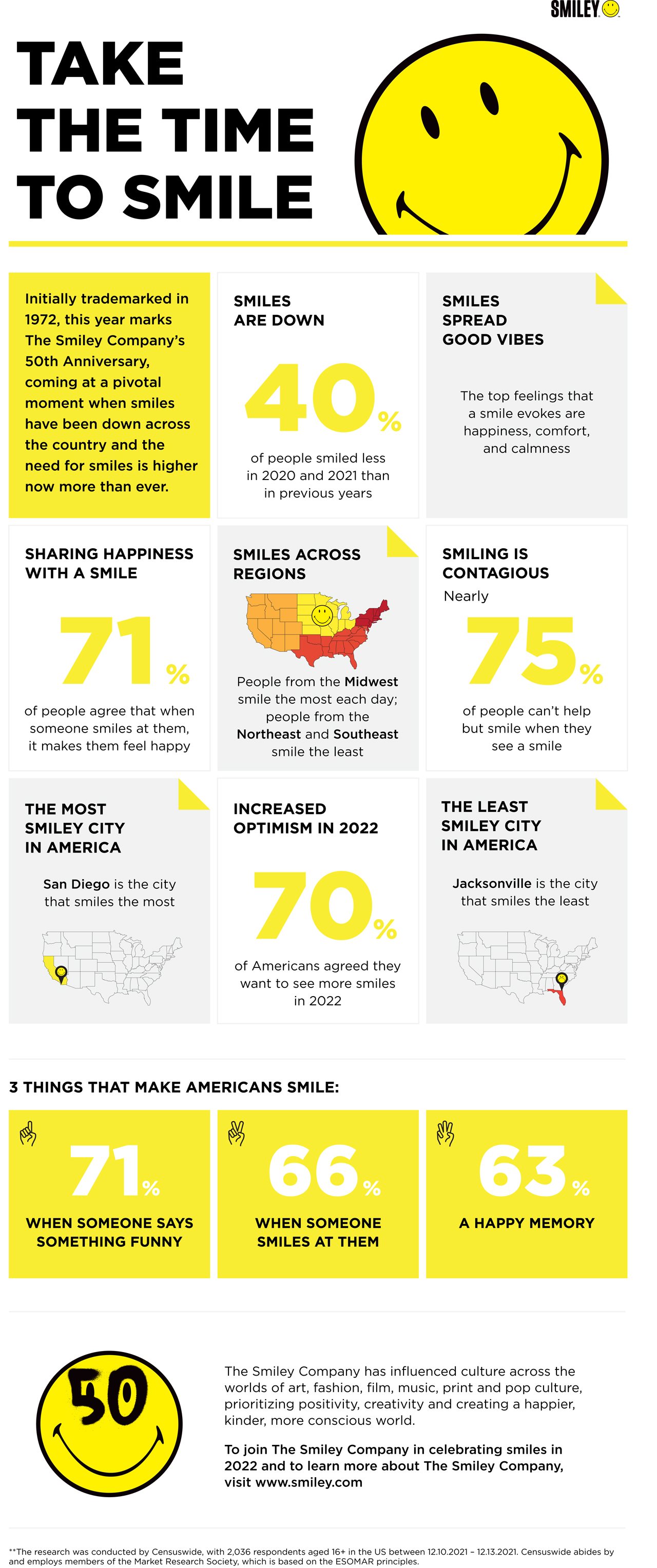
(BPT) – In honor of its 50th anniversary, The Smiley Company, the brand behind the iconic smiley, is declaring 2022 the Year of Smiles based on insights from a recent survey revealing the state of smiles nationwide.

According to the new Smile Index survey, while 40% respondents admit they smiled less in 2020 and 2021 than in previous years, 70% of Americans agree they want to see more smiles in 2022. The study also reveals the power of a smile, with nearly three-quarters (71%) of people agreeing that when someone smiles at them, it makes them feel happy.

“After the challenging last couple of years, what better way to navigate out of these times than with this campaign that aims to reverse a global smile deficit, spread positivity and fill the world with smiles in 2022,” said Nicolas Loufrani, CEO of The Smiley Company. “This campaign has proved that Smiley’s unique, creative and positive symbolism continues to inspire some of the most influential artists, brands and tastemakers across the globe.”

Here is who smiled the most, and least, in 2021 across the country:


Throughout the year, Smiley will be announcing exciting collaborations, partnerships and smile-worthy moments around the world. To join The Smiley Company in celebrating smiles in 2022 and to learn more about The Smiley Company, visit www.smiley.com.

About The Smiley Company:

Created in 1972, by French journalist Franklin Loufrani to spread feel-good news, the Smiley TRADEMARK/BRAND would go on to become one of the most important icons in graphic design, bringing people together through a creative message that spreads positivity and putting social and emotional learning at the top of the agenda. Smiley is a universal counter culture icon with a message of positivity that has influenced generations across the globe. Reinvented and redefined by generations of activists, artists and creators, Smiley continues to thrive and influence future generations.

In 1996 Nicolas Loufrani, son of Franklin, took the helm whilst the world was in the midst of the digital revolution and saw a huge opportunity to bring Smiley into the digital world. Nicolas created a whole new way of communicating, using a variety of facial expressions on the original Smiley to convey emotions. His emoticons are now used by everyone around the world every day.

Pursuing Smiley’s goal to make the world a happier, kinder, more conscious place, Loufrani created Smiley Movement in 2017. Smiley Movement is a non-profit community which aims to inspire positive change in society addressing urgent societal and environmental problems. Smiley Movement provides a cross-media platform of news, videos, events and awards that connect the non-profit sector to the broader public to enlighten minds and empower people to take positive action.

Today, The Smiley Company is one of the world’s top global licensing enterprises that extends across fashion and homewares, through to food and beverage and continues to embrace collaboration as an opportunity to spread this important message. For 2022 Smiley will bring back its original message of ‘Take the Time to Smile’ which is still as relevant as ever, by spreading this positive message through global activations, brand collaborations and feel good experiences. More than an icon, brand and lifestyle, Smiley is a spirit and philosophy and a reminder of how powerful a smile can be.

A New Way to Lower Bad Cholesterol and Keep it Low for People with Known Heart Disease

2022-01-04T08:01:00

(BPT) – Having high LDL cholesterol, commonly referred to as “bad” cholesterol, may lead people to blame themselves and their lifestyle. But eating heart-healthy foods, getting more exercise and, in many cases, taking a daily cholesterol medication, called a statin, is sometimes not enough, especially for people with known heart disease, or atherosclerotic cardiovascular disease (ASCVD), who have already experienced having an event like a heart attack or a stroke.

This situation is more common than you think. In fact, approximately 80% of people with heart disease who take a statin, the current standard of care for lowering bad cholesterol, are still unable to meet and/or maintain their cholesterol target1.

“My heart attack was my warning sign. Now I’m taking my medication, exercising every day and eating healthy,” says Brad Helms, who ignored his high bad cholesterol and the warning signs his body gave him before he had a heart attack. “I’m also checking in with my cardiologist regularly to ensure I am keeping my cholesterol under control.”

When it comes to lowering cholesterol, sometimes medicine and lifestyle changes may not be enough to get you where you need to be. “In some cases, a high cholesterol level can be an inherited genetic predisposition,” says Dr. Norman Lepor, a Los Angeles based cardiologist. “But identifying the problem is only half the battle—many patients do everything their doctors ask, and still have cholesterol levels that are too high for them. It can be frustrating and challenging, especially if they are also managing other diseases like diabetes and hypertension or have side effects from their prescribed cholesterol lowering medication. They may decide to give up because they feel like they’ve failed and there’s nothing else they can do.”

Fortunately, there is a newly approved treatment, a medicine called Leqvio® (inclisiran), that has been approved to work with statins and a healthy diet to lower bad cholesterol in certain patients with known heart disease. The medicine is administrated by a health care provider and may fit seamlessly into a patient’s appointment schedule as it’s given twice a year after two initial doses2,3. Leqvio was shown to help keep high cholesterol down over each six-month dosing period2,3.

Meeting the cholesterol target

“Be sure your cholesterol level is checked regularly by your provider and that you go over where your LDL cholesterol goal should be,” Dr. Lepor says. “Without proper management, high cholesterol can silently accumulate over the years.”

With a healthy diet, statin therapy and the development of Leqvio, Dr. Lepor believes we will be able to offer patients with known heart disease a treatment that lowers cholesterol and keeps it low through each six-month dosing interval.

“Leqvio is a new type of therapy that works differently from other currently approved cholesterol-lowering treatments,” Dr. Lepor says. “It works with the body’s natural processes to block the creation of a specific protein that circulates in the blood and plays a role in keeping cholesterol levels high. Leqvio improves the liver’s natural ability to remove bad cholesterol from the bloodstream, helping to lower your LDL cholesterol.”

More than 8 out of 10 (84%) patients treated with Leqvio in one clinical trial achieved the guideline-recommended LDL-C target (<70 mg/dL)4,5. Those who are struggling to manage their cholesterol should talk to their health care provider to see if Leqvio is right for them.

“The most crucial thing you should know is not to give up and blame yourself for your high cholesterol,” Dr. Lepor says. “Many people struggle with lowering their bad cholesterol and keeping it down. What’s important is to keep talking to your doctor about what more can be done to help.”

To learn more about Leqvio, visit www.leqvio.com.

What is Leqvio?

Leqvio (inclisiran) is an injectable prescription medicine used along with diet and other lipid-lowering medicines in adults who need additional lowering of “bad” cholesterol (LDL-C) and have known cardiovascular disease and/or heterozygous familial hypercholesterolemia (HeFH), an inherited condition that causes high levels of LDL-C. It is not known if Leqvio can decrease problems related to high cholesterol, such as heart attacks or stroke.

IMPORTANT SAFETY INFORMATION

The most common side effects of Leqvio were: injection site reaction (including pain, redness and rash), joint pain, urinary tract infection, diarrhea, chest cold, pain in legs or arms and shortness of breath.

These are not all the possible side effects of Leqvio. Ask your health care provider for medical advice about side effects. You are encouraged to report negative side effects of prescription drugs to the FDA. Visit www.fda.gov/medwatch, or call 1-800-FDA-1088.

Please click here for Leqvio full Prescribing Information.

References

  1. Wong ND, Young D, Zhao Y, et al. Prevalence of the American College of Cardiology/American Heart Association statin eligibility groups, statin use, and low-density lipoprotein cholesterol control in US adults using the National Health and Nutrition Examination Survey 2011-2012. J Clin Lipidol. 2016;10(5):1109-1118.
  2. Ray KK, Wright RS, Kallend D, et al. Two Phase 3 trials of inclisiran in patients with elevated LDL cholesterol. N Engl J Med. 2020;382(16):1507-1519.
  3. Raal FJ, Kallend D, Ray KK, et al. Inclisiran for the treatment of heterozygous familial hypercholesterolemia. N Engl J Med. 2020;382(16):1520-1530.
  4. Leqvio prescribing information. East Hanover, NJ: Novartis Pharmaceuticals Corp; 2021.
  5. Grundy SM, Stone NJ, Bailey AL, et al. 2018 AHA/ACC/AACVPR/AAPA/ABC/ACPM/ADA/ AGS/APhA/ASPC/NLA/PCNA Guideline on the Management of Blood Cholesterol. Circulation. 2019;139:e1082–e1143.

Novartis Pharmaceuticals Corporation ©2021 Novartis 12/21 158266
East Hanover, New Jersey 07936-1080

Fitness Guru Isaac Boots Shares How to Choreograph a Better, Healthier 2022 While Leaving Migraine in the Rearview

2021-12-23T14:01:00

(BPT) – Isaac remembers it vividly. The way it felt to be dancing on the edge of total darkness and the wave of fear that flooded in. “I was auditioning for a Broadway show and couldn’t see the front of the stage. I was getting ready to do a split turn jump, and I had no idea where the edge of the stage was.” A migraine had almost completely obscured his vision.

As a successful Broadway dancer, choreographer and fitness trainer to stars like Jessica Chastain and Kelly Ripa, Isaac has always maintained a high pressure and highly visible career. Often triggered by stress, migraine has been a long-standing issue for him, occurring at least twice a month and sometimes more. Like so many of the nearly 40 million Americans who suffer from this disabling neurological disease, Isaac lived in a “constant state of fear” of when the next migraine would strike.

Not anymore. Today Isaac takes Nurtec® ODT (rimegepant) to stop his migraine attacks and it brings him relief within the hour—giving him the confidence he needs to do what he loves and to be fully present when it matters most.

Excited to have finally found a reliable treatment, he has partnered with Biohaven Pharmaceuticals, the company that makes it, to help address the social stigma associated with migraine and to let others know that speaking up and being vigilant about practicing good self-care can help.

Isaac also knows migraine management is complicated and depends on the individual. For him, diet and exercise play a huge role in his daily routine. As the new year approaches, he shares some healthy habits for achieving more balance during the busy holiday season:

  • Take a walk between meals with friends or family … Get those steps in!
  • Drink at least three liters of water every day.
  • Make sure you drink a glass of water after every alcoholic beverage.
  • Taste everything but don’t gorge yourself … Moderation is key!
  • Don’t be too hard on yourself.

Living with migraine can mean having to make difficult tradeoffs. “It can be very isolating,” Isaac says, noting that he’s missed many family events and work commitments over the years. But he takes comfort in knowing that now he has a treatment that can help. “I know whatever my plans, I’ll have Nurtec ODT in my back pocket.”

Indication
NURTEC ODT orally disintegrating tablets is a prescription medicine that is used to treat migraine in adults. It is for the acute treatment of migraine attacks with or without aura and the preventive treatment of episodic migraine. It is not known if NURTEC ODT is safe and effective in children.

Important Safety Information
Do not take NURTEC ODT if you are allergic to NURTEC ODT (rimegepant) or any of its ingredients.

Before you take NURTEC ODT, tell your healthcare provider (HCP) about all your medical conditions, including if you:

  • have liver problems,
  • have kidney problems,
  • are pregnant or plan to become pregnant,
  • are breastfeeding or plan to breastfeed.

Tell your HCP about all the medicines you take, including prescription and over-the-counter medicines, vitamins, and herbal supplements.

NURTEC ODT may cause serious side effects including allergic reactions, including trouble breathing and rash. This can happen days after you take NURTEC ODT. Call your HCP or get emergency help right away if you have swelling of the face, mouth, tongue, or throat or trouble breathing. This occurred in less than 1% of patients treated with NURTEC ODT.

The most common side effects of NURTEC ODT were nausea (2.7%) and stomach pain/indigestion (2.4%). These are not the only possible side effects of NURTEC ODT. Tell your HCP if you have any side effects.

You are encouraged to report side effects of prescription drugs to the FDA. Visit www.fda.gov/medwatch or call 1-800-FDA-1088 or report side effects to Biohaven at 1-833-4NURTEC.

Please click here for full Prescribing Information and Patient Information.

For more information visit Nurtec.com.

US-RIMODT-2101090 12/10/2021