Put your best foot forward with self-care tips for your feet

2021-11-29T06:01:00

(BPT) – Self-care is having more than just a moment, it’s become a movement, and your feet deserve to be in on it.

We spend lots of time nurturing our body, mind and soul with facials, meditation, yoga, luxurious baths and more, but what about our feet? Don’t they deserve some TLC? We expect so much from them in high heels and our quest for 10,000 steps a day.

Showing your tootsies some love has never been easier thanks to Baby Foot®, which is considered the OG of home foot peels. The brand’s foot care package features Baby Foot exfoliating foot peels and moisturizing foot masks to help you get rid of dead skin cells, cracks and callouses while adding moisture back to your dry heels.

The peel is comprised of 16 types of natural extracts that exfoliate and moisturize at the same time. Most of us don’t realize feet can have up to 150 layers of dead skin. Fruit acid, the principal ingredient of Baby Foot, safely penetrates the layers and targets the dead skin cells, breaking down the desmosomes which hold the layers together, giving you healthy, beautiful feet. It’s simple to use, and the results are nothing short of astounding.

“Baby Foot is one of my favorite products for rough, dry feet with calluses on the heels and elsewhere. It works beautifully and always seems to amaze our patients and customers at LovelySkin,” says Board-certified dermatologist and cosmetic surgeon Joel Schlessinger, MD, FAAD. “The best part of it is that with the great price point, it is quite a bit more affordable than seeing a podiatrist or other specialist for a medical procedure. Our patients love Baby Foot!”

Here’s how to use it: Wash your feet thoroughly before placing them in the two pre-filled plastic booties containing the exfoliating formula. Secure the booties with the adhesive tape provided. Wear for one hour before removing the booties. Gently wash your feet with soap and go on with your day. It’s that easy!

Within five to seven days, voila! Dead skin will begin to peel easily away from the healthy layer beneath, leaving skin undamaged. Experts recommend using a peel every three to four months for maintenance. You’ll be hooked after your first peel so you won’t need any reminders.

According to Dr. Leigh Summer of Lewisville Laser & Aesthetics in Lewisville, NC, “Baby Foot has been a part of our medical practice since 2013. The products provide our patients with consistently remarkable results. They often include Baby Foot as part of their wellness program, and buy it for friends and family who aren’t able to go or comfortable going to a salon for regular pedicures and foot treatments.”

“They also like the fact that it is gluten-free and not tested on animals. The Original Baby Foot is the only brand they want,” she said.

Once the canvas is primed, and your feet are baby soft and smooth, it’s time for a self-care pedicure.

Many of us perfected our home pedicure game during the early days of the COVID-19 pandemic when widespread shelter-in-place orders were in place, and even though salons are back open for business, you can still show off your skills.

For starters, remove any old polish. Trim, smooth, and shape nails. Apply a base coat if desired, brush on your favorite color, and finish with a protective topcoat.

Remember to treat your feet to Baby Foot, your total foot care package. For extra hydration, add the Baby Foot Moisturizing Foot Mask to your routine. Use after the peeling process and any time in between. When your feet need some extra love, pamper them with this power boost of collagen and hyaluronic acid.

Get started on your new self-care ritual today by visiting Babyfoot.com.

Celebrating the Past, Looking Toward the Future This Diabetes Awareness Month

2021-11-24T12:01:00

(BPT) – November is Diabetes Awareness Month — a time for us to reflect not only on how far diagnosis and treatment have advanced since the discovery of insulin just 100 years ago, but also on where opportunities still lie to expand access to advanced technology.

As the leading global healthcare technology company, Medtronic boldly confronts the most challenging health problems facing humanity by engineering solutions that strengthen, lengthen and save lives. Diabetes management has evolved from a death sentence just 100 years ago, to glass syringes and backpack pumps, to the smart insulin pens and advanced integrated pump systems available today. Medtronic has pioneered many of these advancements and now more than ever remains committed to transforming diabetes care and serving as a true care partner for anyone managing their insulin delivery.

There have been countless inventions over the last century that have made a difference for the 463 million people worldwide living with diabetes. In 1922, a 14-year-old boy was dying from unregulated diabetes until he received the first-ever insulin injection, and his high blood glucose levels dropped to near-normal levels within 24 hours.

Today, individuals diagnosed with diabetes face a much different, and more promising, future. Terry was first diagnosed with type 1 diabetes 48 years ago. At first, he struggled to learn about treatment options and experienced fluctuations in his blood sugar levels. That was the case until he started using a MiniMed™ insulin pump, which offered a reliable, easy-to-understand way to take control of his diabetes.

Since starting with the pump 25 years ago, Terry hasn’t needed to seek treatment for a single diabetes-related condition. He now serves as a Medtronic Diabetes ambassador and helps other patients learn about the technology options available and whether they may be a good fit for their own management.

This Diabetes Awareness Month, we celebrate where we have been and the opportunity we still have ahead of us as a diabetes community to expand access to these life-changing and life-saving technologies.

Medtronic is working to address health disparities for people living with diabetes. Learn more about the work they are leading to help reduce inequities in the use of diabetes technology and the programs they offer through the Medtronic Access Programs to help support qualifying individuals who are interested in these advancements.

Important Safety Information for Insulin Infusion Pumps:

Medtronic Diabetes insulin infusion pumps, pens, continuous glucose monitoring systems and associated components are limited to sale by or on the order of a physician and should only be used under the direction of a healthcare professional familiar with the risks associated with the use of these systems. Successful operation of insulin infusion pumps require adequate vision and hearing to recognize alerts and alarms. Rx required. Please visit www.medtronicdiabets.com/about/safety.html for additional details.

5 critical questions to answer during Medicare annual enrollment

2021-11-22T13:01:00

(BPT) – Millions of people across the country rely on the federal health insurance program Medicare. If you’re one of them, it’s important to know about the annual open enrollment period where you can make changes to your plan so you’re set for the year ahead. To get the best Medicare coverage for your needs, it’s crucial to act now.

Annual enrollment for Medicare starts Oct. 15 and ends Dec. 7, so now is the time to check your plan and update coverage for the coming year. While many people stick to the same plan they have used in the past, subtle changes can leave you wondering what is best for your personal situation.

To help you navigate open enrollment with ease and get the best plan for your needs, ask yourself these important questions:

1. When is the deadline?

Plan to enroll by Dec. 7, 2021. The exception is if you have a Medicare Advantage Plan and want to return to Original Medicare and a standalone Part D plan. If so, you can do that from Jan. 1 to Feb. 14 of each year.

2. Is your current Medicare plan offered next year?

Plans vary from year to year. Medicare updates terms and changes how they pay the plans, so it’s important to explore what’s available. If you can’t get your current plan, start researching alternatives to fit your needs.

3. Will this plan meet your health needs and budget?

Many things can change in a Medicare plan, from benefits to provider networks. You’ll receive an annual notice of change that explains adjustments, but you should still take time to compare your existing plan to next year’s offering during enrollment. More specific questions to keep in mind include:

  • What are monthly premiums and annual deductibles?
  • How much do doctors’ visits cost (co-pays and co-insurance)?
  • Which prescriptions are covered and which are not?
  • Do your current doctors accept this plan?

4. Does the plan include additional coverage, such as for vision?

Your Medicare plan may not provide the vision coverage you need. Consider complementing your Original Medicare coverage with a VSP Individual Vision Plan. These plans cover glasses or contacts and eye exams, which can help detect glaucoma and other eye problems, as well as health issues like diabetes and hypertension. Overall, VSP typically saves people more than $200 per year on their eye care, and has the largest network of independent doctors, so it’s likely you can keep seeing the doctor you trust.

5. How can you enroll?

If you decide to switch plans, you can use the tools on www.Medicare.gov to get answers to your questions before enrolling. On the website you can enter prescriptions, your pharmacy preference and other details and you’ll learn which plans are right for you. This makes it easy to compare plans and associated costs. Once you decide, you can begin enrollment.

If you have Graves’ disease, here’s what you need to know about Thyroid Eye Disease

2021-11-18T15:31:00

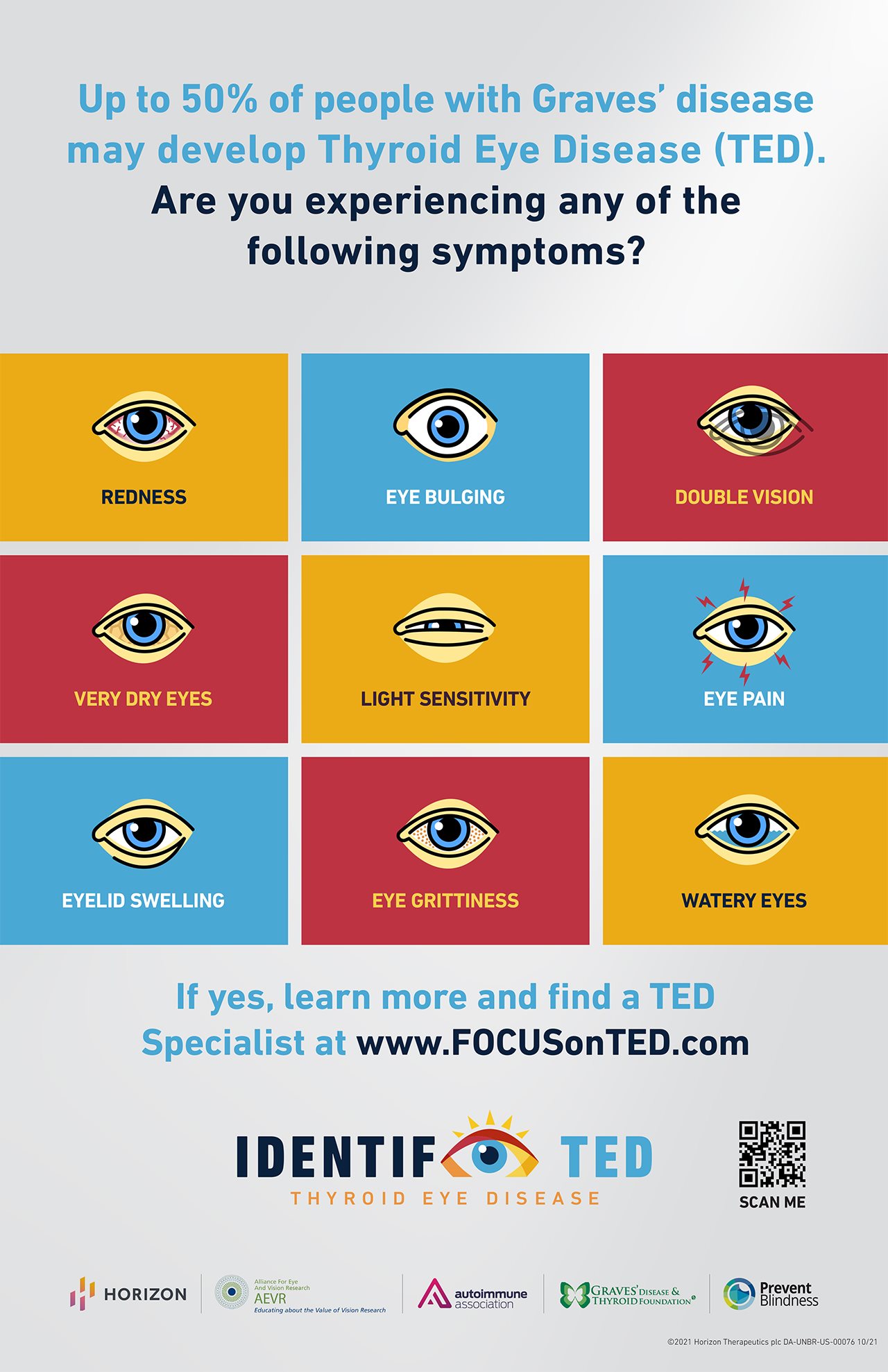
(BPT) – If you are experiencing symptoms like eye bulging, double vision, dry or watery eyes, severe pain or pressure behind your eyes, these could be signs of Thyroid Eye Disease (TED) — a serious, progressive and potentially vision-threatening rare autoimmune disease.

TED mostly affects people who have thyroid disorders, like Graves’ disease (hyperthyroidism) or Hashimoto’s disease (hypothyroidism). In fact, up to 50% of people with Graves’ disease may develop TED – so much so that many people who have Graves’ disease assume it’s a normal part of the disease. However, TED is a separate condition from Graves’ disease, requiring separate treatment. If you or a loved one have Graves’ disease, it’s important to pay attention to your eyes. You should monitor your eye symptoms, write them down and report them to a TED Specialist. The sooner treatment is started for TED, the better.

Here’s more you should know about TED.

Who is at risk for TED?

  • Women are up to 5 times more likely to develop TED than men
  • Up to 50% of people living with Graves’ disease may develop TED
  • TED can also be seen in people who have Hashimoto’s or hypothyroidism
  • Smoking increases the risk of developing TED by 8 times
  • TED typically affects people ages 40-49 and 60-69

What are the symptoms of TED?

TED is often misdiagnosed for more common conditions, such as allergies and dry eye, because the symptoms can be similar. It is important to get an early diagnosis because TED gets worse over time, and delays in being properly diagnosed and treated can cause serious damage, both to your vision and to the appearance of your eyes.

Eye symptoms that can help you “IdentifEYE” TED:

  • Dry or gritty feeling
  • Feeling like something’s stuck in your eyes
  • Watery, teary eyes
  • Redness
  • Eye pain and pressure behind your eyes
  • Bulging eyes and/or swollen eyelids
  • Eyelid retraction (pulled back eyelids)
  • Misaligned eyes (eyes point in different directions)
  • Sensitivity to light
  • Blurry and/or double vision
  • Loss of vision/color vision

What kind of specialist should you see?

While an ophthalmologist may be the first doctor you see for eye symptoms like these, if you have a thyroid condition, like Graves’ disease, and are experiencing eye symptoms, you should see a TED Specialist. Because TED is a complicated disease, it is best treated by a trained eye specialist such as a neuro-ophthalmologist or oculoplastic surgeon.

“Receiving the correct diagnosis and starting treatment as soon as possible is crucial to managing Thyroid Eye Disease,” said Dr. Ana Carolina Victoria, oculoplastic and reconstructive surgeon and TED Specialist. “It’s important for patients to monitor their symptoms and get the support they need.”

How to find support as you manage TED

Because TED can negatively affect your vision, it can interfere with daily responsibilities and activities. Simple tasks like walking or driving can become hazardous, and many people find it difficult to work, especially on a computer. The disease can also cause physical changes to your appearance, which can lead to a loss of self-confidence and withdrawal from social settings. TED can be very isolating, so it’s important to get support and know that you are not alone.

“After years of living alone with this condition, I discovered a community of others with TED,” said California native Christine, who had been living with Graves’ disease for three years before she started noticing symptoms of TED. “Connecting with the right TED Specialist and other TED patients was so important because I finally felt understood and knew what steps I needed to take.”

In recognition of the second-annual Thyroid Eye Disease Awareness Week, November 14–20, consider learning more about TED or supporting a loved one living with the disease.

For more information or to find a TED Specialist near you, visit FOCUSonTED.com.

A Caregiver’s Perspective – Managing A Loved One’s Mental Health and Tardive Dyskinesia

2021-11-18T08:01:00

(BPT) – ADVERTISEMENT

This article was sponsored and developed by Neurocrine Biosciences Inc. Forrest and Moira were compensated by Neurocrine Biosciences Inc. to share their story.

Whether you’re caring for a loved one’s physical or mental state, this November, we commemorate caregivers across the country for providing well-needed care for their families during National Family Caregivers Month.

Approximately 39.8 million caregivers provide care to loved ones. Those who require caregiving vary in age, so the duties and responsibilities caregivers must undertake may span from buying groceries and cooking, to helping manage medications and attending medical appointments. National Family Caregivers Month is an important time to honor those who provide these crucial services.

Forrest, hailing from Long Island, New York is a proud husband, father, and care partner to his wife, Moira. Forrest prefers to refer to himself as a care partner, rather than a caregiver because he and Moira are navigating her mental health journey together. He is an ordained as a Roman Catholic priest and a Protestant minister, as well a social worker.

He met Moira through an online dating service in New York City. Soon after, the couple married and have a family with Moira’s two children from a previous marriage.

A few years into their marriage, Moira’s battle with major depressive disorder and bipolar disorder resurfaced. “This depression was very different than anything I’d experienced in the past. I had no appetite and was in terrible psychological and physical pain,” said Moira.

After consulting with her psychiatrist, Moira was prescribed antipsychotics to treat her depression and bipolar disorder. Over two years later, she started experiencing involuntary movements in her mouth. “The movements were so extreme that people thought I was chomping on gum,” said Moira. “It wasn’t even subtle looking.” People even commented on Moira’s movements while she was leading service at her church.

When Forrest first noticed Moira’s symptoms, he was heartbroken. “I’ll never forget the day in our study when she asked me to look in her mouth because she felt phantom objects with her tongue – and of course, there was nothing there,” Forrest said. Forrest couldn’t bring himself to suggest her involuntary movements may be part of another health condition. Forrest’s suspicions were confirmed after Moira visited her neurologist, who conducted a full assessment and later diagnosed her with tardive dyskinesia (TD).

TD is a movement disorder characterized by uncontrollable, abnormal, and repetitive movements of the face, torso, and/or other body parts, which may be disruptive and negatively impact those living with the condition. TD is associated with taking certain kinds of mental health medicines (antipsychotics) that help control dopamine receptors in the brain. Approximately 600,000 people in the U.S. may be affected by this condition.

Moira’s TD diagnosis changed their relationship as she began to withdraw further and experienced self-esteem issues. “I spent a lot of time talking to Moira to help her cope,” said Forrest. “It was a difficult time because she previously had a job that required a public presence and was having trouble working.”

As Moira’s care partner, Forrest accompanied his wife to appointments and took on a historian role. He recorded dates, events, and medication dosages ahead of each appointment. “She needed a lot of support then, as her work was in jeopardy and her depression was getting worse,” said Forrest.

Forrest’s role also extends beyond caring for Moira’s physical symptoms of TD. He also provides emotional and mental support. “There would be moments where I woke up and the movements would start. Forrest was there and helped me continue with life. He kept pushing me to do the next thing,” said Moira. “Without Forrest, I think I would have been hospitalized for my depression.”

In 2017, Moira’s psychiatrist prescribed INGREZZA® (valbenazine) capsules for her TD, the only once-daily treatment for adults with TD. INGREZZA is a prescription medicine used to treat adults with movements in the face, tongue, or other body parts that cannot be controlled (tardive dyskinesia). It is not known if INGREZZA is safe and effective in children. The most common side effect is sleepiness (somnolence).

She began taking INGREZZA, and Forrest noticed a reduction in the severity of her involuntary movements caused by TD a month later. Both Forrest and Moira noticed the involuntary movements were also less severe. Individual results may vary. Some taking INGREZZA begin to notice a reduction in movements at 2 weeks with clinical results at 6 weeks.

Please see Full Important Safety Information below and Prescribing Information

“It was a bleak situation with Moira,” said Forrest. “TD had an emotional impact on Moira, and I could see its outward impact on her work and family life. Now that Moira is on treatment with INGREZZA, her TD symptoms are much more manageable.”

To learn more about TD and INGREZZA, talk to your doctor or visit INGREZZA.com for more safety information.

Download the doctor discussion guide on Ingrezza.com to help talk to your doctor about your TD movements.

This article was sponsored and developed by Neurocrine Biosciences Inc. Forrest and Moira were compensated by Neurocrine Biosciences Inc. to share their story.

See Important Safety Information Below

Important Information

Approved Use

INGREZZA® (valbenazine) capsules is a prescription medicine used to treat adults with movements in the face, tongue, or other body parts that cannot be controlled (tardive dyskinesia).

It is not known if INGREZZA is safe and effective in children.

IMPORTANT SAFETY INFORMATION

Do not take INGREZZA if you:

  • are allergic to valbenazine, or any of the ingredients in INGREZZA.

INGREZZA may cause serious side effects, including:

  • Sleepiness (somnolence). Do not drive, operate heavy machinery, or do other dangerous activities until you know how INGREZZA affects you.
  • Heart rhythm problems (QT prolongation). INGREZZA may cause a heart problem known as QT prolongation.

Symptoms of QT prolongation may include:

  • fast, slow, or irregular heartbeat
  • shortness of breath
  • dizziness or fainting

Tell your healthcare provider right away if you have a change in your heartbeat (a fast or irregular heartbeat), or if you faint.

  • Abnormal movements (Parkinson-like). Symptoms include shaking, body stiffness, trouble moving or walking, or keeping your balance.

Before taking INGREZZA, tell your healthcare provider about all of your medical conditions including if you: have liver or heart problems, are pregnant or plan to become pregnant, or are breastfeeding or plan to breastfeed.

Tell your healthcare provider about all the medicines you take, including prescription and over-the-counter medicines, vitamins, and herbal supplements.

The most common side effect of INGREZZA is sleepiness (somnolence). Other side effects include changes in balance (balance problems, dizziness) or an increased risk of falls, headache, feelings of restlessness, dry mouth, constipation, and blurred vision.

These are not all of the possible side effects of INGREZZA. Call your doctor for medical advice about side effects. You are encouraged to report negative side effects of prescription drugs to the FDA. Visit MedWatch at www.fda.gov/medwatch or call 1-800-FDA-1088.

Please see accompanying INGREZZA full Product Information.

©2021 Neurocrine Biosciences, Inc. All Rights Reserved. CP-VBZ-US-1722 11/21

Living with malignant pleural mesothelioma: How one man found a different treatment option

2021-11-17T23:01:00

(BPT) – Harold L. was raised in a Kansas farming family as one of fourteen siblings. Unfortunately, throughout his active life and unbeknownst to him, he had been exposed to asbestos; first, as a young man growing up on the family farm and then while on active duty in the military. But his greatest exposure occurred throughout his long career in the building industry, due to contact with building supplies and shingles.

All of this led to ongoing fluid buildup in his lungs, which had to be drained multiple times over the course of four years. In June 2020, Harold had to undergo a pleurodesis, a procedure to eliminate the space in the lungs where fluid tends to build up. His condition worsened when his doctor discovered a tumor during surgery, which led to a serious diagnosis: Stage IV malignant pleural mesothelioma (MPM). His doctor immediately ordered CAT and PET scans to assess the extent of the cancer and to determine a treatment plan.

In August 2020, Harold began chemotherapy, and regular scans showed that the chemotherapy helped to decrease the size of the tumor. Then in April 2021, he switched to low dose chemotherapy along with Optune Lua®, a wearable device approved by the FDA. His doctor explained that Optune Lua is non-invasive and delivers treatment directly to the tumor. It works by delivering low-intensity, wave-like electric fields via adhesive patches called transducer arrays, placed on a patient’s body.

These fields, known as Tumor Treating Fields or TTFields, leave patients’ healthy cells mostly unaffected, and slow and sometimes stop cancer cells from dividing. Some cancer cells are even destroyed completely.

Harold is treated at Hays Medical Center, and he was the first patient in the University of Kansas Medical system to use the Optune Lua device, as well as the first patient in the U.S. to receive the second-generation version of the device. The second-generation Optune Lua system is smaller and lighter than the original system, weighing just 2.7 pounds, and was designed with convenience, carrying comfort, and usability in mind.

“The second-generation device is lighter and is designed in a way that makes it convenient to carry with me throughout my day, I’m grateful this version is now available,” said Harold.

His wife and caregiver Pat noticed that her husband has been able to start doing things he enjoys again, like spending time with his large family — six daughters and fourteen grandchildren — and making music.

“Harold plays guitar, sings and can play almost any instrument by ear if he has it in his hands long enough. That slowed down for a while since he couldn’t breathe as well,” recalls Pat. “Now he’s picked it back up again and the kids are delighted. We have a musical family.”

Learn more about a treatment option for MPM at OptuneLua.com/mesothelioma-treatment.

Indication and Important Safety Information for Optune Lua®

What is Optune Lua® approved to treat?

Optune Lua is a wearable, portable, FDA-approved device indicated for the treatment of adult patients, with unresectable, locally advanced or metastatic, malignant pleural mesothelioma (MPM) to be used together with standard chemotherapy (pemetrexed and platinum-based chemotherapy).

Who should not use Optune Lua?

Optune Lua is not for everyone. Talk to your doctor if you have:

An implanted electronic medical device including a pacemaker, implantable automatic defibrillator, etc. Optune Lua has not been tested in people with implanted electronic devices, which may cause the devices not to work properly

A known sensitivity to conductive hydrogels (the gel on the arrays placed on the upper body like the ones used on EKGs). When Optune Lua comes into contact with the skin, it may cause more redness and itching or may rarely cause a life-threatening allergic reaction

Do not use Optune Lua if you are pregnant or are planning to become pregnant. It is not known if Optune Lua is safe or effective during pregnancy.

What should I know before using Optune Lua?

Optune Lua should only be used after receiving training from qualified personnel, such as your doctor, a nurse, or other medical staff who have completed a training course given by Novocure®, the maker of Optune Lua.

• Do not use any parts that did not come with Optune Lua sent to you by Novocure or given to you by your doctor

• Do not get the device or transducer arrays wet

• Please be aware that Optune Lua has a cord that may cause tripping when connected to an electric socket

• If you have an underlying serious skin condition on the upper body, discuss with your doctor whether this may prevent or temporarily interfere with the Optune Lua treatment

What are the possible side effects of Optune Lua?

Most common side effects of Optune Lua when used together with chemotherapy were low red blood cell count, constipation, nausea, tiredness, chest pain, fatigue, skin irritation from device use, itchy skin, and cough.

Other potential adverse effects associated with the use of Optune Lua include: treatment related skin irritation, allergic reaction to the plaster or to the gel, electrode overheating leading to pain and/or local skin burns, infections at sites of electrode contact with the skin, local warmth and tingling sensation beneath the electrodes, muscle twitching, medical device site reaction and skin breakdown/skin ulcer.

Talk to your doctor if you have any of these side effects or questions.

Please click here to see the Optune Lua Instructions For Use (IFU) for complete information regarding the device’s indications, contraindications, warnings, and precautions.

How One Woman Turned Type 2 Diabetes Into a Wake-up Call

2021-11-17T12:47:00

(BPT) – Sponsored by Novo Nordisk.

Meet Nikki M., registered nurse, mom, military wife, and avid tennis player. She is also one of about 32 million people in the United States living with type 2 diabetes.[a] To see Nikki today, you wouldn’t expect her to be someone who once struggled to maintain a healthy lifestyle. She’s incredibly active and eats a well-balanced diet. But it wasn’t always that way. After years of juggling a hectic schedule and putting everyone else in her life first, the stress finally caught up.

A mother of two, whose husband was frequently deployed by the Kentucky Air National Guard, Nikki became used to managing a busy and family-first life single-handedly. “There’s a lot of added pressure when your partner is not there to share in the stresses and celebrations that come with raising children.” But in 2019, her role as sole caregiver was stretched to the max. After work, childcare and tending to home responsibilities, Nikki had little to no time left for self-care, sticking to a consistent meal plan or finding the time to exercise. “At the time, I was just being a mom and not taking care of myself or really anything else.” She even stopped doing something she loved most, playing tennis.

Gradually, her health started to take a downturn. Usually an upbeat and outgoing person, Nikki started noticing that she wasn’t feeling like her old racket-wielding self anymore. “I was on edge and sluggish, I was snappier with my kids, I was tired and would nap a lot. I gained a lot of weight.” Years of ignoring her own health were taking a toll.

In December 2020, Nikki went for her annual health checkup and was told that her blood sugar levels were higher than they should be, now for the second year in a row. As a nurse, she recognized the warning signs. She had to face an uncomfortable truth—that she may have type 2 diabetes, and she knew what the condition could do to someone if left untreated. Nikki knew she couldn’t ignore the issue any longer. She took action and found an endocrinologist, who diagnosed her with type 2 diabetes.

The diagnosis was heartbreaking, but she wasn’t going to let type 2 diabetes define her. She reset her priorities and started putting her health first. Initially, Nikki was put on metformin along with lifestyle modifications, but it wasn’t getting her to her blood sugar goal. Nikki worked with her endocrinologist to create a revised treatment plan that included taking RYBELSUS® (semaglutide) tablets 7 mg, along with being more active and making better food choices. Her blood sugar control started to take a turn for the better. RYBELSUS® is a prescription medicine that can improve blood sugar in adults with type 2 diabetes, along with diet and exercise. From the very first day after her diagnosis, Nikki was determined to stick to her newfound self-care plan and get her blood sugar back on track. Because RYBELSUS® is taken only once each day, Nikki was able to incorporate it into her daily routine.

Her persistence and commitment have paid off. After a few months of incorporating RYBELSUS® into her daily routine, along with the changes she was able to make to her diet and exercise plan, she has seen an improvement in her blood sugar levels. Nikki has also made time for doing the things she loves. She walks every day and plays tennis with her best friends two to three times a week. She also joined a local gym and started cooking more meals at home.

Nikki’s proactive attitude and desire to be a role model for her children motivated her to take ownership of her type 2 diabetes. Her story shows us that, with determination and commitment to taking charge of your health, type 2 diabetes can be managed. Nikki is just one of a growing number of people who prove that type 2 diabetes doesn’t have to control your life but the diagnosis itself can be a wake-up call to make changes in your life.

What is RYBELSUS®?

RYBELSUS® (semaglutide) tablets 7 mg or 14 mg is a prescription medicine used along with diet and exercise to improve blood sugar (glucose) in adults with type 2 diabetes.

  • RYBELSUS® is not recommended as the first choice of medicine for treating diabetes
  • It is not known if RYBELSUS® can be used in people who have had pancreatitis
  • RYBELSUS® is not for use in people with type 1 diabetes
  • It is not known if RYBELSUS® is safe and effective for use in children under 18 years of age

Important Safety Information

What is the most important information I should know about RYBELSUS®?

RYBELSUS® may cause serious side effects, including:

  • Possible thyroid tumors, including cancer. Tell your healthcare provider if you get a lump or swelling in your neck, hoarseness, trouble swallowing, or shortness of breath. These may be symptoms of thyroid cancer. In studies with rodents, RYBELSUS® and medicines that work like RYBELSUS® caused thyroid tumors, including thyroid cancer. It is not known if RYBELSUS® will cause thyroid tumors or a type of thyroid cancer called medullary thyroid carcinoma (MTC) in people

Do not use RYBELSUS® if:

  • you or any of your family have ever had MTC, or if you have an endocrine system condition called Multiple Endocrine Neoplasia syndrome type 2 (MEN 2)
  • you have had a serious allergic reaction to semaglutide or any of the ingredients in RYBELSUS®. See symptoms of serious allergic reaction in “What are the possible side effects of RYBELSUS®?”

Before using RYBELSUS®, tell your healthcare provider if you have any other medical conditions, including if you:

  • have or have had problems with your pancreas or kidneys
  • have a history of vision problems related to your diabetes
  • are pregnant or plan to become pregnant. It is not known if RYBELSUS® will harm your unborn baby. You should stop using RYBELSUS® 2 months before you plan to become pregnant. Talk to your healthcare provider about the best way to control your blood sugar if you plan to become pregnant or while you are pregnant
  • are breastfeeding or plan to breastfeed. Breastfeeding is not recommended during treatment with RYBELSUS®

Tell your healthcare provider about all the medicines you take, including prescription and over-the-counter medicines, vitamins, and herbal supplements. RYBELSUS® may affect the way some medicines work and some medicines may affect the way RYBELSUS® works.

How should I take RYBELSUS®?

  • Take RYBELSUS® exactly as your healthcare provider tells you to
  • Take RYBELSUS® by mouth on an empty stomach when you first wake up with a sip of plain water (no more than 4 ounces)
  • Do not split, crush, or chew. Swallow RYBELSUS® whole
  • After 30 minutes, you can eat, drink, or take other oral medicines
  • If you miss a dose of RYBELSUS®, skip the missed dose and go back to your regular schedule

What are the possible side effects of RYBELSUS®?

RYBELSUS® may cause serious side effects, including:

  • inflammation of your pancreas (pancreatitis). Stop using RYBELSUS® and call your healthcare provider right away if you have severe pain in your stomach area (abdomen) that will not go away, with or without vomiting. You may feel the pain from your abdomen to your back
  • changes in vision. Tell your healthcare provider if you have changes in vision during treatment with RYBELSUS®
  • low blood sugar (hypoglycemia). Your risk for getting low blood sugar may be higher if you use RYBELSUS® with another medicine that can cause low blood sugar, such as a sulfonylurea or insulin. Signs and symptoms of low blood sugar may include: dizziness or lightheadedness, blurred vision, anxiety, irritability or mood changes, sweating, slurred speech, hunger, confusion or drowsiness, shakiness, weakness, headache, fast heartbeat, and feeling jittery
  • kidney problems (kidney failure). In people who have kidney problems, diarrhea, nausea, and vomiting may cause a loss of fluids (dehydration), which may cause kidney problems to get worse. It is important for you to drink fluids to help reduce your chance of dehydration
  • serious allergic reactions. Stop using RYBELSUS® and get medical help right away, if you have any symptoms of a serious allergic reaction, including swelling of your face, lips, tongue, or throat; problems breathing or swallowing; severe rash or itching; fainting or feeling dizzy; or very rapid heartbeat

The most common side effects of RYBELSUS® may include nausea, stomach (abdominal) pain, diarrhea, decreased appetite, vomiting, and constipation. Nausea, vomiting, and diarrhea are most common when you first start RYBELSUS®.

Please see Prescribing Information and Medication Guide for RYBELSUS®.

You are encouraged to report negative side effects of prescription drugs to the FDA. Visit www.fda.gov/medwatch or call 1-800-FDA-1088.

Visit Rybelsus.com to learn more.


[a] Centers for Disease Control and Prevention. Type 2 Diabetes. https://www.cdc.gov/diabetes/basics/type2.html. Last accessed: September 2021

RYBELSUS® is a registered trademark of Novo Nordisk A/S.

Novo Nordisk is a registered trademark of Novo Nordisk A/S.

© 2021 Novo Nordisk All rights reserved. US21RYB00630 November 2021

Embrace Your Inner Goddess: How Moms Can Stay Centered, Healthy and Stress-free Through the Holiday Season with Kundalini Yoga

2021-11-15T02:01:00

(BPT) – Preparing for the holidays is a breeze. Especially if you have kids. There’s nothing more relaxing than managing menus, cleaning up after guests, decorating the house, buying gifts, making travel arrangements, navigating family drama, and hosting social gatherings, especially during a global pandemic.

No, wait.

The opposite.

It’s exhausting! And like much of the stress of the pandemic, many of these activities and organizational responsibilities fall on moms.

There’s no avoiding the holidays — they are coming, ready or not. But there are things we can do to take care of ourselves so that we can get through the next few months with our health and sanity.

Remember this:

You Are a Goddess.

Write it down on a Post-it note and put it on your bathroom mirror. Write it on your hand with a Sharpie if you have to. You are strong and fierce and wise.

Awaken your Kundalini through meditation.

“Kundalini” describes the divine feminine energy that is inherent in all beings. It’s often portrayed as being a coiled snake, lying dormant at the base of the spine. (If you’re a mom, you might relate, because what more does a mom want than to unwind?)

Accessing the Kundalini energy daily can deliver the strength you need to get through the stress of the holiday season. It can bring peace to your actions and help you understand that you are not alone — we are all in this together.

Here’s how.

Find somewhere you can be alone. (Moms will appreciate this already.) Kundalini Yoga can be practiced in a bedroom and no one will care how messy it is. It can be practiced in an office with a closed door. It can be practiced in a park. Everyone can find a place for this simple daily practice from 3HO, an organization dedicated to sharing the teachings of Kundalini Yoga:

Sit in a comfortable position with a straight spine — chin-in and chest lifted.

Rest your hands comfortably on your knees or in your lap. Try the Gyan Mudra hand gesture, touching your first finger and your thumb together like you would to signal “OK.”

Close your eyes and be aware of your breath.

Inhale through the nose in 8 equal strokes. Exhale through the nose in one deep and powerful stroke.

Continue for 11 minutes, or as long as feels comfortable.

Inhale deeply and hold the breath 5-10 seconds. Exhale. Inhale deeply and hold the breath 15-20 seconds and roll your shoulders. Exhale powerfully. Inhale deeply and hold the breath 15-20 seconds and roll the shoulders as fast as you can. Exhale and relax.

Now what?

This part is easy. Believe in yourself. Because you’ve got this.

Kundalini Yoga is a scientifically proven source of self-care. A study involving women with generalized anxiety disorder (GAD) found that just eight weeks of Kundalini Yoga can reduce anxiety levels to those seen following eight weeks of standard cognitive therapy.

For more information on Kundalini Yoga and how it can benefit your health and wellness, visit 3HO.org.