What can you do to protect your vision?

2021-10-25T08:01:00

(BPT) – You could probably predict the outcome of a study about whether people who don’t have vision insurance get adequate — or any — vision care. Unsurprisingly, less than half of Americans who lack health insurance get eye care services, according to the Centers for Disease Control and Prevention.

Yet you might be surprised to learn you can buy vision insurance regardless of whether you have private or public health insurance, get insurance through your employer or buy it on your own, or even if you have none at all. And you can purchase it for roughly the cost of one large coffee-shop beverage per week.

From injuries to age-related vision changes, chances are you or a family member will need eye care at some point. In fact, the CDC predicts within the next four years, half of all Americans will have eye diseases and associated vision loss as the population grows older. “People must have access to eye care services and then actually use the services if their eye conditions are to be detected and treated,” the CDC says. “However, not all U.S. residents have sufficient access to these services.”

Vision insurance can be a cost-effective way to help gain affordable access to vision care, protect your eye health, and reduce the cost of necessities like exams, glasses and contact lenses. Here are some eye-opening facts about vision insurance:

  • Some employers offer vision coverage as a voluntary benefit — that is, an extra benefit that you can pay for. When you get vision coverage through an employer, your company may cover all, a portion of or none of the premium. If your employer doesn’t offer vision insurance, you can purchase it on your own for an affordable cost. For example, VSP Individual Vision Plans offers vision coverage plans as low as $13 per month, depending on your state.
  • A vision benefits plan is not the same as a vision discount plan, although both can be part of a vision insurance plan. A benefits package works much like your health insurance; you may have a co-pay at the time of service with the insurance plan paying some or all of the balance directly to the provider, whom you will chose from an approved network. With a discount plan, you pay for all services but at a lower price that the plan administrators have negotiated with care providers in their network.
  • Vision insurance can save your eyesight and your wallet. Routine eye care can catch problems early, when they are most treatable, and proper treatment can prevent an existing problem from becoming worse or even unmanageable. What’s more, vision insurance can lower the cost of vision care significantly; VSP publicizes that plan-holders typically save an average of $455 a year on eye exams, glasses, contacts and other types of eye care.

According to the CDC, vision disability is one of the top 10 disabilities among adults, and one of the most common disabling conditions among children. Vision problems are also among the most detectable, preventable and treatable conditions, yet only half the estimated 61 million American adults at high risk for serious vision problems saw an eye doctor in the past year, the CDC says.

Having insurance is one of the most critical predictors that you’ll get the health care you need, including vision care. According to the Kaiser Family Foundation, people who lack insurance are more than twice as likely to delay or skip needed care.

To learn more about vision insurance and find an affordable vision plan that’s right for you, visit www.vspdirect.com.

Why sleep experts recommend eliminating daylight saving time

2021-10-20T16:01:02

(BPT) – Nov. 7 is approaching, and with it the end of daylight saving time, when those in most of the U.S. will “fall back” to standard time by setting clocks back one hour. If the American Academy of Sleep Medicine (AASM) had its way, this would be the last time change in the U.S., and the switch to standard time would be permanent.

There is widespread support for the elimination of the biannual time change.

  • In a 2020 AASM survey, 63% of U.S. adults indicated they support the elimination of seasonal time changes in favor of a national, fixed, year-round time.
  • The AASM and other organizations representing health, safety and education recommended eliminating seasonal time changes and adopting permanent standard time for improved public health and safety in a 2020 AASM position statement.
  • In early 2021, Sen. Marco Rubio of Florida and several Republican and Democratic colleagues reintroduced in the U.S. Senate a bill that would make daylight saving time permanent across the U.S.

Eliminating seasonal time changes

There is ample evidence of the negative, short-term consequences of seasonal time changes. Studies have found an increase in car accidents during the week following the change to daylight saving time and an increase in patient-safety related incidents associated with human error in the week following the transition into and out of daylight saving time. Other negative effects of the time change in the spring include increased risk of stroke and hospital admissions, and increased production of inflammatory markers, one of the body’s responses to stress. Conversely, another study found that in the fall, during the shift from daylight saving time back to standard time, there was a reduction in the rate of cardiovascular events, suggesting that the risk of heart attack may be elevated because of chronic effects of daylight saving time.

“Light is the most powerful timing cue for the human body clock,” said Erin Flynn-Evans, who has a doctorate in health and medical science and is director of the NASA Ames Research Center Fatigue Countermeasures Laboratory and a consultant to the AASM’s Public Safety Committee. “Shifting to permanent daylight saving time in the winter would result in more darkness in the morning and more light in the evening, leading to misalignment between the body’s daily rhythm and the timing of routine social obligations, like work or school. That has the potential to make it harder for most people to fall asleep at night, disrupting sleep quality and leading to sleep loss, which can negatively impact health and safety.”

While there is debate about how the merits of permanent daylight saving time would compare with permanent standard time, the AASM position is that a change to permanent standard time is best aligned with human circadian biology and has the potential to produce beneficial effects for public health and safety.

Tips for managing the time change

For now, the November switch back to standard time is still a reality. As it begins to get dark earlier in the evening, it is the ideal opportunity to reset your body clock for an extra hour of sleep. To maximize the benefits of the hour gained from the fall time change on Nov. 7, the AASM recommends the following healthy sleep tips for anyone who is getting insufficient sleep:

  • Wait to change your clocks until it is time to get ready for bed.
  • Go to bed at your usual bedtime.
  • Just before getting into bed, set your clocks back one hour.
  • Wake up at your standard wake time.
  • Take note of how much better you feel after an extra hour of sleep.
  • On the Sunday after the time change, your normal bedtime will be an hour earlier. Go to bed at this earlier time to reset your sleep schedule to achieve longer sleep.

More information about sleep and sleep disorders is available from the AASM at www.SleepEducation.org. To get help for a sleep problem, use the AASM’s online directory on the SleepEducation.org homepage to find an accredited sleep center near you.

6 tricks and treats for kids to enjoy a healthier Halloween

2021-10-20T13:01:00

(BPT) – Kids love Halloween, and it’s no wonder — on what other occasion are they allowed to have so many treats at one time? While you love letting them enjoy the holiday, here’s a few tricks to treat kids — from healthy snacks to easy ways to keep them active. Check out these fun and festive candy alternatives to keep you from being spooked.

1. Use tangerines to create fun — and edible — decorations

You can use little tangerines in two different ways to create a festive Halloween atmosphere that doubles as a healthy snack.

  • Leave the peel on: Draw jack-o’-lantern faces on tangerines with markers. This is a fun activity for kids who are too young to help carve pumpkins. Let the marker face fully dry before handling (or peeling to eat!).
  • Peel but leave whole: Create stems with sticks of cut celery or raw green beans and stick them in the center of each tangerine. Arrange the mini “pumpkins” on a platter to admire, then let kids at ’em.

2. Hand out Halloween GoGo squeeZ Fruit pouches for a spooky treat on the go

Made from 100% real fruit in squeezable, re-closeable and BPA-free pouches, GoGo squeeZ is a healthy and delicious alternative to sugar-filled candies and snacks. These specially designed Halloween packs come in four unique designs and are perfect for trick-or-treaters, family parties, kids’ events, sports teams and classroom snacks.

Dani Lebovitz, MS, RDN shares that “it’s gluten free, nut free and non-dairy, with no added colors, flavors or high fructose corn syrup. It’s also free from the top 8 allergens.”

Check out the fun Halloween packages of applesauce in these spooky flavors: Creepy-Crawly Apple Strawberry, AHHHH! Apple Apple and Unbelievable Apple Banana, all available on GoGo squeeZ’s website and other select retailers.

3. Hold a mini pumpkin race

This is a great activity that uses energy while also calming kids down. Kids will need to focus and take their time as they balance a mini pumpkin on a large spoon to get to the finish line, indoors or out (depending on the weather).

Pumpkin fall off? You have to start over. For a large group of kids, set up as a relay race and play in teams.

4. Play pumpkin bean bag toss

Carve a big pumpkin with an extra-large mouth (think of a super surprised pumpkin!) and set out in the yard or on the porch. Provide kids with small bean bags (or make your own out of orange or black felt, filled with dried beans) and let them toss these into the pumpkin’s mouth. Let younger children stand closer to the target. Each bean bag in the pumpkin can earn the child a treat or small toy.

5. Let banana ghosts haunt your get-together

Cut bananas in half and stand them on a decorative plate with the pointed ends upward. You can create eyes and a mouth from many different edible items, from mini chocolate chips (push the pointed end of the chip into the banana) or sprinkles to your favorite cereal circles — to make your ghosts go “Oooh!”

6. Serve Halloween-themed sandwiches

Even ordinary sandwiches can seem extra special if you use Halloween cookie cutters — shaped like pumpkins, ghosts or witches’ hats — to cut pieces of bread, plus sliced cheese and meat if you’re not going the PB and J route. Decorate the plate around the sandwich with “eyeballs” made from grapes, olives or hard-boiled eggs, and “spiders” made of two round crackers filled with cheese spread or peanut butter in between, with pretzel sticks for legs.

With these tips, you can be sure your kids will have a fun-filled — and healthier — Halloween.

It’s Time to Resume Routine Care: Chronic Diseases Like Osteoporosis Haven’t Stopped During the Pandemic

2021-10-20T09:01:02

(BPT) – This content is sponsored by Amgen.

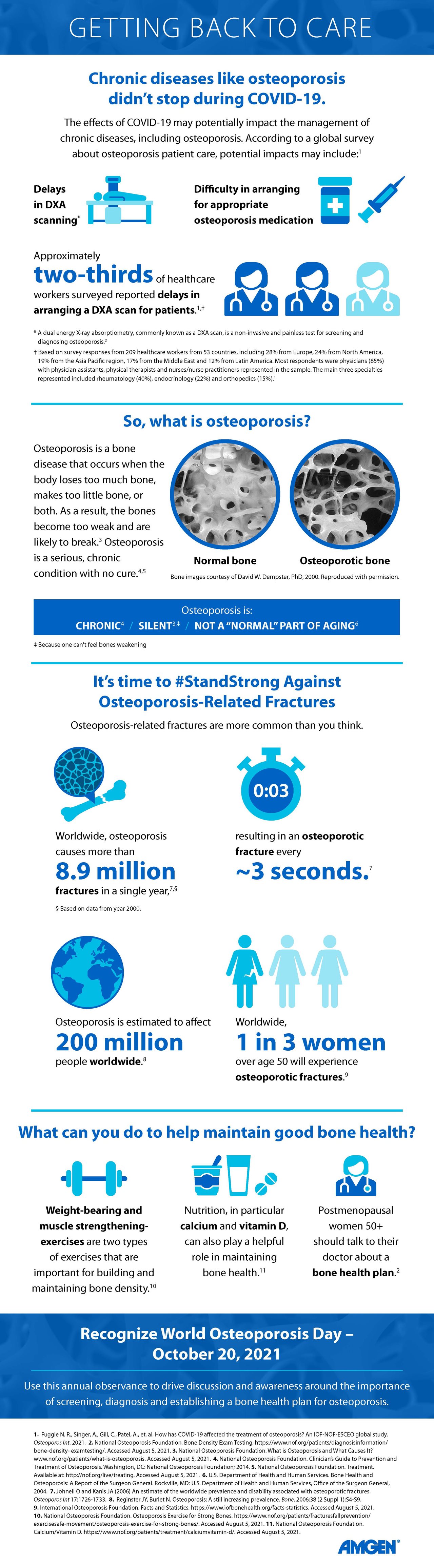
While many regular activities continue to be interrupted by the COVID-19 pandemic, one thing that hasn’t stopped is the need to screen, diagnose and treat chronic diseases such as osteoporosis. The pandemic has made it more difficult for people all over the world, including the United States, to see their doctors, but now it’s time to resume care, such as regular osteoporosis screenings, that can help keep serious diseases in check.

Evaluate Your Risk

A first step in knowing your risk for developing osteoporosis is becoming familiar with the risk factors of disease. For osteoporosis, a bone disease in which the bones become weak and more likely to break, some of the main risk factors include:1

  • Being age 65 or older2
  • Postmenopausal2
  • Tobacco use and excessive alcohol intake (>3 drinks per day)2,3
  • Low body weight2,3
  • Calcium deficiency2,3
  • Having a parent who suffered a hip fracture2,3

Screenings are important to help prevent the impact of serious diseases like osteoporosis.3

“It remains very important for patients to follow a bone health plan in consultation with a healthcare professional, such as their primary care physician or a specialist such as an endocrinologist, rheumatologist or gynecologist, depending on their specific situation,” said Henry G. Bone, MD, MACP, FRCP, FACE. “While COVID-19 persists, women already receiving treatment should discuss with their doctor any issues or concerns related to gaining access to care.”

Osteoporosis: A Refresher

Osteoporosis is estimated to affect about 200 million people worldwide, including about 10 million Americans.4,5 The impact of the disease and the related bone fractures is very significant.3 The disease causes more than 8.9 million fractures worldwide every year—or a bone break about every ~3 seconds.6 And it may surprise many people to know that a fracture related to osteoporosis can be a life-altering event that can lead to the loss of one’s mobility and changes in a person’s lifestyle.3

In New Jersey, more than 34,400 women have experienced at least one osteoporosis-related fracture, with 40% of those fractures being an index hip osteoporosis-related fracture.7,8*

It is important to be aware that osteoporosis is a serious, chronic condition with no cure that can cause bones to weaken and increase the risk of breaking a bone.9,10 Other important things to know about osteoporosis include:

  • Osteoporosis occurs when the body loses too much bone, makes too little bone, or both.1
  • It is often called a silent disease because one can’t feel bones weakening.1
  • A bone break is often the first sign of osteoporosis. Such breaks can occur from a minor fall or, if severe, even a strong sneeze.1
  • Bone breaks can make daily activities more difficult.11
  • Weight-bearing and muscle strengthening-exercises are two types of exercises that are important for building and maintaining bone density.12
  • Nutrition, especially proper levels of calcium and vitamin D, can be helpful in maintaining bone health.13

Your health isn’t guaranteed – take the necessary steps to look out for your well-being by visiting a healthcare professional to get screened for osteoporosis and to develop a bone health plan today.

Learn more at https://www.takechargeofosteo.com/what-to-know.html.

*A retrospective database analysis of women aged >= 66 years identified from 100% FFS Medicare data was conducted. The first occurring non-traumatic osteoporosis-related fracture between Jan 1, 2011-Dec 31, 2017 was used to identify women to be included in the analysis, and marked as their index fracture. Results may not represent the total number of fractures.

Index fracture: the first osteoporosis fracture measured during the analysis time period.

References

  1. National Osteoporosis Foundation. What is Osteoporosis and What Causes It? https://nof.org/patients/what-is- osteoporosis. Accessed October 5, 2021.
  2. Camacho PM, Petak SM, Binkley N, et al. American Association Of Clinical Endocrinologists/American College Of Endocrinology Clinical Practice Guidelines For The Diagnosis And Treatment Of Postmenopausal Osteoporosis-2020 Update. Endocr Pract. 2020;26(Suppl 1):1-46.
  3. Cosman F, de Beur SJ, LeBoff MS, et al. Clinician’s Guide to Prevention and Treatment of Osteoporosis [published correction appears in Osteoporos Int. 2015 Jul;26(7):2045-7]. Osteoporos Int. 2014;25(10):2359-2381.
  4. Reginster JY, Burlet N. Osteoporosis: A still increasing prevalence. Bone. 2006;38 (2 Suppl 1):S4-S9.
  5. National Osteoporosis Foundation. Fast Facts. https://cdn.nof.org/wp-content/uploads/2015/12/Osteoporosis-Fast-Facts.pdf. Accessed October 5, 2021.
  6. Johnell O and Kanis JA (2006) An estimate of the worldwide prevalence and disability associated with osteoporotic fractures. Osteoporos Int. 17:1726-1733.
  7. Data on file, Amgen; 2020.
  8. Lewiecki EM, Singer AJ, Rane PB, et al. Geographic Variation in Prevalence of Osteoporosis Diagnosis and Utilization of Anti-Osteoporosis Therapies in United States Female Medicare Fee-for-Service Beneficiaries With Fragility Fractures. Poster presented at: American Society for Bone and Mineral Research 2020 Annual Meeting; September 11-15, 2020; Virtual Event.
  9. National Osteoporosis Foundation. Treatment. Available at: http://nof.org/live/treating. Accessed October 5, 2021.
  10. National Osteoporosis Foundation. Clinician’s Guide to Prevention and Treatment of Osteoporosis. Washington, DC: National Osteoporosis Foundation; 2014.
  11. Fischer, S., Kapinos, K.A., Mulcahy, A. et al. Estimating the long-term functional burden of osteoporosis-related fractures. Osteoporos Int. 28, 2843–2851 (2017).
  12. National Osteoporosis Foundation. Osteoporosis Exercise for Strong Bones. https://www.nof.org/patients/fracturesfallprevention/exercisesafe-movement/osteoporosis-exercise-for-strong-bones/. Accessed October 5, 2021.
  13. National Osteoporosis Foundation. Calcium/Vitamin D. https://www.nof.org/patients/treatment/calciumvitamin-d/. Accessed October 5, 2021.

The new normal prioritizes routine breast screening

2021-10-20T08:47:01

(BPT) – In the early days of COVID-19 when recommendations to remain at home were rampant, routine health screenings were relegated to the long list of “non-essential” activities. In retrospect, delaying screenings may have been counter-productive. As of March 2021, the diagnosis rate for breast and several other types of cancer dipped 19% below pre-pandemic rates. At first blush, it sounds like an improvement, but unfortunately that statistic is widely considered to be a reflection of less screening — not less cancer — and delays in detection are associated with more advanced disease, more aggressive and costly treatment, and worse outcomes, according to AuntMinnie.com.

A recent Prevent Cancer Foundation survey revealed that 31% of respondents who did not schedule a breast or cervical screening say they were worried about being exposed to the coronavirus. Fortunately, the new normal appears to value routine health screenings because in the same survey, 65% said they plan to book an appointment for a breast or cervical screening before the beginning of 2022. The benefit of “getting back on the books” can’t be over-emphasized, because finding breast cancer early makes it easier to treat or cure, according to the American Cancer Society. As Dr. Nicole Priest, chief wellness officer at Merit Medical explains it, “One of the most important choices women can make is to adhere to mammography screening guidelines. Mammography saves lives and today women diagnosed with early-stage breast cancer have options.”

Women can opt for less invasive surgery and breast-conserving treatments, which focus on removing only the tumor and allowing women to keep their healthy breast tissue. These options exist as a result of technological advances in detection and new treatment approaches. For instance, the wire-free SCOUT® Radar Localization System uses safe, non-invasive, radar technology for precise guidance during the surgery. With SCOUT, a tiny, passive reflector about the size of a grain of rice is placed at the tumor site either at the time of biopsy, prior to neoadjuvant chemotherapy, or at any time prior to surgery. Then during the procedure, the surgeon uses the SCOUT system to activate the reflector, which enables the surgeon to precisely locate and remove the tumor. The precision provided by RADAR localization has been clinically proven to reduce re-excision rates, according to Merit Medical data.

When COVID-related restrictions stalled cancer screenings and surgeries, a patient backlog ensued. In response, some breast centers pivoted to a more advanced application of SCOUT by placing the passive reflector at the time of biopsy to minimize the number of visits to the hospitals. A prime example is Intermountain Healthcare, an integrated health system based in Salt Lake City, Utah, where Dr. Brett Parkinson, Imaging Director Breast Care Services, is embracing this technology in a forward-thinking way. By consolidating diagnostic exams, biopsy and radar localization of highly suspicious breast lesions into a single visit, Parkinson and his team have been able to reduce the number of required patient interactions by 50%, from four to two. Parkinson’s observations on how care has improved since his team started placing SCOUT reflectors at the time of biopsy — which in most cases is on the same day as the diagnostic mammogram — stress the benefits to patients. “Women who’ve had previous wire localizations comment on the ease of the procedure compared to traditional localization,” said Parkinson, “and they love that they don’t have to return to the breast center for biopsy, and then again for a localization procedure.”

Since its introduction, SCOUT has been used in the treatment of over 235,000 breast cancer patients, and in a multi-site survey 97% of women who opted for SCOUT-assisted surgery said they would recommend it to other women, according to a 2016 study. For women who require radiation therapy after surgery, Merit’s brachytherapy system, SAVI® Brachy, delivers radiation directly to the lumpectomy site where the radiation is needed most, helping to spare surrounding healthy tissue. Along with SCOUT, these technologies are helping to reduce the burden that cancer places on women and their loved ones.

For more information, visit https://www.merit.com/merit-oncology/. Dr. Parkinson is a paid consultant of Merit Medical.

Supercharge your diet with foods rich in vitamin D

2021-10-20T07:01:01

(BPT) – When you think of healthy bones, calcium likely comes to mind. However, without another powerhouse nutrient, your body can’t absorb calcium. You need adequate amounts of vitamin D to keep your bones strong, which many people get from sunlight. The problem is, when shorter days arrive in the winter and people spend less time in the sun, vitamin D deficiency becomes a concern.

In addition to promoting bone health, vitamin D supports the body in many ways, from maintaining muscle and body tissue to boosting the immune system and supporting cognitive wellness. During cold weather months when there is less exposure to sun due to limited daylight hours and increased cloud coverage, the body may not obtain enough vitamin D. An easy solution is to adjust your diet and incorporate foods rich in vitamin D.

“As seasons change, our bodies can naturally crave comfort foods paired with seasonal produce,” said Marissa Meshulam, registered dietitian nutritionist and founder of MPM Nutrition. “As you enjoy these cozy recipes, try to be intentional about which foods you’re adding into your diet that are packed with vitamin D.”

Salmon

Americans tend to eat less fish than other countries around the world. Fish can be an important source of nutrients, and if you’re looking for fish with high amounts of vitamin D, salmon is your best bet. One 3.5-ounce serving of farmed Atlantic salmon contains 526 IU of vitamin D, or 66% of the recommended daily value, according to the U.S. Department of Agriculture. Try different preparations, from baking to poaching, to discover which you prefer. You can even purchase canned salmon and make salmon cakes or salmon salad — the same way you would make tuna salad — for a quick and easy lunch.

Mushrooms

For thousands of years mushrooms have been used in traditional medicine to treat a variety of ailments. Today, mushrooms are widely available at supermarkets, offering a nutrient-packed plant source of vitamin D. Enjoy trying different varieties including button, shitake and oyster. For a larger mushroom that some people use as a meat substitute, try portobello, which can act as sandwich buns or even a mushroom pizza base. Have fun choosing new recipes that incorporate mushrooms in a variety of ways to make meals interesting.

Eggs

Packed with vitamins and minerals, eggs are a versatile and delicious food. But keep in mind, not all eggs are created equal. Next time you’re at the grocery store, choose Eggland’s Best eggs with the bright red EB stamp, which provide superior nutrition compared to ordinary eggs. With six times more vitamin D, one Eggland’s Best egg is equivalent to 35% of the daily recommended amount. Plus, Eggland’s Best eggs have more than double the Omega-3s and vitamin B12, 10 times more vitamin E and 25% less saturated fat, making them a go-to ingredient to boost the nutrition in any recipe.

In addition to adding foods rich in vitamin D to your diet, explore recipes that bring these items together and explore tasty flavor combinations to keep mealtime enticing. Whether you’re looking for a twist on Sunday brunch or a crowd-pleasing appetizer, Egg Portobello Boats are a meatless option worth trying.

Egg Portobello Boats

Servings: 4

Ingredients

4 portobello mushrooms, cleaned, stemmed and gills removed
Juice and zest from 1 lemon
3 garlic cloves, minced
1/2 teaspoon kosher salt
1/4 teaspoon pepper
1 shallot, minced
4 large Eggland’s Best eggs
1 head hearts of romaine
1 cup grape tomatoes, quartered
1 tablespoon extra-virgin olive oil
1 tablespoon rice wine vinegar
1 teaspoon honey mustard
Salt and pepper
Asiago cheese
Store-bought french-fried onion

Directions

1. In a large zipper top bag, combine lemon juice, zest, garlic, salt, pepper and shallot with the mushrooms. Refrigerate for 45 minutes to 1 hour.

2. Heat a grill to medium/high heat. Brush grates with vegetable oil. Place marinated mushrooms on grates, gill/stem-side down. Grill for 6-7 minutes.

3. Flip mushrooms and crack one Eggland’s Best egg on top of each mushroom on the gill/stem-side. Close lid and grill until egg whites look solid, but yolks are still runny. About 6-7 minutes.

4. Whisk olive oil, rice wine vinegar, honey mustard and salt and pepper. Spoon over romaine and tomatoes placed on serving platter or plates.

5. Place the mushrooms on top of salad and top with shaved asiago cheese and crispy onions.

3 simple, dermatologist-approved steps for treating acne

2021-10-18T23:01:00

(BPT) – New research shows that adults with acne report feelings of acne-related depression, social isolation and anxiety that span both their personal and professional lives. The study, published in the medical journal JAMA Dermatology, highlights the difficulties adult acne poses and also sheds light on the challenges that adults face in accessing proper care. Fifty female participants, 18 to 40 years old with moderate to severe acne, were interviewed for the study.

Starting with a simple, three-step routine may simplify acne treatment, and help those who struggle with adult acne. Board-certified dermatologist Dr. Joshua Zeichner, M.D., offers his very simple yet effective approach to caring for your skin, especially if you have acne. But first, he recommends against switching to all new products all at the same time.

“If you’re starting any new skincare routine, my advice is to start with only one new product at a time,” said Zeichner. “Wait a few weeks to make sure that you don’t have any kind of reaction to a new product before adding on another one.”

Step 1: Use a gentle cleanser

The goal of cleansing is to remove any dirt, oil, and impurities without disrupting the outer skin layer. This is especially important with acne-prone skin — you want to leave the skin’s barrier intact for clearer, healthier skin. Use your gentle cleanser with lukewarm water, rinse, and then pat dry with a clean towel.

Step 2: Treat your acne

An acne medication will only be effective if you actually use it consistently. While the prescription acne treatment tretinoin has decades of proven benefits, many people with acne were unable to tolerate previous formulations, as they made their skin feel too dry or irritated. This made it difficult for many to stick with their acne medication.

Altreno (tretinoin) Lotion, 0.05% is the only tretinoin in a hydrating lotion formula. It benefits the skin’s health and appearance by treating acne and hydrating with glycerin, hyaluronic acid, and collagen to reduce skin irritation. The formulation has been shown to improve skin barrier function, and only 1% of patients reported application site irritation in clinical studies. Altreno spreads easily and absorbs quickly into the skin. It doesn’t leave behind a white cast, so it’s great for all skin tones. Plus, it can be used morning or evening or under makeup. The formula is free of fragrances, sulfates, dyes, and silicones.

“My patients love the hydrating formula of Altreno, and the results,” said Zeichner. “But be patient, as results will not occur overnight. It takes weeks of continued, consistent use to see results.”

Step 3: Protect and moisturize

Right after applying your acne treatment, you should use a quality moisturizer to help protect your skin. Look for one that’s non-comedogenic. And don’t forget to use sunscreen in the morning, even on cloudy days. Many acne medications, including tretinoin, can make your skin more susceptible to developing sunburn, so using an SPF 30 sunscreen every day is a must. You can make the SPF step easier by choosing a moisturizer that’s already combined with sunscreen.

When using prescription tretinoin formulas such as Altreno to treat your acne, Zeichner recommends:

  • Start slow with tretinoin. Use it every other day at first, and then daily as your skin can tolerate it.
  • Use only a small amount; you only need a once-daily application the size of a pea.
  • Treat the entire face and stick with it because it takes weeks to start to see significant results.

It’s now easier than ever to learn more about Altreno. Either talk to your dermatologist or you can get Altreno via Altreno.com by choosing the online appointment option. You’ll be connected with a health care provider via a telemedicine platform for a virtual consultation to see if starting Altreno is right for you. If so, you can get Altreno delivered to your door or your pharmacy.

INDICATION

Altreno (tretinoin) Lotion, 0.05% is a prescription medicine used on the skin (topical) to treat people with acne (blackheads, whiteheads, and other pimples).

IMPORTANT SAFETY INFORMATION

It is not known if ALTRENO is safe and effective in children under 9 years of age. ALTRENO is for use on the skin only. Do not use it in your eyes, mouth, or vagina.

What should I tell my healthcare provider before using ALTRENO?

Before you use ALTRENO, tell your healthcare provider about all of your medical conditions, including if you:

  • are allergic to fish. ALTRENO contains fish proteins. Tell your healthcare provider if you get hives or itching during treatment with ALTRENO.
  • have eczema or any other skin problems.
  • have a sunburn.
  • are pregnant or plan to become pregnant. It is not known if ALTRENO will harm your unborn baby.
  • are breastfeeding or plan to breastfeed. It is not known if ALTRENO passes into your breast milk.

Tell your healthcare provider about all the medicines you take, including prescription and over-the counter medicines, vitamins, and herbal supplements. Certain medicines, vitamins, or supplements may make your skin more sensitive to sunlight. Tell your healthcare provider about any cosmetics you use, including moisturizers, creams, lotions, or products that can dry out your skin.

What should I avoid while using ALTRENO?

  • You should avoid sunlamps, tanning beds, and ultraviolet light during treatment with ALTRENO.
  • Minimize exposure to sunlight. If you have to be in the sunlight or are sensitive to sunlight, use a sunscreen with an SPF of 15 or more and wear protective clothing and a wide-brimmed hat to cover the treated areas.

What are the possible side effects of ALTRENO? ALTRENO may cause serious side effects, including: Skin Irritation: ALTRENO may cause irritation, including skin dryness, pain, redness, excessive flaking or peeling. If you develop these symptoms, your healthcare provider may tell you to stop using ALTRENO for a while, decrease how often you use it, or stop it altogether. Avoid applying ALTRENO to skin that is affected by eczema or sunburned.

  • These are not all the possible side effects of ALTRENO.
  • Call your healthcare provider for medical advice about side effects.

You are encouraged to report negative side effects of prescription drugs. Visit https://www.fda.gov/safety/medwatch-fda-safety-information-and-adverse-event-reporting-program or call 1-800-FDA-1088.

Please click here for full Prescribing Information, including Patient Information.

ALT.0188.USA.21

What nicotine is doing to the youth mental health crisis

2021-10-14T11:01:01

(BPT) – While it is well known that nicotine harms developing brains, including by making young people more susceptible to addiction, lesser known are the worrying connections between youth nicotine use and mental health.

Numerous peer-reviewed studies point to troubling links between smoking and vaping nicotine, including clearly established research that shows nicotine can worsen symptoms of depression and anxiety. The colliding mental health crisis and vaping epidemic pose increasing threats to a generation of young people who now also have access to many vape products with higher concentrations of nicotine than traditional cigarettes.

To highlight the connection between vaping and mental health, truth®, the national youth smoking, vaping, and nicotine prevention campaign from Truth Initiative, launched its latest youth e-cigarette education effort “It’s Messing with Our Heads,” exposing nicotine’s role as a contributor to the worsening youth mental health crisis and the tobacco industry’s ongoing attempts to distort public perception about the health effects of vaping products.

As part of the campaign, truth created a fake vape company called Depression Stick! to raise awareness of the fact that nicotine can worsen symptoms of anxiety and depression and underscore the potential mental health impact of real e-cigarette products like JUUL, Vuse, blu, Logic and NJOY, the leading e-cigarette brands popular among youth.

Research points to links between nicotine and mental health

According to a recent JAMA study, youth depression and anxiety doubled during the pandemic, compared to pre-pandemic estimates. Meanwhile, youth vaping remained at epidemic levels with an alarming 43.6% of high school students who vape reporting using e-cigarettes on 20 or more of the past 30 days, almost daily, underscoring the trap of nicotine addiction. Yet, the very thing many young people turn to for relief can actually make it worse.

“I started vaping during my sophomore year of high school,” said Cashmir, a college student. “Vaping affected my mental health by making me feel like I was controlled by nicotine. I couldn’t go anywhere without it, and that started making me anxious. There was always a feeling in the back of my mind that was telling me I should have quit sooner and that I shouldn’t have become addicted.”

A recently published white paper from Truth Initiative titled “Colliding Crises: Youth Mental Health and Nicotine Use,” details how nicotine can worsen anxiety symptoms and amplify feelings of depression. Additionally, current e-cigarette users have double the odds of having a diagnosis of depression compared to those who have never vaped, according to a 2019 JAMA study of nearly 30,000 current e-cigarette users.

This research points to an urgent need to increase awareness of the connections between youth vaping and mental well-being.

Support for those experiencing mental health concerns

The associations between youth nicotine use and mental health concerns add to the urgency to regulate and reduce youth access to e-cigarette products. Preventing the use of nicotine and helping those who are addicted to quit is critical to helping ensure today’s youth and young adults are best equipped for the future.

Many opponents of vaping are concerned by the FDA postponing a court-mandated decision on e-cigarette products such as JUUL and other top brands, leaving these popular products widely available and delaying regulations.

“Quitting vaping had a very positive impact on my life, especially being an athlete,” said Ethan. “I feel better, I perform better, and my mental health is better. Vaping affected me in more ways than you can imagine. I went from having panic attacks and being paranoid, to having a sound mind and the ability to suppress my anxiety.”

Evidence shows quitting vaping can lead to positive mental health outcomes. Through This is Quitting, a first-of-its-kind text message quit vaping program, truth has helped nearly 400,000 young people on their journey to quit vaping. A recent clinical trial shows This Is Quitting increased e-cigarette quit vaping rates among young adults aged 18-24 by nearly 40% compared to a control group. truth also offers a free, comprehensive digital program curriculum, Vaping: Know the truth, that gives students the facts about the health dangers of e-cigarettes and the help they need to quit.

At a time when the growing mental health crisis intersects with the ongoing youth vaping epidemic, young people — especially those who vape — need to know that nicotine use is associated with depression, anxiety and other mental health disorders and know where to turn for help.

Young people struggling with mental health or who want to quit vaping can access free resources at thetruth.com.

The silent health risk of COVID-19: Five facts to know about blood clots

2021-10-13T16:05:00

(BPT) – COVID-19 is associated with many complications, but one that many people are not as aware of are blood clots. According to a recent study, between 25% to 49% of patients with severe COVID-19 also experience blood clots with blood clots in the lungs being the most common condition. These blood clots can be limb- and life-threatening.

Jeremy Sipe, a 52-year-old avid runner, knew something was wrong when he was experiencing shortness of breath after a few steps on the treadmill. He tried again later in the day and the same thing happened — he was out of breath after just a couple of seconds. He called his doctor immediately and ended up in the hospital diagnosed with a blood clot in his lung, also known as a pulmonary embolism.

“Jeremy’s clot could have been life threatening,” said Dr. George Chrysant, interventional cardiologist at INTEGRIS Baptist in Oklahoma City, OK. “It is important to recognize the signs of blood clots, especially pulmonary embolisms, because when they are diagnosed and treated quickly, complications decrease dramatically.”

Blood clots are often overlooked and misunderstood. In recognition of World Thrombosis Day in October, take a few minutes to learn about blood clots.

Risk factors for blood clots

Blood clots can affect anyone at any age, but there are factors that can increase risk, like surgery, hospitalization, pregnancy, cancer, and family history. Studies have shown an increased chance of suffering a blood clot during the COVID-19 pandemic, both among those who have the virus and those with more sedentary lifestyles due to shutdowns and working from home.

Symptoms of blood clots

A blood clot in your arm or leg can cause swelling and pain. It may be tender, red, or warm to the touch. A blood clot in the lung can cause difficulty breathing, an irregular heartbeat, chest pain and coughing up blood, according to the American Lung Association.

Technology for blood clots

Dr. Chrysant removed Jeremy’s blood clot with a medical technology from Penumbra, Inc. called the Indigo System Lightning 12. It works like a minimally invasive “vacuum” inside a blocked artery or vein to remove a blood clot.

“In the past, we would have been limited to clot-dissolving medications, which can be problematic because they sometimes require long stays in the intensive care unit and have a high risk of causing bleeding elsewhere in the body,” Dr. Chrysant said.

Five facts to know about blood clots

Doctors say it’s important to know the facts and seek treatment right away if you suspect a blood clot. Here are a few things to remember:

  1. Blood clots can affect anyone. Still, there are risk factors that include smoking, obesity, pregnancy, being sedentary, and birth control and hormone therapy. Certain diseases and conditions, such as cancer, also increase risk.
  2. Genetics play a role. If you have family members who have a history of blood clots, or you have a personal history of repeated blood clots, you could be more at risk.
  3. Doctors have tools to diagnose a blood clot, but there is no routine screening. Your doctor will gather information about your medical history, age, medications, and lifestyle factors. Diagnostic tests are usually only performed if a clot is suspected.
  4. There have been recent advancements in the treatment of blood clots. With new technology, doctors have more treatment options to help patients.
  5. You can help prevent blood clots. Be aware of risk factors, recognize the signs and symptoms and see your doctor right away if you suspect a blood clot. And remember, when you’ve been sitting for a long time, stand up and walk around or stretch your legs every couple of hours.

“I’m fortunate that I saw my doctor right away and had this blood clot taken care of that same day,” said Sipe. “I felt a difference immediately after the procedure and I even went to the gym that evening. It’s important to know when to see a doctor, especially when things don’t seem right.”

For more information about Penumbra, visit www.penumbrainc.com/patients-caregivers/.

Article Sponsored by Penumbra, Inc.

4 things to consider before buying an indoor air purifier

2021-10-13T08:01:00

(BPT) – The average person takes between 17,280 and 23,040 breaths a day, according to the United States Environmental Protection Agency. With colder months ahead driving people back indoors — where concentrations of allergens like dust, pollen, pet dander and smoke can be up to five times higher — air quality should be a top priority.

“More people are becoming aware of the quality of air in their homes and want to take control,” says Anda Allison, associate director, air care at BISSELL Homecare, Inc. “An air purifier can help remove common irritants and allergens to help your family breathe healthier. The key is to get the right one for your space and your needs.”

To help guide your research, Anda shares several important things to consider when buying a home air purifier:

Reasons

What problem do you want to solve with an air purifier? Common concerns include allergies, odors, pet dander, wildfire smoke or general pollution. When researching options, make sure the air purifier you select addresses your specific concerns regarding air quality. Ranging from personal to large room units, BISSELL air purifiers are a great option to consider, as they’re engineered to capture odors and allergens like dander, dust, hair, pollen and smoke, like that from smoking, cooking and wildfires.

Size and space

Air purifiers are available in a variety of sizes and offer a range of square foot coverage. When selecting an air purifier, the first step is to determine where you want to place your air purifier. Personal air purifiers are ideal for smaller rooms, such as offices, nurseries, dorm rooms or bedrooms. They fit nicely on bedside tables, desks or end tables. Air purifiers with large capacity are great for living areas, bedrooms, kitchens and basements. Once you determine where to place an air purifier, you can select the appropriate size by the indicated clean air delivery rate (CADR). The CADR metrics will correlate to the total square foot coverage the air purifier offers. To ensure the air purifier works effectively, it’s essential to select the right size for maximum coverage within your space.

Multiple filters

Filtration technology is the key to delivering clean air in the home. Three-stage filtration featuring a pre-filter, HEPA and carbon is featured in many air purifiers, including the BISSELL air320 Max Smart WiFi Air Purifier. The three-stage filtration system in the air320 Max air purifier includes a permanent-fabric pre-filter on the front of the machine, an H13 Medical Grade HEPA filter and an activated carbon filter. The HEPA filter captures 99.97 percent of particles 0.3 microns and smaller, such as dust, pollen, pet dander and smoke when used on the lowest fan speed. The activated carbon filter captures gases and volatile organic compounds (VOCs), such as odors from pets, cooking, smoke and other common household odors.

Style and technology

BISSELL has been recognized by customers for differentiated designs within air purification. The BISSELL air320 Max air purifier has been described by consumers as “The Apple of Air purifiers” and “overall design is a big step above its competitors.” BISSELL understands that these devices will become a part of your home’s aesthetic and designed the air320 Max air purifier with clean lines, smooth edges, modern legs, a discreet cord wrap and a fabric front. The air320 Max air purifier blends seamlessly into any style home. For ease of use, this air purifier offers an intuitive, soft-touch dial and pairs with the BISSELL Connect App, which allows users to easily monitor indoor air quality, reset and check filter life, adjust fan speed and activate night mode.

“Every breath you take fuels your body and mind,” says Anda. “Investing in a home air purifier helps improve your indoor air quality so you can breathe easier.”