Great grilling tips and tricks of the pros

2018-05-25T07:01:01

(BPT) – Across the country as weather heats up, so do the grills. You don’t need to be a pitmaster to enjoy the fresh flavors that only come from grilling. A few simple tips and creative tricks will help you perfectly grill foods so juicy and delicious, you’ll impress even the pickiest of palates.

Keep it closed: If you’re looking, it’s not cooking! When grilling, it’s temping to constantly check your foods, but this mistake can cause items to cook unevenly. While some parts may be overdone, others could be dangerously underdone. A grill does its best work when closed, so let heat build up evenly to cook foods with all those fantastic smoky flavors. Peek in only when necessary to verify doneness or add sauces or oils.

Marvelous marinades: Marinades are a popular way to add flavor to grilled dishes and can be a fun way to experiment with different foods. However, experts caution not to marinade for too long. Two hours should be your max for most marinades when you’re planning to grill. This is particularly important with marinades using pineapple as the high level of enzymes can make foods mushy. Additionally, marinading with citrus or vinegar for too long can toughen some foods.

Please with cheese: The smoky flavors of the grill are the perfect pairing to earthy cheeses like award-winning Salemville Blue Cheese. Crafted in the heart of Wisconsin, this cheese is known for its earthy flavor that perfectly accentuates burgers, chicken and steaks. To delight taste buds with a mingling of rich flavors, try making Blue Cheese Stuffed Fig Burgers. The tangy cheese pairs perfectly with the savory burger and the sweet fig and caramelized onions. For more great grilling recipes featuring blue cheese, visit www.salemville.com.

Let it be: After grilling your choice of meat, remove from heat and let it sit for a few minutes. If you cut into that savory steak or succulent chicken breast right after it’s removed from the grill, those precious juices will erupt and end up on the plate. Just three to five minutes allows juices to redistribute throughout the cut and settle so that when served you get a main course just oozing with juicy flavor.

Creative sides: Think outside the box when it comes to grilling sides. For example, Buffalo Blue Cheese Grilled Corn on the Cob is guaranteed to add kick to your meal. Start by heating the grill on low. Then, peel and clean corn. Brush each ear with hot wing sauce and wrap in aluminum foil, being careful to fully seal corn in foil. Place on the top rack of the grill and close the lid, cooking until fork tender, about 15 to 20 minutes. Remove from grill, carefully open aluminum foil and brush with additional hot wing sauce. Place on plates and sprinkle each ear with blue cheese. Serve immediately.

Grilled dessert: No need to turn off the grill come dessert time. Use that heat to transform fresh fruit into a satisfying dessert! Many fruits do well on the grill and offer a fantastic and healthy dessert alternative. If you’ve never grilled fruit before, stone fruits like peaches and nectarines are a good place to start. Simply cut in half, take out the pit, brush with olive oil and place on the grill cut-side down. Once warm, remove and drizzle and add a sprinkle of cinnamon or dollop of yogurt, if preferred. Other popular fruits to grill include pineapple, bananas, cantaloupe and even watermelon.


4 decorating tips for the perfect outdoor entertaining space

2018-05-25T07:01:01

(BPT) – When it comes to outdoor entertaining, making sure your space is ready is critical for enjoying summer — from its “unofficial” start over Memorial Day weekend all the way through Labor Day.

Lowe’s recently partnered with Julia Engel, lifestyle influencer of Gal Meets Glam, to style her new Charleston porch with affordable, effortlessly chic accents so it’s ready to welcome family and friends. The result is a cool, refreshing space to entertain and show off her home’s curb appeal.

If you’re getting ready to celebrate the weekend like Julia, follow these simple tips to turn your backyard or patio into the perfect, affordable, outdoor oasis you can enjoy every beautiful day of summer.

* Get the furniture right. Finding the right furniture for your outdoor space can be tricky. Striking the right balance of ample seating while not overwhelming a space is key. Julia opted for a table that was big enough for four, but not so big that she didn’t have space for other entertaining items, like a bar cart and bench with plenty of potted plants. If you’re having trouble piecing together a patio look, Lowe’s has plenty of patio set options to choose from, including 3-piece and 5-piece sets, as well as trendy daybeds, conversation sets and more.

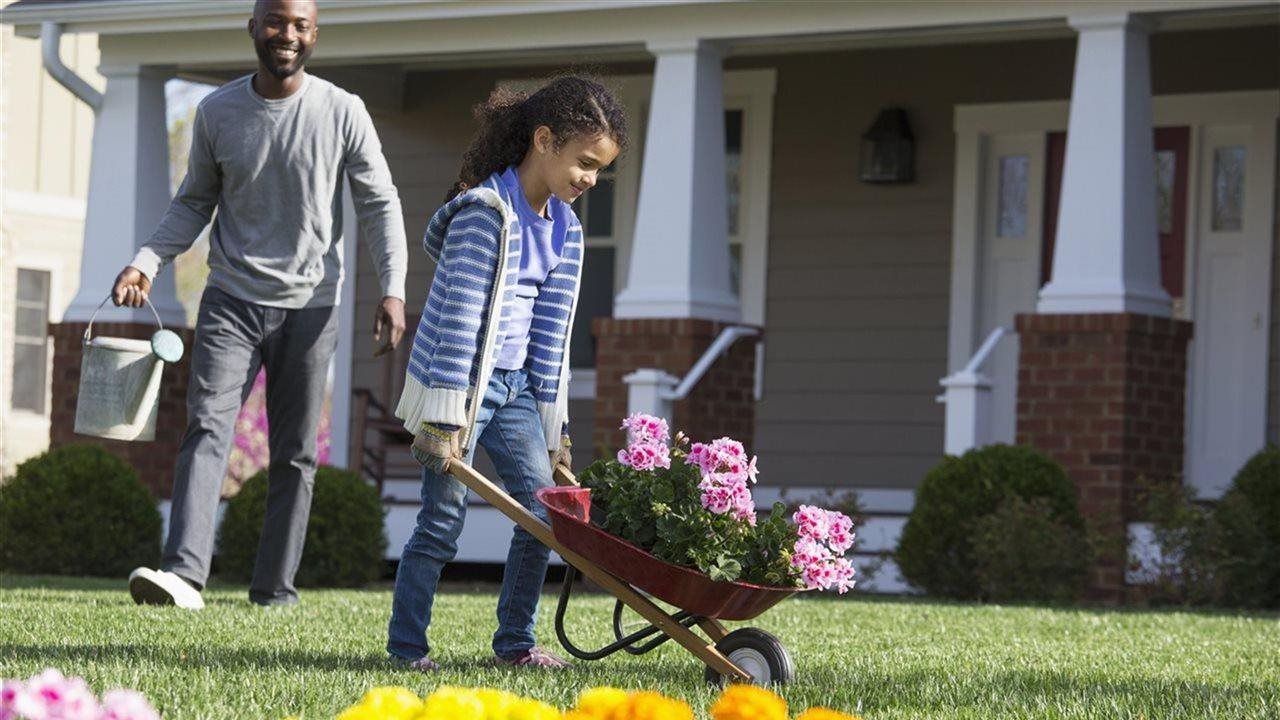
* Choose your landscaping. Landscaping is crucial for upgrading your outdoor space as it brings a necessary curb appeal or wow factor to your patio or backyard. In Julia’s front porch, she added boxwoods in varying shapes, sizes and placement patterns. For added interest, she included variegated pittosporums spaced between the boxwoods for some leaf color, and agapanthus for their lovely blue flowers in early summer. These plants all love well-drained soil and bright full-sun exposure. In the more shaded areas, Julia planted pink hydrangeas, acanthus and African iris, all lending foliage and flowers to the garden. If you’re not sure what to plant in your outdoor space, live nursery specialists are available at your local Lowe’s to help you get started.

* Select the right containers. A container garden is an easy landscaping solution that can be transported place to place, and is completely customizable. On Julia’s porch she used a variety of pots to include some more seasonal plants that can be changed out through the seasons, but anchored most of the pots with at least one evergreen so she wasn’t tied to re-potting every time the seasons change. When the tree-form hydrangeas flanking her front door in square planters are done with their spring and summer bloom, Julia plans to transplant them out into the garden for their permanent home — that’s the beauty and ease of container gardening!

* Bring the outdoors indoors. For the outdoor dining portion of Julia’s patio, she wanted a natural transition from inside the home, so she added details like an outdoor rug and outdoor lighting, plus some more homey accents like a table lamp to style her bar cart, bringing indoor elegance to her outdoor entertaining space. By giving your outdoor space a cozy touch of home, it will quickly become your favorite spot to relax in the morning with coffee, or with a glass of wine at the end of the day.


Smooth operators: Tips for installing trendy barn doors

2018-05-23T10:13:00

(BPT) – Whether they’re rustic or contemporary in style, sliding or barn-style doors have become a much-sought-after element of American home décor.

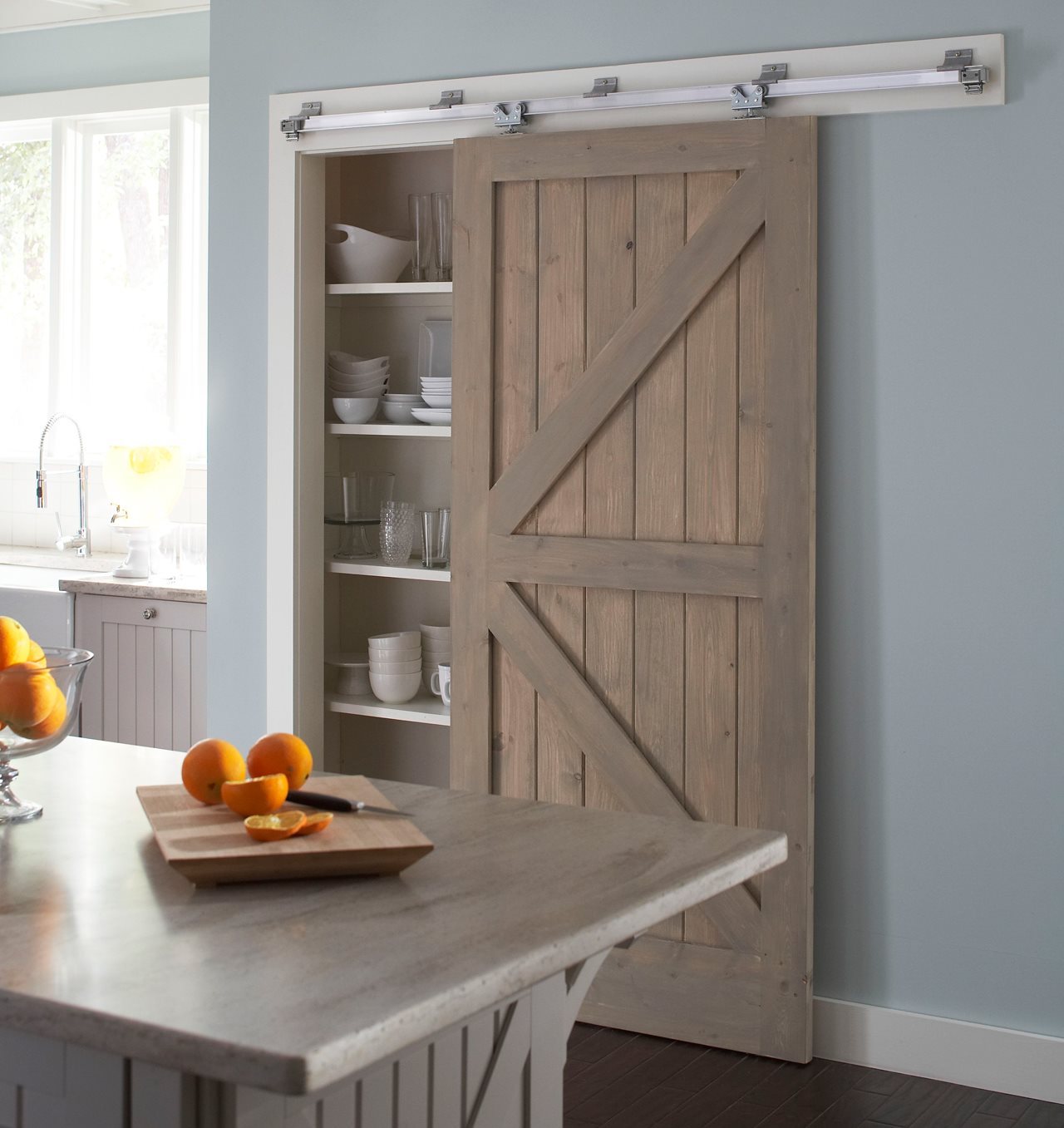
Often designed to feature rich hardwoods and decorative metal trim, the versatile gliding doors are frequently featured on home renovation TV shows such as “Fixer Upper” and “Extreme Makeover.” Part of their popularity lies in their ability to conserve living space, since they don’t require extra room to swing in and out like traditional doors. But they also offer privacy, durability, ease of installation and improved accessibility. And with the variety of styles available, they can add a unique design statement to any home, serving as a kind of functional art form.

For example, “Barn doors are now becoming a staple in homes from new construction to renovations for their unique appeal and space-saving properties,” writes Jaymi Naciri in Realty Times. “If the word ‘barn’ is turning you off, rest assured there are a variety of styles that can bring a fresh look to your home along with new function.” She points to a U.S. real estate study showing homes incorporating such doors sell as many as 57 days faster than homes without, fetching prices that are 13 percent above projected values.

The right set-up for the right doors

When choosing the right hardware for a sliding door, it’s important to consider which configuration you’ll need — pocket, bypass or wall mount — and whether you’re selecting a quality brand. For example, longtime manufacturer Johnson Hardware rigorously tests all its hardware for strength, durability and functionality, ensuring the doors it supports will operate smoothly each time without jumping off their tracks. The 60-year-old company offers styles to match any interior door design from farmhouse to mid-century to modern.

Wall mounts create focal points

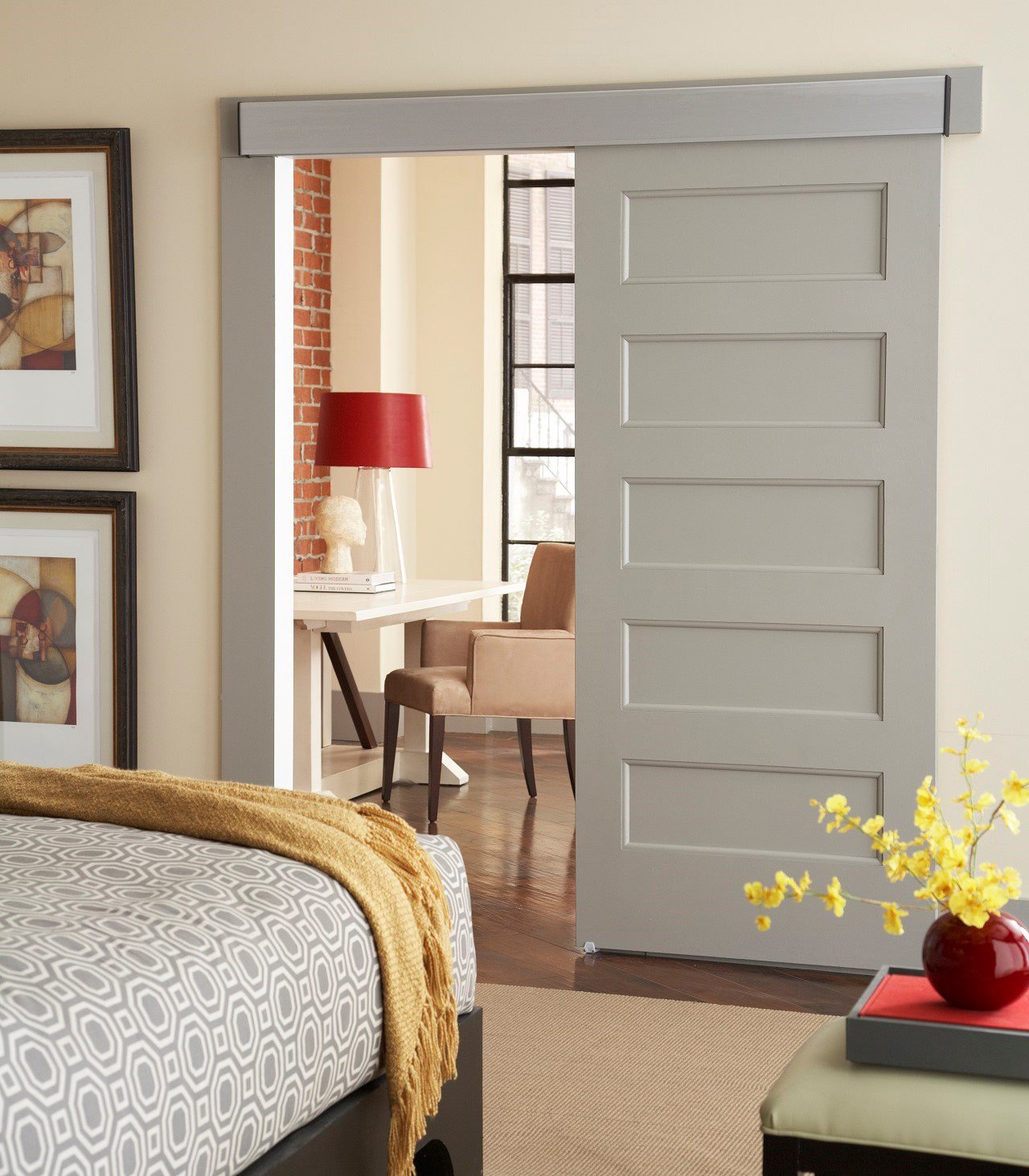
This versatile style simply mounts horizontally across the top of a wall. You can use a single door, or two converging doors. A decorative valance spanning the upper track is optional. Wall mounts can generally support doors up to 400 pounds; just remember to choose a hardware set tailored to the correct size, and make sure it contains doorstops that prevent the doors from sliding off track when they’re fully open.

Rack ’em and stack ’em with bypass doors

Many homeowners replace bi-fold closet doors with these sliders that hang side-by-side when open, but slide behind or in front of each other when closed. The hardware utilized includes two to three parallel tracks that allow for the panels to move soundlessly back and forth.

Picking a pocket door?

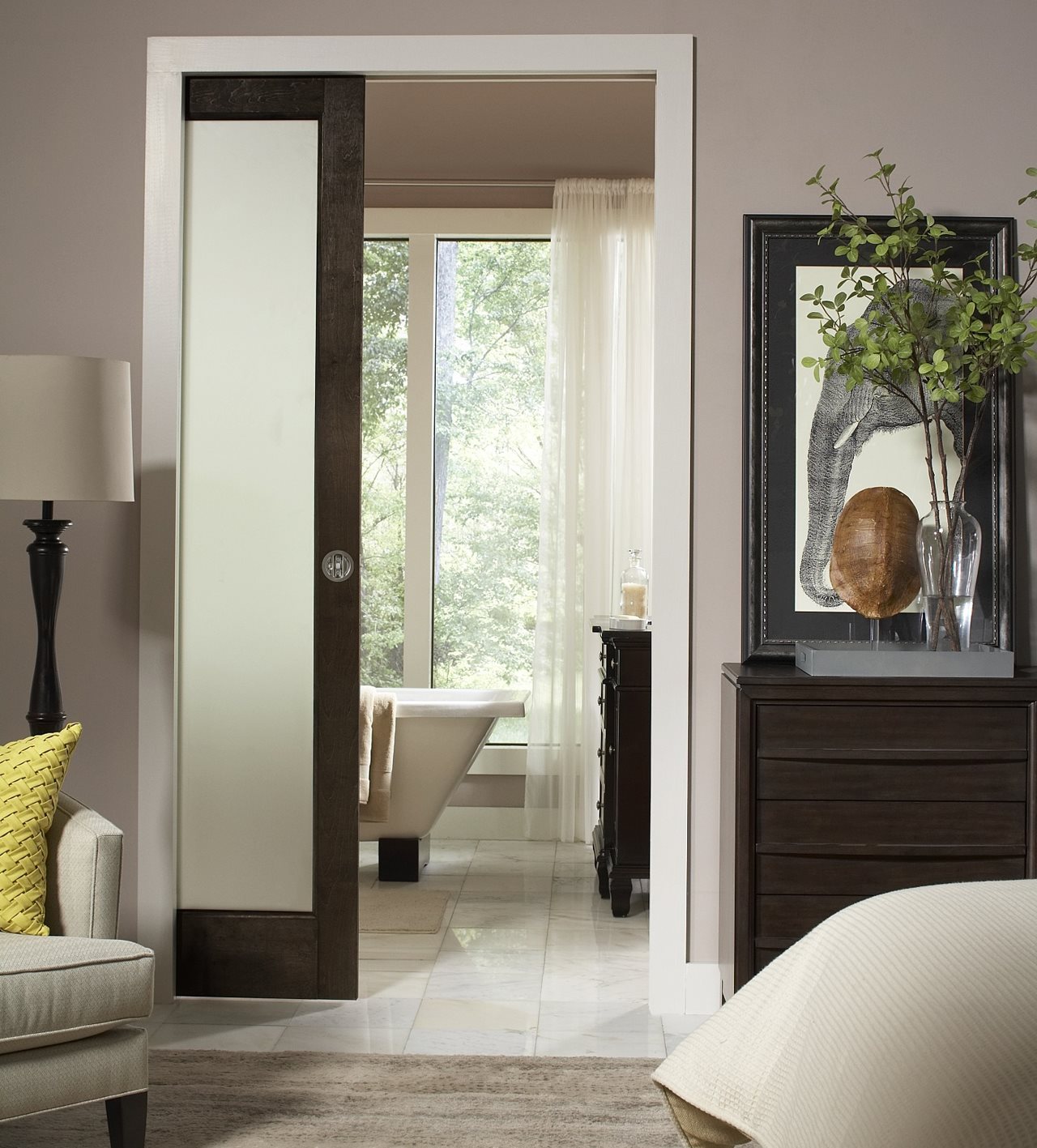
As their name suggests, pocket doors are panels that cover your doorway when they’re closed but disappear into a recess of your wall when they’re open. Quality hardware allows them to move smoothly and quietly, and in some cases they can be retrofitted to replace traditional doors — freeing up as much as 14 square feet of living space that would have been needed for the swinging motion.

Smooth as silk

When shopping for sliding door hardware, look for Johnson’s Soft Close products that function like the closing mechanisms in kitchen cabinets, allowing your sliders to open or close seamlessly with just a light touch. The specially designed systems ward off slammed doors and pinched fingers while minimizing noise.

For more information on sliding hardware , please visit johnsonhardware.com.


Make the most of your landscaping projects this year with these tips

2018-05-10T08:31:00

(BPT) – Home improvement projects aren’t constrained to a single season, but during these warmer months, your focus is no longer simply on your home’s indoors. Now there’s outdoor yard work to do as well, and if you’re looking to recreate your outdoor space, your outside projects may include some landscaping. If you have landscaping as part of your to-do list this season, the right strategy can ensure that you get the most benefit from your landscaping goals with the least amount of headache.

To that end, here are five tips to simplify your landscaping projects this year.

* Plan for the entire year. Landscaping projects can be hard work, and because of that, you deserve to enjoy them for as long as possible. That’s why it’s important to plan your landscaping layout with the entire year in mind. Research your plant and flower options based on bloom periods and plant a variety so your yard is always being introduced to new pops of color. You should also add evergreen shrubs and other such plant life to your overall plan to give you a spot of color in the winter and preserve your landscaping look.

* Be mindful of other tools outside your home. When developing your landscaping strategy, you need to be aware not only of your home but the other vital components outside as well. Many homeowners are not mindful of their home’s HVAC units and may place landscaping solutions too close to the unit, which makes it difficult for techs to service the unit and exposes your system to the harmful effects of debris. Instead, plan to keep all landscaping at least two feet away from your HVAC system. This allows units like the Champion Momentum Variable Capacity Residential System to operate at peak efficiency and allows service techs to utilize its built-in advanced monitoring system to provide accurate readouts for faster annual service, maximized service life and improved comfort in your home.

* Touch every corner of your yard. Your home is naturally the focal point of your yard, but it doesn’t have to be the only one. Creating a berm — a mound-type space that you can fill with rocks, wood chips or a flower garden — can add a pop of color and visual appeal to an otherwise plain area. These visual attractions can be placed anywhere, but adding one to an otherwise deserted corner of your yard is a great way to tie the entire space together and make the most of an unused area.

* Add plants that fit your lifestyle. When planning your landscaping project, it’s important to remember this isn’t just a one-time solution. Your landscaping will need continual work, and as such, your landscaping plan should be based partly on the time you have to dedicate to the project. For example, if you’re a person who appreciates beautifully colorful flowers but doesn’t want to replant them every year, you should start your project by planting perennials instead of annuals. Your time commitment in year one will be roughly the same, but you’ll ease your time requirements in the years ahead.

* Monitor your budget. Like many things, a lavish landscaping project can get away from you very quickly in the financial department. Veteran landscapers know that it becomes very easy to get swept up in the project and before you know it, you’ve added a slightly larger tree or another bush or two. Then you suddenly have unexpected costs heading your way. Instead of ending your exciting project on a bad note with a higher bill, plan out your budget ahead of time. Try to get as specific as possible with where you plan to spend every dollar. The more you can hold to each line item in your budget, the better you’ll be able to avoid unnecessary expenses throughout the process.

Making landscaping improvements to your yard can be a fun and rewarding project provided you follow a strategy that makes the best use of your time and money. Apply the tips above and you’ll be rewarded with a beautifully landscaped yard that you can enjoy every day of the year. To learn more about the Champion Momentum Variable Capacity Residential System, visit championhomecomfort.com.


5 ways gardening and plants can reduce stress

2018-05-09T08:01:00

(BPT) – In today’s busy world, we’re continually searching for new ways to slow down and unwind. This has led more people to discover the calming benefits of gardening and how incorporating plants into decor provides a way to reduce everyday stress.

Studies have shown that indoor plants clean the air by removing 87 percent of airborne toxins in 24 hours, and can make people more relaxed. In fact, the very act of planting and maintaining a garden provides relaxing stress relief in today’s busy world.

With such pronounced benefits, there are many reasons people who live in crowded cities and spacious suburbs have taken up gardening. For a closer look, green industry experts at RISE (Responsible Industry for a Sound Environment) offer these five ways gardening can help you create a stress-relieving sanctuary at home.

Add a fiddle leaf fig to your living room

With large, waxy green leaves that look like a fiddle, the photogenic fiddle leaf fig adds a stunning pop of green to any living space. The trees thrive in bright to medium light and prefer room temperatures. Water them only when the surface of the soil is dry or when the leaves start to wilt; you’ll know your tree is happy when its leaves are perked up toward the sun. Caring for the tree energizes your mood and in turn, its healthy green leaves liven up your home.

Grow an herb garden in your kitchen

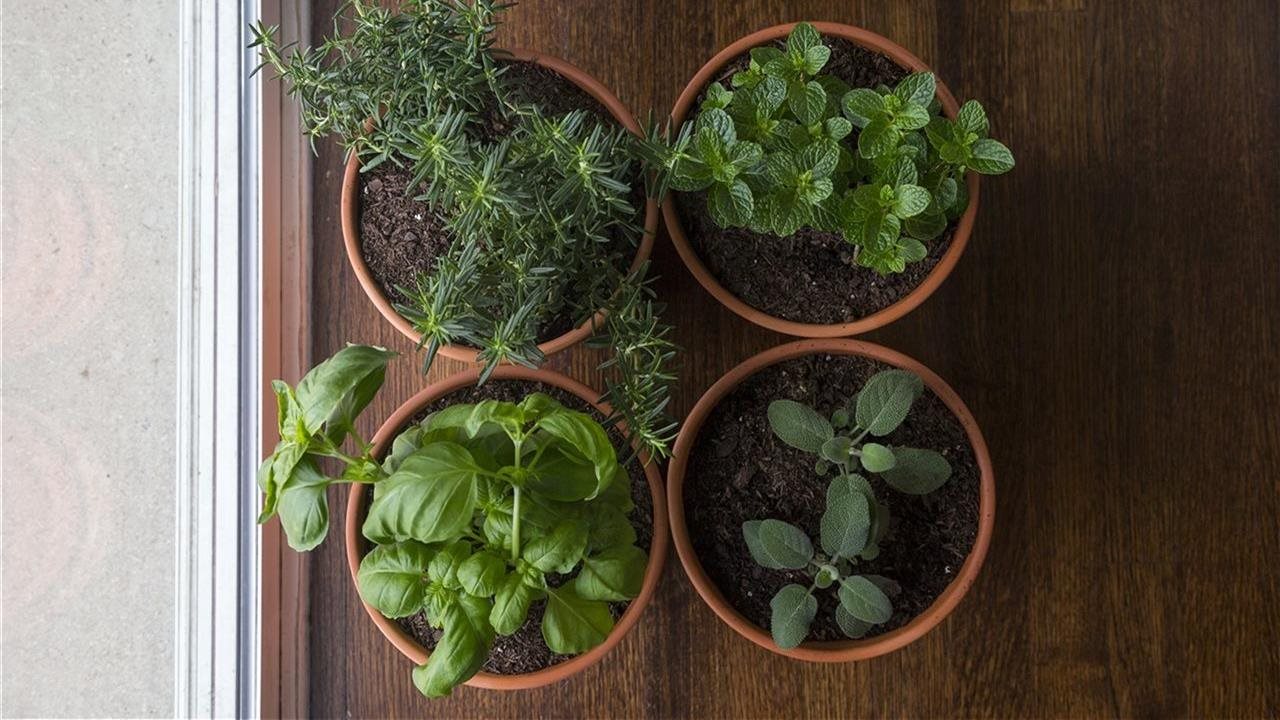
Home chefs and foodies alike know how important it is to have fresh herbs on hand. Rosemary, mint, sage and basil thrive in small terra cotta pots on your sunny windowsill. They not only add the finishing touch to a meal or a refreshing drink, but tending your herbs helps to relieve daily stress while enticing you to experiment with new healthy recipes featuring your homegrown harvest.

Monitor the air quality with aloe vera plants

Most people know about the medicinal properties in aloe vera plants. Most of us have slathered some on after getting a sunburn. In addition, they’re great for purifying the air. They can also serve as a monitor of air quality because they will display brown spots if something isn’t quite right. Aloe vera thrives in sunny spaces and at room temperature, so make sure to position it near an interior window to help maintain a healthy plant.

Put a snake plant in your office or wherever you’re most busy

Offices and cubes can be some pretty sterile spaces, which can make it hard to stay motivated or feel content during the work day. There are a million and one reasons for putting a plant in your office, and because you need to focus on the work at hand, you need a stress-free plant. When it comes to caring for a plant, it doesn’t get much easier than a snake plant. These beautiful plants grow in a wide-range of lighting conditions and at any normal room temperature. They offer a low-maintenance boost of zen, producing oxygen and, because sometimes you go on vacation, can go weeks without water.

Liven up your shaded bathroom with a peace lily

The dark leaves and curvy white blossoms on a peace lily are easy on the eyes and easy to grow. Perfect for those less-well-lit areas of the house, peace lilies thrive in shade and can withstand a variety of temperatures. Looks aside, they’re known for reducing both airborne toxins and mold, making them the perfect plant for bathrooms or other damp areas of your home.

The wellness benefits of caring for and being around plants are endless. The next time you’re feeling stressed, spend some time in the garden or take a stroll through a park to enjoy the greenery and the natural comfort that comes with being surrounded by plants. To ensure they stay healthy and vibrant, visit www.debugthemyths.com where the experts at RISE offer more tips and advice on how to care for the plants in your garden and home.


6 summer essentials to stay healthy and maximize the season

2018-05-09T08:01:00

(BPT) – The long summer months are full of potential. From hitting the beach to hitting the open road, there are plenty of activities for you to get outdoors and explore the warm weather. To make the most of the sunny days and star-studded nights, you need to be prepared so you have fun, stay safe and keep your health top of mind.

To have a healthy summer full of incredible memories, experts recommend you don’t leave home without these essentials:

Sunscreen: Any time you’ll be outside, it’s important to wear sunscreen. This is especially important when spending time around sand and water as these reflect the sun’s rays, which put you at higher risk for sunburn. The American Academy of Dermatology recommends everyone use sunscreen that offers broad-spectrum protection (protects against UVA and UVB rays), is SPF 30 or higher, and is water resistant.

Sunglasses: Did you know your eyes can get sunburned? Protect those peepers by keeping sunglasses on hand. If you wear prescription glasses, a stylish and affordable solution is Solar Shield, available in clip-ons and fits-over designs. Solar Shield sunglasses are polarized and come at an affordable price point, so you can have a pair with you for all your summer adventures. Put a pair in the car, your workout bag, purse and backpack, the cabin and anywhere else you’ll need sun protection.

Water: Staying hydrated is important for keeping your body well, especially as the temperatures rise. When outdoors during summer, your body needs H2O to stay energized and keep cool. If you’re doing an activity in the heat, you’ll need to increase your water intake. Keep a bottle nearby and drink often. If you tend to forget, set an alarm on your phone or use an app to remind you regularly.

Insect repellent: Warm weather brings out people to enjoy nature, and whether you like it or not, that includes bugs. From mosquitoes and ticks to ants and chiggers, bugs thrive in the summer. The first step to keep yourself protected is to be aware of what insects you may encounter during the activities you have planned for the day. Next, be prepared by using appropriate insect repellent and clothing.

Shoes: The unofficial shoe of summer has to be the flip-flop. This easy-on, easy-off shoe has been keeping feet cool for generations. The problem is flip-flops offer little support and put you at higher risk of injury. From stubbing your toes to being a tripping hazard, flip-flops are a flop when it comes to your health. Support feet and be ready for summer by shopping for supportive sandals with toe and ankle straps. For example, athletic-style sandals are trendy, durable and will last more than one season, making them a worthwhile investment.

Cotton clothing: All-natural cotton can serve you well when on summer adventures. Cotton breathes, meaning it allows air to circulate against the body so you don’t get too hot. It also can wick away sweat and dries quickly. Whether a classic cotton T-shirt or a trendy swimsuit cover-up, it’s the ideal material for covering up and staying cool.

These six must-have summer essentials will help you feel your best so you can maximize every day to the fullest. Have fun and stay safe for the best summer yet.


Invite monarchs to stay at your place this summer

2018-05-08T08:01:00

(BPT) – Farmers, gardeners and lawn care aficionados take great pride in their work, which typically involves removing weeds. However, a new movement flips that script by encouraging people to establish milkweed habitats.

Milkweed is at the epicenter of a monarch butterfly habitat, as it is the monarch larvae’s only food source. Without this vital plant, monarchs will not have a safe place to lay their eggs and produce future monarchs. Monarch populations have declined more than 80 percent over the past 20 years due to many factors, including climate change, deforestation and loss of milkweed habitats along the monarch migration path.

To aid the monarchs, families along the migration path have begun establishing milkweed habitats on their land, and have found it to be a fun family activity. However, planting milkweed can be tricky. Here are some simple, helpful tips to get a successful habitat started:

  1. Ordering milkweed seedlings is easy. If a request is made, most nurseries can order the weed ahead of time.
    • Common milkweed is the most prevalent type of milkweed across the U.S. Visit www.monarchmilkweedhabitat.com to find a list of native milkweed plants in every state.
  1. For best results, transplant the milkweed seedlings in early spring or early fall.
  2. Find an area that receives at least six hours of sunlight daily and is away from frequent mowing.
  3. The milkweed seedlings should be planted at least 3 feet apart. Depending on the variety, they can spread throughout the habitat once they are established.
  4. Milkweed can be a finicky plant. To get it established, remove all existing vegetation in the area you wish to plant. This allows the weed to grow without other competition.
    • To reduce weed competition, dig a large hole or spray a small amount of herbicide before planting.
    • It’s best not to spray the herbicide right at planting. Try spraying the area a few days before.
  1. If there has been lack of rain, make sure to water the seedling. However, it doesn’t need to be watered once the weed is established, which is usually after the first year of planting.

Once your milkweed plants are established, you’ll see the beautiful monarch butterfly’s life cycle occur before your very eyes. Your efforts will help preserve the monarch population for generations to come.

To help families establish monarch habitats, BASF created the Monarch Challenge, a program that is a part of the company’s Living Acres biodiversity initiative. Participants can sign up for the newsletter to get additional information on milkweed management, and have the opportunity to receive free milkweed seedling packets. To learn more, please visit www.monarchchallenge.com.


Tips to keep your pet healthy in the heat

2018-05-04T08:01:00

(BPT) – Spring is here, summer is approaching fast and it’s time to get outside and start taking advantage of the warmer weather. Dr. Jeff Werber, Emmy award-winning celebrity veterinarian, has a few tips and tricks on how to keep your pet happy and healthy in the heat.

Before you start your jogging treks, hiking excursions or bicycle touring with your furry partner by your side, it’s important to understand these spring/summer safety measures to keep your pet happy and safe.

Easing into exercise

After sitting around all winter, it is not a good idea to jump right into a full exercise regimen full speed ahead. The best approach to get your pet ready for more activities outside is a gradual introduction into exercise. A game of fetch is a perfect way to get your pet up and moving. The Chuckit! Launcher and Locator Sound Ball provides an easy way for your pet to increase their stamina, with the added entertainment of retrieving a ball that emits an audible pulse sound every few seconds to help pet parents and dogs locate the ball in any terrain after launch.

If your pet enjoys chasing ground pursuits (think rabbits and squirrels), the Chuckit! RingChaser is a great option to satisfy their instincts. Again, short bursts of chasing and retrieving are a fun way to get your pup back into shape.

It’s also critical to choose the best time of day to exercise — and noon is not it. The best time to enjoy your pet’s company is early in the morning or early in the evening. Keep in mind that in the evening after the sun is down, the pavement can still be pretty warm, as it retains heat for quite a while. Where possible, try to exercise on a grassy or dirt surface to avoid burning or irritating their paws.

Keeping cool and staying hydrated

What we love so much about our dogs is how loyal they are and how much they want to please us. This can be a problem when it comes to potential overexertion, as they will keep going just to be with us, even though they may be overheating. Moreover, many dogs and cats can overheat from lying around the house or backyard as well. When leaving pets outside during the spring or summer, make sure that shade and fresh water are always available. There are many devices available that can provide water automatically or on-demand, like the Petmate Replendish Waterer, which provides a constant flow of fresh water throughout the day for pets even when the pet parent isn’t home. If you’re out and about with your pet, consider the Replendish To-Go Water bottle that conveniently includes a travel bowl for your pet. For longer excursions, or for hotter climates, wet a bandana and place it in the freezer the night before so it will remain nice and cool a little longer. Also, make regular stops in a shady area to allow both of you to catch your breath.

Indoor dogs and cats also need to escape from the heat. Make sure the house isn’t kept too warm. Keep at least one room cooler by leaving the shades or drapes closed. Enough has been written about pets and parked cars, so I’m sure you are all aware of that potential deadly hazard. Don’t do it, not even in the shade or “only for a few minutes.” Enough said.

Limitless possibilities, while on a leash

You and your pet are finally enjoying the great outdoors, and the fun activities with Fido are endless. Our pet nation has a huge population, and it’s important to be a good citizen. Remember to respect other pets’ “space” and boundaries, and don’t assume every dog is dying to play with yours. Wherever you and your pet decide to roam, be mindful of the local leash laws. You don’t want to turn a fun outing into an emergency room visit for you or anyone else.

If you’re heading off to a park or hiking area, make sure you have everything you need for your trek. Travel treats and water bottles are always a good idea to keep with you, to make sure you and your pet are well fueled and hydrated. Keep essentials, like your keys, lip balm, waste bag, etc., all in one place with the Petmate Zipp Leash that features an expandable pouch built right into the leash to hold all dog-walking basics while on the go.

Regardless of whether you choose to run, romp, hike or trek, spring and summer are great times of year to bond with your pets. I encourage all of you to get outdoors, enjoy the warmth and sunshine, and to include your four-legged kids in your activities. Just remember to play it smart and keep them safe.


Changing addresses? 10 tips for busy baby boomers

2018-05-01T09:01:01

(BPT) – For many Americans, moving households represents a fresh start and a chance to improve quality of life. Last year, some 39.4 million Americans changed residences, thanks in part to better affordability in the housing market.

That doesn’t mean, however, that everyone’s moving process was friction-free. The logistical coordination and the physical work involved with DIY packing and loading can be a major chore in the best of circumstances. And that’s doubly true for baby boomers who are downsizing or moving to new communities, yet challenged by the physically grueling aspects of a DIY move.

Fortunately, forming a plan that troubleshoots the most common challenges can help enormously. Consider how these tips could keep your next move smooth and free of unnecessary stress.

1. Protect your treasures: Avoid the heartbreak of damaged belongings by stocking up on bubble wrap and other efficient packing materials. You also could optimize household items such as towels, blankets and coats.

2. Stagger your packing: Pack too early and you may need items you’ve stashed away; pack too late and you may be crunched for time. Start with non-essentials and out-of-season belongings a few weeks before moving day, sorting discards as you go. Save necessities for the last 48 hours.

3. Label, label, label: This may seem unnecessary while you’re packing, but will save you time and frustration upon arrival when you’re desperately looking for your essentials. It also allows you to immediately sort boxes by room and store items that are infrequently needed.

4. Secure transportation early: Instead of procrastinating and missing out on the truck you need, hop on your smartphone at least two weeks ahead to easily reserve a vehicle at PenskeTruckRental.com.

5. Right-size your truck: Rather than guessing what size moving vehicle you’ll need, plan on about 150 cubic feet of truck space for each fully furnished room in your home. That means a move from an apartment might necessitate a 12-foot truck offering 450 cubic feet, while a move from a house might require a 26-foot truck offering 1,400 feet.

6. Recruit help: The packing and transporting may sound easy until you try to do it all yourself. This is the time to call in favors or perhaps pay some teens to help with the lifting and hauling.

7. Pack your truck strategically: Optimize your space by positioning your furniture and other large, heavy items in the back of your vehicle before proceeding with lighter items. That optimizes the vehicle’s power and allows you to fit smaller items into smaller spaces.

8. Follow ergonomics: The last thing you need is to injure your back through haphazard movement during the loading process. Stretch beforehand, avoid twisting your torso as you load and remember to lift with your legs by crouching rather than bending from the waist.

9. Strategize your route: Map out the way ahead of time, review weather forecasts, avoid rush hour and leave yourself plenty of time for breaks, refueling and unloading.

10. Drive like a pro: Many people are unfamiliar with the difference between driving a car and a big truck. Read all instructions provided and understand how to drive differently to remain safe (and legal).

Regardless of your age, a DIY moving process can be efficient and pain-free when you organize the details ahead of time. Talk to Penske Truck Rental for more suggestions on making that happen.