Bee responsible! How to attract pollinators to your garden and help them thrive

2018-06-20T07:01:15

(BPT) – It’s been in the news for years now: the decline of pollinators such as honeybees and butterflies, and how it’s upsetting our world’s healthy ecosystem. We need pollinators for the growth of many of the foods we eat each day – according to the Natural Resources Conservation Service, some scientists estimate that one in three bites of food we take result from the work of pollinators. Berries, apples, oranges, almonds and scores of other foods, not to mention flowers, rely on pollinators. If they disappear, those foods will fade along with them.

So, why are pollinators declining? They can’t find enough food because their habitats are disappearing.

Fortunately, we can all help protect pollinators. Ortho, a leading brand in lawn and garden, recently teamed up with the Pollinator Stewardship Council for a consumer education campaign, “Bee Responsible,” aimed at helping home gardeners protect the pollinators in their yards, attract more of them and help them thrive.

In 2016, after evaluating the risk to honeybees and other pollinators, Ortho also announced plans to phase out neonicotinoid-based pesticides from all its outdoor gardening products and is investing in alternative pest control solutions. Ortho’s parent company, Scotts Miracle-Gro, has funded 125 pollinator-friendly gardens throughout the country.

Want to attract pollinators to your yard and help them thrive? Here are some tips.

Make your garden pollinator friendly. Nectar and pollen-packed plants attract honeybees, butterflies, hummingbirds and other pollinators. Choose colorful flowers, such as alyssum, aster, delphinium, flax, lavender, liatris, lupine, phlox or zinnia. Check with your local garden store for native plants and flowers that thrive in your climate and choose a range of plants that bloom in different seasons.

Encourage neighbors to do the same. If one pollinator-friendly garden is good, a network of them dotting your neighborhood is better. This could provide enough habitat and resources to help restore and bolster the pollinator population in your community.

Control pests in your garden. Insects and mites can bring disease and destruction to your garden, undoing all of the good you’re trying to do for pollinators. Ortho’s neonic-alternative 3-in-1 Insect, Mite & Disease control will help banish the bad bugs in your garden. To use responsibly, avoid spraying when it’s windy, apply the product at dusk and dawn when pollinators are less active and avoid using the product on blooms. Another tip: Use native plants whenever possible. They usually require less pesticide than plants from other zones.

Provide shelter. Bees and butterflies need shelter, so make sure your yard has some cozy nesting sites, like leaves, moss, piles of grass or a patch of yard you just let go wild. Also, check out bee houses in your neighborhood garden store. They’re artistic and fun, and they provide bees with shelter for their offspring to thrive.

Don’t forget the water. Your garden will provide the nectar and pollen. But bees, birds and butterflies need water, too. A decorative bird bath, water feature or even a shallow rain catcher will give your buzzing friends the water they need.

Install a hummingbird feeder. Imagine sitting outside with your first cup of coffee in the morning and watching those magical hummingbirds dart around the feeder. You’ll be nourishing your garden and your spirit at the same time.

By providing pollinators with friendly habitats, backyard gardeners can help these vital components in our ecosystem regain a foothold.

Paint like a pro in 5 easy steps

2018-06-19T09:01:00

(BPT) – Nothing transforms a home quite like a fresh coat of paint. In fact, painting your own house is one of the smartest and easiest DIY upgrades a homeowner can accomplish on their own.

“Summer is the ideal time to tackle a painting project, as the warmer temperatures lead to faster drying times, and you can comfortably leave the windows open for better ventilation,” said Megan Youngs, Product Manager at DAP. “Just remember, a little bit of preparation goes a long way toward creating a professional look that will last for years to come.”

Before reaching for a paintbrush, follow these paint preparation tips from the experts at DAP.

Clean Up Your Act – Paint adheres better to a smooth, clean surface. While living room walls may only need a dry dusting, kitchens and bathrooms, where dirt, grease, oil or mildew can build up, need extra attention. Wash surfaces with soap and water, rinse well and allow them to fully dry. For bathrooms, remove mildew by applying a solution of one-part bleach to three-parts water and allow the solution to sit for 20 minutes. Then scrub the mildew with a soft-bristle brush, rinse the surface and allow it to dry. Be sure to wear safety glasses and rubber gloves when working with this bleach-and-water solution.

Scrape and Sand – Now that the surface is dry, smooth down the surface with a bit of fine-grit sandpaper. This is particularly important if painting over a glossy finish, as paint applies more evenly to dull surfaces. In addition, going over the area with sandpaper will help uncover any cracks, holes or dents that could diminish the final look of your project. Another pro tip is to shine a bright light at a low angle across the surface to spot any problem areas. After you have sanded or scraped the area, wipe it down with a damp cloth to remove any dust or residue.

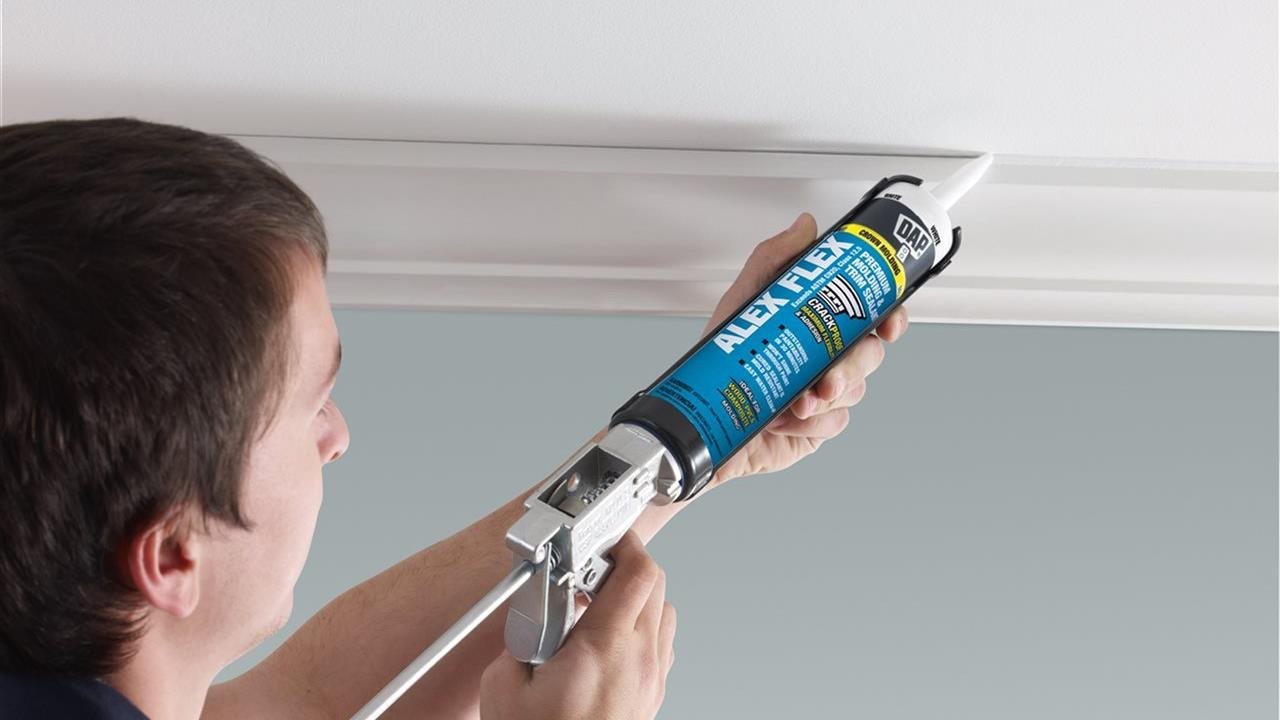
Don’t Forget the Details – Anyone can paint over a wide, smooth surface, but it’s the attention to detail around windows and doors that truly separates a mediocre job from the pros. Use painter’s tape to protect window sills, molding, baseboards, door hinges and the ceiling perimeter, taking your time to ensure that every corner is properly protected. These areas are also prone to gaps and cracks. Remove any loose or cracked caulking from windows, doors and trim, and apply a fresh bead of sealant for a smooth, sealed surface. Alex Flex Premium Molding & Trim Sealant is specifically formulated for use on molding and trim applications. The sealant is paintable in just 30 minutes with latex or oil-based paints, saving time and resulting in a seamless, more professional finish.

Fill It Up – Now it’s time to tackle the main surface. Cracks, holes and dents will mar the finished project, so apply spackle to fill in these areas. Open a container of pre-mixed spackling compound and scoop up a small amount with a putty knife. There’s no need to pile it on. Instead, start with a small amount, and with a shallow knife strike, spread the compound over the hole or crack in a smooth, downward motion. Repeat until the hole is completely filled in. Want to get rid of those stubborn recurring cracks? Reach for Alex Flex Flexible Spackling, which provides maximum flexibility and moves with the repaired surface as problem areas expand and contract with changes in weather and humidity. It’s also easy to sand to a smooth, feathered-edge finish and is paintable for a seamless repair.

Paint with Precision – Make the job go easier and faster by having a variety of brushes and rollers on hand. Rollers are great for covering large, wide surfaces, but for a professional look around edges and corners, you’ll need smaller brushes for the right amount of detailed work. Moisten rollers and brushes in water beforehand, as this will help the paint glide more smoothly onto the surface. Allow the first coat of paint to completely dry, and then apply a second coat to ensure smooth, even coverage. Once the second coat is dry, carefully pull up any painter’s tape and voila! Your space is transformed!

For more information on DAP products for your next DIY project, visit DAP.com.


Top tips to help first-timers navigate the fast-paced housing market

2018-06-17T07:01:00

(BPT) – Across the U.S., the housing market is picking up pace moving into the peak of the summer homebuying season.

In city after city, home prices are on the rise, up 2.3 percent on average between April 2017 and 2018, according to the RE/MAX April 2018 National Housing Report. And there are fewer houses on the market to choose from, with total housing inventory down by 11.3 percent.

Based on home sales in April 2018, the national supply of inventory was at 2.5 months, making it a strong seller’s market. (A 6-month supply of inventory historically indicates a market that is balanced equally between buyers and sellers.)

What’s fueling the demand? More members of the millennial generation entering the housing market, among other factors.

If you’re ready to stop renting and start enjoying the benefits of home ownership, finding the perfect house within your price range can seem daunting, especially in a seller’s market. Keep these things in mind to find and close on that special home.

1. Keep an eye on your credit score

The interest rate of your mortgage matters a great deal. Even a fraction of a percentage can add (or subtract) thousands of dollars over the life of a 30-year loan. One thing that can influence your interest rate is your credit score — it’s just one way for the lender to determine how likely you are to repay the loan. Well before you begin browsing properties online, take steps to get your credit score in the strongest possible position. Review your credit report and report errors immediately. Make on-time payments and put off opening new credit accounts until after the mortgage is finalized.

2. Work with a full-time, experienced real estate agent

Plenty of online services claim you can save money by completing the process without a real estate agent. But as many buyers discover, the savings don’t always come through as promised. In fact, going through this complex process without professional guidance can definitely lead to costly problems later. If you work with an agent, you’ll get to work with a pro who’s in touch with the local market and can lend a helping hand every step of the way. Their expertise can help you find that perfect house and help you craft the right strategy for your offer. Visit remax.com to find a professional agent in your area.

3. Play to your strengths

When you find the right house, you may not be the only one making an offer on the property. That can be intimidating. But keep in mind it’s not always about coming in with the highest dollar amount. Buyers have different motivations to sell. Some may be in a situation where they want to close and move out as soon as possible. They’ll be less likely to work with buyers who have their own houses to sell, making first-time buyers more attractive candidates.

Buying a house is a big step, and in the heat of a seller’s market, it takes extra patience and perseverance. Find the right real estate agent to help you through the process, and moving day may arrive sooner than you expected.


DIY dream: 4 cedar project ideas for your home or cottage

2018-06-14T12:09:00

(BPT) – Americans love their do-it-yourself home improvement projects, and the warmer months can be an excellent time to brush up on your construction skills and complete a woodworking project to grace your home or cottage.

Do-it-yourself fans in the U.S. are expected to spend some $43.7 billion toward home improvements this year, marking a 45 percent increase since 2012. And when it comes to selecting a strong yet versatile wood for those projects, many will opt for Western Red Cedar, an aromatic wood that grows in the Pacific Northwest.

The unique characteristics of the durable yet lightweight species make it resistant to rot, decay, shrinkage and insects even as it weathers over time into a stunning silver patina. The knotty species comes in several surface textures, dimensions and price points, and do-it-yourselfers report it handles like a dream because it lays flat and accepts a wide range of finishes. Further, it’s a sound environmental choice because it comes from sustainably managed forests.

Looking for a useful and enjoyable woodworking project that will wow your friends and family this season? Consider one of the following gems you could construct using Western Red Cedar.

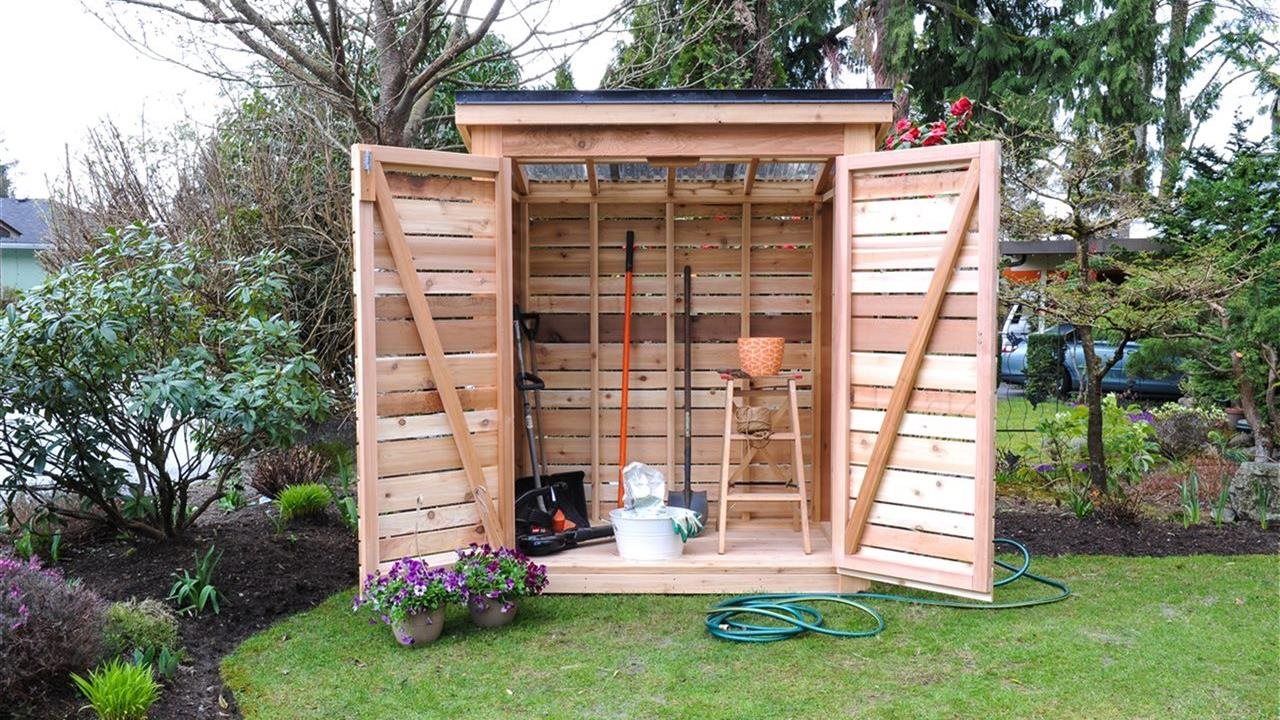
* Sharpest shed ever: Envision this compact multi-purpose shed gracing a key corner of your backyard to organize and protect your yard tools, ladders, sports equipment, recycling bins, firewood, and/or other outdoor gear. The pattern calls for 1×6 and 1×4 cladding spaced strategically to let air flow through the building so you can keep your things dry. Thanks to the superior strength and weather-resistance of the wood, your newly created storage space will last for years.

* Recliner of your dreams: Imagine kicking back with a friend — or taking a nap in the sun — on this roomy loveseat fitted with standard-size comfortable cushions that match your outdoor décor. Entertaining more than one friend? It’s super easy to fold down the back so you can seat guests on both sides. This versatile and practical design, featuring modern and clean lines, is an excellent seating option when you need to make the most of your space on porches and decks.

* Dinner al fresco: The clean lines of this dining table and bench-set fit seamlessly into any indoor or outdoor décor. Imagine your family gathered comfortably around your new spacious dining area to enjoy a backyard cookout, a round of ice-cold drinks, or a birthday celebration. Since the bench and table designs match, you can build the benches first to prepare you for the larger project.

* Grow your own herbs: After whipping up this compact vertical herb garden made to lean against any wall, you’ll be able to enjoy the fruits of your labor for years. Merely step out on your deck to harvest your choice of fresh, flavorful seasonings for whatever you’re cooking that day. Of course, planting colorful flowers in the removable containers is another great option. Perhaps best of all, because Western Red Cedar contains naturally occurring preservatives that automatically fight decay, no stain or finish is necessary; exposure to the elements will instead turn the wood a beautiful silvery color.

Ready to get started? For these and many other free downloadable project plans featuring Western Red Cedar, log onto the Do-It-Yourself Center at Realcedar.com.


3 easy ways to get on deck with the right decking

2018-06-13T08:01:00

(BPT) – If The Old Farmer’s Almanac prediction holds true, this summer will be a hot one. The weather forecast anticipates temperatures for the season to be “hotter than normal” across most of the U.S. If you’re ready to kick up your feet and soak in these rays, now is the perfect time to get started on that deck you’ve been dreaming about adding. But before you put hammer to nail, you’ll need to decide on which decking material to use.

While wood might be the first material that comes to mind, there are now a multitude of options from luxurious hardwoods to wood-plastic composites. With all of the products in today’s home improvement stores, it can be hard to know which one to put in your cart. The process doesn’t have to be complicated. Before you buy, look for decking that meets these three criteria:

1. Beautifies your backyard

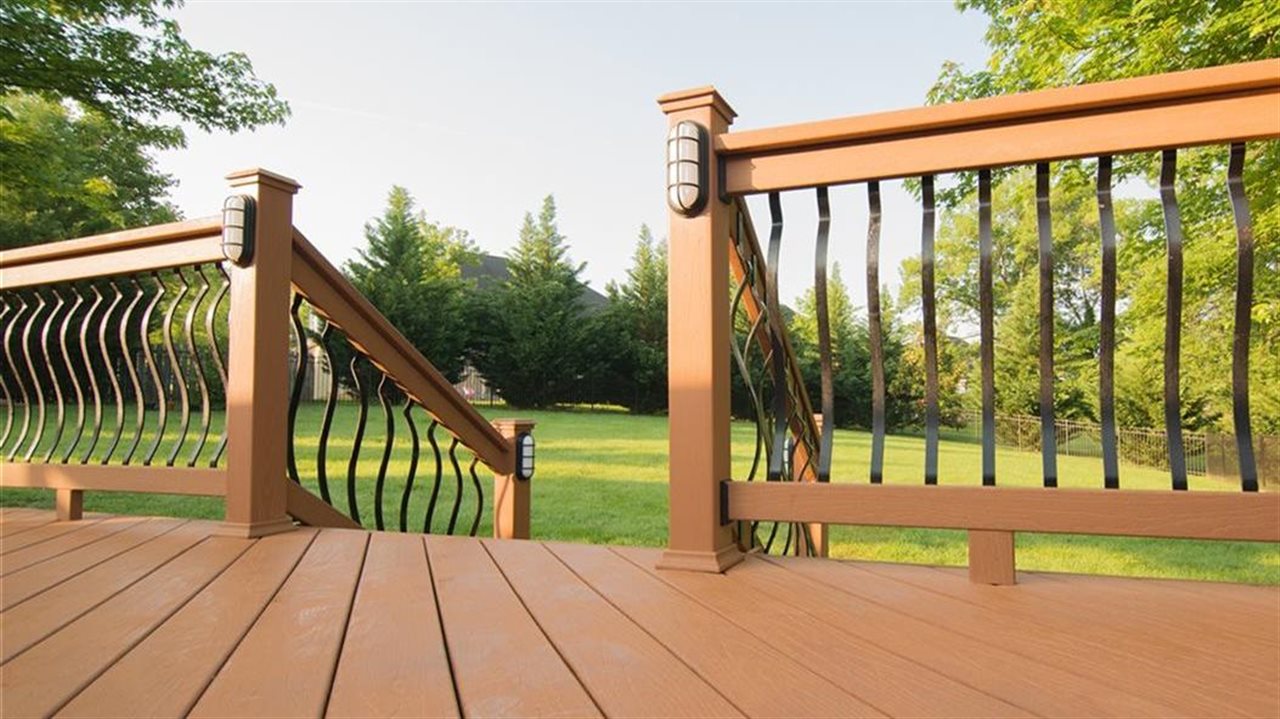
Whether your deck is big or small, it helps set the stage for your backyard retreat. Make sure the decking material you select packs a lot of style and ties in with your home’s existing architecture to create a wow-worthy outdoor living space. Get creative. Many of today’s offerings are available in a wide array of decking color combinations to complement exterior color schemes, from popular grays to rich, dark browns.

If you love the look of wood, but want enhanced durability, consider modern composite decking with a mix of natural wood fibers and plastic. Look for boards with deeper, more detailed embossing. They give the illusion of a more realistic wood-grain.

2. Keeps the sander in the shed

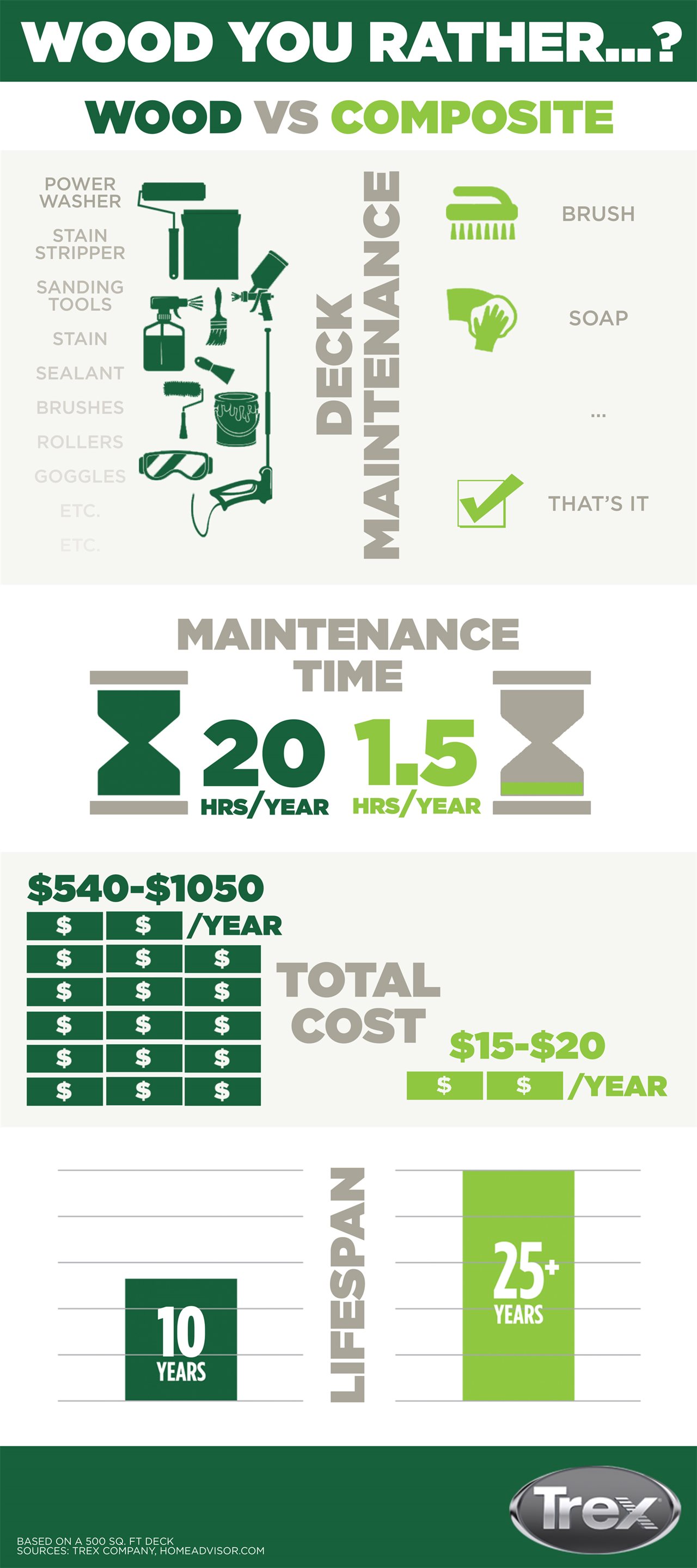
Decks are meant to be enjoyed, but it’s hard to relax if they require hours of maintenance that cut into summertime fun. So, before you settle on a decking material, make sure you have a realistic expectation of what is required to keep it in top-notch shape. For example, while wood decking can easily ramp up the style of your backyard, it requires regular sanding and a new coat of stain or paint to keep its attractive appearance.

If you’re looking to spend more time on the deck with a lemonade in hand than on your knees sanding, consider materials that reduce the hassle of upkeep. Many of today’s wood-alternative decking materials can create a beautiful, low-maintenance scene for your backyard by eliminating the need for annual painting, staining or sealing. And with the increase in types of decking materials, there is no need to compromise on appearance for the sake of reduced upkeep.

3. Withstands the elements

Decks need to be tough to add lasting style. They are exposed to sun, water, insects, spills and, if you have kids, the occasional marker artwork. Surprisingly, finding a decking material that can withstand these conditions is easier said than done. Without proper care, many decking products, including treated wood, will start to deteriorate with extended exposure to UV rays, moisture and insects. Deck boards that warp, splinter or rot become safety hazards that require replacement.

To spend less time replacing deck boards and more time enjoying your deck, look for products with exceptional durability. Composite decking is one offering that is specially designed to withstand the rigors of life outside.

“After investing in a new deck, the last thing homeowners want is to spend time on costly fixes. Composite decking can help keep them on deck enjoying the sun,” said Josh Landis of ChoiceDek Composite Decking. “Boards are now available that fully encapsulate wood fibers in plastic to protect against moisture intrusion all the way to the core. They resist rotting and splintering to help keep decks looking beautiful and feeling great underfoot.”

Getting started

Selecting the right decking material can be the difference between a deck with faded and splintered boards, and one that invites relaxation for years to come. With proper planning, you can get on deck with a material that will help you enjoy your outdoor living space for years to come.


How to prep your home for a new addition to the family

2018-06-12T09:01:00

(BPT) – Whether it’s a baby or pet, a new addition to the family calls for new, unexpected responsibilities, and is bound to come with adjustments for every member of the family. While it would be silly to guarantee zero stress for the new family environment, below are tips for a transition with more playtime and fewer headaches to help you get started.

Here’s what you need to know:

Get ready in style

Prep the space with all the necessities needed to make your new addition’s life as happy as possible. Based on the needs of your new child or pet, this could mean turning your home office or game room into a nursery, or finding the perfect doggy door to install in the back entrance. After checking big-ticket items off your list, consider how moments such as bath time will change in the new dynamic. Choose a product that is stylish and functional, like the Peerless SideKick Shower System, which has interchangeable attachments for parents, pet and baby. Versatile shower additions create a one-stop shop for everyone in the family, limiting mess and making bath time more efficient (and cost-effective!).

Proof! Proof!

When you walk through your front door, you are greeted with the comfort and security of being in a space made just for you. With a new baby or pet, that could all change! It is important to take a careful look at your home and proof for all possible dangers and accidents. Move chemicals and cleaning products onto high shelves, tape electrical cords to baseboards, find ways to secure cabinets and doors that you would prefer not to have curious hands, mouths and noses digging around in, and make sure anything that can induce choking is stored in a safe place, far away from the curious new family member.

Budget for two

A new addition to the family means one more mouth to feed and nurture. It is important to prepare for unexpected expenses. Babies and pets are more prone to illness, injury and accidents because they are constantly exploring their environment. Remember to plan ahead by setting up a monthly savings plan to make room for miscellaneous expenses in your monthly budget. Go the extra mile and save more money by buying clothes and accessories from thrift or consignment stores, using family or friends for backup daycare, and asking relatives to babysit or puppy sit. Remember that planning is key. You’ve got this!

Playtime

Ensure a stress- and mess-free playtime by designating an area for play in your home. If possible, create a gated space to give yourself a sense of control over playtime activities. This will offer peace of mind and allow your new addition to have fun and express themselves without any inhibitions. Bonus: There is less cleanup time as well.

For more shower solutions for the family, please visit peerlessfaucet.com.


Be prepared for the 2018 storm season

2018-06-07T09:01:00

(BPT) – For millions of Americans, the devastation of the 2017 storm season is still fresh in their minds. According to the National Oceanic and Atmospheric Administration, the cumulative cost of the weather events in the U.S. was $306.2 billion. Whether you were directly affected by one of those storm systems, or saw images of flooded neighborhoods, there’s probably one question that you’re now asking yourself.

What can I do to prepare for the next storm season?

It’s an important question to ask. And considering the hurricane season officially begins each year on June 1st, now is the time to start planning.

Be prepared

Whether you live in a coastal area that might be affected by a hurricane or anywhere else in the country, there are common-sense steps you can take to prepare you and your family. A basic emergency kit should include a supply of flashlights and lanterns, medication, food, water, cash and so forth. Being prepared in this way is important because even if you’re not directly in the path of a storm, you may still be affected by a power outage. Losing power means more than losing light. It means losing hundreds of dollars of food and medications in the refrigerator, losing connection to the outside world, watching basements flood as sump pumps fail, facing uncertainty and dealing with the stress that comes with this.

A steady source of power is something many of us take for granted. You really don’t know how dependent you are on electricity until it’s gone.

Power up

There is a cost-effective measure every family can take to avoid the cost — and the stress — of a power outage. The solution is to invest in an automatic standby generator. Some people think power generators are pieces of equipment for either people with cabins or survivalists. But, this has changed. Generator manufacturers today produce a variety of standby generators — as well as portable and industrial options — to meet a diverse array of needs.

Similar to a central air conditioning unit, an automatic standby generator is permanently installed outside of a home. It connects to a home’s electrical system and runs on either natural gas or propane from the home. In the case of an outage, some models, such as the ones produced by Kohler, automatically turn on within 10 seconds of losing power. Depending on the size of the generator, they can power everything in the home, from lights, HVAC, refrigerators, sump pumps, computers, TVs, home security systems and more, while smaller units can power a few key circuits.

Not all units are the same. To ensure you invest in an automatic standby generator that is truly ready for the storm season, look to the models from Kohler. These feature an automatic start, so whether you’re at home or away, it will automatically turn on; a durable enclosure that can withstand storm-force winds; a commercial-grade engine that can handle heavy loads; remote monitoring from a smartphone or laptop; quiet, neighborhood-friendly operation and a five-year warranty.

Additionally, standby generators from Kohler deliver high-quality power that won’t harm your electronics and run on your home’s natural or LP gas, keeping your crucial systems powered at all times — even when you’re not present.

No matter where you live, the potential for experiencing a power outage is real. Having an automatic standby generator can help you get through some of the worst weather nature will throw at us this season.


5 pet-friendly preparations for your summer travels

2018-06-06T08:01:00

(BPT) – On your most challenging days you can always count on your pet to greet you at the door when you come home or cuddle up in your lap in the evening. They are a vital part of your home life all year long, but when your life takes you away from home — as it often does during summer travel — are you thinking of them before you head out the door?

With so much to pack and prepare for your trip, it’s easy to forget about those you’ll leave behind, like your pets. That’s why if you’re planning to leave for a day or longer, you should make sure to employ these five tips to make sure your pet is happy and safe while you’re away.

* Find a quality pet sitter. Dogs need to be walked and let out during the day, so when you’re gone, you’ll need a pet sitter to fill these duties. Finding a quality, reliable pet sitter can be the difference between a happy pet and damage to your home when you return. Try to trade sits with a fellow pet owner, and if that’s not possible, the National Association of Professional Pet Sitters is a nonprofit organization with resources to help you find the best pet sitter for you.

* Be mindful of the temperature. Knowing the temperature patterns in your destination city plays a big role in how you pack, but have you looked at what the weather has in store for your home while you’re gone? Allowing your home to get overly hot while you’re away isn’t good for your pet. You can control the temperature in your home — even while you’re away — with the Coleman Echelon Hx Touch-screen Thermostat. This WiFi-enabled smart thermostat provides more than just comfort, it monitors the temperature in your home, allowing you to always be aware of your home’s temperature. And best of all, it’s completely controllable from your smartphone, so even if you forget to make adjustments before you go, resetting the temperature in your home is just a click away.

* A little cleaning goes a long way. Your pet really isn’t that different from you; they appreciate a nice clean area to live in as well. Give it to them before you go by making sure the litter box or the yard is clean and that you’ve picked up as much clutter as possible. Wash the blankets that adorn their favorite sleeping places and make sure the space is ready for their use.

* A little TV time. If commotion is the name of the game in your home, a house that is suddenly too quiet could have a negative impact on your pet. To alleviate this concern, leave the television on in one of the rooms so your pet can enjoy a little noise in the background. Just make sure you choose a room that is different from where your pet often sleeps so they can comfortably avoid the sound if they want to.

* Leave a little bit of yourself. Is it possible to be in two places at once? In some ways yes. Leaving items out that smell like you — laundry or blankets, for example — can be a wonderful source of comfort in instances when your pet is feeling stressed. Just remember that if your pet likes to chew, these items could be their first target, so only leave things you’re comfortable losing.

Having a pet doesn’t mean you need to put your summer plans on hold, it just adds another layer to your planning process. Apply the tips above, and you and your pet will be happy and comfortable until the trip is over and you’re reunited.