
10 gift ideas for Father’s Day: For dads who love to fish

2024-06-07T07:05:00

(BPT) – Why is it so hard to find a Father’s Day gift for dad? We may never know. However, if your dad loves to fish, at least you have some options.

The fishing folks at Rapala understand this problem all too well. So, to help those seeking some really great Father’s Day gift recommendations, they invited their top fishing pros to share some ideas that will put a great big smile on Fishin’ Dads everywhere.

  1. Pro dreams — Golfin’ Dads dream of playing in major golf tournaments with the world’s top golfing pros. Likewise, Fishin’ Dads dream of fishing in the Bassmaster Elite or Major League Fishing (MLF). If you’re going to fish like a pro, such as Jacob Wheeler, you need the right lures. So what’s winning? This Father’s Day, set your dad up with CrushCity softbaits, which have been responsible for generating big money for some of the top fishing pros in the country.
  2. Help Dad get more organized — Some Fishin’ Dads have so many lures, tools, etc., they simply can’t find what they need, when they need it. Help your Fishin’ Dad spend more time fishing and less time looking for the right lures with a durable, see-through tackle tray.
  3. Protect Dad from the damaging UV rays — If your dad spends any amount of time in the sun fishing, he needs to protect his skin from damaging UV rays. Help him take care of himself with a cool, but protective long-sleeve, lightweight hoodie with UPF 50+ UV protection.
  4. Fishin’ Dads love their new gear — Lures, tackle boxes, new fishing line, clothes — these are all great. But, if you really want to get Fishin’ Dad excited, surprise him with a new rod and reel! If your dad loves bass fishing, consider getting him an Omen spinning rod and Axum spinning reel by 13 Fishing, a brand that makes rods and reels for tournament bass pros.
  5. Dads love telling fishin’ stories — Every angler loves to share fishing stories with their fishin’ buddies. Well, let’s be honest, anyone who will listen. To give your dad something to start the conversation, get him a 29-inch replica fishing lure and let him talk about “you need a big lure for the big fish.”
  6. Measure up — Some Fishin’ Dads really want to know how much their fish weigh. To help him know exactly how much his next catch weighs, get him a tournament-grade digital scale.
  7. Put a cap on it — Like lures, a Fishin’ Dad can’t have enough caps. If you want Dad to look good on the water, set him up with a snapback trucker cap that’s as cool as him.
  8. Proven lures that work — Do you have a Fishin’ Dad who only buys stuff that is proven? In other words, they avoid the new and trendy? For this kind of Fishin’ Dad, a proven winner is needed — a classic, if you will. You won’t go wrong by getting him a DT, a lure that dives to the exact depth that an angler is trying to reach fish. It’s been a long-time favorite among tournament pros for years.
  9. Big value for Frugal Dad — Some of us love a Frugal Dad. He’s the kind of dad who truly appreciates a great deal. For a frugal dad who fishes, check out the Blue Fox Super Vibrax Tri-Pack — three lures in one package that are proven to catch fish. Such a deal.
  10. Keep Dad safe from himself — If you have a Fishin’ Dad who keeps his fishing lures — hooks and all — on his fishing rod, do him a favor by giving him some lure wraps to prevent him from getting his hands accidently caught on those lures.
5 tips to serve up the best summer yet

2024-06-05T13:59:00

(BPT) – Summer is the perfect season for outdoor fun and a great time for families to focus on health and wellness! There are so many ways to enjoy activities that get you and your family moving and grooving in the summer sun, as well as delicious and nutritious foods to fuel those outdoor adventures.

Registered Dietitian and Nutritionist Dawn Jackson Blatner recommends five tips that will allow you to enjoy the sunshine while keeping your mind and body energized.

1. Try different types of movement

Healthy movement doesn’t have to always look the same, and it doesn’t have to be boring. You can have a blast while maintaining your wellness, such as playing pickleball, swimming laps to cool off, going paddle boarding or enjoying a lively game of beach volleyball with friends. A trending sport like pickleball is especially fun this time of year, because it’s easy to pick up and can be played by anyone no matter the age or skill level. It’s a fantastic way to get moving, meet new friends and have a ton of fun!

2. Hydrate with coconut water

Water alone is great for hydration, but it isn’t always enough on those super hot days. Try drinking coconut water with a pinch of sea salt to replace the electrolytes you lose by working up a sweat in the heat. It’s low in calories and doesn’t have the added sugar or artificial coloring you may find in sports drinks. Plus, the naturally sweet taste is a great thirst quencher on a warm day.

3. Energize with foods rich in Vitamin B12 early in the day

B12 helps support energy production and keeps you going throughout an active summer day. If you’re looking for foods to add to your diet that are rich in Vitamin B12, try incorporating more dairy products like yogurt and milk, eggs and fish. B12 is naturally found in animal-based foods, but you can also get it in fortified foods such as some plant milks and cereal.

4. Snack on magnesium-rich foods in the evening

Magnesium is great for people with active lifestyles because it supports muscle health, but it also can help you sleep. The Sleep Foundation reports that magnesium helps with duration and quality of sleep, which is important for recovery, especially for those who are more active during the day. When you’re winding down for the night, try snacking on a magnesium trail mix of almonds, pumpkin seeds and dark chocolate.

5. Recover and refuel

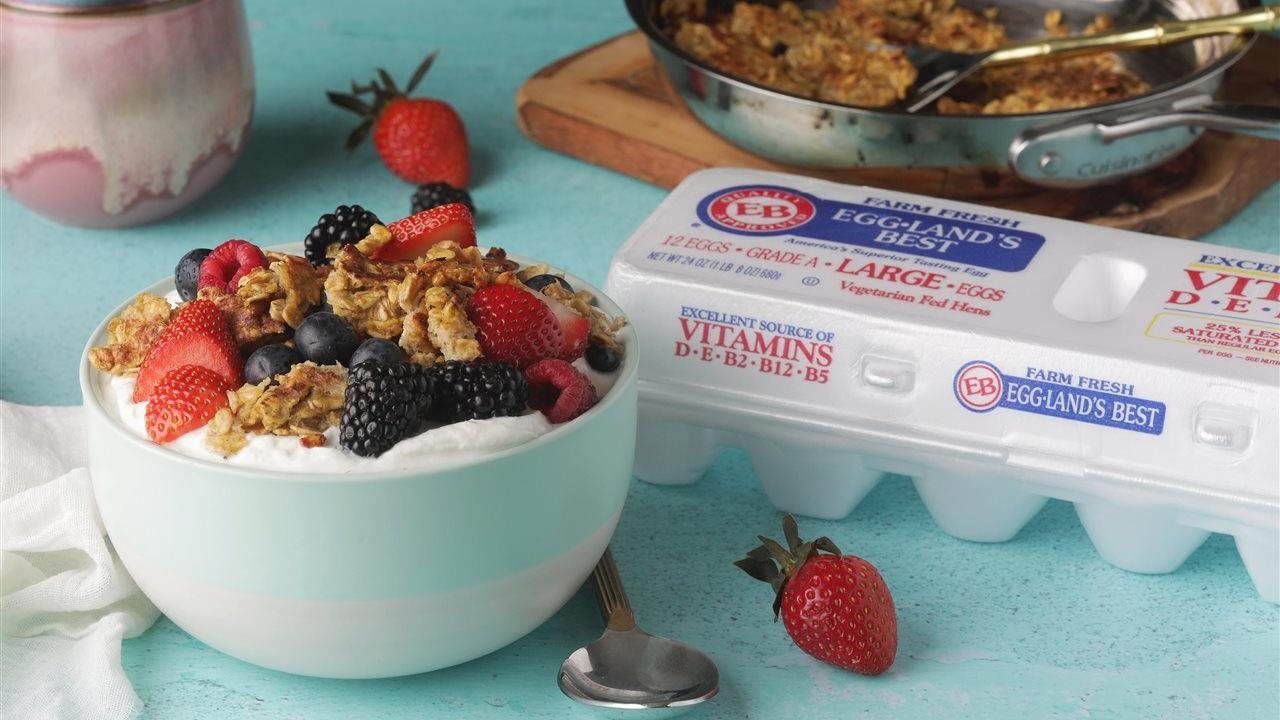
After an active day, whether you’re playing pickleball or swimming laps in the pool, enjoy a recovery meal with quality carbs, proteins and healthy fats. Egg-centric meals are a great choice, and it’s important to know that not all eggs are created equal. Eggland’s Best eggs contain 25% less saturated fat, more than double the omega-3s and Vitamin B12 and ten times more Vitamin E compared to ordinary eggs, making them a great nutritious option to incorporate into your meals, before or after hitting the pickleball court.

Try this delicious Scrambled Oats recipe, made with Eggland’s Best eggs, that will get the job done after a day of summer fun! Bonus: It’s quick, easy and packed with essential vitamins and nutrients needed for energy. To learn more, or for more great recipes, visit Eggland’s Best.

Plus, Eggland’s Best is giving families across America a chance to win a Grand Prize of $5,000 and a VIP pickleball experience with the Eggland’s Best “Serves Up Summer” Sweepstakes. Now through July 16, Eggland’s Best invites fans to enter daily at EBFamilySweeps.com for a chance to win the Grand Prize and incredible weekly prize packs of pickleball swag that encourage nutrition, fitness and fun!

Scrambled Oats

Prep Time: 5 minutes

Cook Time: 10 minutes

Yield/Total Servings: 2

Ingredients:

  • 2 Eggland’s Best eggs, large
  • 1 teaspoon olive oil
  • 1 ripe banana
  • 1 cup rolled oats
  • 1/4 teaspoon cinnamon
  • 1.5 cups 2% plain Greek yogurt
  • 1 cup fresh berries

Instructions:

1. In a bowl, mash banana, whisk in Eggland’s Best eggs, and stir in oats and cinnamon.

2. In a skillet over medium heat, brush on olive oil.

3. Add mixture to skillet, spread out like a pancake, and cook undisturbed for about 5 minutes, until golden.

4. Break up the oat mixture and “scramble” it like you would eggs, until all the pieces are golden.

5. Serve on Greek yogurt and top with berries.

Additional Notes:

Eat immediately or refrigerate leftovers in a covered container for up to 4 days.

Allergy Info: vegetarian, no added sugar, whole grain (gluten free if made with gluten free oats)

5 nutrition tips to power your next workout

2024-06-05T08:01:01

(BPT) – With the kickoff of summer, and #GlobalRunningDay, many of us are motivated to slip into our sneakers and head outside for a run. A good run enhances strength, contributes to cardiovascular fitness, builds muscle endurance and is a great way to shed pounds. It’s also a boost for your mental health. A recent study in Neuroscience News found aerobic exercise like running leads to an increase in levels of serotonin, dopamine and norepinephrine — chemicals that regulate your mood. It also helps promote better sleep, relaxes stress hormones and increases brain function.

So, take this as your sign to get out there! But, in addition to the right footwear, a killer playlist and an interesting route for your workout, it’s vital to focus on nutrition. Regardless of the distance or duration of your run, sports nutrition is an important key to your performance.

Most runners know they should get some carbs, protein, and stay hydrated. But how much, and when? Before, during or after your run? Dana Ryan, Ph.D., MA, MBA, director of Sports Performance, Nutrition and Education and Chair of the Fitness Advisory Board at Herbalife, offers these tips to get moving with good nutrition.

Start with the basics. Whether you’re a distance runner or a new jogger working up to your first mile, a good basic diet is the building block for great performance. Fruits, veggies, lean protein, healthy fats and good carbohydrates are a must.

Pre-workout boost. As you near your run, you want to focus on liquids. One to two hours before your workout, drink a protein shake that includes carbohydrates. Protein helps your brain and body function and gives you an energy boost, and those carbs keep you going. Within 30 minutes of your run, a pre-workout drink that contains caffeine and nitric oxide precursors is a good option. The two things you want to avoid pre workout are fiber and fat as they are hard for the body to digest.

Hydrate! This is vital before, during and after your workout. Proper hydration is essential not only for general body functions, but also boosts performance and mitigates dehydration during running. Runners need to maintain body water balance, because water provides nourishment that the body needs for almost every single function. It also helps limit changes in body temperature. For hydration, water alone is great. Water with electrolytes kicks it up a notch. Herbalife24 CR7 Drive was designed to support athletes. It enhances hydration with 320 mg of electrolytes that you can lose during exercise, and B12.

Carb it up. For many dieters, carbs are taboo. But for runners, or people who do other high-intensity workouts, carbs are key to performance. If you’ve ever run out of steam or hit a wall during a workout, it could be because you’re low on carbs. While running, it’s crucial to replace what the body is losing, namely carbohydrates and electrolytes. One’s body fatigues because of the depletion of carbohydrate reserves and dehydration due to loss of water and electrolytes in sweat, both of which hinder sports performance. So, for every hour of running, consume about 30 to 60 grams of carbohydrates through a sports drink.

Finish with protein. Immediately following the completion of a run, make sure to get some protein in. Within 30 minutes of finishing your workout, consume 20 to 40 grams of high-quality protein, no matter how long the run was. And for those longer runs, add in some carbohydrates to be closer to a 3:1 carbohydrate-to-protein ratio. Why? Protein after a run helps your muscles repair and recover. The amino acids in protein help build lean muscle, which is exactly what you want.

No matter your fitness level, nutrition is an important part of getting the most out of your workout. Now, get out there and move!

Outdoor play each day will help to keep the screens away

2024-06-05T07:31:00

(BPT) – It’s difficult to distance ourselves from screens; they follow us everywhere — in the car, into stores, at restaurants and all around our houses. Children often become reliant on screens for entertainment, and parents sometimes use screens as a distraction. While there’s high-quality, educational digital content available, even too much of a good thing can be detrimental. It’s important for parents to make sure their children are experiencing a well-rounded mix of free play, both inside and outside, along with technology usage.

The American Academy of Pediatrics (AAP) and the World Health Organization (WHO) recommend children under the age of 18 months have no screen time except for video chatting, and children ages 2 to 5 spend no more than one hour per day watching a device.

The harmful effects of screen time have been well researched. In fact, evidence suggests that even television shows claiming to be stimulating and educational are not as effective for infants and toddlers as face-to-face interactions with a caregiver. Too much screen time has also been linked to poor sleep, delays in language and social skills, obesity, behavior problems and more. Allowing children to play in a setting that is unstructured, open-ended and encourages exploration is more beneficial than placing them in front of a device.

So, what can parents do to help their children escape the all-consuming screen? Get outside!

According to the National Association for the Education of Young Children (NAEYC), outdoor play is essential for the healthy development of children. Not only does outdoor play promote physical health but it also helps children make connections to the real world and develops their STEM skills. Plus, fresh air and exposure to sunlight have numerous health benefits for children, including stress reduction and better sleep.

Children can sometimes be resistant to heading outside, especially if they’re interrupted during screen time. Head off potential complaints by setting a timer and letting them know that once they’re done, it will be time to play outside. Let them pick out their shoes and give them two choices of activity so they feel empowered and in control.

Experts at Kiddie Academy® Educational Child Care recommend several outdoor activities developed from their proprietary Life Essentials® curriculum to help parents get children excited about spending time outside.

  • Infants can enjoy several outdoor activities like tummy time on a blanket in the park, wiggling their toes in the grass and listening to bird sounds.
  • Toddlers benefit from going on nature walks and discovering items like pinecones and leaves and helping their caregivers plant flowers, fruits and vegetables.
  • For active preschoolers and older children, make an obstacle course challenge with chalk and other items like tactile discs, hula hoops, pool noodles and more. Older children also enjoy searching for bugs and creating art from things found in nature.

Unstructured outdoor play, like spending time in the sandbox or on a playground, includes fun activities that give children of all ages the opportunity to explore independently. Parents should feel free to sit back and just observe these times, making sure their children are safe while allowing them to discover the magic of outdoor play on their own.

“In addition to enhancing well-being, outdoor play helps children understand their role in the world so they can be good stewards of our planet,” said Samina Hooda, co-owner of Kiddie Academy of Mercer Crossing in Dallas.

Help your children develop a love of the outdoors at an early age and watch them flourish — emotionally, physically and intellectually.

The culinary comeback of cottage cheese

2024-06-04T08:01:00

(BPT) – Individuals are seeking simple ways to add protein into their meals. Enter cottage cheese: a powerhouse food that can be incorporated into everything from toast toppings and smoothies to pastas and even desserts.

When looking for cottage cheese, reach for a brand like Breakstone’s, known for hand-crafted, high-quality dairy since 1882. An East Coast favorite for generations, Breakstone’s 2% lowfat cottage cheese is creamy, delicious and provides 13 grams of protein per serving, which is 20% or more of the daily recommended value of protein in one serving.

Lauren Clark, manager of culinary research and development at Lactalis Heritage Dairy, a subsidiary of Lactalis USA, and part of Lactalis Group, the world’s leading dairy company, emphasizes that consumers are looking for ways to incorporate cottage cheese into everyday recipes. “I turn to Breakstone’s 2% lowfat cottage cheese because it is packed with protein and offers 10% of your daily recommended value of calcium,” she explains. “It takes the guesswork out of making the most out of mealtime.”

One of the greatest appeals of cottage cheese is its versatility that appeals to all age groups.

If you’re looking to add protein to your recipes, cottage cheese offers a delicious solution for a myriad of lifestyles. So, next time you’re perusing the dairy aisle, don’t overlook the humble cottage cheese. With 13 grams of protein per serving and its culinary versatility, Breakstone’s 2% lowfat cottage cheese might be the secret ingredient your grocery list has been missing.

How to Help Prevent an Overdose

2024-06-03T10:33:23

(BPT) – Mental health plays an important role in our general health and well-being. It influences how we feel, think, and act. Many Americans of all ages experience mental distress. According to National Institute of Mental Health data, more than 1 in 5 U.S. adults live with a mental health condition.[1] A mental health condition is an illness or disorder that affects your thinking, feeling, behavior, or mood, and can range from mild to severe.[2] Moreover, about 1 in 25 U.S. adults live with a severe or serious mental health condition.[3] People with serious mental health conditions can live fulfilling lives with effective treatment.[4] However, some people are not in treatment because they lack access to care or may want to avoid perceived stigma related to mental health conditions.

Mental health awareness not only focuses on mental well-being, but also on the connection between mental health conditions and substance use. Some people with mental health conditions struggle with substance use.[5] They may turn to illicit drugs and other substances to help them cope with stress, trauma, or mental distress.[6] Brain changes in people with mental health conditions may also make it more likely they will continue to use substances and could develop substance use disorders and addiction.[7] People with substance use disorders, in turn, may have increased risk for developing other mental health conditions.[8]

And what’s more, using these drugs can have dangerous consequences, including overdose or even death. Substance use disorder affects an estimated 1 in 7 Americans, and nearly 300 Americans die every day from a drug overdose.[9][10]

What CDC is doing to Stop Overdose in America

At CDC we’re educating people about the dangers of illicitly made fentanyl, the risks and consequences of mixing drugs, the lifesaving power of naloxone, and the importance of reducing stigma around recovery and treatment options. We are using the State Unintentional Drug Overdose Reporting System (SUDORS) to better understand the circumstances that surround overdose deaths, improve fatal overdose data timeliness and accuracy, and identify specific substances causing or contributing to overdose deaths as well as emerging and polysubstance overdose trends to help inform overdose prevention and response efforts. CDC is investing in neighborhoods, communities, cities, counties, states, and the nation to prevent overdoses and ensure the health and well-being of all Americans.

Learning how to prevent an overdose can help save a life if you know someone struggling with addiction.

Mixing drugs is never safe

People sometimes think that because they’ve mixed drugs before and nothing seemed to happen, they can do it again. However, a person’s body can react to drugs differently every time. The fact is, even if you’ve been OK in the past, there’s no way to know what the outcome will be from mixing drugs.

Why it’s so dangerous to mix drugs

No matter how it happens, mixing opioids with other drugs is incredibly risky. Using more than one drug is never safe because the effects of mixing them can be stronger or more unpredictable than one drug alone. For example, mixing opioids with stimulants (“uppers”) can increase your risk for a heart attack or a stroke. Mixing opioids with depressants (“downers”) can slow breathing or lead to brain damage. Mixing can even be deadly: More than 50 percent of overdose deaths involve multiple drugs.

“There are evidence-based treatments that work to treat both substance use disorders and mental health conditions,” said Allison Arwady, MD, MPH, director of CDC’s National Center for Injury Prevention and Control. “If you know someone with a substance use disorder or who is in mental distress, you can offer them the support and encouragement they may need to get help.”

Learn the signs of overdose and how to help by using Naloxone

If you think someone could be experiencing a drug overdose – even if you’re not sure – it’s safest to treat it as an overdose. Naloxone is a lifesaving, non-addictive, over-the-counter medication that can be administered to help reverse an opioid overdose, and anyone can keep and use it to help save a life. You can get naloxone as a nasal spray or an injection, and you can use it without medical training or authorization. Also, it won’t harm a person if they’re overdosing on a drug that’s not an opioid.

Seven signs of overdose to watch for include:

  • Small constricted, pinpoint pupils
  • Slow, weak, or no breathing
  • Falling asleep or losing consciousness
  • Choking or gurgling sounds
  • Cold and/or clammy skin
  • Discolored skin, especially lips and/or nails
  • Limp body

Important steps to take when you think someone around you is overdosing:

  1. Administer naloxone, if available
  2. Call 911
  3. Keep the person awake and breathing
  4. Lay person on their side to prevent choking
  5. Stay with the person until emergency assistance arrives

For more information and resources, visit CDC.gov/StopOverdose.

If you’re in the U.S. and thinking about suicide, are worried about a friend or loved one, or would like emotional support, call or text 988 now, or chat 988lifeline.org.

If you’re wanting help for substance use, know that recovery is possible. You can find evidence-based treatment and service options near you by visiting findtreatment.gov or by calling the 24/7 National Helpline at 800-662-HELP (4357).

New Program Helps COPD and Asthma Patients Afford Their Medicine

2024-06-03T08:01:00

(BPT) – For many patients, a diagnosis of chronic obstructive pulmonary disease (COPD) can come as a shock. COPD, a chronic respiratory condition, can drastically impact quality of life, making everyday tasks like walking or climbing stairs a struggle.

Oftentimes, patients know very little about COPD. Many turn to their healthcare providers for guidance and support—exploring treatment options together that include inhaler medications.

Getting the right medication to patients who need it can make a huge difference in the way respiratory conditions, like COPD and asthma, are managed. Making these medications more accessible for patients means they can go out and live their lives on their own terms. Increasing access to inhalers with predictable, affordable and consistent costs gives people the opportunity to regain a sense of normalcy.

Enter Boehringer Ingelheim, a global independent healthcare company on a mission to make essential medications more accessible to those who need them most. With the launch of their new program to cap out-of-pocket inhaler costs for eligible patients at just $35 per month, they’re breaking cost and access barriers for patients who depend on their medications.

With Boehringer Ingelheim’s program, eligible patients can benefit from support available to them, both medically and financially. It is the company’s most tangible attempt to ensure patients don’t have to choose between their health and their wallets.

As Boehringer Ingelheim continues to lead the way in ensuring their medications are more accessible, most eligible commercially insured patients should find the process of getting their inhalers not only cheaper, but simpler, too. For eligible patients with commercial insurance, the discount happens automatically at the pharmacy counter, with no action required—no websites to visit or forms to fill out.

All other eligible patients, including those whose pharmacies do not participate and those without insurance, can visit www.InhalerOffer.com to enroll for a co-pay card to present at their pharmacy to receive the same $35 reduced cost.

As with any chronic condition, it’s important to work closely with your healthcare provider to determine the best course of treatment. For more information about the program details, including terms and conditions, visit www.InhalerOffer.com.

*Terms and conditions apply. Government restrictions exclude people enrolled in federal government insurance programs from co-pay support.

Exercise, meditate, sleep, eat: Stress management tips from Mississippi’s Nurse of the Year

2024-06-03T08:01:00

(BPT) – How’s your stress level? If you’re like most people — 75% of Americans experienced stress in the past month according to a 2022 survey by the American Psychological Association — you know the feeling and impacts it can have on your day-to-day life. That’s a staggering figure. A little well-timed stress can actually be a good thing. Think about those butterflies you might get before a big presentation or an important meeting. That stress can help you focus on delivering your A game.

Severe, prolonged stress? That’s different. It can affect your health more than you realize.

“Stress affects just about every system in our bodies, from headaches to chest pain and shortness of breath,” said Deidra Thompson, Mississippi’s 2024 Nurse of the Year, and graduate and instructor from Walden University. It’s an important issue that is part of her focus as she speaks to local groups of business leaders about combatting this stress epidemic in the office and at home.

The mind and body are inextricably connected, Thompson explained, so all of that worrying and fretting and even fear that’s roiling around in your brain can manifest in the body in many adverse ways, including:

  • Pain
  • GI symptoms like decreased appetite, nausea, irritable bowel syndrome
  • Chest pain
  • Elevated heart rate
  • Sweating
  • Impaired sleep
  • Decreased immunity
  • Mood swings
  • Poor concentration

That’s no way to live. While we can’t eliminate the various causes of stress in our lives — global unrest, political turmoil, rising prices, workplace hassles, job uncertainty, money problems, family strife and much more — we can do something about how we react to that stress. Thompson calls it “resilience,” the ability to adapt to challenging situations and maintain an acceptable level of functioning despite stress and adversity.

“Building resilience is about identifying and strengthening our protective factors, those things in our lives that can buffer and insulate us from stress,” she said. “They’re things like religion or spirituality, meaningful family relationships, access to and engagement in health care, financial stability, a sense of purpose and the ability and willingness to seek help.”

Thompson recommends these tips to manage stress:

Exercise. It might be the last thing you want to do when you’re feeling low, but exercise lowers the levels of stress hormones, increases endorphins, and leads to increased oxygenated blood flow to the brain. This doesn’t mean you have to run a marathon every day. Walk the dog. Get outside in nature. Yoga has been proven to increase gamma-aminobutyric acid, which leads to decreased anxiety and a better mood.

Meditate. Never done it? No problem. Meditation decreases activity in our limbic system, which plays a role in emotional response, fight-or-flight, aggression and more. All you need is a comfy chair and a quiet room. Start with five minutes. There’s no secret technique or trick to it — just be in the moment. If thoughts float in, usher them out. A good way to do this is to focus on the simple act of breathing in and out. Or find a guided meditation app to help you along.

Sleep. Do you know anyone who gets enough sleep? Poor sleep is the lament of the masses, and it can lead to myriad health problems, not the least of which is being exhausted the next day. With stress, it’s a double-edged sword because stress causes sleep problems, and sleep problems exacerbate stress. To combat this, focus on getting a good night’s sleep. Set yourself up for success with a dark, quiet room at a comfortable temperature, not too warm, not too cold. Be consistent with your bedtimes, even on weekends. Avoid large meals, caffeine or alcohol before sleep.

Eat. You might be surprised by how much nutrition plays into our feelings and mood. If you overeat, you feel sluggish. Everyone knows what Thanksgiving afternoon feels like. But did you know you can feel lethargic if you undereat? Sugar and processed foods can contribute to inflammation in the brain and body. Instead, focus on foods that are good for your mental health like fruits, leafy greens, veggies, nuts, seeds, beans and lentils.

In the tumultuous world we live in, you can’t eliminate stress. But focusing on exercise, meditation, sleep, and eating right can help you be resilient to stress factors and help insulate you from stress.

Go Big without Staying Home this Summer: Travel and Entertainment Spending Tips for 2024

2024-05-31T12:59:00

(BPT) – By Mary Hines Droesch, Head of Consumer, Small Business & Wealth Management Banking and Lending Products at Bank of America

Summer travel planning is officially in full swing, and while many Americans are likely to be mindful of their spending, plenty are eager to get out and experience the world.

Gen Z seems to be leading the charge. According to a recent Bank of America survey, 24% of Gen Zers are planning to take longer trips in 2024 than years prior, whereas millennials (16%), Gen X (9%) and baby boomers (7%) are less likely to do so. Gen Z also takes the lead in international travel, with 20% planning an international trip — far ahead of millennials (10%), Gen X (8%) and baby boomers (6%).

Meanwhile, 81% do not plan on postponing any travel plans, and 91% say they plan ahead for vacation. So, what’s driving this appetite for big adventure — especially among younger generations?

The fact that entertainment has been making a big splash could have something to do with it. Last year, Swifties and the BeyHive showed us just how much they’re willing to sacrifice to see their favorite artists on stage, and “Barbenheimer” took the world by storm via the screen. Considering that 45% of people said they were likely to splurge on experiences while traveling and 38% are already planning to travel internationally, the excitement is likely to continue this summer. Beyonce’s recent album release has fans on the edges of their seats anticipating a tour announcement, the Eras Tour is hitting international venues and the Olympic Games are taking over Paris.

While 72% of people are planning to travel this summer, however, most don’t plan to throw all financial consideration to the wind. In fact, 84% of those who will be traveling will establish a budget or spending limit.

If you’re all about going big without going broke, here are some tips to help you offset costs on travel this summer:

1. Plan your travel and entertainment budget thoughtfully. When considering how much to budget, start by thinking through how you’re most likely to spend during your trip. For example, 27% of travelers budget solely for major expenses and maintain flexibility with other spending on vacation. Consider the things you want to go all out on, and where can you cut back. Self-proclaimed foodie? You’ll want to make sure your food and beverage budget has plenty, while you may be able to cut other costs by booking less expensive accommodations. If it’s kicking back and relaxing on a luxurious bed that you look forward to most, consider budgeting more for accommodations and less for food, opting to grocery shop instead of eating out every night.

Another important consideration when it comes to planning your spending this summer is your “fun budget.” Especially if you’re traveling for a big-ticket event like a concert, you’ll want to make sure you know how much you can spend on the ticket — and how much that leaves for the rest of your travel budget. Americans tend to overspend in this area, with the biggest culprits for going over the “fun budget” being trying new restaurants (42%), concerts/music festivals (39%) and sporting events (30%).

2. Start planning now. Plan as much as you can, as early as you can. Avoid last-minute price hikes on tickets for both travel and entertainment by buying them well in advance, taking advantage of early bird discounts on flights and booking your accommodations before options fill up.

What’s more, when you start the process early, you might get lucky and find a package deal with offers that include flights, accommodations and even event tickets.

3. Use a rewards credit card before and during travel. Whether you plan to spend big on a trip or go the more frugal route, consider using a cash back credit card to help offset some of your vacation expenses. With the Bank of America Customized Cash Rewards credit card, each month you can choose to earn 3% cash back in one of six spending categories, including travel, dining, online shopping and more. To maximize your cash back, you could choose the travel category for the months before your trip when you’re booking accommodations and flights, then switch to a new category, like dining, to make the most of your purchases during your trip.

If you’ve earned credit card rewards but haven’t used them yet, consider putting them toward your travel and entertainment purchases to offset some of the costs. Or, if you’re planning to travel next year, too, consider putting the cash rewards you earn this summer into a savings account, so you’ll have funds at the ready for future endeavors.

Overall, despite some lingering financial concerns, the appetite for travel is strong. High-profile entertainment, like concerts and sporting events, is likely to be a major draw for travelers this summer — which means effective money management will be key for consumers. By strategizing and making wise financial decisions, even the most adventurous vacationers can enjoy a remarkable summer getaway without blowing the budget.

Sponsored by Bank of America

Navigating Infertility: Key Insights, Support and Resources for Couples Trying to Conceive

2024-05-31T14:01:01

(BPT) – Couples yearning to start a family often face numerous challenges, including financial worries, health concerns and fears about potential problems during pregnancy and birth. One significant challenge that many couples may not anticipate is infertility.

According to a recent survey, 77% of U.S. women aged 25-34 who have been trying to conceive over the last 12 months did not think about their ability to get pregnant until after they decided to try to conceive. In the survey that was commissioned by First Response in collaboration with RESOLVE: The National Infertility Association, a majority (57%) didn’t realize how long it would take to get pregnant, and almost 2 in 5 women trying to conceive (38%) wish they knew how much conflicting information there was before attempting to get pregnant.

For many couples, the challenge to conceive is even more difficult if they live in a “support desert” — an area where health care resources and infertility support are not available. This most often includes rural communities, where distance creates one problem, but the local health care infrastructure itself can be inadequate to meet the needs of young families. The survey revealed that over 2 in 5 women trying to conceive (42%) do not have local access to infertility support groups and treatment. That number climbs to 62% for rural women who feel they have inadequate access, amplifying their sense of isolation and frustration. Additionally, 41% simply don’t know what resources are available.

Beyond facing limited or nonexistent resources, many couples feel a stigma around discussing infertility, accompanied by shame, embarrassment or a belief that they are at fault. While over half of those surveyed have talked to friends (57%) or family members (56%), only 42% have spoken to a health care provider, 24% discussed their journey to pregnancy with a mental health expert, and only 16% sought a support group.

The importance of information and resources

Access to adequate information, support and resources is crucial for couples trying to conceive. In the survey, a staggering 93% of women said they believe at least three misconceptions about trying to get pregnant when given a knowledge test about common facts regarding pregnancy.

Expanding support and getting the word out about resources is crucial. Women with access to local infertility support groups and treatments are more than twice as likely to use these resources (21% versus 10% without access). In addition, women with access to infertility support groups and treatment in their area report being more likely to reach out to family members (59%) or health care and mental health providers (56%) than those without local options.

What couples can do

For those living in rural communities and other support deserts, it’s vital to be proactive by seeking out care, advocating for your well-being and creating a support structure if you can’t find one. Couples living in support deserts can:

  • Seek out community outreach programs: Contact your nearest health care facilities and social service programs to ask about resources.
  • Access telemedicine platforms: Ask health care clinics and hospitals in your state if they can provide remote consultations and support.
  • Join or establish in-person/remote support groups: If you can’t locate support groups near you, start one — or consider joining or creating a remote support group to share experiences, information and resources with others going through infertility. RESOLVE.org is home to several resources that empower, educate and equip couples to help address roadblocks in conceiving, including free support groups.
  • Advocate for yourself and others: Destigmatizing infertility is key. Speak out, educate others and encourage open and supportive dialogue within your community. Join The Pregnancy Hub by First Response™, a community created to help connect and inspire those navigating trying to conceive.

Survey Methodology: The survey was conducted by Wakefield Research among 1,000 U.S. women, ages 25-34, who have been trying to conceive over the past 12 months, “Trying to Conceive” defined as trying to get pregnant either naturally or with assistance, between March 27 and April 7, 2024, using an email invitation and an online survey.