The Benefits of Eating with Others

2024-05-06T08:01:00

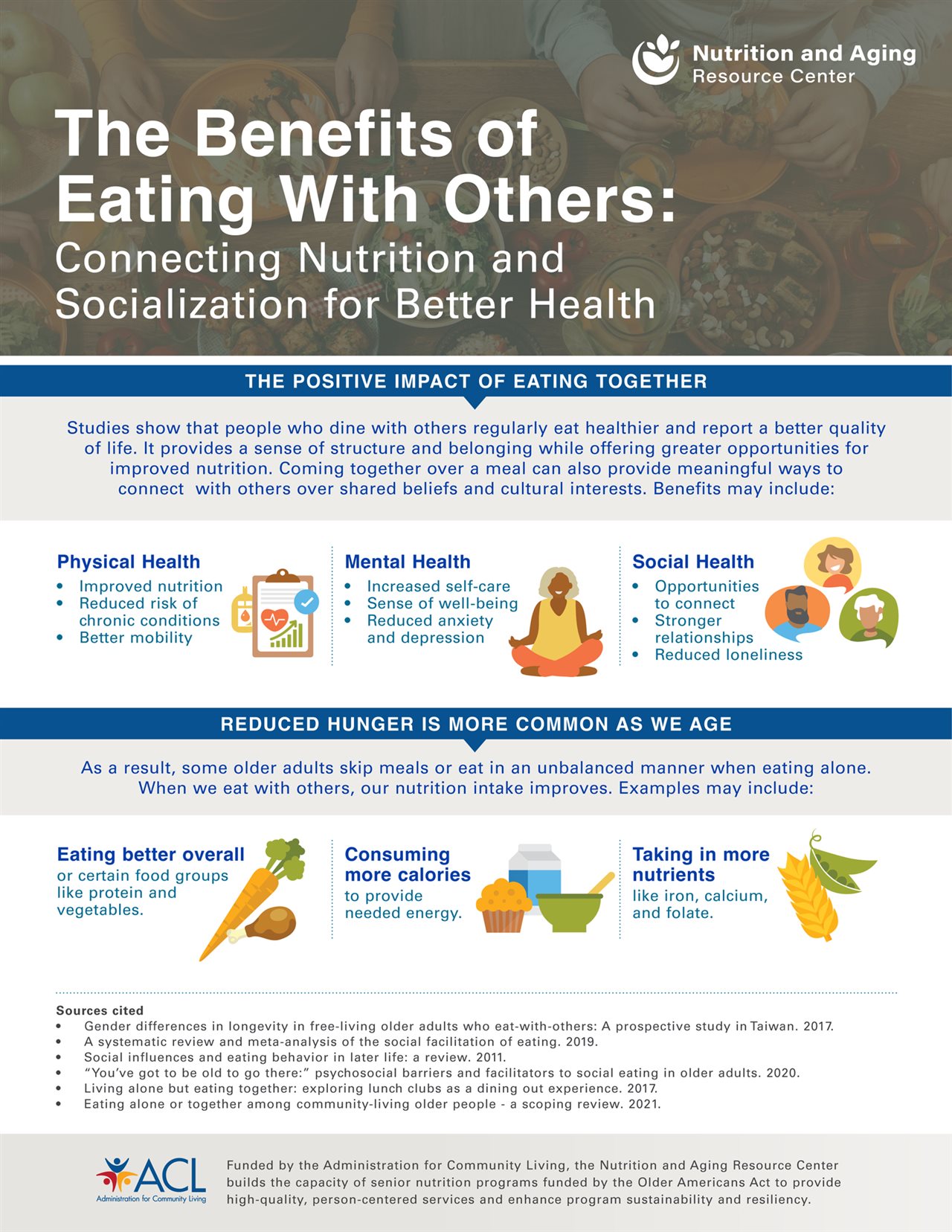
(BPT) – Studies show that people who dine with others regularly eat healthier and report a better quality of life. It provides a sense of structure and belonging while offering greater opportunities for improved nutrition. Coming together over a meal can also provide meaningful ways to connect with others over shared beliefs and cultural interests.

Family Matters: Tips for Planning a Summer Family Reunion

2024-05-06T07:31:00

(BPT) – Did you know the average family spends less than an hour of quality time together per day? According to data from Pew Research Center, nine in ten people indicate that spending time with family is one of the most important things to them, but it can be difficult to prioritize.

Reunions can be the missing piece that helps families reconnect to share family history and traditions, creating a sense of belonging that is hard to replicate. While family reunions can have a positive impact on well-being, they can also be a daunting task. AARP members can unlock an abundance of discounts that make a memorable reunion that everyone will talk about for generations to come.

”Some of the longest standing traditions that families have are their reunions, which come in all shapes and sizes from small annual gatherings, to once in a decade parties,” said Steve Guilday, AARP Services Travel Director. “Because families don’t always live in the same city, these events require a lot of coordination and often double as a summer vacation. Taking advantage of existing membership discounts like those available for AARP members can make reunion travel and execution more financially friendly for all.”

Prepped and Primed

Whether bringing together a group of 30 or 300, family reunions require a good dose of planning. With so many moving parts — flights, hotels, transportation — the AARP Travel Center Powered by Expedia is the perfect one-stop shop for creating a seamless itinerary. Members save up to 10% on select hotels, 30% off car rentals from Avis and Budget and receive a $50 gift card with any flight package.

For out-of-town families, it’s nice to have the option to book a dependable rental car at a discounted rate to shuttle everyone around comfortably for planned activities. AARP members save up to 30% off base rates or up to 35% when selecting Pay Now and receive a 3% credit to apply to rentals within 12 months when booking a car with Avis. Plus, you get an upgrade on compact through full-size car class bookings, an additional driver at no cost, and more.

Location, Location, Location

Where families stay for the reunion can directly influence their overall enjoyment. Look for hotel options that are not only conveniently located by the event venue or airport, but near other areas to enjoy such as the local downtown area or parks.

Where Furry Friends Are Welcome

Families come in all shapes and sizes and for many, family includes pets. Many pet owners take their beloved animal along for travel, making pet-friendly lodging crucial. Remember to ensure for families with pets that there will be four-legged-friend approved hotels, particularly ones that can share a list of local pet-friendly wineries or breweries, restaurants, hiking trails and dog parks.

Thankfully, with your AARP member benefits, you and your pets are covered.

One pet-friendly option is Choice Hotels®, which offers more than 3,500 pet-friendly properties globally; AARP members can save 10% on their reservation and some locations may offer extra amenities such as pet food, food dishes, water bowls and play areas.

With thousands of pet-friendly locations worldwide, Wyndham Hotels & Resorts has the perfect accommodations for members and their loyal pets at hotels like La Quinta® by Wyndham and Baymont® by Wyndham. AARP members can save 10% on the Best Available Rate at pet-friendly Hotels by Wyndham around the world.

No matter where the road takes you, pets always stay free at Motel 6. AARP members save 10% off the best available rate and can request a late checkout until 2 p.m.

A Last-Minute Helping Hand

You’ve made it to the reunion. You’ve secured your rental car and settled into your lodging. You’ve confirmed the caterer, but something feels like it’s missing. Even the most careful planners can overlook something. Whether you simply need napkins or anticipate a bigger problem like running out of food or want to stock up on snack items for your hotel room, Walmart+ is a membership that helps save you time and money. AARP members save $20 off the annual membership and enjoy benefits like free delivery from the store, free shipping with no order minimum, video streaming with Paramount+, gas savings, plus so much more.

Safe and Secure

The main focus of family reunions should be enjoying time with family, so make sure you don’t miss out on reconnecting because you’re worrying about home security while you’re away. AARP members can have peace of mind and save 5% on monthly home security monitoring with ADT™ Home Security equipped with intrusion monitoring, connected smoke and CO detection, and smart automation from video doorbells and security cameras to smart locks.

Homes aren’t the only things that need protecting, especially since most people consider pets to be just as big a part of their family as a human member. Whether you and your furbaby are at home or on the road AARP members save 10% on Fetch Pet Insurance monthly premiums for the lifetime of their pet’s policy, which covers qualifying care for injuries and illnesses, emergency vet visits, prescription meds and supplements, plus boarding fees for your pet should they require hospitalization.

Although the effort and expense of organizing a family reunion may seem intimidating, AARP member benefits make it easier to save, so all you have to worry about is enjoying the magic of being surrounded by generations of family.

To learn more about the benefits and discounts for AARP members to help you prepare for your family reunion, please visit aarp.org/save.

AARP member benefits are provided by third parties. AARP receives a royalty fee for the use of its intellectual property. These fees are used for the general purposes of AARP. Provider offers are subject to change and may have restrictions.


Four Outstanding Substitute Teachers Honored During Teacher Appreciation Week

2024-05-06T08:01:00

(BPT) – The enduring wisdom of the African proverb, “It takes a village to raise a child,” resonates across cultures, underscoring our collective responsibility toward nurturing the academic, social, and emotional development of our future leaders. In alignment with this timeless ethos, Teacher Appreciation Week serves as an ideal occasion to honor not only our teachers but also the often overlooked yet indispensable members of our children’s educational community. These unsung heroes, particularly substitute educators, provide crucial continuity and foster an environment of support and positivity, making them essential pillars in the comprehensive upbringing of our youth.

Kelly Education, the leading provider of education workforce solutions in the nation, proudly upholds a tradition of celebrating these anchors of operational stability through its annual Substitute Educator of the Year Award. This prestigious honor is extended to substitute teachers and school support staff who have made significant contributions to their school communities. Eligibility requires active employment with Kelly Education and a nomination from a school colleague that highlights the nominee’s positive impact on both students and peers. Winners of the award are recognized with a $5,000 bonus, in addition to a $1,500 donation to the school of their choice, reinforcing Kelly Education’s commitment to acknowledging the invaluable role of substitute educators in shaping future generations.

“One of my greatest joys is celebrating the work of our educators,” said Kelly Education President Nicola Soares. “These educators are extra special because they were nominated by their school partners for the positive impact they’ve had on their school community.”

Here are this year’s winners, who are changing students’ lives, one classroom at a time.

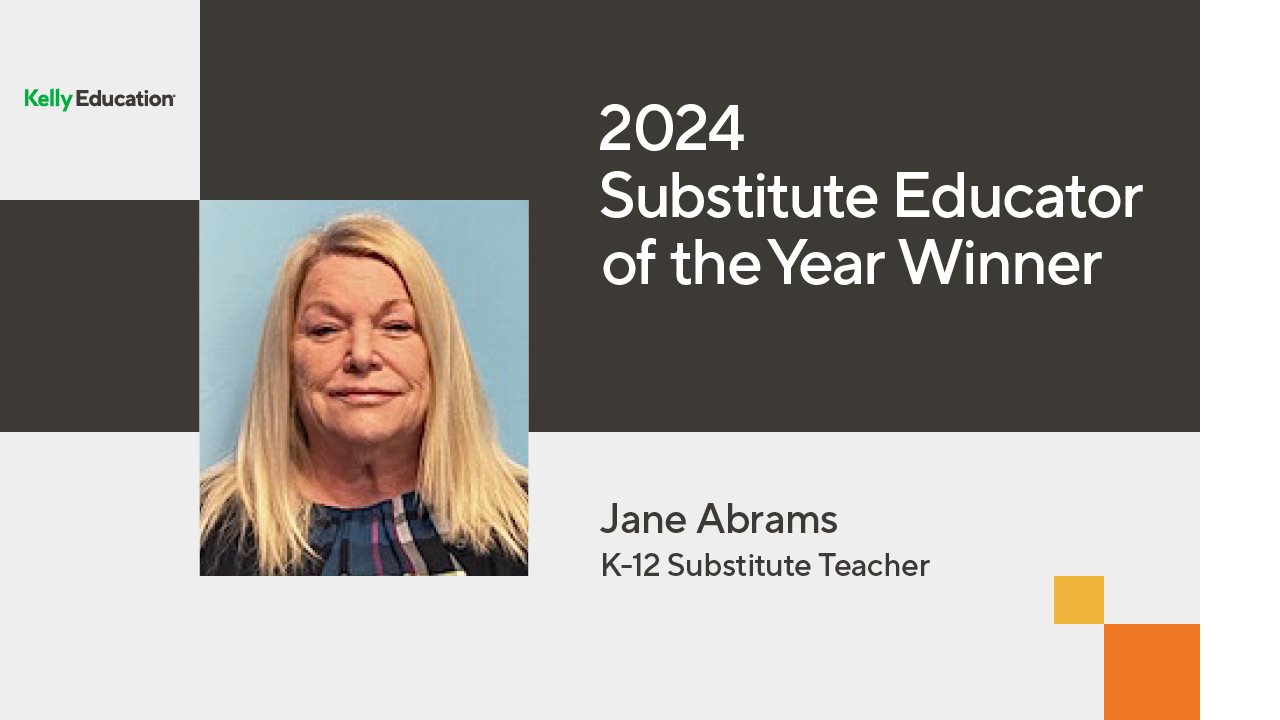
Jane Abrams, K-12 Substitute Teacher, of Aventura, Florida, found a way to recover from heartbreaking losses by returning to the field she loved, becoming a substitute educator. Her experience at Fulford Elementary has given her a whole new family.

“All of the teachers and staff welcomed me with open arms,” said Abrams. “This is a workplace of respect and congeniality — and the children filled my heart back up with joy and love.”

Abrams appreciates how Kelly Education gives her the freedom to work around her schedule, as well as providing insurance and perks like retail bargains and other incentives. She advises substitute educators to be positive, listen to what the other teachers have to say, and ask questions: “Leave a detailed account of what you accomplished or didn’t accomplish during the day, and remember — a teacher can change the world.”

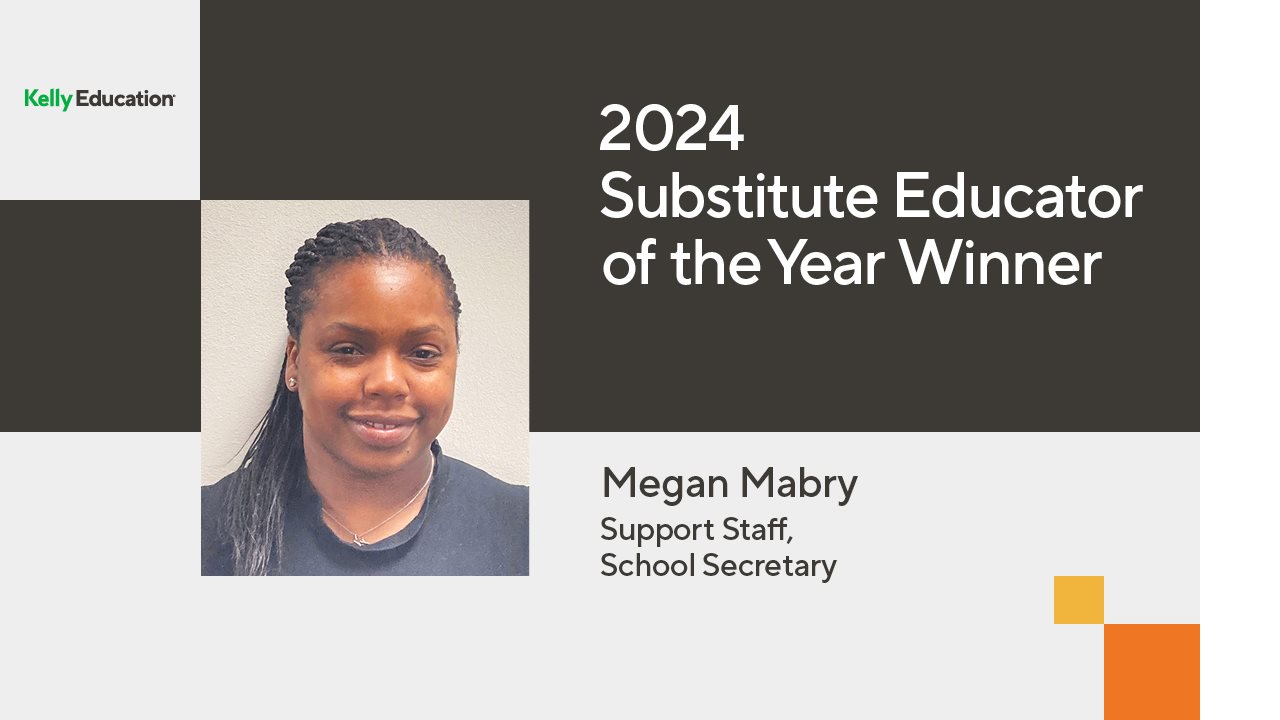
Megan Mabry, Non-Instructional Substitute Educator, from Cabot, Arkansas, grew interested in education from her role as a mother. After earning her bachelor’s degree in business management and working for the U.S. Postal Service, Mabry wanted more involvement with her children’s education and better work-life balance. This led her to the flexible opportunity of becoming a Kelly Education substitute educator. She appreciates the long-term opportunities that can become permanent positions within a school district.

Mabry enjoys working in the student success center, where she interacts with all the students, encouraging them academically and helping build their self-confidence.

“One student who came in was working hard to keep her grades up all year,” said Mabry. “She visited recently to share that she’s achieving her goals of graduating and joining the Army National Guard this year and thanked me for all the encouragement.”

Saira Zamarripa, Early Childhood Substitute Educator, from Oklahoma City, Oklahoma, became a substitute educator after earning her bachelor’s degree in science from Southern Nazarene University. She is currently enjoying a long-term temporary position at Arthur Elementary School, where they recognized her with their “Caught You Being Good” award, which made her feel like an important part of the school community.

“What I like most about being a substitute teacher are the relationships I’ve built with students,” said Zamarripa. “I like that I can bring a little happiness into their lives because you never know what they’re dealing with away from school.”

Zamarripa appreciates the flexibility and responsiveness of Kelly Education staff and her relationships with school teachers and administrators.

Lucille Zeigler, Paraeducator, of Pelham, Alabama, attended Lawson State Community College before becoming a substitute teacher at Berry Middle School.

“What I love most about being a substitute teacher is the enthusiasm of the students who want to learn more and more,” said Zeigler. “I love to see the faces of students as they learn.”

She remembers an influential teacher in her life — her sixth-grade teacher, who helped her learn math to avoid embarrassment at the chalkboard. She reminds substitute educators to be patient, kind and good listeners.

“Don’t forget that you are there to help the classroom teacher,” Zeigler advised. “And it’s important to love what you do.”

Learn more about this year’s award winners at kellyeducation.com. Interested in substitute teaching opportunities near you? Visit mykelly.com.

3 expert tips to manage your puppy’s dental health

2024-05-03T14:01:00

(BPT) – Every new puppy owner has a camera roll full of pictures, but don’t let that sweet puppy smile fool you — good dental health requires a plan.

By the age of three years, most dogs will have some sort of periodontal disease, according to the American Animal Hospital Association. When left untreated, periodontal disease can cause pain, infection, inflammation and other health problems for your best friend.

It’s important to ensure you have the necessary tools to keep your puppy happy and healthy. Don’t know where to start? Check out these three expert tips from veterinarian and puppy expert Dr. Callie Harris.

1. Establish a brushing schedule early on

Just like you, your dog needs their teeth brushed. Since they can’t do it on their own, it’s up to you to brush for them.

“Brushing your puppy’s teeth early on not only keeps them healthy but also supports a strong bond between pet and pet parent,” says Harris.

It’s important to establish teeth brushing as part of your puppy’s routine early on. Using flavored dog toothpaste (never human toothpaste!) and a soft-bristled toothbrush or a finger brush can help ease the process.

You may not be able to do a full toothbrushing session at first, but you can start by brushing your puppy’s teeth for a few seconds every day and work them up to a full session. Beginning a toothbrushing routine may also help reduce stress for potential future teeth cleanings at the vet. Remember to praise and reward them during and after brushing.

2. Offer chew toys or tasty dental chews

Around the time you take your puppy home — usually 12-16 weeks — they’ll be teething. As they lose their baby teeth and their adult teeth come in, they’ll follow their instincts to chew. While this instinct keeps their teeth clean, it could lead to your dog chewing on household items.

You can get ahead of negative chewing behavior by offering your puppy chew toys that are appropriate in size and don’t pose a choking hazard. Rubber dog toys with ridges or nubs are a great option for your pup, as they help remove plaque during chewing.

Dental chews are another great way to invest in your puppy’s oral health while providing a tasty treat. When choosing a chew for your four-legged friend, consider an option like Purina DentaLife Puppy Teething Chews.

“DentaLife Puppy Teething Chews can help establish a healthy dental routine by supporting a puppy’s natural drive to chew and their mental engagement,” said Harris. “The chews safely redirect chewing behavior during peak teething age, around 3+ months old, when puppies’ adult teeth emerge.”

DentaLife Puppy Teething Chews are a great tool for puppy parents to support their new pet through the teething stage and build up healthy dental habits. Designed and formulated by Purina animal care experts, they also contain DHA, EPA and calcium to support your puppy’s developing brain, teeth and bones.

3. Schedule professional dental cleaning

As your puppy grows and develops, it’s important to explore when your pup should get their first professional dental cleaning, as recommendations vary across breeds. During a cleaning, your vet can examine your pup’s teeth and gums for disease and remove hardened tartar. They’ll also be able to help you address any issues they find so you can keep your best friend happy and healthy for years to come.

Remember, establishing good dental habits as a puppy can set them up for dental success down the road. Using these three expert tips, you’ll be well on your way to keeping your puppy’s smile healthy and bright.

Parents, protect your child against measles before international travel

2024-05-02T11:01:00

(BPT) – Do you have travel plans? As your family gets ready for summer trips and get-togethers, make sure your child is up to date with routine childhood vaccines. The World Health Organization has noted a significant increase in measles cases worldwide, including popular international tourist destinations for Americans. Travel is a great opportunity to see new places and visit family, but it can also put you and your family at risk for measles if you aren’t all vaccinated.

The good news? Staying up to date on recommended vaccinations is the best way to protect your child from measles and other diseases. Here’s what you need to know before you travel.

Measles is very contagious and can cause serious symptoms like high fever and a rash.

Measles is caused by a virus and spreads to others very easily when an infected person coughs or sneezes. The measles virus is so contagious that up to 90% of the people around an infected person can become infected if they are not vaccinated — and the virus can even stay in the air for up to 2 hours after an infected person is there.

Vaccination can help protect your child against measles and related complications.

The good news is that the measles-mumps-rubella (MMR) vaccine is safe and effective in protecting you and your family from measles. The MMR vaccine is part of the recommended immunization schedule for all children and adults. Vaccination with MMR is the best and safest way to prevent measles. When both doses of MMR vaccine are given (typically when the child is about 1 and 4 years old), MMR is 97% effective at preventing measles.

If you plan to travel internationally, make sure you and your loved ones are protected against measles before departure. CDC recommends:

  • Infants 6 to 11 months receive one dose of the MMR vaccine before traveling internationally.
  • If children 12 months and older are not vaccinated, CDC recommends they receive two doses 28 days apart before traveling.

Make sure you discuss your options with your child’s healthcare provider before traveling. Even one dose of the MMR vaccine is 93% effective in protecting against the illness.

Prepare your child for travel by ensuring they are up to date on their MMR vaccine, so you and your family can focus on what matters: staying healthy and safe while traveling abroad. Talk to your child’s healthcare provider and learn more about measles today.

9 helpful mealtime hacks from iconic TV host and actor

2024-05-02T08:15:00

(BPT) – When it comes to getting meals on the table that your whole family will love, iconic actor, television host and father of four Alfonso Ribeiro has a few go-to tips and tricks to ensure mealtime is a success.

“Juggling our family’s hectic schedule and my career means we’re constantly seeking ways to get meals on the table quickly and without too much prep time,” said Ribeiro, who has been a longtime spokesperson for the Bob Evans brand. “Along with many tips I’ve learned along the way, I discovered that Bob Evans is a great mealtime solution for busy families like mine.”

Here are some of Ribeiro’s best tips for managing a busy family kitchen and coming up with delicious, satisfying and convenient meals.

1. Prep meals ahead

To help your family get through the busy work and school week, brown up a batch of Bob Evans Sausage over the weekend so you’ll have plenty to add to dishes throughout the week — like breakfast tacos, biscuits and gravy, pasta dishes and shepherd’s pie, just to name a few. Get creative and combine the sausage with buttered veggies and potatoes for a quick and easy weeknight meal or swap out the protein source in some of your favorite recipes.

2. Spice it up

You can put your own personal tastes into family favorites like Bob Evans ready-to-heat Original Mashed Potatoes or Macaroni & Cheese by sprucing them up with a variety of toppings and mix-ins that you love, like garlic, jalapenos or bacon bits.

3. Easy microwave cleaning

Need a quick fix to help you clean out your microwave? Put a cup of water and half a cup of vinegar into a microwave-safe bowl and place it in your microwave, then microwave on high until the mixture comes to a boil and the window steams up. Allow the microwave to cool for a few minutes, then wipe the interior down with a sponge or cloth.

4. Freshen your kitchen with citrus

Did you know that you can clean up your wooden cutting board by massaging it with coarse salt and half a lemon? Try it! You can also use ground-up citrus peels of any kind, along with ice, to freshen your kitchen sink drain or garbage disposal.

5. Save time and fridge space

You can avoid having too many unwanted leftovers and reduce post-dinner clean-up at the same time by using single-serve side dishes. Bob Evans offers convenient, single-serve options like Mashed Potatoes in a variety of flavors, and Macaroni & Cheese, which can also make it a lot easier to satisfy family members asking for different choices at dinnertime.

6. End the cling wrap wrestling match for leftovers

If you have trouble getting your cling wrap to cooperate (and who doesn’t?), store it in the refrigerator for a while. Chilling your cling wrap will temporarily reduce its “stickiness,” making it much easier to use.

7. Dish-drying hack

Are you tired of your dishes still being wet after you clean them in the dishwasher? Place a clean dish towel within the dishwasher’s door once the cleaning cycle is complete, close it and wait five minutes, then — voila! Your dishes will be dry and ready to put away.

8. Easy butter softening trick

Need softened butter for a recipe or just easier spreading? Microwaving often melts your butter into a puddle, which may not be what you want. First, measure and unwrap the amount of butter you need. Cut the butter into thin slices or small chunks and leave out of the fridge — in around 10 minutes you’ll have softened butter.

9. Salvage hardened brown sugar

If your brown sugar has hardened into an unusable block, don’t toss it out — instead, place a slice of fresh bread along with the brown sugar in an airtight container. After about a day, the sugar will have absorbed moisture from the bread to make it soft and crumbly again. This is also a great use for the ends of bread that nobody wants for their sandwiches!

These tips will help make your kitchen management and mealtimes a lot easier. If you delight in providing convenient and delicious meals at home while using tips and tricks, visit BobEvansGrocery.com/Become-Bob-Evans-Replacement-Spokesperson to enter to become the next Bob Evans spokesperson!

To find Bob Evans products, recipe inspiration and a retailer near you, visit BobEvansGrocery.com.

How colleges and universities can support adult learners navigating a changing world

2024-05-01T08:01:00

(BPT) – The world is always changing — for better or for worse — but the last few years have transformed society rapidly. Handling these changes in current responsibilities can be incredibly overwhelming and for some people, it has resulted in poor mental health.

This May, Mental Health America is observing Mental Health Awareness Month, a time dedicated to raising awareness and reducing the stigma surrounding mental behavioral health issues, with the theme, “Mental Health in a Changing World.”

The month’s theme could not come at a more opportune time, given the prevalence of mental illness in the U.S. The National Council for Mental Wellbeing found that one in five adults in the U.S. experienced mental illness in 2021. Of those adults, 47% received treatment.

While mental illness can impact anyone, adult learners who are balancing their personal lives with professional and educational pursuits need special attention.

Balancing life, school and mental well-being

Adult learners account for more than 24% of the 12.8 million enrolled students pursuing an undergraduate degree during the period, according to a survey by The Best Schools. These students face challenges not typically experienced by traditionally aged learners (18-24).

Oftentimes, adult learners must juggle their education and existing professional responsibilities, as more than two in three adult learners in 2022 were employed either full- or part-time while pursuing their degrees. Making time for education can be difficult, and some students are forced to choose between completing an assignment and receiving a steady paycheck.

Family obligations are another area in which adult learners differ from their traditional counterparts. The survey found that nearly half of older learners who enrolled in spring 2020 reported they had dependent children. Only about 3% of students 18-24 reported the same.

Managing school, work and family is challenging, and even more so in a changing environment. That’s why it’s crucial now more than ever that adult learners receive mental health support from their educational institutions.

How higher education institutions can help

Colleges and universities have an opportunity to play a pivotal role in the mental well-being of their adult learners.

“The role mental health support and academic resources play in the personal and professional success of adult learners cannot be overstated,” says Agnam Memeti, DeVry University’s chief enrollment and student support officer. “Higher education institutions must find ways to create an environment that fosters mental health awareness and promotes well-being for all students, including adult learners.”

The majority of DeVry students are at least 26 years old and more than half are parents supporting children and other dependents. With so many adult learners, it’s no surprise that the university is proactive in supporting adult learners’ mental health and well-being. DeVry provides them with academic support, mental health resources and flexibility scheduling that they require due to their busy lives balancing work, school and family.

For example, the DeVry CARE Formula demonstrates the institution’s commitment to student success. All students are provided with a personalized support team that includes a student support advisor and career advisor. Students can also receive support through the StudentLinc program, which offers an array of emotional well-being and life-balance resources and support whenever and wherever needed free of charge.

Through StudentLinc, students can receive help addressing everyday issues through short-term counseling from licensed clinicians available 24/7, 365 days a year; therapy via text with licensed counselors Monday through Friday; and digital group support via live sessions hosted by licensed counselors. Other resources available include training, and referrals to help address challenges like child or elder care, adoption, pet care, home repair, education and housing.

If a student isn’t sure what assistance they need, they can access a Mental Health Navigator to receive personalized guidance for program support and resources. Beyond mental health support, StudentLinc also provides free legal consultations with a local attorney, consultations with financial experts and more via phone, the web and mobile apps.

“Mental health isn’t a one-size-fits-all journey,” adds Memeti. “At DeVry, we want to make sure that all our students, whether traditional or adult learners, have the resources they need to complete their education while prioritizing their well-being.”

To learn more about the ways DeVry University supports all students, visit DeVry.edu.

Top 4 Reasons To Become a Mental Health First Aid Instructor

2024-05-01T07:01:00

(BPT) – Have you experienced or known someone who has experienced a mental health or substance use challenge? Mental health conditions are common, manageable and treatable — and more likely than you may think. Almost half of people in the U.S. will experience a mental health condition at some point during their lifetime, with symptoms often emerging in childhood or adolescence. For individuals at any age, asking for help can be difficult, and many of us don’t know where to start.

Mental Health First Aid (MHFA) is a research-based training program that teaches adults how to recognize and respond to someone who may be experiencing a mental health or substance use challenge. At the core of the program are its Instructors, who have trained more than 3.7 million Mental Health First Aiders since the program was first introduced in the United States in 2008.

This May is Mental Health Awareness Month, a chance for you to make an impact in your community with evidence-based training, resources and tools. If you feel motivated to help members of your community navigate challenges to their wellbeing, consider becoming an MHFA Instructor. MHFA is an evidence-based, early-intervention course that teaches participants about mental health and substance use challenges, including how to recognize early signs and symptoms and provide initial support until professional help is available.

Who can become an MHFA Instructor?

No specific academic or professional credentials are required to become an MHFA Instructor. Applicants to an Adult or Youth MHFA Instructor training course must first hold an active First Aider certification in that curriculum. As an Instructor, you’ll play an important role in the lives of those experiencing mental health and substance use challenges, largely because you teach and model how to offer help.

What do MHFA Instructors do?

Instructors are key to spreading MHFA. They teach the MHFA course with fidelity to the core program model and key messages. MHFA offers a range of comprehensive skills-based early-intervention courses, and achieving Instructor designation in MHFA’s community-specific courses allows you to tailor your teaching to the community around you.

Core responsibilities for certified Instructors include:

  • Teach an MHFA course at least three times per year.
  • Create, market and coordinate their classes, supporting learners along the way.
  • Tailor curriculum and discussions to their learners, including compiling a list of local resources for help.

Why should I become an MHFA Instructor?

Some people feel called to become Instructors to give back to their communities. Others feel passionate about mental wellbeing because of their experiences. Here are the top four reasons to become an MHFA Instructor:

1. Connect

MHFA Instructors bring members of the community together, giving them a sense of belonging, support and purpose.

As an Instructor, you’ll create a safe space and open dialogue with members of your community; deepen their understanding of their neighbors, friends, family and peers; and equip them with skills to go out into the world and strengthen their own communities. You’ll also be joining a built-in community of mental health champions and have an opportunity to connect with like-minded peers.

2. Advocate

Stigma — negative attitudes surrounding people with mental health and substance use challenges — can keep people from important life opportunities and getting help.

Studies have shown that MHFA training improves knowledge, reduces stigma and increases first aid actions toward people with mental health challenges. In your role as an Instructor, you’ll have the power to help change attitudes about mental health and substance use, and help create a more equitable, kind and understanding world.

3. Educate

There are many mental health services available across the U.S. However, 43% of U.S. adults who say they needed substance use or mental health care in the past 12 months did not receive that care. Why? It’s directly related to poor mental health literacy, including misconceptions about therapies and treatments.

As an MHFA Instructor, you can help others learn and understand more about common mental health and substance use challenges, and you can increase the likelihood that they’ll help someone. You’ll be able to access a library of expert-curated curricula and materials to help you through every step in your teaching journey. By building mental health literacy, you can make a difference in someone’s life.

4. Lead

MHFA Instructors empower other individuals to be the first line of support for a person in need and contribute to a healthier community. As an Instructor, you will also help us ensure that everyone in America has a close friend they can turn to before a mental health or substance use challenge becomes a crisis.

As an Instructor, you’ll also be able to gain opportunities and add a revenue stream, while increasing your mental health literacy and advancing your professional development.

How do I become an MHFA Instructor?

First, get certified as a Mental Health First Aider. Instructor training focuses on how to teach the curriculum. You’ll spend about three days in Instructor training, plus time spent doing pre- and post-work.

Once certified, you’ll have access to National Council webinars and annual conferences and be able to tap into an online community where Instructors can connect, ask questions, share resources and support each other.

Learn more about how you can become an Instructor and join an upcoming informational webinar.

Seven things everyone should know about retina specialists

2024-04-29T08:01:00

(BPT) – Healthy sight allows you to see all of the world’s wonders, and healthy retinas make healthy sight possible. When retinal disease strikes and a clear view of the world is replaced by a curtain-like shadow, central blurriness or straight lines that appear wavy, it’s critical to seek out the expert care uniquely provided by a retina specialist.

“Many retinal diseases have no symptoms in the earliest stages. Therefore, it’s critical to see a specialist with advanced training in the treatment of retinal conditions for those who are at risk. Once symptoms appear, one should see a retina specialist as soon as possible,” American Society of Retina Specialists (ASRS) Foundation President Judy E. Kim, M.D., FASRS, said. “With a mastery of the newest and most sophisticated tools and surgical techniques available, retina specialists can often preserve and improve a patient’s vision, allowing them to get back to activities like working, driving and reading that can be challenging or impossible with impaired vision.”

Millions of Americans have retina specialists to thank for saving their vision from conditions such as age-related macular degeneration (AMD) and diabetic retinopathy so they can see for a lifetime, but others who haven’t needed the care of a retina specialist may be in the dark about the advanced early detection and state-of-the-art treatments they offer. During May’s Healthy Vision Month, learn more about America’s retina specialists and the importance of the sight-saving care they provide.

  1. Retina specialists are medical doctors. There are many types of eye health providers, but not all have attended medical school. Retina specialists are among the most extensively trained and highly skilled eye care providers, having completed up to 10 years of advanced medical training to specialize in ophthalmology and sub-specialize in diseases and surgery of the retina.
  2. Retina specialists are physicians and surgeons. Retina specialists can treat many retinal conditions by administering medications, but most are also trained surgeons who perform surgical procedures on tissue thinner than a butterfly’s wing in the retina to treat issues such as retinal detachment and macular hole.
  3. Retina specialists treat two of the leading causes of irreversible blindness in the U.S. AMD and diabetic retinopathy are retinal conditions that affect more than 20 million people in the U.S. Both conditions can result in blindness, but if caught and treated early, a retina specialist can often save or improve vision in people with these and other retinal conditions.
  4. Retina specialists are responsible for sight-saving breakthroughs. Less than 20 years ago, many people diagnosed with common retinal conditions like AMD were destined to become legally blind. Today advances in the diagnosis and treatment of AMD and other retinal diseases made possible by retina specialists allow many patients to preserve their vision through personalized medical and surgical treatment approaches.
  5. Retina specialists have access to advanced retinal imaging. People who are at risk or experience symptoms of a retinal condition should visit a retina specialist’s office, which is equipped with cutting-edge imaging technologies, allowing for earlier diagnosis, closer monitoring and breakthrough treatment approaches that can help save sight. These state-of-the-art imaging technologies include optical coherence tomography (OCT), fluorescein angiography and ophthalmic ultrasound, just to name a few.
  6. Retina specialists treat adults and children. Some of the conditions retina specialists treat are more common in adults and older people such as AMD, diabetic retinopathy and retinal detachments. Children can also experience retinal conditions such as retinopathy of prematurity, affecting premature babies, and Leber congenital amaurosis, an inherited retinal disorder that can cause visual impairment in infancy. Retina specialists also care for children who experience eye trauma, and those diagnosed with retinoblastoma, the most common form of eye tumor in infants and young children.
  7. Find your retina specialist in just a few clicks. Find a retina specialist from the comfort of your own home or on the go with ASRS’s Find a Retina Specialist locator. Search the ASRS database of member retina specialists using a physician’s name or enter your country, city, state or zip code. Results are listed and shown on a map of your area. Access the search tool at FindYourRetinaSpecialist.org.

For more information about retina specialists and the conditions they treat visit SeeforaLifetime.org. Also, download and share these printable retina health resources in English and Spanish:

About ASRS

The American Society of Retina Specialists (ASRS) is the largest organization of retina specialists in the world, representing more than 3,000 members in all 50 states, the District of Columbia, Puerto Rico and 63 countries. Retina specialists are board-certified ophthalmologists who have completed fellowship training in the medical and surgical treatment of retinal diseases. The mission of the ASRS is to provide a collegial and open forum for education, to advance the understanding and treatment of vitreoretinal diseases, and to enhance the ability of its members to provide the highest quality of patient care. Learn more at ASRS.org. Like ASRS on Facebook, subscribe to our YouTube channel and follow us on Twitter for the latest retina health information.

Green goodness: 4 reasons to love homegrown produce

2024-04-29T09:03:00

(BPT) – Are you one of the 185 million Americans who garden? If not, it’s time to consider joining the crowd. Gardening can be an incredibly rewarding hobby, especially if you grow your own produce.

When you grow your own fruits and vegetables, you can taste the difference between a store-bought tomato and one you pick fresh from the vine. Still not convinced? Discover four ways you can benefit from growing your own food.

1. Savor the taste and the savings

Growing your own produce guarantees you have the freshest possible fruits and vegetables at the best price. Inflation is top of mind for most Americans, and one especially spendy category is groceries. According to a recent U.S. Census Household Pulse Survey analysis, the average household spending on groceries is $1,080 a month. That increases to $1,260 per month for a four-person household.

You can quickly curb your grocery bill by growing your own food. The National Gardening Association found that a 600-square-foot garden, which costs about $70 per year, can yield 300 pounds of fresh produce a year, worth $600. The return on investment is well worth the time, expense and effort you put into cultivating your garden. It’s a win for your wallet and your taste buds.

2. Add variety to your diet

Depending on where you shop, your selection of produce can be limited. However, when you garden, you’re in control of what you grow, so take the opportunity to expand your palate. With just a few packets of seeds, you can grow a rainbow of flavor in your backyard!

For example, Ferry-Morse, one of the leading and oldest gardening seed brands in the U.S., has a new Colossal Collection of seeds that will take your gardening to new heights this season. The collection features six seed varieties that will grow vegetables double the average size — or double the yield — for extra flavor, value and bragging rights!

The collection includes The Big Dill Cucumber, Jack’s Magic Pole Beans, Super Nacho Jalapeño Peppers, Beefed Up Beefsteak Tomato, Sasquatch Butternut Squash and Cinderella’s Ride Pumpkins. Not only do they taste good, but they also provide the most bang for your buck — for example, one pack of The Big Dill Cucumber seeds can grow up to $250 worth of fresh cucumbers. To start your culinary adventure in your garden, visit FerryMorse.com/Collections/Colossal-Seed.

3. Get a natural workout

Skip the gym and get your hands dirty instead! Tending to your garden is a labor of love and an engaging workout. As you nurture your garden, you’ll have to dig, plant, weed, water and harvest. Before you know it, you’ll have gotten your exercise in for the day and be one step closer to enjoying the fruits (and vegetables) of your labor. Best of all, you get to do this all in the fresh air under sunny skies!

4. Be inspired to try new recipes

When you grow your own produce, especially if you’re growing items you don’t usually buy at the store, you’ll be inspired to get creative in the kitchen. Tini Younger, a Next Level Chef season 2 contestant, was inspired by Ferry-Morse’s Colossal Collection to create a beef stir fry using Jack’s Magic Pole Beans.

Start by trimming your Jack’s Magic Pole Beans and combine them with chopped broccoli, bell peppers, onions, and minced ginger and garlic. In a bowl, season thinly sliced flank steak with garlic powder, onion powder, chile powder, salt, and pepper. Add a splash of rice vinegar and a tablespoon of cornstarch, mixing to combine.

Add vegetable oil to a pan or wok and place over medium-to-high heat. Place your sliced steak into your pan and cook for two to three minutes on each side or until brown. Remove your steak from the pan and add your vegetable mixture, cooking for four to five minutes or until crisp. Once your vegetables are cooked, combine them with your cooked beef and keep to the side until your sauce is ready.

In a separate bowl, start making your sauce by combining a one-quarter cup of soy sauce, a tablespoon of hoisin sauce, half a teaspoon of sesame oil, a tablespoon of your minced garlic and ginger, one-quarter cup of beef stock, two tablespoons of dark brown sugar, and half a tablespoon of cornstarch, which will help thicken your sauce.

Add your sauce to a large saucepan over medium heat and let it simmer for one to two minutes, stirring consistently. Once your sauce has thickened, add your cooked vegetables and steak to your pan and combine. Plate your stir fry over a bowl of rice, garnish with chopped green onions, cilantro, and a squeeze of lime juice, and enjoy!

These are just four wonderful reasons to fall in love with homegrown produce. This season and beyond, embrace the green goodness of growing a produce aisle right in your backyard. Happy gardening!