How a marshmallow-sized implant is helping people heal ACL injuries

2024-04-26T09:41:57

(BPT) – For some, skiing isn’t just a sport. It’s a way of life. This is especially true for Holly Reitsema, who was raised in a family of freestyle skiers. Not only is she a competitive freestyle skiing athlete, but she also coaches at the prestigious Woodward Copper snowboard and ski training camp.

“I’ve been skiing since I was 3 years old. I ski over 200 days a year and it’s my livelihood,” said Reitsema.

Everything changed for Reitsema when she tore her anterior cruciate ligament (ACL) when she hit a jump while skiing. “Midair, I felt off-axis and shoulder heavy, so I knew I was about to fall. I then did the worst thing possible and fought my fall, so my body was twisted when I landed.”

Not an uncommon story

Skiers like Reitsema are well acquainted with ACL injuries. According to Miach Orthopaedics, about 400,000 ACL injuries occur each year in the U.S. Of those injuries, 20,000 happen while skiing. Even with gear maintenance, proper warmup and strengthening exercises, ACL tears still happen to skiers of all levels and ages.

Unlike many other ligaments in the body, the ACL cannot heal on its own and often requires ACL reconstruction (ACLR) surgery. During ACLR, an orthopedic surgeon removes the torn ACL and replaces it with a graft from another part of the body or a deceased donor.

Although ACL reconstruction is effective, the procedure has drawbacks. When a graft is taken from the knee, many patients experience long-term knee pain. And when a graft is taken from the hamstring, patients may have persistent weakness in that muscle. Regardless of the graft type, many people cannot return to the same level of daily activities or sports.

Reitsema’s father had ACLR years previously with a patellar tendon graft, and she saw how the injury changed him. Hesitation, pain and multiple operations held him back from his prior feats, and this was not something Reitsema nor her father wanted.

“My local orthopedic surgeon initially suggested I get ACL reconstruction with a patellar tendon graft,” said Reitsema. “I was very hesitant because I wasn’t experiencing pain from the ACL tear, but the doctor said I would have pain after getting the graft. I was concerned that I wouldn’t be able to return to skiing or coaching. Something just didn’t feel right about the patellar tendon graft procedure to me.”

A novel treatment for ACL injuries

Luckily for Reitsema, she was an excellent candidate for a novel ACL tear treatment. The BEAR Implant is the first medical advancement that enables the ACL to heal on its own. The implant works by using your own blood to heal the torn ends of your ACL back together, restoring its natural anatomy and function.

During the procedure, the orthopedic surgeon adds your own blood to the BEAR Implant and attaches it between the torn ends of your ACL. The implant holds and protects the blood to allow clot formation. Over time, the BEAR Implant — made of collagen — is resorbed by your body and replaced with native ACL tissue.

“I think the BEAR Implant has the potential to change the entire paradigm around ACL injuries,” said Dr. Alex Meininger, an orthopedic surgeon at Steamboat Orthopaedic and Spine Institute in Steamboat Springs, Colorado. “Previously, we as surgeons thought an ACL tear was incompatible with healing and the stump of native ACL tissue unsalvageable. The regenerative medicine potential of the BEAR Implant has turned that notion on its head.”

After speaking with Reitsema, Meininger felt that she was a great fit for the BEAR Implant. After the procedure and diligent rehab, Reitsema’s ACL healed, and she was able to return to skiing and coaching.

“After hitting the slopes for the first time, I was so proud that my knee didn’t tire out,” said Reitsema. “Since skiing and coaching again, I have been building my stamina and am more self-aware of my energy levels. These days, once I properly warm up, I feel like I did before I got injured. Being able to hit a rail and demonstrate tricks for my students while coaching is an extreme accomplishment for me.”

Reitsema’s story isn’t the only success of this innovative treatment. To date, over 300 patients with snow-related injuries have been treated with the BEAR Implant. To learn more about the procedure and read safety information, visit BEARImplant.com/Snow.
Beyond the baby blues: Confronting pregnancy-related mental health challenges

2024-04-26T00:01:00

(BPT) – By Dr. Lisa Saul, UnitedHealthcare’s National Medical Director, Maternal & Child Health

Pregnancy and childbirth are often celebrated as incredible, remarkable events in a woman’s life. But for some, it can be anything but joyful. One in five women experience pregnancy-related mental health conditions. Of those, 20% will face suicidal thoughts or attempt to harm themselves. In fact, maternal mental health challenges are the number one cause of maternal mortality, primarily due to suicide.

Mental health conditions are among the most common complications of pregnancy and can present themselves in many ways. In addition to sleep disruption, some women feel unable or unwilling to care for their baby, while others have negative thoughts about their baby. In some cases, women may experience hallucinations, psychosis, or severe depression.

Most women have some degree of the “baby blues.” So, what makes some women more likely to experience more severe mental health issues? Women with a history of anxiety or mood disorders or those with a family history of postpartum depression have a higher risk. Women from under-resourced communities, those with little to no social support, and those who use substances like drugs or alcohol also face higher risks, as are women who have experienced fertility challenges, an unwanted pregnancy, or a difficult birth. And among communities of color, stigma and judgment often prevent women (and men) from seeking mental health treatment.

But it doesn’t have to be that way. As a medical professional specializing in women’s health and a mother of two, I believe it is crucial to shed light on this silent epidemic. The time has come to recognize that pregnancy-related mental health conditions are not only prevalent but largely preventable. With a concerted effort to raise awareness and prioritize maternal mental health, we can take significant steps to save lives and ensure a safer journey into motherhood. Here are a few tips to help combat maternal mental health challenges:

Inform yourself: Take some time to familiarize yourself with emotional changes that can come with pregnancy and the postpartum period. Learning about common experiences and knowing when things may be veering into more serious territory can be immensely helpful. This knowledge not only helps in setting your own expectations but also empowers you to communicate effectively with healthcare providers.

Destigmatize mental health: It’s okay to talk about how we’re really feeling, even when it’s tough. Whether you’re pregnant, a new parent, or a supportive partner or friend, speaking up about mental health challenges should be as normal as talking about a backache. When we open up, we make it easier for everyone to seek the help they might need without fear.

Monitor your well-being: Keep an eye on how you’re feeling emotionally, not just physically. Changes in mood, energy levels or thoughts can be subtle clues that you need some extra care. It’s like keeping a diary of your emotional world — noting down what feels different, what’s worrying you, or even what’s bringing you unexpected joy.

Call your health plan provider: Your health insurer can also help you access care. For example, some insurers like UnitedHealthcare have specially trained advocates to support members who might be struggling due to their social environment. They’re there to help members understand their benefits and guide them to timely care.

Take advantage of your Employee Assistance Program (EAP): These programs typically offer services that relatively few employees take advantage of. For example, if your employer offers EAP in-the-moment support through UnitedHealthcare, you can call in to speak confidentially with a master’s level behavioral health clinician to receive support as many times as needed, in real-time, and around the clock — even if it’s 2 a.m. on a Saturday.* Depending on your situation, you may not need to seek additional behavioral health support with a care provider if your EAP offers personalized guidance.

Seek support: Don’t hesitate to ask your personal or professional networks for help. A trusted healthcare provider can guide you to the right level of support, such as talking to an expert in person or virtually, or joining a network or discussion group about this issue. Your family and friends can be there for you by listening, offering the voice of experience, or even helping with household chores to allow you time to rest. Remember that taking action early is a proactive step toward maintaining your mental health. It’s a sign of strength.

As we journey toward safer motherhood experiences, it is essential to recognize the significance of pregnancy-related mental health conditions and take action to address this pressing issue. Together, we can break the silence, prioritize maternal mental health, and ensure that no mother faces this challenge alone. It is time to unite, embrace compassion, and empower all women to embark on their motherhood journey with strength and resilience.

* EAP availability varies by plan design and benefits selected by the employer

Antoni Porowski’s tips for creating a yard-to-table garden

2024-04-25T14:45:00

(BPT) – Have you ever grown salsa in your garden? What about potato salad? You can, with spring’s hottest culinary trend called “yard-to-table.” It brings farm-to-table home and is about growing your own vegetables for the dishes you love to cook. It’s fun, healthy and easy, with a little planning and the right help. Lowe’s recently partnered with Queer Eye’s New York Times bestselling cookbook author Antoni Porowski to get people started on their own yard-to-table smorgasbord — complete with exclusive new recipes.

Porowski recommends beginning with a few herbs that you use often in the kitchen, like basil or parsley. He also urges everyone to seek a little professional advice to determine what grows best and when in their particular area. Not only are Lowe’s red vest associates — experts in all things garden — available every day to offer insight and help identify which plants may grow best for shoppers, but Lowe’s is also holding a DIY workshop, “How to Grow a Salsa Garden” in stores nationwide on April 27.

This free workshop is exclusive to MyLowe’s Rewards members, a new loyalty program that offers a seamless and rewarding shopping experience. Members also receive exclusive perks like free standard shipping on eligible online purchases, free gifts and member-only offers.

Porowski also suggests thinking about favorite dishes when selecting herbs, vegetables and fruits for an edible garden. Love a summer pasta? How about potato salad? Sweet tooth? It’s important to break down ingredients needed for these go to recipes.

That said, Porowski also recommends planting versatile veggies and fruits that are easy to grow in just about any climate and conditions, from a balcony planter to a full garden. For example, cucumbers are a staple in everything from cucumber salad to Porowski’s Mediterranean Garden Pasta. Berry varieties lend themselves to Porowski’s Pear Blackberry Cobbler with Sage Brown Butter or a Spicy Strawberry Refresher Mocktail.

Interested in these yard-to-table recipe takes from Porowski? We’ve got you covered there, too. Check out Porowski’s exclusive recipes made in partnership with Lowe’s below and head over to your local Lowe’s and Lowes.com to snag all the herb, vegetable and fruit plants and garden essentials needed to create your own edible garden.

Garden Potato Salad

Serves 12-16

Ingredients:

1.5 lb Baby Yukon Gold Potatoes

1.5 lb Baby Red Potatoes

1/2 lb fresh green beans (2 cups)

1/3 c finely diced red onion

1 c finely diced celery

1/2 c finely diced radish

4 hard boiled eggs*

1 1/4 c mayonnaise

3 Tbsp Dijon mustard

2 Tbsp fresh lemon juice

1 1/2 tsp salt

1 tsp pepper

1/2 tsp garlic powder

1/2 tsp Aleppo pepper (or crushed red pepper)

1/2 c finely chopped flat leaf parsley

2 Tbsp finely chopped fresh dill

Boil potatoes until just fork tender. Remove from pot with a slotted spoon and place into a bowl of ice water to quickly chill. While potatoes are cooling, drop green beans into reserved potato water for 1-2 minutes to quickly blanch. You will know they are ready when the color of the bean turns to bright green. Drain and run under cold water until cooled. Pat dry potatoes and beans to remove excess moisture.

Into a large bowl add mayo, mustard, lemon juice, salt, pepper, garlic powder, Aleppo pepper, parsley and dill. Whisk until well incorporated.

Chop potatoes into small, bite-sized pieces. Cut green beans into roughly one inch lengths.

Add potatoes, green beans, red onion, celery and radish to the large bowl containing dressing. Hand tear eggs into rough pieces and add to bowl. Stir with a wooden spoon or spatula until all vegetables are fully dressed.

*Quick tip for easy hard boiled eggs: preheat air fryer to 250. Place eggs in air fryer and cook at 250 for 15 minutes. Remove and place in an ice water bath.

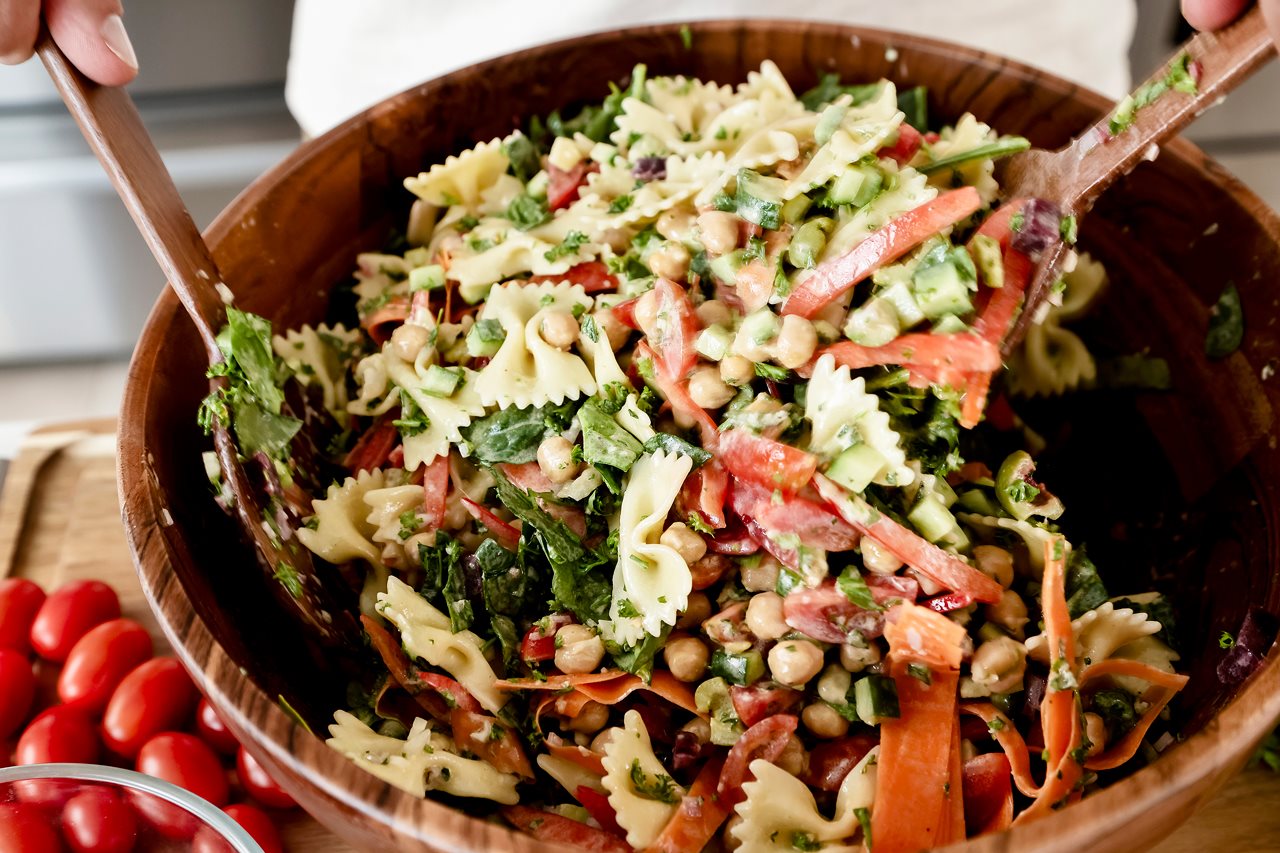
Mediterranean Garden Pasta

Serves 6 as a main, 12-15 as a side

Ingredients:

For pasta:

1 lb of your favorite pasta (ziti, penne, farfalle or spaghetti work beautifully)

15.5 oz can of garbanzo beans drained and rinsed

2 c diced cucumber (if not using mini or English, remove seeds before chopping)

1 c quartered cherry tomatoes

1/2 c thinly sliced red pepper

1/4 c finely minced shallot

1 large carrot shaved into strips with a vegetable peeler and cut in half

2 packed c baby spinach roughly chopped

1 packed c curly parsley finely minced (stems and all)

1/2 c Castelvetrano olives roughly chopped

1/2 c pickled beets diced

1/4 c pepperoncini finely diced

7 oz feta crumbled or diced

Dressing:

2 Tbsp mayonnaise

2 Tbsp Dijon mustard

1/2 c fresh lemon juice (approx. 4 large lemons)

3 large cloves of garlic grated

1/2 c olive oil

1 tsp salt

1 tsp pepper

2 Tbsp fresh oregano leaves finely minced

Cook pasta according to directions. Make sure to not overcook as will become mushy and break when added to vegetables and dressing. Slightly underdone is perfect as pasta will absorb dressing as it sits. Strain and rinse under cold water to stop cooking. Set aside.

In an extra large bowl whisk together all dressing ingredients. Add garbanzo beans and mash with a fork until at least half of the beans are roughly mashed.

Add cucumber, tomato, red pepper, red onion, carrot, spinach, parsley, olives, beets, pepperoncini and feta. Stir all together very well to evenly distribute ingredients and fully coat with dressing. Add pasta and gently fold it in with a rubber spatula to prevent breaking. At this point pasta is ready to serve but will become even more flavorful if allowed to sit in refrigerator for 1-2 hours or overnight.

Pear Blackberry Cobbler with Sage Brown Butter

4 heaping c quartered, cored and sliced pears

6 oz (one pint) blackberries

1 c brown sugar

1/2 c water

1/2 tsp white pepper

Pinch salt

3/4 c sugar

1 1/2 c self rising flour

1 c milk

2 tsp vanilla

12 Tbsp (1.5 sticks) unsalted butter

2 packed Tbsp fresh sage leaves

1 c chopped pecans

Preheat oven to 400. Place butter and sage leaves into a 9 x 13 pan and put in oven. Let cook until butter solids separate and brown and sage becomes crispy (12-14 min). You will know you are close when butter begins to smell nutty and butter turns amber in color. Dark brown bits are what you are after. Once your butter has reached this stage, remove from oven and set aside.

Turn oven down to 350.

While butter is browning put pears, brown sugar, water, white pepper and salt into a sauce pan. Bring to a boil over medium high heat and continue to cook for about 10 minutes until pears become tender and liquid becomes syrupy.

In a medium sized bowl mix sugar, flour, milk and vanilla. Stir just until no lumps remain in batter. Add to melted sage butter by pouring into middle of pan (DO NOT MIX).

Spoon pears and their liquid over the batter, again do not mix. Stud with blackberries and sprinkle pecans over the top in an even layer.

Bake at 350 for 30-35 min. Cobbler is done when lightly browned and internal temp is 190.

Serve plain, with whipped cream or your favorite vanilla ice cream.

Spicy Strawberry Refresher

Makes one mocktail

2 medium sized strawberries, chopped

1 slice fresh jalapeño

1 tsp sugar

1 tsp fresh whole cilantro leaves

pinch salt

About 1 oz ginger beer

Fresh orange juice

To a 16 oz glass, add strawberries, jalapeño, sugar, cilantro and salt. Muddle together in bottom of glass. (If you don’t have a traditional muddler the handle of a wooden spoon may be used.)

Add 1/2 c ice and ginger beer, stir vigorously.

Top with a splash of orange juice.

Enjoy!

How you can take better control of your asthma

2024-04-24T10:01:00

(BPT) – Did you know 1 in 13 people in the U.S. live with asthma? If you or a family member have asthma, you already know how it affects your daily life. You may have coughing, wheezing and shortness of breath. There may be times when your symptoms suddenly get worse, causing an asthma attack.

Asthma is a chronic lung condition that can keep you from doing the things you love. It may even be life-threatening. But in most cases, asthma can be controlled.

What is asthma control?

If your asthma is under control, that means you have minimal asthma symptoms, with no limits to your daily activity. You should be able to do anything that someone without asthma can do, like sleeping through the night, going hiking or playing soccer. Good asthma control requires treatment of your symptoms so you can live a normal, active life.

Your asthma specialist (a doctor who may be an allergist or pulmonologist) can help you create an Asthma Action Plan. This plan will offer guidance on how to watch for symptoms and when to use asthma medication.

Steps to help control your asthma

Take your asthma medications as prescribed.

  • Use a quick-relief inhaler to treat sudden symptoms and open the airways.
  • Use a daily controller medication to prevent inflammation.

Avoid triggers that cause symptoms.

  • Stay indoors when pollen counts are high or air quality is poor.
  • Clean up mold in your house.
  • Avoid being around cigarettes.
  • Use dust mite-proof mattress covers and pillow cases.
  • Keep furry pets out of your bedroom.

Get regular check-ups with your doctor.

  • This can mean seeing a specialist, like an allergist or pulmonologist.

When to talk with your asthma specialist

When you have frequent asthma symptoms, or you’re using your quick-relief inhaler or oral corticosteroids too often, your asthma is not under good control. You can use the “Rules of Two” to help you know when your asthma is not under control.

Signs of uncontrolled asthma include:

  • Experiencing asthma symptoms 2 days per week
  • Waking at night due to asthma 2 (or more) times per month
  • Refilling your quick-relief inhaler prescription or taking oral corticosteroids 2 or more times per year
  • Measure changes in your peak flow with asthma symptoms more than 2 times 10 (20%)

If you answered “yes” to any of the Rules of Two, or if you’ve been to the emergency room or hospitalized due to asthma, it’s important to see your doctor.

Challenges of eosinophilic asthma

Some types of asthma are very hard to control. Eosinophilic asthma with Type 2 inflammation is a severe form of asthma. It may require special medications called biologics, and you may need to see an asthma specialist.

Learn more about these medications at BiologicMeds.org.

Take an active role

To better control your asthma, you can take a more active role in your own treatment. For example, when your doctor prescribes medication, ask how it works and how to use it. Don’t be afraid to ask questions. Don’t stop or cut back on medications just because you’re feeling better for now, or if you’re worried about side effects.

It can also be useful to have someone in your corner, to give you advice and guidance. One-on-one asthma coaching can help you learn effective ways to manage your condition. It can also help you easily track your symptoms and progress.

Learn more about how asthma and how to manage it at AllergyAsthmaNetwork.org. See if you’re eligible for free asthma coaching at AsthmaCoach.org.

When Allergy Season Knows No Season: The Climate Change Connection

2024-04-23T07:01:00

(BPT) – By Jad Daley, President and CEO of American Forests

Climate change is reshaping our world in unexpected ways, including the worsening of seasonal allergies. This was confirmed by a 2019 study showing a significant positive correlation between long-term temperature increase and an increase in both seasonal duration and pollen load. With fewer frost days leading to earlier springs and later falls, the longer, more intense allergy seasons are leaving millions of people searching for relief.

Many global programs are working to address climate change on a larger scale. However, there are steps we can take at the local level to help improve conditions in communities that may be disproportionally exposed to environmental hazards. For example, residents of urban areas are more likely to suffer from respiratory issues compounded by worsening seasonal allergies, especially in parts of our communities that have higher levels of air pollution. Pollution from car exhaust and heavy industry, specifically pollutants like Ozone, Nitrogen Dioxide, Sulfur Dioxide and particulate matter can exacerbate urban allergies.

Thankfully, there is one simple action we can take right now to help combat climate-fueled heat, air pollution and pollen exposure—plant more trees in our communities. This is especially important in lower income neighborhoods where trees are shown to be systemically lacking, according to American Forests’ Tree Equity Score. This unprecedented analysis of every urban neighborhood in America shows average tree cover deficits of 26-38 percent for these communities, and average temperatures of 7-10 degrees Fahrenheit above citywide norms.

One example of an urban area in need of Tree Equity support is Southwest Detroit. With trucking routes and factories operating alongside neighborhoods and schools, respiratory-related hospitalizations are three times higher than the state average. According to Tree Equity Score, neighborhoods in this part of Detroit have a fraction of the tree cover common in other parts of the city and can be more than 18 degrees Fahrenheit hotter than the citywide average, which further exacerbates air pollution and pollen exposure. With the support of the ZYRTEC® ReLEAF Project and American Forests, the Detroit Tree Equity Partnership is working toward a goal to plant 75,000 trees over a five-year period. Increased tree canopy cover can cool a city block by as much as 10 degrees Fahrenheit, while also helping to manage respiratory issues by absorbing and deflecting pollutants.

Additionally, planting more trees in urban areas, such as Southwest Detroit, can help mitigate seasonal allergies. While that might sound surprising, we are able to strategically select the tree species we plant to maximize environmental benefits such as shade coverage and reducing air pollution while minimizing pollen exposure. This is possible by using cutting-edge climate- and health-focused urban forestry techniques developed by American Forests in partnership with the U.S. Forest Service. As part of our science-based approach, we use resources like the Ogren Plant Allergy Scale (OPALS™) to help inform a city’s Preferred and Prohibited Planting Species List. For example, OPALS™ indicates that mulberry trees produce pollen that triggers seasonal allergies, while certain species of maple trees have less of an adverse effect on allergy sufferers.

The ZYRTEC® ReLEAF Project and American Forests are working to help people from all backgrounds have equitable access to resources that advance the well-being of both people and our planet. Climate change continues to impact our environment and allergy sufferers, and we can all do our part to help.

The path to cleaner air and a healthier future lies in our hands, and it starts with the strategic placement of the right trees in the right places for healthier and more climate-resilient cities.

5 Delicious Ways to Revamp Your Routine with Oats

2024-04-23T10:01:00

(BPT) – Do you want to add more variety and nutrition to your meal planning? Consider incorporating Quaker Oats into your diet! While oats are typically associated with breakfast, they’re a versatile ingredient that can also be used in all kinds of crowd-pleasing recipes — hot or cold, sweet or savory, morning or evening.

Quaker Oats is the largest oat miller in the world and has been a trusted household staple making the same quality, delicious, nutritious oats you know and love since 1877. They are 100% whole grain, and provide a great source of energy and heart healthy* soluble fiber.*

“Quaker Oats is a brand that my family grew up eating, and I’ve dreamed of partnering with the brand for decades,” says celebrity chef Carla Hall. “Their products are essential in my kitchen, using them to add variations of texture and flavors in endless recipes — even as the secret ingredient to the moisture in my meatloaf!”

So, are you ready to remix your routine — and your favorite dishes — with Quaker Oats? Check out these fun and flavorful recipes the whole family can enjoy.

*Three grams of soluble fiber from oatmeal daily in a diet low in saturated fat and cholesterol may help reduce the risk of heart disease. One serving of Quaker Old Fashioned Oats provides about 2 grams of soluble fiber.

1. Triple Berry Oat Smoothie

For a delicious and easy new addition to your breakfast routine, try the Triple Berry Oat Smoothie. Not only does this make for a great add-on to breakfast, it’s also a fun way to enjoy your daily fruits. With blueberries, blackberries, raspberries, and bananas, this smoothie is fruity goodness.

2. Oatmeal Pancakes

You’ve just met your new favorite pancake! These wholesome, fluffy Oatmeal Pancakes are an easily customizable and delicious morning option. Whether you add blueberries, bananas, apples, chocolate or your favorite mix-in, this recipe invites everyone to enjoy pancakes their way.

3. Key Lime Bars with Oatmeal Crust

You don’t have to live near the beach to enjoy these bright and citrusy flavors! The Key Lime Bars with Oatmeal crust are full of bright flavors, chewy oats and crunchy nuts that are sure to be a hit for entertaining at your spring and summer gatherings.

4. Whole Grain Banana Muffins

These banana muffins are a tasty treat you can enjoy at any time of day, pair with your breakfast in the morning or grab as a snack during the day. Elevate your muffins by serving warm for a simply delicious, melt-in-your-mouth result.

5. Meatloaf Sliders

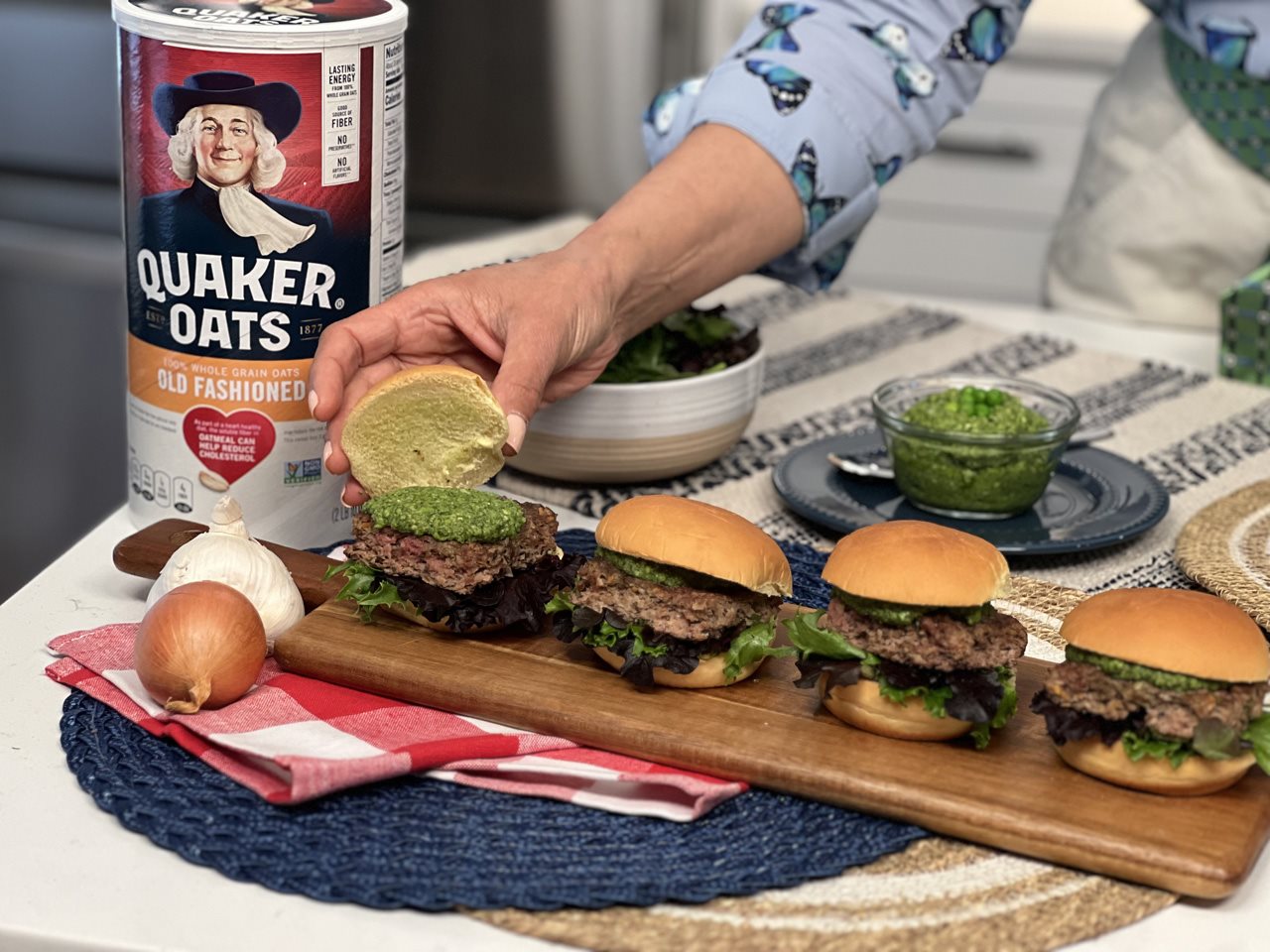
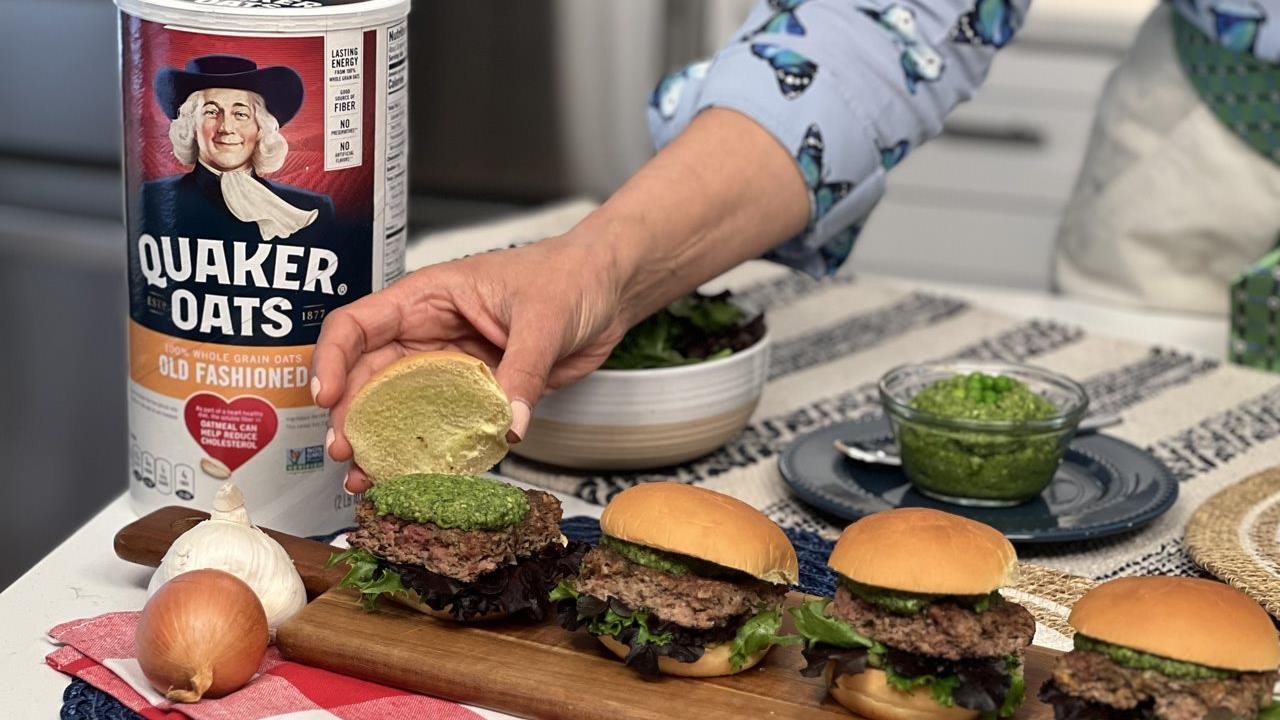
Take a classic, cozy weeknight dinner into the warmer months with Carla Hall’s very own Meatloaf Sliders, featuring her secret ingredient – oats! This juicy and tender dish is sure to become a favorite that your family and friends will be asking for on all occasions.

Let these five recipes inspire you to try new dishes and incorporate Quaker Oats into every meal, every day. So, grab Quaker’s classic Old Fashioned Oats — or try one of their other great varieties like Steel Cut Oats or Oat Flour — and get cooking! Visit QuakerOats.com for more recipes and products.


Meatloaf Sliders:

Ingredients

  • 1/4 Cup Quaker® Oats, finely ground
  • 1 Egg, beaten
  • 1/4 Cup Milk
  • 2 Tsp. Ground Cumin
  • 1 Tsp. Ground Cayenne
  • 1 Tsp. Kosher Salt
  • 1 1/2 Tsp. Freshly Ground Black Pepper, or to taste
  • 2.5 Lbs. Coarsely Ground Beef
  • 2 Cloves Garlic, minced
  • 1/2 Rib Celery
  • 1 Medium Carrot
  • 1 Tbs. Fresh Thyme, Chopped or 1/2 Tsp. Dried
  • 1/4 Cup Fresh Parsley, Chopped or 1/2 Tsp. Dried
  • 1 Tbs. Worcestershire Sauce
  • Potato Rolls
  • Fresh Pesto Topping
    • Fresh Refrigerated Pesto
    • 1 Cup Frozen Peas
  • Spring Greens

Directions

  1. Preheat oven to 350°F. In a large bowl, combine egg, oats, milk, cumin, cayenne, salt and pepper. Let stand for 5 minutes.
  2. Process garlic, onion, celery and carrot in a food processor until finely chopped.
  3. Add ground beef and finely chopped vegetables to oat mixture. Add herbs to bowl. Gently toss until combined. Be careful to not over mix. Flatten mixture onto a 9”x13” parchment covered sheet pan.
  4. Process pesto toppings in food processor until mixed.
  5. Place the meatloaf in the oven and bake for 7-10 minutes.
  6. Bake until the internal temperature of the meatloaf is 155 degrees or until the juices run clear.
  7. Allow the meatloaf to cool slightly. Without pulling the rolls apart, separate tops from bottoms.
  8. Place the bottoms on to create the sandwich, then cut.
  9. Place pesto and spring greens on top of each meatloaf patty.

New Clinical Trial Opening for People with Rare Ovarian Cancer

2024-04-22T11:01:00

(BPT) – Connie Bell’s journey with low-grade serous ovarian cancer (LGSOC) began unexpectedly in her 30s. Residing in Madison, Wisconsin, Connie was 36 when she first noticed her unusual symptoms, which she and her gynecologist initially dismissed as being related to existing conditions like interstitial cystitis and irritable bowel syndrome. But her symptoms, which included mild pelvic pain and two unusually heavy, painful periods, persisted. It wasn’t until several months later, after multiple medical visits, tests, and escalating concerns, that she ultimately received a devastating diagnosis of LGSOC, a rare ovarian cancer. This diagnosis, however, was merely the first step in what continues to be an extensive and challenging journey for Connie and many others with LGSOC.

LGSOC, a rare, insidious, and persistent type of ovarian cancer that has an alarming ability to adapt and persist despite current treatments, such as standard chemotherapy, due to its distinct molecular and histopathological profile. Unfortunately, approximately 85% of people with LGSOC will have their cancer recur. Compounding this issue is the absence of FDA-approved therapies tailored specifically for LGSOC, which underscores a tremendous gap in patient care. In response to these challenges, researchers are actively pursuing new therapeutic approaches.

Leading these efforts is Verastem, a biopharmaceutical company dedicated to innovating therapies for difficult-to-treat cancers like LGSOC. Their focus is on RAS/MAPK pathway, a crucial cellular system that fuels the aggressiveness and treatment-resistance of LGSOC, and many other, tumors. Through these innovations, Verastem aims to offer renewed hope to patients like Connie, who urgently need better LGSOC treatments and a greater assurance that their cancer will not return after remission.

People with LGSOC face obstacles in detection and treatment

While current prevalence estimates for low-grade serous carcinoma are not available, it has been estimated that LGSOC represents less than 10% of new epithelial ovarian cancer cases and presents unique complexities that severely hinder diagnosis and treatment. One of the factors that sets LGSOC apart from the more common high-grade serous ovarian cancer (HGSOC) is its impact on younger women. Diagnosed as early as the 20s and 30s, it can often inflict devastating consequences on fertility. But, despite its early presentation, LGSOC typically isn’t diagnosed until its advanced stages when treatment options are limited. This is because, as with Connie Bell, it can begin with easy-to-overlook symptoms like bloating, back pain, and menstrual irregularities, which can delay an accurate diagnosis.

“My original gynecologist was not initially concerned, but thankfully ordered an ultrasound which revealed a suspicious cyst. A follow-up MRI revealed widespread malignancy, at which point she still didn’t think it was cancer but referred me to a cancer center to be sure,” describes Connie. “It was there that a gynecologic oncologist recognized the seriousness and scheduled me for surgery to remove the tumors.”

But Connie still wasn’t clear on her diagnosis. “I entered surgery without knowing whether or not I would wake up with a cancer diagnosis, and I didn’t find out that it was the low-grade serous form until two weeks after my surgery,” said Connie.

Even after an accurate diagnosis is made, people with LGSOC face another daunting journey — finding the right treatment. Treatment options for LGSOC are extremely limited because these tumors harbor distinct biological complexities that make them slow yet persistently growing, inherently less responsive to standard chemotherapy, and highly prone to returning even after achieving remission.

Yet, despite these critical distinctions, patients with LGSOC are often treated with the same regimens as other cancers, such as the standard treatments used for HGSOC, leaving many feeling like they’re receiving “treatment leftovers” instead of therapies tailored to their specific needs. This disparity primarily stems from a long-held misunderstanding of LGSOC’s unique requirements, as it was only officially recognized as a distinct form of ovarian cancer in 2014.

Like many others with LGSOC, Connie’s condition and its treatment journey have had a tremendous impact on her daily life. “I have three nieces and a nephew I can’t keep up with anymore,” she said. “It’s just so sad to me that I’m missing out on those different experiences and life events, that I feel like my life is forever changed and that I’ll have to be on medication for the rest of my life. This is my new normal, and I have to learn to deal with it.”

However, new treatment strategies targeting the molecular intricacies of LGSOC aim to bridge long-standing treatment gaps and offer a brighter “new normal.”

The potential of RAS/MAPK targeting therapies

The RAS/MAPK pathway plays a pivotal role in cell growth and development. However, mutations in RAS genes can drive uncontrolled cell growth and tumor formation, which occurs in an astounding ~30% of all human cancers and a whopping ~70% of LGSOC cases.

Unfortunately, while the prominent role of RAS in driving cancer has been widely known for over three decades, many therapeutic approaches have proven unsuccessful. This is because cancer cells can find alternative ways through the RAS/MAPK pathway to bypass their therapeutic effects.

Verastem is pioneering new approaches to address these issues with their lead candidate, avutometinib. This investigational first-of-its-kind RAF/MEK clamp is designed to block multiple parts of the RAS pathway simultaneously in a single molecule. This multi-pronged approach aims to deliver a more effective and durable solution against adaptive drug resistance issues that have hindered RAS-targeted therapies for years.

In addition, Verastem is developing another drug, defactinib, which targets selective FAK signaling — a separate mechanism that cancer cells use to evade RAS/MAPK-targeting therapies.

The investigational combination has already shown potential benefits for patients with LGSOC as part of Verastem’s RAMP (Raf And Mek Program) and is currently being investigated in the confirmatory Phase 3 RAMP 301 study (GOG-3097; ENGOT-ov81/NCRI).

Exploring a novel combination therapy with RAMP 301

The international Phase 3 RAMP 301 study aims to determine if the novel combination of avutometinib and defactinib may provide clinical benefits compared to standard treatments for recurrent LGSOC. The trial is seeking approximately 270 patients with recurrent LGSOC who have undergone prior platinum-based therapy and whose disease has progressed.

The study, conducted by gynecological cancer specialists, will measure the effectiveness, safety, and quality of life measures of the investigational combination.

If you or a loved one are interested in learning more about this study, please visit: LGSOCstudy.com

Purina’s commitment to pets, people and planet Earth

2024-04-18T10:11:00

(BPT) – By Gopi Sandhu, vice president of Environmental Sustainability at Nestle Purina

Efforts to protect the planet are important for every creature that calls Earth home, including people and their pets. Companies and consumers must make eco-friendly changes now to ensure a lasting impact.

At Purina we are committed to the health of pets and making high-quality products for them. We are also committed to the planet that we all share. Though our climate-focused goal of achieving net zero greenhouse emissions by 2050 drives much of the important work we do across our value chain, our sustainability work also includes water, packaging and biodiversity. Our experts continually look for ways to better steward the Earth’s resources and reduce Purina’s environmental footprint.

Ingredients and sourcing regenerative agriculture

Did you know that each ingredient used in Purina’s products is chosen specifically to meet the nutritional needs of pets based on their health and life stage? Purina has more than 500 pet nutrition and behavior scientists, veterinarians and other credentialed pet experts on staff. For decades, these experts have been studying the nutrients our dogs and cats need, then selecting the right ingredients, like high-quality meat, grains and vegetables, to ensure that every recipe will nourish pets and taste good.

Just as important as the ingredients themselves is how they are sourced — we can trace our ingredients back to our trusted suppliers. Because these ingredients are such an important part of our environmental footprint, we are working with suppliers and sustainability partners in the regions where we source our ingredients throughout the U.S. to promote and accelerate regenerative agriculture, a conservation and rehabilitation approach to food and farming systems that restores soil and ecosystem health and offers climate, water and biodiversity benefits.

Purina is investing with partners like Cargill to support farmers in the Midwest as they transition to regenerative agriculture practices. This work will support soil health and is estimated to reduce the carbon footprint of the Purina grain supply from Cargill by up to 40% over the next three years.

Reduce and renew in manufacturing and logistics

Nearly all of Purina’s products sold in North America are manufactured in our own facilities across the U.S. An increasing portion of our total electricity today comes from clean energy, renewable resources such as solar, hydropower, wind and investments in renewable energy. We are on track to reach our goal to have 100% renewable electricity across all of our factories and distribution centers by 2025. Our factories have been committed to reducing energy, water and waste for decades. Similarly, our transportation network is now undergoing changes to increase the use of low carbon fuels and electric vehicles.

Recycle and reuse in packaging

Today, more than 90% of Purina’s packaging is designed for recycling, and we continue to look for ways to transition the rest of our packaging to recyclable solutions, while also working with trade organizations to promote a better recycling system in the U.S. Nearly half our Tidy Cats litter jugs are made with 60% post-consumer resin (recycled plastic), and by 2025, we’ll reduce our use of virgin plastics by one-third. Together with our partners and pet owners, we can make a difference by reducing waste to landfills.

Purina’s sustainability commitment

From the ingredients we source to manufacturing, transporting and packaging our products, Purina is committed to providing families with the healthiest and most nutritious foods possible for their pets, and to remaining focused on our impact on the world we all share. Pets are our passion, and there is nothing quite like the bond we get to share with them. It is our promise to continue working for a better planet today, and for future generations of people and pets.

3 expert tips to fight the 3 p.m. slump

2024-04-16T23:01:00

(BPT) – Do you struggle to stay focused and alert in the afternoon? The 3 p.m. slump is very real and hard to avoid! Many people feel their energy and productivity tank during this time, but fortunately, you don’t have to give in to the 3 p.m. slump. Registered dietitian and Quest partner Kristin Kirkpatrick, M.S., offers her top three tips to help power through this challenging time of day.

1. Choose your afternoon beverage wisely

What you drink in the afternoon can help or hinder your fight against the afternoon slump. Choose your drinks wisely by avoiding sugary beverages. Consuming too much sugar throughout the morning is a sure way to fast-track a midday crash.

When your body has more sugar than it’s used to, it produces an influx of insulin to keep your blood glucose (sugar levels) consistent. This blood sugar spike is quickly followed by a crash caused by a rush of insulin and decreased blood glucose, leaving you tired and unfocused.

Avoid a sugar crash and boost your energy by reaching for a beverage high in protein and minimize sugar. Kirkpatrick recommends keeping Quest Iced Coffees on hand to help you power through your day. Just one serving offers 10 grams of protein, 1 gram of sugar and a whopping 200 milligrams of caffeine, so you can stay alert throughout the day while hitting your nutrition goals.

2. Get moving

A simple yet powerful way to combat the 3 p.m. slump is to get moving! Moving increases blood flow and oxygen to your brain, making you feel more alert and energetic.

When you’re feeling lethargic and unfocused, practice some light stretches, do a few jumping jacks or pushups, or take a walk. With the weather warming up, it’s the perfect excuse to leave your desk and take a stroll around the block or even the office.

In addition to improving your energy and focus, physical activity stimulates brain chemicals that can make you feel happier, relaxed, and less anxious so you can breeze through your day and feel your best.

3. Work on your sleep

Do you regularly feel tired throughout the day? You may not be sleeping enough. If you are getting solid, restful sleep, you’re more likely to stay energized and focused the following day.

The National Heart, Lung and Blood Institute recommends that adults sleep between seven to nine hours each night. Once you have a consistent sleep schedule, staying awake — even during the afternoon — will become easier.

Consider making time for a nap on days you haven’t slept enough. Surprisingly, even short naps have been found to enhance energy and alertness. Studies show that short naps can potentially reduce the risk of heart attacks and strokes!

Don’t let the 3 p.m. slump beat you! With these three tips, you can power through even your sleepiest afternoons and finish your day strong.