Traveling in remote places? Make sure you have satellite access

2025-11-05T11:25:00

(BPT) – For outdoor adventurers, staying connected while exploring remote locations is key to having fun and staying safe. From making sure that your loved ones know your location to accessing online maps and emergency services, having a reliable digital connection lets you confidently wander the wilderness.

But some areas make it impossible to connect to terrestrial networks. In fact, according to T-Mobile, there are more than 500,000 square miles in the U.S. where traditional cell towers simply can’t reach, including national parks, oil fields, lakes, rural farmland and mountains.

Using a dedicated satellite phone is a typical solution. These phones are built specifically to connect to satellites instead of land-based cell towers, making them a good choice in very remote areas with virtually no cell coverage. But they’re unlike your typical smartphone. They’re stripped-down, bulky devices made to withstand harsh conditions.

As of this year, satellite phones aren’t the only solution anymore. Now, you can access satellite connectivity straight from your smartphone.

The freedom to unplug and the ability to reconnect when it matters most

As part of its mission to put an end to dead zones, T-Mobile created T-Satellite with Starlink. This direct-to-device satellite connection uses more than 650 Starlink satellites in low Earth orbits that essentially act as cell towers in space.

It’s the first and only service of its kind in the U.S. that connects automatically to compatible phones from the last four years, which means you won’t need special apps or extra steps to connect to T-Satellite. If you can see the sky, you’re connected.

Not only can you send SMS messages, share your location and text 911, but T-Satellite now supports some of the most popular go-to apps when off grid, including WhatsApp, AllTrails, X, AccuWeather, T-Life and Google Maps.

So, whether you want to share your location with friends, receive updates from home, or check weather and road conditions while backcountry skiing, camping, hiking, fishing or hunting, you’re connected.

A proven solution

While the service may be new, T-Satellite has already proven itself during recent natural disasters.

T-Satellite proved to be helpful in a moment of crisis for first responders following the devastating Hurricanes Helene and Milton. The satellite service connected over 1 million people who sent over 650,000 SMS messages and helped distribute 200 wireless emergency alerts.

Additionally, during the Oregon wildfires in October, T-Satellite connected nearly 7,000 people who sent over 24,000 SMS messages and helped distribute seven wireless emergency alerts.

In both cases, these important and life-saving messages and alerts would not have been possible using terrestrial cell networks.

T-Satellite also supports text-to-911 services, enabling anyone with a satellite-capable device ­— even if they aren’t T-Mobile members or T-Satellite customers — to text with first responders for free from almost anywhere when help is needed most — you just need to sign up.

Connecting to service is just a swipe away

T-Satellite already works on nearly every smartphone made in the last four years. If you’re a T-Mobile member on the Experience Beyond plan, T-Satellite is already included. All other T-Mobile members and non-members can sign up for T-Satellite for only $10 a month — including Verizon and AT&T customers.

Are you ready to get your hands dirty and commune with nature? To learn more about how you can connect to satellite service no matter where you roam, visit T-Mobile.com/Satellite.
When access to care matters most: How CRNAs keep rural America safe and healthy

2025-11-04T17:01:00

(BPT) – In small towns and rural communities across the United States, access to health care can mean the difference between life and death. On National Rural Health Day (Nov. 20), the American Association of Nurse Anesthesiology (AANA) recognizes the dedicated health professionals who serve these regions — and the Certified Registered Nurse Anesthetists (CRNAs) who are often the key to ensuring safe, timely care close to home.

“On average, rural trauma victims must travel twice as far as urban residents to reach the nearest hospital,” said Jeff Molter, MBA, MSN, CRNA, president of AANA. “Because of this and other health disparities, nearly 60% of trauma deaths occur in rural America — even though only 20% of Americans live there. CRNAs, also known as nurse anesthesiologists or nurse anesthetists, play a vital role in ensuring patients receive the anesthesia and pain management care they need when and where they need it most.”

What is a CRNA?

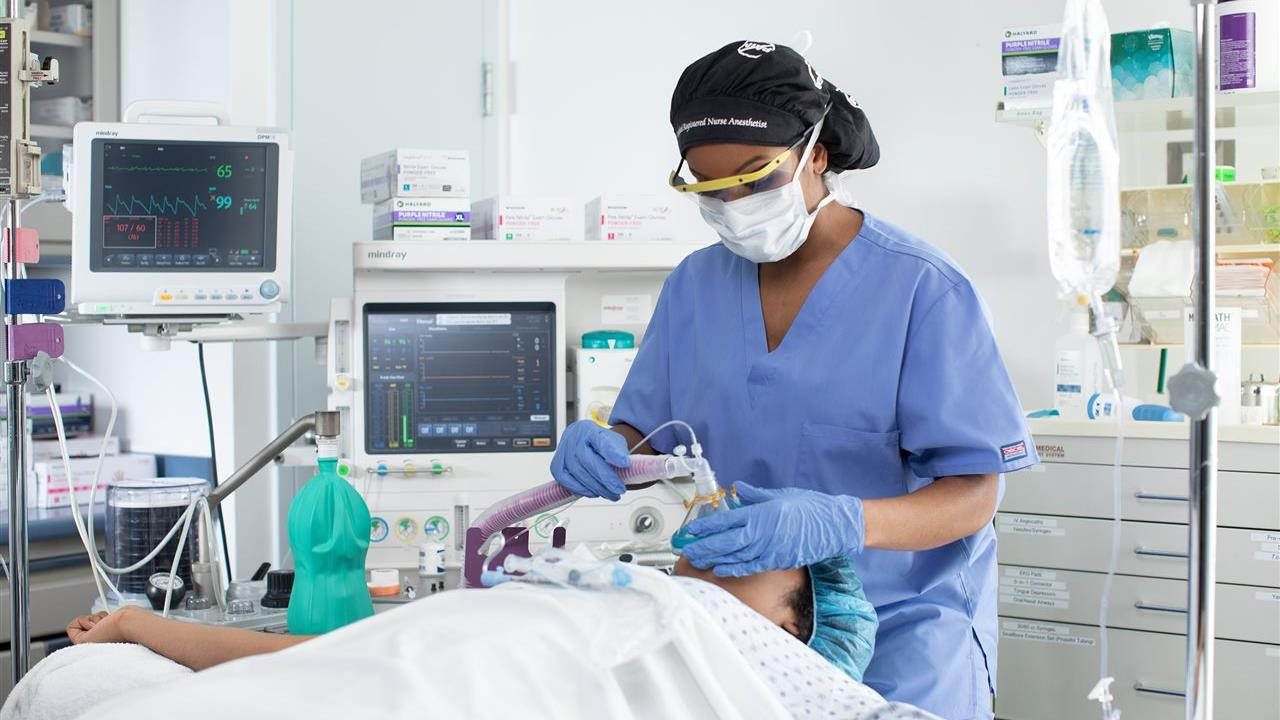
CRNAs are advanced practice registered nurses (APRNs) who specialize in anesthesia and pain management. They deliver care before, during, and after surgical, therapeutic, diagnostic, and obstetrical procedures.

With more than 150 years of trusted service, CRNAs are highly trained clinicians who provide the full range of anesthesia services in every type of health care setting — from large hospitals to rural critical access facilities.

The Health Care Challenges Facing Rural America

Rural areas face a variety of health care barriers — including hospital closures, workforce shortages, and long travel distances to care.

According to the U.S. Department of Veteran Affairs more than one-third of veterans with service-connected disabilities live in rural areas. The U.S. Department of Agriculture also notes that rural communities have a higher proportion of older adults, many of whom live with chronic conditions such as heart disease, diabetes, hypertension, and heart failure.

Without local CRNAs, many of these patients would have to travel hours for essential surgical or anesthesia care. When emergencies happen, those hours can make all the difference.

CRNAs: The Lifeline of Rural Health Care

CRNAs safely administer more than 58 million anesthetics each year and represent over 80% of anesthesia providers in rural U.S. counties, according to AANA. In many small hospitals and ambulatory surgical centers, CRNAs are the sole anesthesia providers, supporting critical services like obstetrics, surgery, trauma stabilization, and pain management.

Their presence keeps lifesaving care within reach, helping rural hospitals stay open and their communities healthy, resilient, and self-sufficient.

“Working as a CRNA in rural settings shows just how critical our role is in medicine,” Molter said. “When we can practice to the full extent of our education and training, we help bridge health care gaps and deliver care to people who need it most. It’s why we celebrate and advocate for CRNAs who keep rural America safe and strong.”

Learn More

To learn more about the essential role of CRNAs in rural and other health care settings — or to explore how to become a CRNA — visit AANA.com.

New research: 68% say Thanksgiving will be more expensive this year

2025-11-03T09:01:01

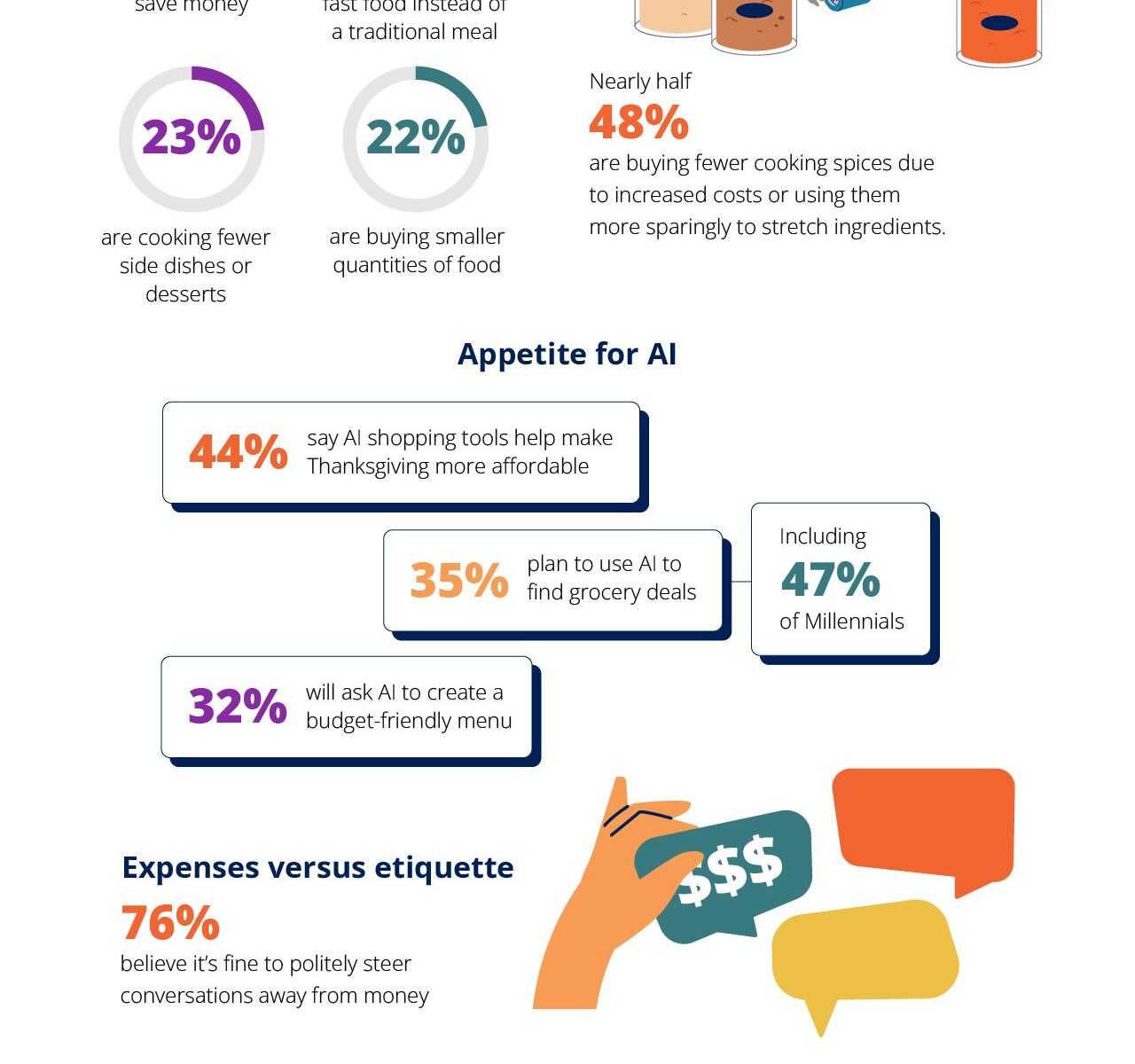
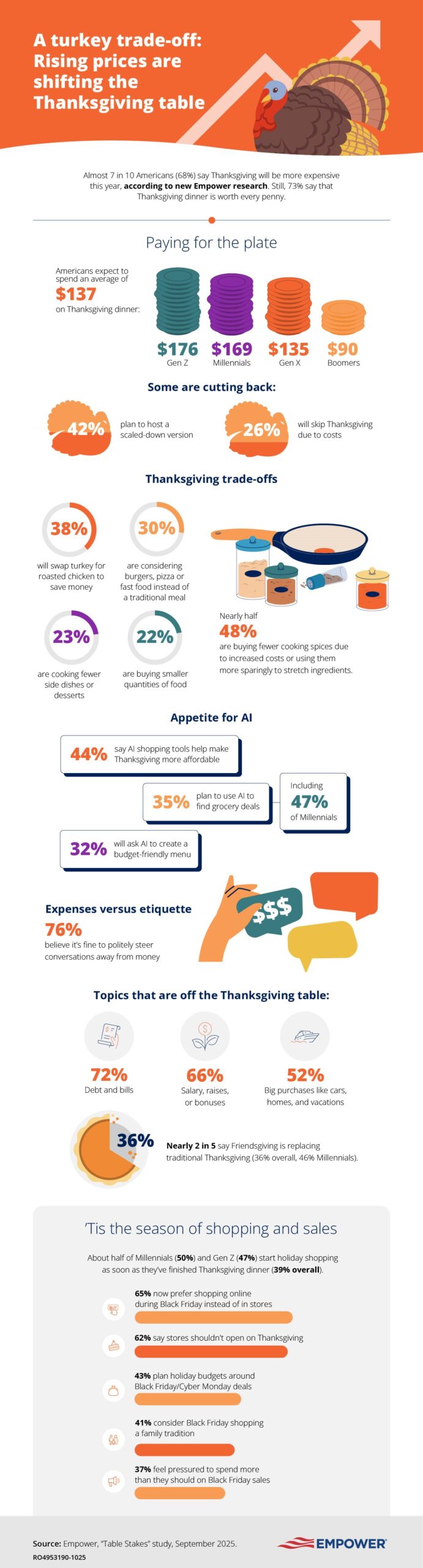
(BPT) – New research from Empower reveals how Americans are adjusting to inflation, tariffs, and shifting traditions around the holiday table. Cost is on the menu as nearly 7 in 10 Americans (68%) say Thanksgiving will be more expensive due to tariffs and inflation. Two-thirds (66%) expect their grocery bill will rise compared to last year, with people expecting to spend an average of $137 on Thanksgiving dinner, with younger generations anticipating the highest costs (Gen Z $176; Millennials $169; Gen X $135; Boomers $90). More than a quarter plan on passing on Thanksgiving this year due to the expense (26% overall; 33% Millennials; 31% Gen Z), and 42% will host Thanksgiving this year, but a scaled-down version to save money (50% Millennials).

Half of people (48%) say the price of cooking spices like thyme and pepper has increased, so they’ll be buying less or using them more sparingly to stretch ingredients (54% younger generations). With rising costs, some 57% think they are “getting priced out of my own kitchen” — with groceries too expensive to cook Thanksgiving at home.

The table is shifting too, with nearly half open to replacing turkey with less costly alternatives (47% overall; 56% Gen Z). For 38%, that means they’ll swap the bird for roasted chicken to save money (48% Millennials). Others are reimagining the menu altogether: 30% are considering serving burgers, pizza or fast food instead of a traditional meal to keep costs in check, a trend pronounced among younger generations (38% vs. 23% older generations).

Still, 73% of Americans say that Thanksgiving dinner is worth every penny, and it’s a holiday where they don’t mind spending a little extra (70% overall; 79% Boomers). Half say hosting the holiday is one of the most important things they spend money on all year (56%).

The price of tradition

Seven in 10 say turkey prices climb every year, yet 52% feel pressured to serve one despite the cost. Still, close to a third (30%) say they’ll pay the price tag, as turkey is the star of the Thanksgiving table.

Though more than half (52%) say rising food prices are making them rethink hosting altogether, a strong majority (76%) still want a sit-down dinner: 57% note that their parents and older generations insist on hosting. Families are adapting by budgeting carefully (63%) and sharing expenses to make the holiday more affordable (72%), while Friendsgiving is emerging as a new tradition for nearly 40% of Americans, especially Millennials (46%).

More than half (57%) say Thanksgiving is stressful because of grocery costs and preparation (64% of Gen Z) though, ultimately, 73% see Thanksgiving as an investment in family, connection, and lasting memories.

Budgeting for Thanksgiving

More than half (53%) of Americans say the Thanksgiving menu looks a lot different than it did in the past: 52% will look for pre-packaged “meal deal” bundles to stretch their dollars. A third (32%) say meat is too expensive, so they’ll serve only appetizers and sides at the Thanksgiving table (41% Millennials). While 65% agree leftovers help justify the cost, 40% call them “overrated” and too expensive — they’d rather make less food to save money (47% Millennials).

Making trade-offs

  • 53% say Thanksgiving travel is now too expensive
  • 23% are cooking fewer side dishes or desserts
  • 22% are buying smaller quantities
  • 16% are planning smaller meals to cut down on leftovers and waste
  • 16% are switching to store brands over name brands
  • 15% are choosing cheaper cuts of meat or non-traditional proteins
  • 1 in 10 say it’s the year of the side dish and don’t plan on serving a main protein

Conversations and etiquette

Money may be shaping Thanksgiving more than ever, but most Americans don’t want to talk about it at the table.

  • 66% say discussions about pay, raises, or bonuses should be off-limits
  • 72% say talk of debt and bills doesn’t belong at dinner
  • 76% believe it’s fine to politely steer conversations away from money
  • 34% say they’d rather talk politics than money at the Thanksgiving table
  • 52% say big purchases (homes, cars, vacations, etc.) are not appropriate discussion topics for the table (43% Gen Z)
  • 70% say asking others about their holiday spending or budgets should be avoided (59% Gen Z)

Screen-free meals matter too: 74% want a no-screen-time rule at the table, even as AI is becoming a Thanksgiving assistant.

AI on the menu

  • 35% plan to use AI to find grocery deals (47% of Millennials)
  • 44% say AI shopping tools make Thanksgiving more affordable
  • 32% will ask AI to design a menu within their budget
  • 45% rely on AI to compare prices across stores

Beyond the meal

Thanksgiving also traditionally marks the start of the holiday shopping season, with 39% saying as soon as the Thanksgiving meal is over, they start shopping for holiday gifts (50% Millennials; 47% Gen Z; Boomers 23%).

  • 62% say stores shouldn’t open on Thanksgiving Day (Gen Z 50%; Millennials 58%; Gen X 67%; Boomers 70%)
  • 41% consider Black Friday shopping a family tradition
  • 43% say they plan their holiday budget around Black Friday or Cyber Monday deals
  • 37% feel pressured to spend more than they should during Black Friday sales (46% Gen Z; 48% Millennials)
  • 57% feel skipping Black Friday makes the holiday less stressful
  • 65% now prefer shopping online during Black Friday instead of in stores

Meanwhile, most prefer watching the parade from home (75%) rather than spending money to see it in person. Forty-eight percent say they’re more likely to purchase something if they saw an ad for it on Thanksgiving or during the holidays.

Visit The Currency™ to read Empower’s full research study, Table Stakes.

Methodology:

Empower’s “Table Stakes” study is based on online survey responses from 2,200 Americans ages 18+ from September 3-4, 2025. The survey is weighted to be nationally representative of U.S. adults.

RO4809618-0925

2 Practical Solutions to Improve Office Productivity

2025-11-03T07:01:00

(BPT) – Often success in business is determined by one key factor, employee productivity. Which is why so many executives took notice of a recent study from Oxford University that found happy workers are 13% more productive than those found to be unhappy. But what are employees looking for, and are there practical and cost-effective solutions to boost their in-office satisfaction? Below are two easy ways some companies are doing just that.

Problem #1: The myth that you are more productive when working alone …

… is widespread, but research suggests otherwise. Stanford University found that employees were 50% more effective at completing tasks when they worked in a collaborative setting than those who worked alone.

Solution: Foster spontaneous collaboration.

So how do you get employees to work together? For one, getting them to stay in the office improves productivity and addresses what 87% of employees say they want: the ability to collaborate with team members and build relationships. However, it’s not more meetings on the calendar they’re looking for, it’s organic connections that can only be built by spending time together in office workspaces and breakrooms.

How? Keep them in the office with excellent amenities and perks.

A 2019 survey by the Society for Human Resource Management (SHRM) shared that 60% of employees considered on-site food and beverage to be an important workplace benefit. That is, when they like the options available.

Low-quality hot coffee is unlikely to entice more workers into the breakroom, especially since 60% of Gen Z coffee drinkers prefer their coffee cold. But rather than leaving for 30-60 minutes to seek out a café to get their cold brew coffee fix, employees can be enticed to spend that time collaborating with co-workers in the company breakroom if the right offerings are present. In fact, analysis from Harvard Business Review shows cross-department collaboration increases by 36% when employees from different teams eat or drink together.

One innovative option many offices are turning to is Java House’s new Peel & Pour Pods. They offer convenient, barista-quality coffee in a wide variety of roasts and styles, from multiple iced coffee options to lattes, hot cocoa and even tea. And while this is an authentically cold brewed coffee product, it can also be enjoyed hot!

Problem #2: Workers don’t want to sit at a desk all day …

… so they shouldn’t have to. Humanscale conducted a survey in 2023 to understand where people work: in an office, at home or a third place. Respondents shared they worked in over 50 “third spaces,” and a staggering 98.7% indicated they worked in more than one location within their homes.

Solution: Make workspaces varied and comfortable.

Workers want to have options on where they work in the office. According to the Occupational Safety and Health Administration (OSHA), ergonomics can help increase productivity while reducing the risk of muscle fatigue and work-related musculoskeletal disorders (MSDs). Wherever employees choose to work in-office, they should be comfortable.

How? Ergonomics everywhere.

The average American spends roughly 55% of their waking hours in a seated position. Some employers are investing in employees’ health and comfort by providing ergonomic support throughout the office. Humanscale’s Meeting Collection, for example, blends its pioneering self-adjusting seating mechanics across a range of chairs, from the boardroom to the bar top. And, when employees choose desks, having the option to stand can provide additional health benefits and further improve productivity.

Conclusion: Invest in your office and your employees.

Comfortable workspaces with quality amenities show employees you care about their well-being. Investing in the space, tools and fuel that bring teams together isn’t just good for employees, it’s good for business.

What you need to know about improving your credit

2025-11-03T08:01:00

(BPT) – Do you ever feel like you don’t really understand as much as you should about credit ratings and credit in general? If so, you’re not alone. A new survey* conducted by Credit One Bank, in partnership with YouGov, discovered a startling truth: Many U.S. adults with credit cards have a surprising gap in their understanding of the basics of credit.

For example, nearly three in four survey respondents (72%) were unaware that a single missed credit card payment can stay on their credit report for up to seven years. In addition, nearly half of respondents (48%) were unaware that creditors may close accounts due to inactivity, which can also reduce the length of their credit history.

These and other survey findings highlight the need for better financial education from a credible source. The results are also a timely reminder of how crucial it is for everyone to understand credit basics — because credit affects everything from the ability to get a good interest rate on credit cards and auto loans to being able to access a home mortgage and more.

“Many seemingly small actions can wreck your credit score without you realizing it,” said Amber Greenwalt, senior vice president of Brand and Advertising at Credit One Bank. “But the good news is, incremental changes can also have a big impact on improving credit health, and credit building doesn’t have to be daunting.”

Knowledge that can help you improve your credit

Even if you have had financial setbacks in the past, you can repair and improve your credit if you follow the tips featured in Credit One Bank’s new campaign, “The Credit Wreckers.” These characters help illustrate, in an informative and playful way, some of the common missteps people make that are most likely to negatively impact their credit:

  • Max Out has eyes that are bigger than his wallet. When he sees something he wants, he buys it, and his credit score pays the price. Max Out doesn’t know that he should only use 30% or less of his total available credit at any given time — because using his full credit line can lower his score. 4 Habits for Good Credit | Credit One Bank.
  • Miss Payment means well, but more often than not she misses her monthly credit card payments. What she doesn’t know is that every missed payment can stay on her credit report for up to seven years. If only she would set up Autopay, she’d never miss a payment again. How Long Do Late Payments Stay on Your Credit Report? | Credit One Bank.
  • Cancelina thinks that it’s a good idea to cancel her unused credit cards once they’re paid off. Like 70% of adults surveyed, she’s unaware that she should keep her oldest credit card accounts open and use them at least once every few months. Should You Close a Credit Card Account | Credit One Bank.

To learn more about The Credit Wreckers and how you can develop better credit habits moving forward, visit CreditWreckers.com.

Credit One Bank is dedicated to equipping cardmembers with the knowledge to help them make well-informed financial decisions. The company provides credit education resources to help individuals understand and improve their credit health, from in-depth articles on over 20 topics to practical tips and insights available at CreditOneBank.com.

*Survey Methodology: All figures, unless otherwise stated, are from YouGov Plc. Total sample size was 2,007 adults, of whom 1,469 have a credit card. Fieldwork was undertaken between 28 May – 2 June 2025. The survey was carried out online. The figures have been weighted and are representative of all U.S. adults (aged 18+).

Happy paw-lidays! How to keep it festive with furry family members

2025-11-03T05:01:00

(BPT) – With the holiday season fast approaching, it’s easy to get caught up in the chaos.

If you’re worried about how you and your pet can enjoy the festivities safely, you’re not alone. A recent Rover survey of U.S. pet parents found that nearly two-thirds (62%) of pet parents wish they knew more about how to keep their pets out of trouble this holiday season.

Black lab wearing christmas lights while sitting on a gray couch at home.

Maybe you’re wondering if your furry friend can lick your plate after a holiday meal or how to host a party without Harry Houdini escaping as guests arrive. Keeping your pets safe and entertained during the holidays can be stressful, but there are several steps you can take to keep you and your pet at ease amid the holiday madness. Read on for five simple tips that can go a long way toward ensuring this holiday season is merry for pets and their people.

Serve pet-friendly holiday food favorites

Everyone looks forward to holiday feasts, including your pets, but it’s important to know what scraps they can and can’t eat. Holiday favorites like pumpkin, potatoes, green beans, boneless and skinless turkey breasts, plain sweet potatoes and apples are all pet safe. Meanwhile, keep bones, gravy, mac and cheese, stuffing and fried foods away from begging pets, no matter how convincing their puppy dog eyes are.

Charming beagle standing in front of a Christmas tree and looking lovingly in to his pet parent's eyes.


Deck the halls with your pets in mind

Make the holidays jolly and bright with pet-approved decorations. To create a magical environment in your home that’s safe for your four-legged friends, avoid decorating with traditional holiday plants like poinsettias, lilies, mistletoe and holly — which are poisonous to pets.

Adorbable kitty laying under a christmas tree with an shiny red ornament hanging off a low branch.

Other popular decorations like tinsel, ribbon, string lights, glass ornaments and candles can also be dangerous to pets. But don’t worry, you don’t have to get rid of this décor altogether. Place these decorations out of your pets’ reach on mantels and shelves and make sure fragile ornaments are high up on the tree.

Get your pets party ready

null

More than half (53%) of pet parents said their dog or cat will attend holiday gatherings with them this year, according to the Rover survey. If your furry friend is helping you host a holiday celebration, get them ready with a few simple precautions:

– Contain your pet with a baby gate so they don’t escape or rush guests.

– Hang a door sign so visitors know to ring the doorbell and wait to be let in.

– Offer your pet toys and treats to help them relax and keep them busy.

– Designate a cozy room or crate so your pet can take a break.

Pro tip: For particularly anxious pets, consider booking a pet sitter or overnight boarding service through Rover.

Keep your pet’s routine while you celebrate the season

Pets thrive on routine, providing a sense of security and stability crucial for easing anxiety. Your everyday routine is likely to shift during the holiday season amid gift shopping, party prep, holiday parties or travel. Prevent stress by maintaining your pets’ schedule with the help of pet providers who prioritize safety and comfort.

If you’re gone for a full day of holiday shopping, hire a dog walker to take your puppy on their regular afternoon walk around the block. For evening celebrations at a friend or family member’s home, consider scheduling a drop-in visit so your pet can have playtime without disturbing yours. Headed out of town? Travel with peace of mind by using a reputable booking platform like Rover, which offers pet parents access to a trusted network of sitters and walkers with verified reviews and background checks.

Help them ring in the season with their own gifts

Don’t forget to put a gift in your pet’s stocking! Pick up some purr-fectly festive toys like holiday-themed catnip kickers, wands and scratch pads. For your canine companion, look for Yule log chew toys, winter-themed treat puzzles or a treat advent calendar to help them celebrate the season. For the ultimate gift, give them extra playtime and attention with a dedicated sitter booked through Rover.

This holiday season, make it a paw-some time for everyone! For more tips on how to celebrate the holidays with your pets in mind, visit Rover.com.

Thoughtful Ways to Support Military Children with Care and Connection

2025-11-03T08:01:00

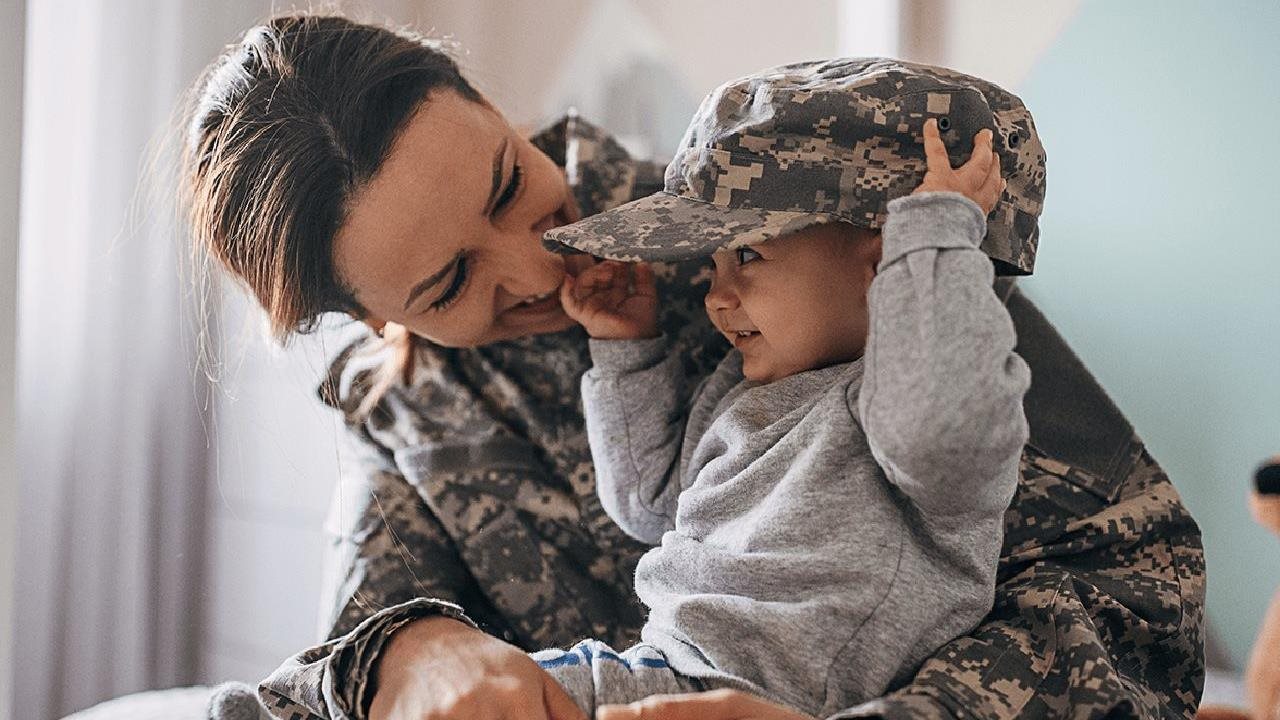
(BPT) – Every November, the nation celebrates the Month of the Military Family — a time to recognize the service, sacrifice and strength of the families who stand behind our nation’s heroes. Many military families face unique situations, from frequent relocations and school transitions to long periods of separation. While sometimes challenging, military life also fosters admirable life skills such as resilience, adaptability, commitment and relationships that can endure change.

At Bright Horizons, military families are an integral part of the community and are celebrated and supported not only in November but throughout the year through partnerships, programs and recognition events. This November, Bright Horizons’ child care centers and offices across the country will partner with Support Our Troops to write letters of thanks to service members and host visits from military officials. Throughout the year, teachers encourage the children to learn about the military through discovery with toy airplanes and ships, camouflage fabrics, and children’s books focused on stories about the military experience that are age appropriate.

“We know that military families experience change,” said Rachel Robertson, Chief Academic Officer at Bright Horizons. “At Bright Horizons, we support children and their families as they navigate these experiences and build their adaptability and resilience, skills that serve children for life.”

Robertson believes that supporting military families starts with understanding — and small gestures can make a big difference. “Teachers, neighbors and friends can all play a role,” she said. “This help can come in many formats: asking a child to share their favorite things about their last school after a move, helping them collect artwork to send to a deployed parent or jumping in with a few household to-dos during a separation.”

For children, separation from a parent, even for a short time, can be difficult. Robertson encourages parents and caregivers to create consistent rituals that help children feel connected. Activities can include:

  • Journals or portfolios: Fill with drawings, photos, notes or “treasures” to share when a parent returns.
  • Countdown calendars or paper chains: Help children visualize when their loved one comes home.
  • Letters, emails or recorded messages: Maintain regular communication, even across distances.
  • Shared activities: Read the same book, tell bedtime stories by phone or plant a garden together to nurture and watch grow.
  • Keepsakes and mementos: Display photos, small objects or gifts from both parent and child to create a sense of connection.

Bright Horizons participates in the Military Child Care in Your Neighborhood (MCCYN) program, which provides eligible military families access to tuition assistance at participating child care centers when on-base care is unavailable. Bright Horizons centers also partner with Child Care Aware of America and Navy Children and Youth program to help military families access high-quality child care and educational support, ensuring that every child — no matter where their family is stationed — has the opportunity to thrive.

“Military families are the heroes behind the heroes,” Robertson shared. “When we take time to understand their stories, support their children and celebrate their strength — not just in November, but all year long — we strengthen our communities as well.”

Visit www.brighthorizons.com for more information.

Saddle up! Experience the unique charm of a dude ranch vacation

2025-11-01T09:01:00

(BPT) – Are you tired of the same old adventureless vacations? Consider staying at a dude ranch! Vacationing at a dude ranch is a chance to experience the cowboy lifestyle in incredible locations.

Dude ranches have been around for over a century. Thanks to the hard work of the Dude Ranchers’ Association (DRA), these ranches have been able to continue to offer visitors the singular experience of living the western way of life.

To celebrate 100 years of preserving this special way of life and the wonderful environment in which dude ranching takes place, the DRA offers this helpful primer on dude ranches, so you can begin planning your own western adventure vacation.

What is a dude ranch?

Dude ranches (also known as guest ranches) are the original western vacation. In the late 19th century, East Coast and Midwest city dwellers, or “dudes,” began visiting working cattle ranches as a way to escape the hustle and bustle of urban life.

A group of dude ranch guests involved with a cattle drive at the Latigo Ranch.

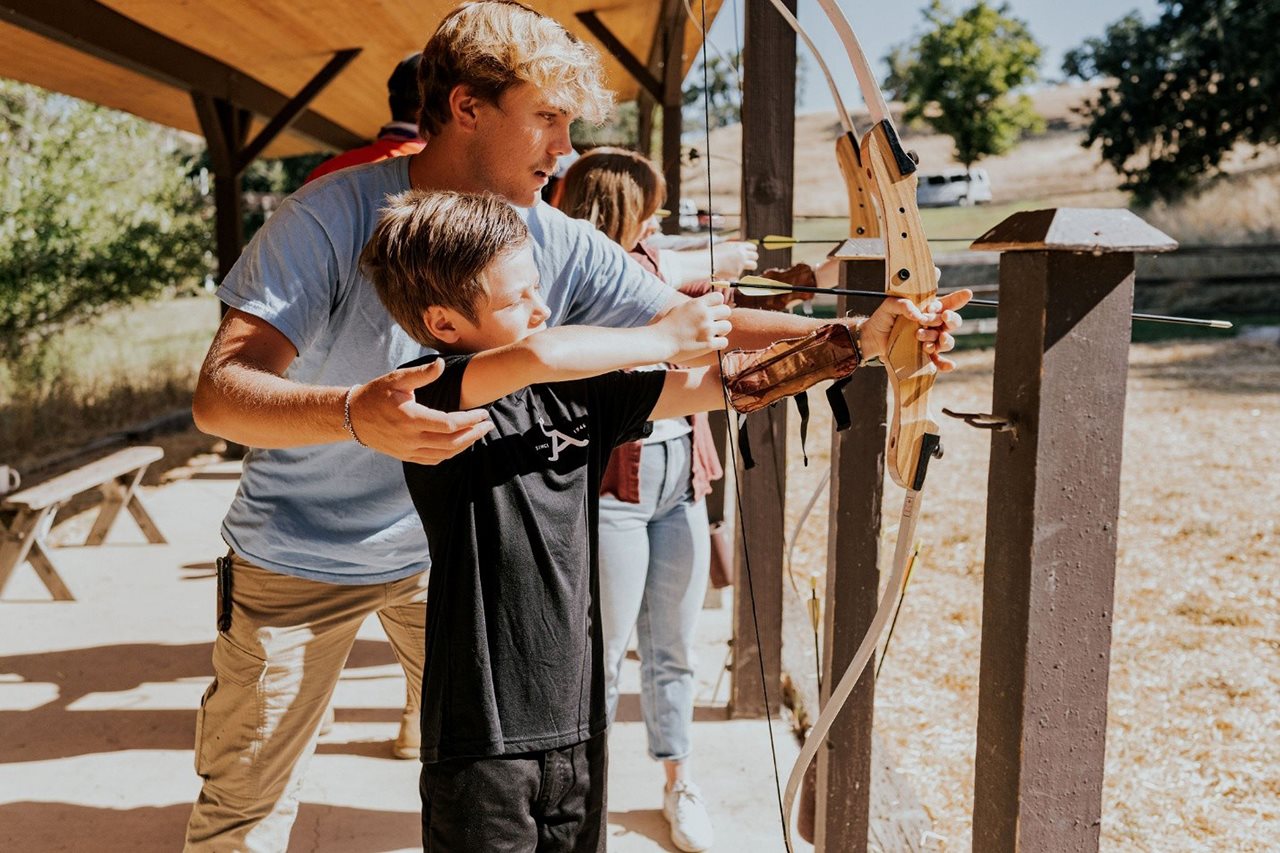
During their stay, visitors found a home away from home where they could discover adventure, reconnect with nature and nourish their body and soul. Dude and guest ranches have continued to offer visitors a chance to unplug while enjoying horseback riding, fishing, hiking, archery and other outdoor adventures, all while preserving the heritage and lifestyle of the American West.

Young man learning archery at the Alisal Ranch.


Why should I vacation at a dude ranch?

A dude ranch vacation is like nothing else you’ve ever experienced. Much like the dudes of the past, you can get away from the stresses and responsibilities of modern living. Instead, you’ll have the opportunity to experience a taste of the western lifestyle.

For a solo traveler, a dude ranch stay allows you to get in touch with yourself while surrounded by forests, mountains and streams. Couples can use it as an opportunity for romance and connection. Families, big and small, can bond over shared activities and create lifelong memories. There’s something for everyone!

How do I choose a dude ranch?

Four riders on the trail at the Circle Bar Ranch.

Each dude ranch offers its own flavor of adventure. With almost 100 members in the DRA, you can choose from ranches that focus on horseback riding over unique terrain, cattle work and/or luxury amenities. From small, intimate guest ranches to traditional working cattle ranches to large resort-style ranches, there is a ranch to fit every budget and dream vacation.

Classic log cabin guest lodge at the CM Ranch.

All DRA member ranches are thoroughly vetted to ensure they offer all-inclusive getaways — including meals, lodging and most activities — and demonstrate the Association’s six core values: horses, hats, hospitality, heritage, honesty and heart.

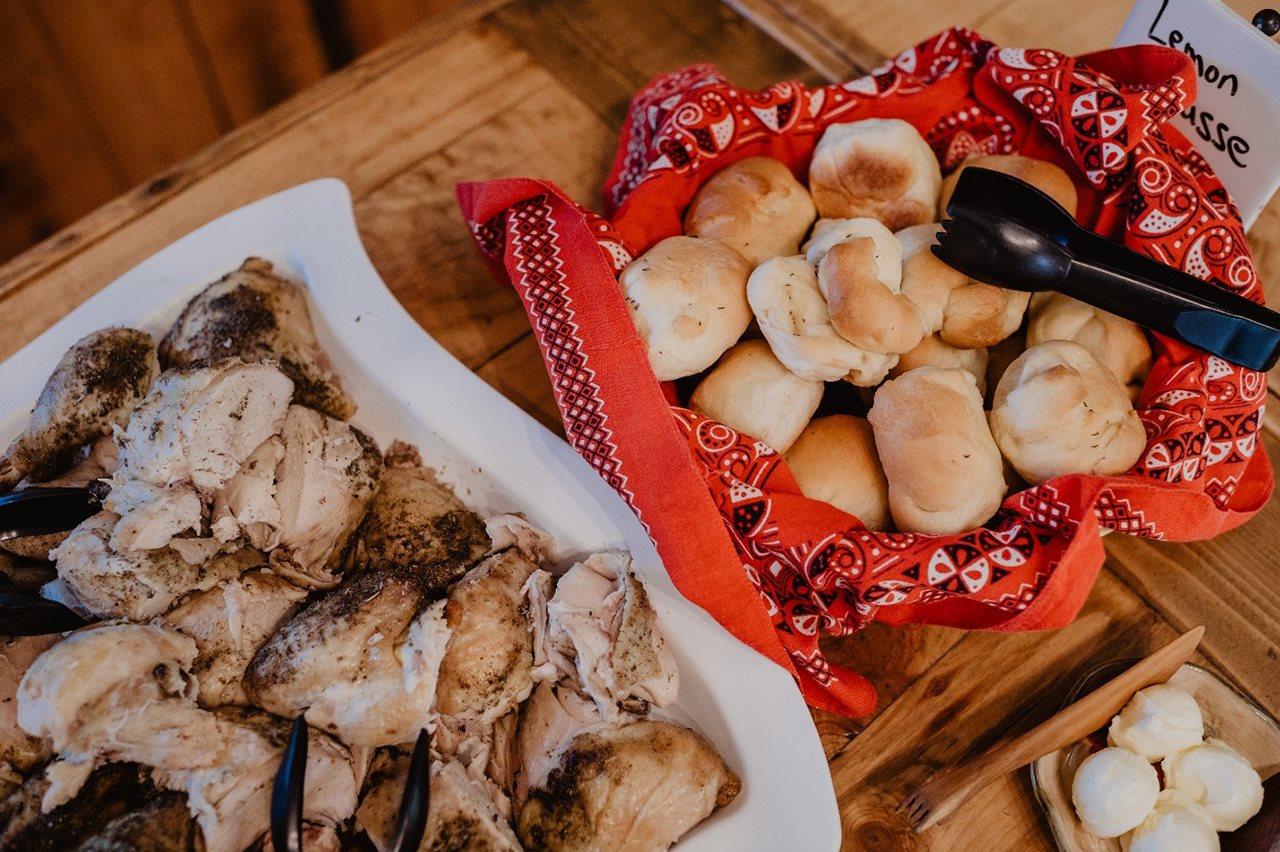
A table with chicken and biscuits for hungry dude ranch guests at Black Tail Ranch.

If you need help narrowing your options, you can use the DRA’s handy ranch filtering system, or you can discuss your needs and expectations with a dude ranch expert. They can help you choose the ideal getaway based on location, ranch size, accommodations, riding programs, kids’ programs, lodging, food and activities. Call or email the DRA at 307-587-2339 or info@duderanch.org.

Are you ready to saddle up?

Seven men riding horses through a beautiful vista over looking a river on the Bull Hill Ranch.

Don’t settle for an ordinary vacation. No matter where you choose to stay, you can expect an all-inclusive experience that welcomes you with warmth, hospitality, horses and the great outdoors. To start planning your dude ranch getaway, visit DudeRanch.org.

Gut check for fall: How to revamp your health routines

2025-10-30T10:31:00

(BPT) – If you’ve ever thought about gut support, you’re not alone. In fact, nearly 75% of U.S. adults experience digestive discomfort at least once a month, and approximately 40% aren’t comfortable doing day-to-day activities because of gut health issues. If this sounds familiar, the first thing you should do is consult with your health care provider. Additionally, you may want to consider resetting your health regimen this season, with a focus on supporting your digestive well-being.

To help you get started, Nature Made®, the No. 1 Pharmacist Recommended vitamin and supplement brand* with over 50 years of expertise in delivering high-quality products with ingredients backed by science, is offering gut wellness tips to guide your seasonal revamp.

null

Focus on fiber

You’ve probably heard it before, but it’s helpful to set specific goals for boosting your fiber intake and discover fiber-rich foods you actually enjoy. That way, it’ll be easy to incorporate more fiber into your everyday routine through foods like fruit, leafy greens, whole grains, legumes, seeds and nuts.

How much fiber should you aim for? Try to consume about 21-38 grams of fiber per day. To increase your daily fiber intake:

Drink more water with meals

Sipping water as you eat throughout the day aids in your digestive processes and promotes regularity, helping break down the food in your system so your body can absorb nutrients better. Not a fan of plain water? Spruce it up with slices of cucumber, lime or lemon, and flavored ice cubes, or opt for sparkling water.

Choose smart biotic supplements

Want to help your good gut bacteria do its job? Check out Nature Made® Triple-Action Biotics Gummies, the latest innovation from the leading national vitamin and supplement broadline brand. Nature Made Triple-Action Biotics Gummies feature three grams of inulin prebiotic fiber per serving to nourish good gut bacteria, 2B CFU of clinically studied IS-2 probiotic to support regularity and 50 milligrams of clinically studied LP20 postbiotic to support immune health.

null

Available in a delicious raspberry lemon flavor, Nature Made Triple-Action Biotics Gummies are gluten free, pectin based and made with natural fruit flavors with colors derived from natural sources.

Nature Made Triple-Action Biotics Gummies are now available exclusively via Costco.com and nationwide in Costco warehouses. Learn more and shop for them at Costco.com.

Exercise to support gut health

Did you know physical activity can support your gut muscles, too? Getting regular exercise helps support your circulation and metabolism, which contribute to a healthy digestive system. Research shows that exercise may even support the beneficial microbes in your gut.

What kinds of exercise are best? Anything that gets your heart rate moving faster than normal and helps you work up a sweat, including walking, biking, dancing or even yardwork and housework. Always be sure to consult with your doctor before beginning any new exercise regimen.

Get your z’s

Research shows that there’s a connection between getting enough good-quality sleep and a healthy gut microbiome. Since sleep is so crucial to your well-being, it’s always a good idea to review your sleep habits to ensure you’re getting the rest you need. Experts usually recommend eight hours for adults, but these needs can vary by individual, so try tracking your sleep for a couple of weeks to see how much you really need to feel your best.

Using these tips, your fall regimen can help support your gut health, which is a key component of overall wellness. By supporting this fundamental part of your body’s functions, you may also start to notice benefits in other aspects of your well-being.

† These statements have not been evaluated by the Food and Drug Administration. This product is not intended to diagnose, treat, cure or prevent any disease.

* Based on a survey of pharmacists who recommend branded vitamins and supplements.