Conscious consumption for better living: The case of Chilean salmon

2025-09-17T09:01:01

(BPT) – Americans are more mindful than ever about the food that ends up on their plates, shopping beyond just convenience or cost. While budget plays a key role, factors like nutrition, sustainability and long-term well-being are now part of the conversation. Despite growing awareness, many Americans still fall short of the Dietary Guidelines’ recommendation to eat at least 8 ounces of seafood per week. That’s where Chilean salmon specifically shines in offering a flavorful, feel-good food that checks all the boxes for health-conscious eaters.

What makes Chilean salmon a nutritious choice?

Chilean salmon delivers many powerful health benefits, thanks to its rich nutrient profile. It’s packed with high-quality, lean protein and is particularly high in essential omega-3 fatty acids. All of these nutrients are known to support heart, brain and immune health at every stage of life. Chilean salmon is also low in mercury, making it a great choice for the entire family, including pregnant women and children.

The U.S. Food and Drug Administration (FDA) includes salmon on its list of foods that meet the new criteria for its updated definition of “healthy,” which focuses on nutrient-dense foods that promote long-term health. The combination of hard-to-find nutrients that support health throughout the lifespan make salmon an important food to include in your diet.

Close-up of a fork taking a piece of pasta, broccoli and salmon from a bowl.


What makes Chilean salmon an easy, sustainable choice?

Farmed salmon, including salmon from Chile, has the highest edible yield and lowest feed conversion ratio (FCR) of animal proteins, meaning it’s the most efficient animal to farm. Chilean salmon farmers have formed impactful third-party partnerships that ensure accountability and hold each farm to high environmental standards. This commitment to protecting the ocean is ongoing; salmon farmers are constantly refining and improving their practices based on the latest science and technological advances. Moreover, fish farming, known as aquaculture, plays an important role in protecting natural fisheries while ensuring there is enough food to sustain the growing global population.

The pristine and consistently cold waters of Patagonia allow Chilean salmon to thrive year-round, making fresh and frozen salmon available at your local grocer no matter the season.

A Centro Magallanes salmon farm.


How to eat salmon from Chile to reap the benefits

It’s the perfect season to add more Chilean salmon to the weekly menu rotation. Whether it’s grilled on the BBQ, tossed into a salad or baked with fresh herbs and citrus, this versatile protein is perfect for family meals. Quick to prepare and easy to love, it’s the kind of “conscious” choice that tastes as good as it feels.

Chilean salmon is a convenient, healthy protein source to buy fresh or keep on hand in the freezer. It is flash frozen to preserve quality and defrosts in just 15 minutes. Ask for Chilean salmon at the seafood counter or find it in the frozen aisle during your next grocery trip.

3 steps you can take now to help get your brand into AI overviews

2025-09-17T00:01:00

(BPT) – From the most experienced marketing and PR pros to the do-it-all-yourself small-business owners, the goal is often the same: get people to a website to learn more and ultimately become a customer.

Until recently, search engine optimization (SEO) was a winning strategy to get on the first page of a potential customer’s online search. But the game has changed now that AI is rewriting the rules, leaving many businesses feeling invisible, according to a recent webinar, “Branded Content in the Era of AI & GEO: Myths, Truths & Trends.”

Entering a visibility economy

People are discovering and trusting content using new tools and features like Google’s AI Overviews, ChatGPT and Perplexity. For example, type in a search and milliseconds later receive a handy AI summary with answers.

“This leads to a visibility economy,” said Lisa Jilek, CEO at Brandpoint, a branded content company with a long history of paid media solutions. “In the current AI-driven landscape, being seen is more important, yet challenging, than ever. Now a key goal for businesses of all sizes is to get cited by AI.”

AI Search is on track to surpass traditional SEO traffic by 2028, according to Semrush. And the average AI search visitor is 4.4 times as valuable, based on conversion rate, as the average visit from traditional organic search.

AI-enhanced search and AI overviews often contain link symbols and website citations. These are what the AI crawlers have deemed credible and pulled from to write the answer for the search query.

“People are no longer scrolling,” said Jilek. “It’s all about the AI summary and positioning your brand’s information to be selected as credible and cited by the bots. This is what people are now seeing and interacting with online.”

How to get into AI overviews

There is no one strategy that guarantees you show up in AI overviews. But you can do things to position your brand for success and make your content more appealing.

“AI is looking for credible content on high-quality websites to crawl in order to create its summaries,” said Adam McBroom, Chief Technology Officer at Brandpoint. “You need to regularly put out content that is clear, topical, credible and readable by people and AI.”

Woman online retail business owner creating content to direct traffic to her site.

How can you get started? Here are three steps to help you get into AI overviews:

Step 1: Create great content

No matter the type of digital content — press release, blog, sponsored content article, social media post — Jilek and McBroom said that in order to craft AI-friendly content, you should use:

  • Structured formats: Q&As, listicles and bylines with credible sources have the potential to get cited by AI engines more reliably.
  • Intent-rich angles: Create content that answers the questions people may ask online and solves the pain points of your customers.
  • Strong visuals: Infographics, listicles and videos engage audiences and send signals to AI algorithms.
  • Authentic voices: AI tools are getting better at identifying sources that are authentic and authoritative, plus people trust brands that are genuine.
  • Parsable snippets: Short, clear and well-formatted content is more likely to be surfaced and cited, especially when placed on multiple high-quality media sites.

Step 2: Publish on quality websites

Credibility is the quality of content as well as where that content appears. High-quality websites matter.

“For instance, an article on USA Today is more credible to AI crawlers because it’s a long-standing news publication that many people use,” McBroom explained. “Another example could be an established blog that has authority in a specific industry space.”

“Credibility and consistency are important for AI search,” added Jilek. “You can’t go wrong with good content on credible websites. Do this regularly and you’re not only appealing to AI, but you’re building brand visibility and reputation for your target audiences as well.”

Step 3: Use consistent messaging

Getting a reporter to cover a story that features your brand is challenging. Many communicators are now using a converged media strategy that balances earned placements (when a reporter covers your brand as part of a story) and paid placements (coverage with a cost) to help ensure a consistent stream of messaging.

Paid placements are unique because you can completely control the message, plus you get guarantees on where it will appear. Branded content refers to paid placements that are distributed on media sites, such as a sponsored article on a newspaper website or an infographic on a media page.

Does AI use branded content?

McBroom has observed that AI citations are referencing branded content, offering an opportunity for businesses.

“Brandpoint distributes branded content for clients on our network of high-quality publishing partners,” McBroom said. “We’re seeing client content appearing in AI summaries. AI crawlers are looking for credible content on credible websites. The value of those placements and frequency will reinforce a brand’s message and goals.”

Group of IT people writing computer code

Plus, many publishers now have partnerships and licensing agreements with AI companies, such as Perplexity AI with Gannett, which owns USA Today and more than 200 local publications.

AI overviews offer opportunity

While AI presents new challenges to businesses big and small, it also provides new opportunities.

“AI enhanced search and AI overviews provide a gigantic opportunity for brands, as consumers are learning online,” said McBroom. “Later, when they do visit your website, they are further down the conversion funnel than traditional organic search. They come in more qualified and are closer to taking action.”

To learn more about branded content and how it can be a part of your media planning strategy, visit Brandpoint.com.

5 essential tasks to make your car road trip ready

2025-09-16T08:01:00

(BPT) – Are you planning to hit the open road? Fall is a popular time for a road trip, and it’s not hard to see why. The cooler climate, changing leaves and fun seasonal activities make traveling by car this time of year a fun adventure, whether you go solo, with friends or take the whole family.

As you consider your travel to-dos, make sure to add car maintenance tasks to your list. Performing basic car care tasks is an easy way to avoid breakdowns during your autumnal getaway, so the only detours are the ones you choose. To help ensure you have an enjoyable, worry-free journey, NAPA offers its top five car maintenance tasks to do before your road trip.

Check tire pressure

Your tires are the only contact your car has with the road, so it’s critical they’re in tip-top shape before you leave your driveway for your vacation.

First, check your tire pressure. The cool autumn weather can cause tire pressure to drop. Low tire pressure may not seem like a big deal, but it can lead to poor handling, reduced fuel efficiency, uneven tire wear and blowouts. Before filling up your tires, check your owner’s manual or the label on the driver’s door jamb to find the ideal pressure for your tires.

Pro tip: While you’re checking your tire pressure, take a moment to inspect the tread. If the tread depth is less than 4/32 inches, you should consider changing your tires.

A technician pours NAPA High Mileage SW-30 motor oil into a vehicle


Change oil

Changing your vehicle’s oil before you leave on your big fall road trip is one of the most important things you can check off your preparation task list. An oil change can boost your fuel efficiency and ensure your engine is clean and well-lubricated so that you can avoid costly repairs down the road.

For your oil change, pick a product that offers superior protection and performance, such as NAPA Full Synthetic High Mileage Motor Oil. This advanced synthetic blend ensures optimal lubrication in extreme temperatures, reduces emissions and keeps engines cleaner.

Thanks to high-mileage additives like seal conditioners, NAPA’s high-mileage motor oil helps minimize leaks and oil consumption while enhancing fuel economy through reduced engine drag. The oil also contains friction-reducing agents and detergents that protect against wear, prevent sludge buildup and maintain engine efficiency. Compatible with both gasoline and diesel engines, including turbocharged systems, it’s a reliable choice for long-lasting engine health.

A NAPA Gold oil filter and bottle of NAPA SW-30 motor oil sit on a table under an elevated vehicle.


Replace the oil filter

Don’t forget to replace your oil filter! A clean oil filter traps debris, keeps your oil clean and removes contaminants that can cause damage to your car. When you change your oil but keep the old filter, you’re contaminating the new, clean oil with old, dirty oil, essentially defeating the purpose of an oil change.

When replacing your oil filter, use a filter built for real-world driving. For example, NAPA Gold Filters are designed for any driving condition, offering up to 10,000 miles of filtration with premium components that trap up to 99% of contaminants and hold up to twice as much debris as conventional filters. Their durable construction, optimal oil flow and reliable cold-start protection make them a trusted choice for both professionals and DIYers. So, whether you’re commuting, road-tripping or facing stop-and-go traffic, you can drive with peace of mind.

A technician checks the fluid level in a vehicle using a dipstick.


Inspect and replace lights

Fall ushers in shorter days and earlier nights. To keep yourself and other cars on the road safe, check that all your vehicle lights are functional. That includes the headlights, taillights, brake lights, hazards, turn signals and fog lights.

Pro tip: Headlights should be replaced in pairs, so if a light on one side is out, it’s a good idea to get ahead of any issues and change the matching light on the other side. NAPA Lamps has a full selection from which to choose.

Swap wipers

When’s the last time you replaced your wiper blades? If you can’t remember, it’s time to install a new pair. Worn wiper blades can’t clean the windshield properly, leaving streaks and limiting your view of the road.

Check your owner’s manual to find the right length wiper blades for your make and model. Don’t forget the rear wipers! They’re just as important to keeping you safe while you drive.

This fall, show your car a little love. By completing these five important car maintenance tasks, you can drive with confidence no matter where the road takes you.

For more information on fall road trip tips, chat with a knowledgeable expert at your local NAPA Auto Parts store. Don’t forget to check out all the auto parts available on NAPAOnline and find a NAPA Auto Care location for routine maintenance and repairs.

4 ways to protect your HVAC system from natural disasters

2025-09-15T09:17:00

(BPT) – When severe weather strikes, one’s home is often the first line of defense. While many homeowners are focused on protecting the roof, windows or basement, it’s easy to forget about one of the home’s most important systems: heating and cooling. An HVAC system keeps a family comfortable year-round, but it’s also vulnerable to damage during storms, floods, wildfires and other natural disasters.

Taking a few precautions can help avoid costly repairs and ensure the system is safe to use after the storm passes. The following are four steps homeowners can take to protect their HVAC systems.

Power down before the storm

When a natural disaster approaches, turn off power to the HVAC system at the circuit breaker. This reduces the risk of electrical damage from power surges and helps protect the equipment in the event of flooding.

A great way to go one step further is to install surge suppression for both your indoor and outdoor units. These devices work by squelching surges and spikes that might damage the electronics within your system. They help prevent problems during lightning storms or when the electrical grid is under stress from severe weather. Some models can also provide protection during electrical brownouts. The best part? They’re relatively inexpensive and easy to install, but they offer excellent protection for your HVAC investment.

Secure outdoor units from high winds

Strong winds can cause serious damage, either by shifting the unit off its base or by hurling debris into the equipment. Before the storm, bolt outdoor units securely in place. Remove lawn furniture, planters or tools that could become airborne hazards. In hurricane-prone areas, homeowners often use hurricane straps to provide their equipment with added stability.

Guard against flooding

Rising water poses major risks to indoor and outdoor HVAC equipment. If a home is in a flood-prone area, consider elevating your outdoor unit on a concrete or composite platform. After flooding, never attempt to restart the HVAC system without first having it inspected. Moisture exposure can cause hidden damage, electrical hazards or mold growth if not addressed by a professional.

Keep up with regular maintenance

Routine HVAC maintenance is always a smart move, but it’s especially important in areas prone to extreme weather conditions. Having a system inspected both before and after severe storms can help catch any damage early. A qualified technician, such as a Rheem Pro Partner®, ensures the equipment is safe, efficient and ready for the season ahead.

Regardless of one’s location, preparation is essential. Natural disasters can happen with little warning, and these steps can help protect a home’s comfort systems and save users from unexpected expenses. For additional resources and expert help, companies such as Rheem, a well-known 100-year-old HVAC manufacturer, and its network of contractors, offer guidance to homeowners navigating these challenges.

How contracting public transit makes a difference for communities

2025-09-15T06:01:00

(BPT) – At 7:32 a.m., Amanda pulls into the coffee shop near her office like she does every morning. She waves at the barista, snags her regular latte and hops back into the car, never thinking twice about the train rumbling by two blocks away. Amanda hasn’t used public transit in years — not since college. But public transit has already shaped her entire morning, even if she’s not aware of it.

The barista who made her coffee? He took the early bus from a neighborhood 45 minutes away. The mechanic who tuned up her car last week? She got to the shop on a light rail line that saved her nearly $200 a month in gas. The assistant in Amanda’s office who makes her job easier? He takes a commuter van pool into town every day — no car, no problem.

Amanda may not realize it, but public transit is part of her everyday life. It connects many of the people she depends on — quietly, reliably and often invisibly.

Public transportation doesn’t just move people. It moves economies, classrooms, hospitals and households. According to the American Public Transportation Association, nearly 87% of transit trips support local economic activity — getting people to work, school, medical appointments or essential services.

Even if you never board a bus or train yourself, transit touches your life through the many people who depend on it every day: The teacher who greets your child in the morning, the nurse in your hospital room, the server who refills your water and the electrician who wired your home. They all rely on public transit systems to show up, contribute and keep your world running.

Public transit is an invisible infrastructure of opportunity — especially for those without reliable access to a car. It’s a lifeline for seniors, people with disabilities, students and working-class families. For every person like Amanda who’s behind the wheel, there are dozens more whose journeys quietly intersect with hers through a bus route or subway line.

A couple walks and converses as people behind them wait to board a bus.

Partnerships that keep people moving

What helps public transportation agencies meet today’s challenges to keep serving the needs of people in communities around the country? Partnerships between public transit agencies and organizations belonging to the North American Transit Alliance (NATA), which provides the experience and expertise to operate and staff innovative transportation solutions.

NATA’s member organizations make up 15% of the U.S. public transportation workforce, encompassing over 71,000 employees in 46 states. NATA member organizations help public transportation improve service even in communities with massive transit demands, remaining flexible enough to respond to each region’s unique needs and conditions.

Across the country, partnerships with private transit operators have resulted in better passenger service, a more efficient service with better value for taxpayers, and new innovations that directly benefit passengers, including:

  • Restructuring bus routes for increased transit service frequency
  • Launching smaller microtransit services to complement traditional transit service, resulting in faster, critical connections for residents.
  • Introducing new technology such as contactless fare payment system and passenger mobile applications.

Partnerships inspire solutions

The many people who use and are touched by public transportation services nationwide (even if they’re unaware of it) benefit from these partnerships with NATA member organizations. The increased efficiency and innovation achieved through public-private partnerships better serves the passengers who rely on them every day. Partnerships help transit companies get the most value for their budget dollars — while hiring trained local contractors for good-paying transit jobs that benefit entire communities.

The bus you didn’t see

At 5:45 p.m., Amanda heads home. She hits some traffic, grumbles and turns up the radio. Meanwhile, just down the block, a man in a faded polo shirt waits at the bus stop. He just cleaned the office where Amanda works. She’s never met him, but she notices the polished floors and tidy lobby every morning. Tomorrow, he’ll be back — thanks to a bus that shows up right on time.

Whether we see it or not, public transit is always there — moving people, sustaining communities and quietly making our daily lives possible.

Learn more about public-private transportation solutions that help connect and strengthen communities at NATransitAlliance.org/contracting.

From Italy’s Heartland to Your Kitchen: Explore Authentic Italian Flavor with This Parmigiano Reggiano

2025-09-11T09:01:00

(BPT) – For centuries, Parmigiano Reggiano has been at the heart of Italian cooking — transforming everyday ingredients into memorable meals. With its rich, nutty flavor, unmistakable aroma and unique crystalline texture, this Italian classic elevates even the simplest of recipes.

Galbani®, Italy’s #1 cheese brand, offers a certified PDO (Protected Designation of Origin) Parmigiano Reggiano that is produced, prepared and imported directly from Italy’s heartland. Made with only three ingredients — milk, salt and rennet — and aged to perfection, Galbani delivers the unmistakable taste of true Italian craftsmanship to the table.

Elevate Classics

Parmigiano Reggiano has long been a cornerstone of Italian cooking, valued for the way it enhances and elevates any dish. Its magic lies in its versatility. Toss it freshly grated over hot pasta or risotto, adding layers of nutty, savory flavor to every bite. Add a rind to a pot of soup, stew or sauce to deepen the taste as it simmers. Finish roasted broccoli, grilled zucchini or sautéed spinach with a generous sprinkle just before serving for a warm, flavorful touch.

Creative Twists for Special Moments

Parmigiano Reggiano’s appeal also goes beyond traditional dishes. Toss warm popcorn with butter, rosemary and finely grated Parmigiano Reggiano for an elevated movie-night snack. Shave over a classic Caesar salad. Or make entertaining effortless with a cheese board built around Parmigiano Reggiano wedges, figs, honey and cured meats — no cooking required.

Galbani Parmigiano Reggiano grated cheese in a cutting board next to a small dish of olive oil

From Italy’s Heart to Your Table

Each wheel of Galbani Parmigiano Reggiano begins in a protected area that includes the provinces of Parma, Reggio Emilia, Modena, Bologna to the left of the Reno River, and Mantua to the right of the Po River in the heart of northern Italy. Here, centuries-old methods and careful aging create a cheese that’s as versatile as it is flavorful. Galbani Parmigiano Reggiano contains no anti-caking agents, stabilizers or preservatives. It’s available in 14- and 24-month 7 oz wedges and 18-month, 2.82 oz cups of grated, shredded and shaved Parmigiano Reggiano — each tightly sealed to preserve peak freshness.

Galbani Parmigiano Reggiano is produced in Italy and made available by Lactalis USA, the world’s largest dairy company. Find Galbani Parmigiano Reggiano at major retailers nationwide. For more product details and recipe inspiration, visit www.galbanicheese.com.

5 ways to achieve peak performance with superior nutrition

2025-09-12T09:03:00

(BPT) – Whether you’re chasing fitness goals, managing busy workdays or simply aiming to feel your best, peak performance starts with the right foundation. Without proper nutrition, your energy levels, focus and recovery can all take a hit, making it harder to show up at your best day after day.

To help you stay sharp, Registered Dietitian and Nutritionist Dawn Jackson Blatner shares her top strategies for achieving peak performance. These simple and effective tips are designed to aid you in building healthy habits, sustaining energy and recovering well, whatever your wellness goals might be.

1. Set yourself up for success

When you’re working toward any health and fitness results, Blatner recommends setting small, achievable goals rather than tackling everything at once. If you have larger goals in mind, break them down into smaller, more manageable chunks that you can realistically envision yourself achieving. This approach helps you to stay motivated and build momentum toward lasting results.

2. Make healthy snacking easier

When your energy dips, it’s tempting to grab whatever’s closest, but quick fixes like chips or candy won’t keep you going for long. Instead, think of snacks as fuel to power your body and mind through busy days. Stock up on options that balance protein, fiber and healthy fats, like cheese or meat sticks, Greek yogurt or hard-boiled eggs. Keep them handy in your kitchen, office or bag so the best choices are also the easiest ones, helping you stay sharp, energized and on track with your wellness goals.

3. Take hydration seriously

Drinking water is essential to stay hydrated throughout the day, especially while working out, but it’s also vital to include beverages containing electrolytes to help keep your energy levels steady. Options like milk, coconut water, watermelon water or low-sugar sports drinks can help replenish fluids and support performance. Keeping these close by throughout the day makes it easier to stay hydrated.

4. Focus on whole foods

Minimally processed foods provide long-lasting fuel for your body and your mind, helping you perform at your best. Whole foods are close to their natural form, so they retain their natural nutrients and fiber. Think of fruits and vegetables, nuts and seeds, plus grains in the form of whole wheat bread, brown rice, quinoa and oats. You can also include dairy, meat and fish products that are minimally processed, with little or no added sugars, salt or artificial ingredients. Planning meals in advance can help ensure you always have nourishing choices ready.

5. Keep breakfast hearty

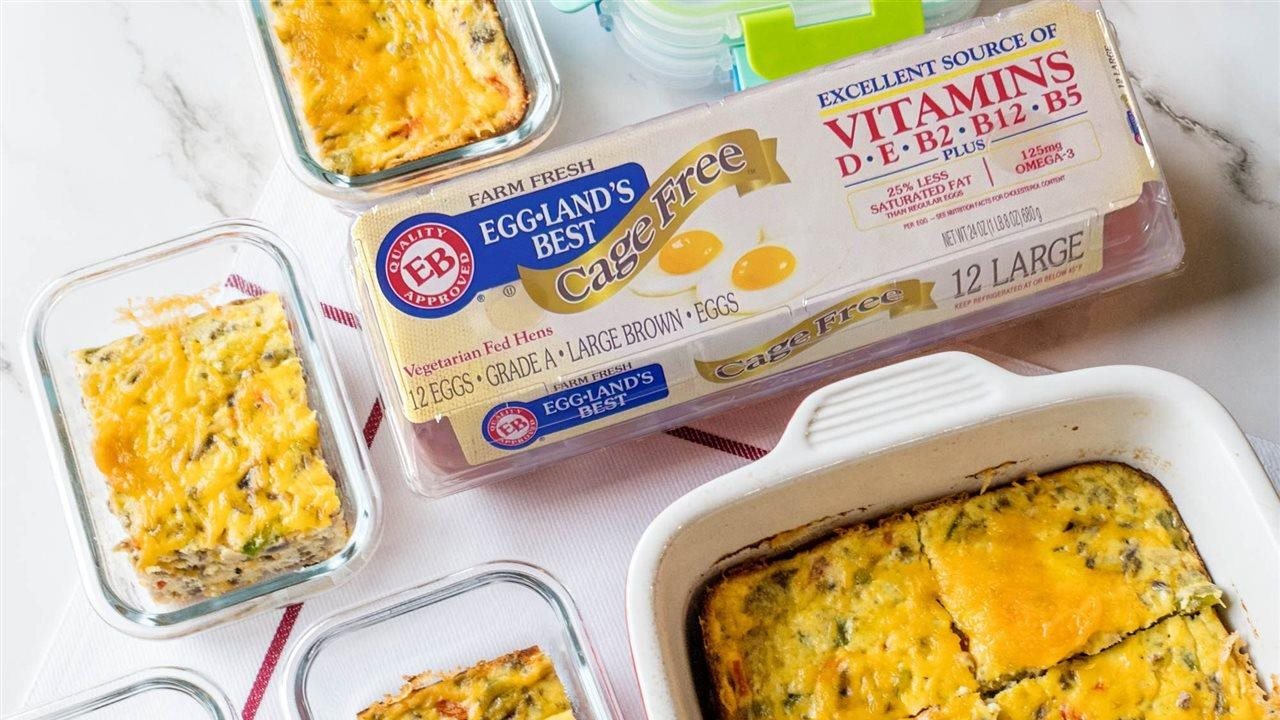
Breakfast plays a key role in setting the tone for your day, providing the energy and focus you need to support your workouts and movement throughout the day. For a flavorful start, you can have fun making delicious recipes such as this Turkey Sausage, Veggie and Cheddar Breakfast Casserole from Eggland’s Best.

Eggland’s Best eggs contain more than double the Vitamin B12 compared to ordinary eggs, providing a natural energy boost and keeping you energized and satisfied all day long. Eggland’s Best eggs also contain more than double the omega-3’s than ordinary eggs, which helps to maintain stronger bones and promote a healthy heart.

Turkey Sausage, Veggie and Cheddar Breakfast Casserole

Prep Time: 15 minutes | Cook time: 40-45 minutes | Yield: 8 servings

This easy, make-ahead Turkey Sausage, Veggie and Cheddar Breakfast Casserole is great for meal prep! It’s freezer-friendly, super easy to customize to your tastes, and you can use all kinds of veggies. It also makes for amazing leftovers!

Ingredients

  • 12 Eggland’s Best eggs, large
  • 1 tablespoon extra virgin olive oil
  • 1/2 red onion, diced
  • 2 garlic cloves, minced
  • 1/2 cup red bell pepper, diced
  • 1/2 cup green bell pepper, diced
  • 1 pound ground turkey sausage
  • 1 cup low-fat sour cream
  • 1 1/2 cups grated cheddar cheese
  • Salt and pepper, to taste

Preparation

1. Heat oven to 350 degrees. Spray a 9×13-inch casserole dish or large deep pie dish with non-stick cooking spray.
2. Heat oil in a skillet. Cook onions and garlic until onions start to get translucent. Season with salt and pepper. Add bell peppers and cook an additional 1-2 minutes.
3. Remove from heat and set aside in a separate dish.
4. Cook ground turkey sausage in the skillet you used for the vegetables. Season with salt and pepper, if desired. Once cooked all the way through, remove from heat and drain. Set aside.
5. In a large bowl, mix eggs, sour cream and 1 cup of the cheddar cheese. Use a whisk to make sure everything is mixed really well. Season with salt and pepper.
6. Add the vegetables and turkey sausage to the bowl and mix until everything is coated with the eggs and well mixed.
7. Transfer to casserole dish.
8. Cook 40-50 minutes, until center is set. Remove from the oven, sprinkle with remaining cheese and return to oven for 1-2 minutes to melt cheese.
9. Let cool, then serve. You can make this ahead and store for easy meal planning.

Find more nutritious recipe inspiration to help you achieve peak performance at EgglandsBest.com.

When antidepressants don’t work, five days could change that

2025-09-10T12:11:00

(BPT) – Finding a medication that alleviates major depression can often take months or years: try a dose, wait, adjust, wait again. And for many, antidepressants simply don’t provide lasting relief. During that time, symptoms can disrupt work, family life and even basic daily functioning.

A new, non-invasive treatment called SAINT® (Stanford Accelerated Intelligent Neuromodulation Therapy), licensed exclusively to Magnus Medical from Stanford University, is the first FDA-cleared, clinically proven therapy that provides rapid relief for people with major depressive disorder (MDD).

For those with treatment-resistant major depression — a condition impacting more than half of people with depression who don’t respond to medications and psychotherapy — that difference in timing can be lifesaving.

Man wearing glasses looking out the window.

SAINT delivers medication-free relief almost immediately. Each day of the five-day course consists of 10 short sessions of stimulation, guided by a magnetic resonance imaging (MRI) map of the individual’s brain.

In published clinical trials with SAINT, nearly 8 out of 10 participants went into remission from their depression in as few as 2.6 days, with a majority staying well for months.

Doctors say the people who qualify for SAINT have typically tried several antidepressants without satisfactory improvement and are looking for a non-drug intervention that doesn’t require hospitalization. These are people who have suffered from life-altering depression that has long impacted their quality of life.

Brandon Bentzley, M.D., Ph.D., a psychiatrist who helped develop SAINT at Stanford, says the goal is precise, rapid relief. “SAINT therapy has already shown the ability to rapidly lift depressive symptoms without systemic side effects, offering hope for a safer, faster solution that helps people feel like themselves again.”

What makes SAINT different from other treatments is the combination of personalization, speed of treatment response and high rates of clinical remission. Before treatment starts, doctors use MRI to pinpoint the unique spot in each person’s brain for treatment, then deliver an outpatient course of brief, precisely targeted stimulation sessions, all completed within a single work week.

Woman leaning against a wall and looking upward.


What do patients often report feeling after the treatment?

Doctors, including Bentzley, say many describe the quieting of racing or repetitive negative thoughts, the first solid night of sleep in months, and a “fog lifting” that makes basic tasks like showering, stepping outside, and creating a simple meal feel doable again.

For most, suicidal thoughts go away, and others report steadier mood and better focus. Families of SAINT patients commonly notice increased eye contact, conversation, and a greater interest in everyday activities soon after treatment begins.

Man outside with a cloud behind him tilting his head up with his eyes closed.


Where do I find SAINT?

SAINT is available at leading health systems, private clinics and medical research centers nationwide. Designated a breakthrough device by the FDA, SAINT is the first mental health therapy to receive innovation support from the Centers for Medicare & Medicaid Services (CMS) through the New Technology Add-on Payment (NTAP) and New Technology Ambulatory Payment Classification (APC) programs, which have helped hospitals and clinics make it easily accessible.

Many commercial insurers approve treatment after medical review, often with prior authorization.

If standard depression treatments have not been effective for you or a family member, talk with your healthcare provider about SAINT. Providers offering SAINT therapy may be found by visiting MagnusMed.com/provider-locator.

Looking ahead

“The future of mental health is precision medicine — treatments that work quickly and effectively,” Bentzley says. “SAINT is proof we’re heading there now.”

If you are in a crisis, call or text 988 to reach the Suicide & Crisis Lifeline, or chat via 988lifeline.org.

Why so many people over 50 love playing video games

2025-09-10T11:01:00

(BPT) – Did you know that more people over the age of 50 play video games in the U.S. than people who are under age 18? This is just one of the many surprising facts uncovered in the 2025 Essential Facts About the U.S. Game Industry Report from the Entertainment Software Association (ESA). These findings from the annual study turn popular belief on its head, revealing that video games are a highly popular form of entertainment for players of just about any age, including people in their 50s, 60s, 70s and beyond.

More older adults are joining in on the fun

Of the over 205 million regular video game players in the U.S., more of today’s players are 50 years or older than ever before. This shows a remarkable increase from 1999, when only 9% of video game players were aged 50 or older.

Here’s the age breakdown for video game players today, according to the ESA report:

  • Aged 50 and older: 29%
  • 35-49: 20%
  • 18-34: 28%
  • Under age 18: 23%

Even more surprising, the report learned that more than half of Generation X (ages 45-60) and nearly half (49%) of Baby Boomers (ages 61-79) play video games every week.

What benefits do older Americans experience from playing video games?

Older players, including people from the Baby Boomer and even the “Silent Generation,” have been discovering the many benefits of playing video games, beyond just relaxing and having fun like their younger counterparts.

For people aged 50 and up, some of the additional benefits derived from playing video games include mental stimulation, improved cognitive skills and new opportunities to connect with others socially. In fact, 57% players aged 65 and older agreed that video games can introduce people to new friends or relationships, whether in person or online.

Some of the top benefits that older players identified from their experiences playing video games include:

  • Mental stimulation
  • Joy through play
  • Improved cognitive skills
  • Stress relief

Multiple academic studies over the years have been backing up these findings from the ESA report, even revealing that video game play can offer lasting, significant relief for older players as a treatment for some of the effects of aging. For example, a recent study concluded that playing video games frequently over time enhanced the cognitive performance and problem solving skills in older people who have mild cognitive impairment. A study from the Brain Sciences Journal also found that training older people with video games improved their cognitive function, quality of sleep and psychiatric symptoms.

For people of all ages, enjoyment is a prime benefit when it comes to video game play. A naturalistic study drawn from observations of over 11,000 players across 29 different countries concluded that video game players experienced positive mood changes. In other words: “People feel good playing games.”

Learn more about who enjoys playing video games today, what types of games they like to play and why, at TheESA.com/facts. You can also download the full ESA report here.

New study: Half of Americans don’t know the ‘right’ amount to spend on gifts

2025-09-10T09:01:00

(BPT) – Economists have long looked for signals in unexpected places. During tough times, Leonard Lauder popularized the lipstick index — the idea that small luxuries rise when bigger purchases are out of reach.1 We are introducing a new kind of measure: the Going Rate. How we give, tip, and celebrate offers another lens into the economy alongside traditional data points. A new Empower study shows that generosity can be a surprisingly powerful economic indicator. It’s one gauge of how households balance tradition and financial well-being.

According to Empower research, Americans say inflation and tariffs are visible in gift prices. Consumer concern is showing up as “gift fatigue” and no-gift policies. Confidence or caution reveals itself in tipping habits and allowances.

“While most gifts are small spending trackers, they can be economic micro-signals,” says Rebecca Rickert, head of communications and consumer insights at Empower. “They point to how consumer prices, wages, and sentiment translate into real behaviors — from the birthday table to the wedding reception.”

The price tag of thoughtfulness

When it comes to gifting, people have clear benchmarks and codes for different occasions, like the half of people (49%) who say you should “pay for the plate” at weddings (Boomers 39%). For many, it’s a balancing act between etiquette and financial limits: half don’t know what the “right” amount is to give, even though 50% feel pressure to spend a certain amount on gifts. This tension may signal a sense of economic uncertainty, as 3 in 4 (75%) say gifts are more expensive due to tariffs and inflation.

Six in 10 people (60%) say gifting culture has gotten “out of hand” and nearly half (48%) report “gift fatigue.” In fact, many are taking a pause altogether, with 33% adopting a “no gifts” policy this year, asking others not to spend money on them at all. Still, the vast majority (86%) agree that gifts can be meaningful without being expensive.

Here is how Americans define the average “going rate” for many of life’s special occasions:

  • Birthday gift: $55.65 for adults, $83.03 for kids
  • Holiday gift: $64.10 per person
  • Teacher or coach gifts: $15.00
  • Wedding gift: $85.18
  • Valentine’s Day gift: $50.69
  • Mother’s Day vs. Father’s Day: $55.25 vs. $38.48

Adults say the average “going rate” for children’s allowances and milestones like visits from the Tooth Fairy add up as follows:

  • Weekly allowance: $36.52 per child
  • Tooth Fairy payouts: $14.87 per child

Over half of adults (53%) say they’ve gifted money from the Tooth Fairy (58% Millennials). Meanwhile, people are split about when kids should start receiving an allowance: A third (33%) say ages 8–10 is the right time, while 24% prefer 11–13, and 22% say as young as 5–7.

Tipping today

Consumers are also navigating an evolving landscape of tipping, where norms vary widely depending on the situation. Tipping culture has moved beyond sit-down dining, with the majority of consumers now tipping for takeout (60%; 69% Millennials vs. 43% Boomers), delivery (69%; 76% Gen Z and Millennials vs. Boomers 57%), and rideshares (60%; 65% Gen Z and Millennials vs. 50% Boomers). Here is what Americans say they’re leaving:

  • In-restaurant dining: 20% median tip; 24.71% average
  • Takeout dining: 16% median; 21.79% average
  • Food delivery: 11% median; 18.09% average
  • Beauty services: 14% median; 18.55% average
  • Rideshare services: 10% median; 15.85% average

A shift in what counts as a gift – and who’s giving

Many Americans see gifting as less about dollars spent and more about shared experiences. Some 44% say they’d rather give the “gift of time” than money or material items — and say their presence is the real gift (55% Millennials; 50% Gen Z; 28% Boomers). Eight in 10 (79%) say cash and gift cards are more acceptable today than in the past (rising to 84% of Boomers). More than half (55%) think their generation spends more than others.

Gift-giving extends into dozens of micro-moments across the year, and is widely commonplace — especially for birthdays, regardless of age. Nearly three in four (73%) buy birthday gifts for other adults (81% Gen Z vs 65% Boomers), and kids (70%) alike. Nearly half (45%) buy gifts for coworkers to celebrate events like work anniversaries, holidays, and retirement (60% Gen Z; 54% Millennials).

The cost of goods

Many consumers are adapting to the effects of rising costs by budgeting carefully. Some 63% say they shop for gifts primarily based on price, and 58% set aside a dedicated budget for gift-giving. People also report planning for occasions: 56% buy gifts ahead of time to spread out the costs, especially Gen Z (67%).

Methodology:
Empower’s “Going Rate” study is based on online survey responses from 2,202 Americans ages 18+ from August 19-21, 2025. The survey is weighted to be nationally representative of U.S. adults.

RO4780013-0825

1 New York Times. “Leonard Lauder Was Beauty’s Original Influencer.” June 2025.