2026-10-30T14:31:00
(BPT) – Key takeaways
- Eighty years after Soldiers at Fort Meade, Maryland, invented “touch and tail,” the Army launched its first men’s and women’s flag football teams through its All-Army Sports program.
- Both inaugural U.S. Army flag football teams competed against other military branches and won silver in the Armed Forces Flag Football Championship in San Antonio, Texas.
- As flag football gains momentum worldwide ahead of its 2028 Olympic debut in Los Angeles, the U.S. Army’s Soldier-athletes bring their own backgrounds, skills, and experiences to the field.
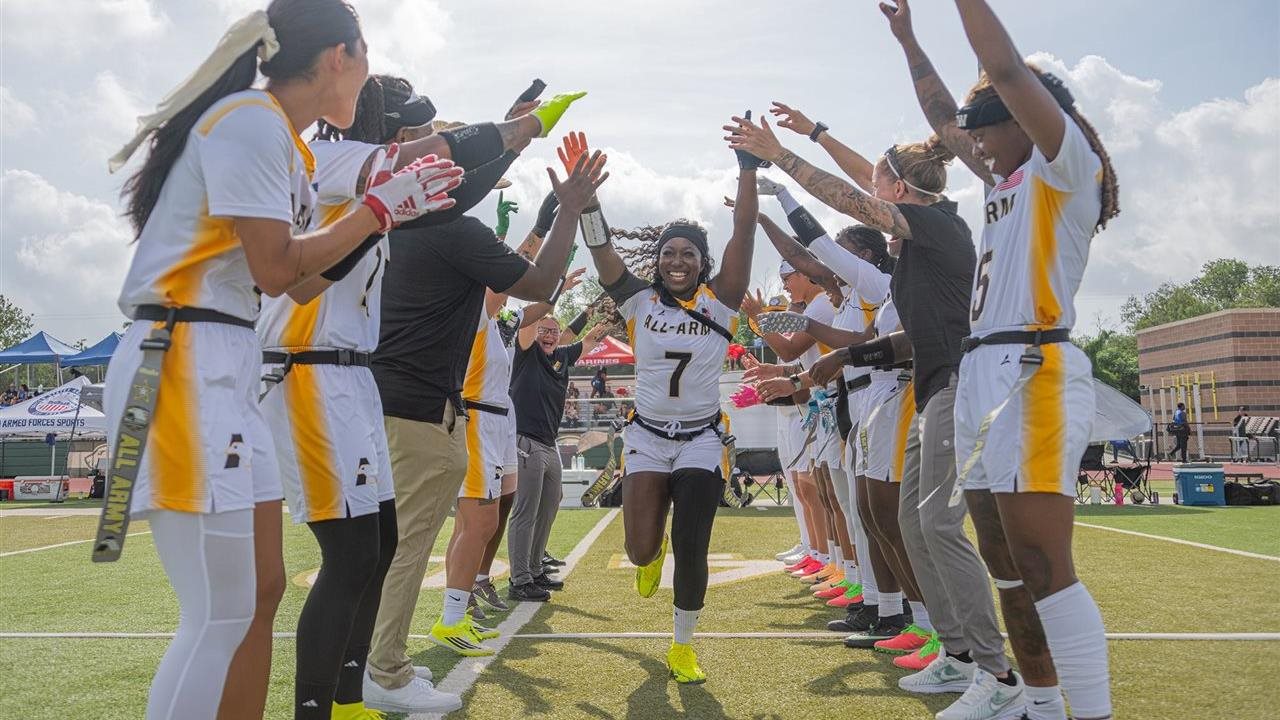
Flag football traces its roots to World War II, when Soldiers at Fort Meade, Maryland, created a non-contact version of football called “touch and tail” to pass the time between missions and deployments. Eighty years later, a new generation of Soldiers is carrying this tradition forward.
In 2026, the Army established its inaugural men’s and women’s flag football teams through All-Army Sports, a program that allows Soldiers to compete across a variety of sports at the elite level while maintaining their Army careers. To qualify, Soldiers underwent an intense training camp where they were evaluated on their technical skills, athletic performance, teamwork and ability to perform under pressure.
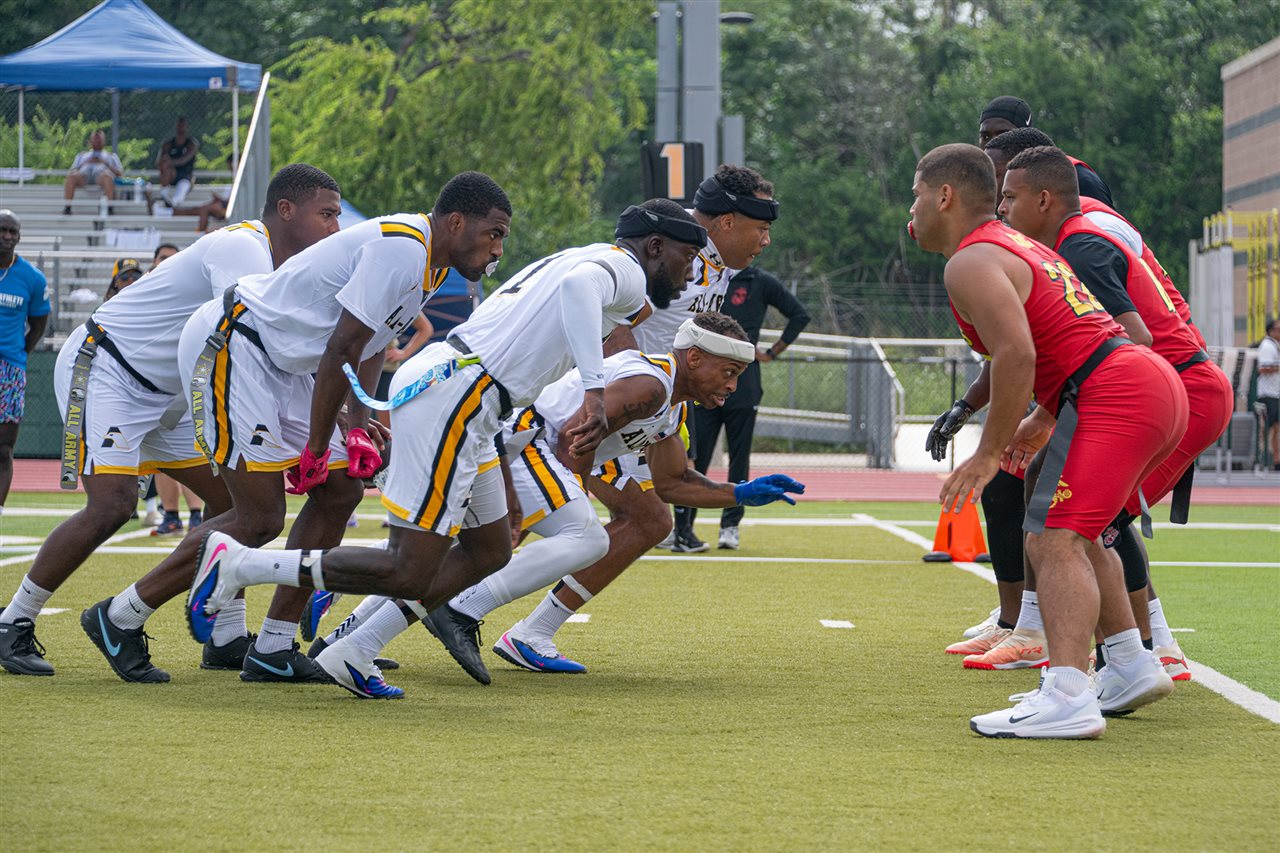
After finalizing the rosters, the selected teams competed at the Armed Forces Flag Football Championship in San Antonio, Texas. Both teams earned silver medals at the championship, and a deep appreciation for the camaraderie they built during their short time together. Member of the men’s team, Sgt. 1st Class Raekwon Bouges, recalls, “Competing alongside other Soldiers was probably one of the best parts of the entire experience. You have individuals coming from different duty stations, backgrounds, and military occupations, but everyone comes together with the same goal, which is to win and represent the Army.”
The debut of All-Army flag football comes as it gains momentum as one of the world’s fastest growing sports — reporting a 50% increase since 2020 — and prepares to make its Olympic debut at the 2028 Los Angeles Games. For these Soldiers, competing on the field connects the sport’s history with a new, exciting chapter. “Flag football is its own sport, with different positions, strategies, and skill sets that separate it from tackle football. Now, the world is beginning to recognize and appreciate those differences,” says men’s team member, Staff Sgt. Justin Jordan.
Read on to learn more about the Army’s flag football talent:
1st Lt. Ky’Achia Carey returns to the football field with the Army
1st Lt. Ky’Achia Carey was 6 years old when she wandered onto a Cincinnati youth football field where her younger brother was practicing. Despite joining as the only girl on the team after years of playing with her dad and brother, she continued to play football until middle school, before transitioning to softball, track and cross country, and basketball.
She continued her track and cross country career at West Virginia State University, while also enrolling in a military science course. This showed her the possibility of Army service, prompting her to join the Reserve Officers’ Training Corps (ROTC), and eventually commissioning into the Army as a Logistics Officer at Fort Bragg, North Carolina.
Football came back into her life in 2022, when she joined a local women’s team forming nearby, and by the time the Army announced it was building its own flag football roster, she had already played on several teams. She sent in a highlight reel to the coach showing her abilities, saying, “I have a resume. I have the talent. Let’s go play.”
She made the roster and caught the pass that gave the Army its first touchdown of the Armed Forces Flag Football Championship — a full circle moment that reminded her how far she had come from being the only girl on her youth football team. But her clearest memory is from a game against the Air Force. The Army team was down by two and hadn’t put a point on the board when she ran a straight route to the end zone and caught the ball. “That touchdown was sweet,” she said, and one of the four she scored throughout the competition. It was quickly followed by an interception from a teammate that showed what can happen when everyone continues to fight and do their part.
But what stayed with her the most was a children’s camp the players led during training. Carey taught one boy a spin move, then watched him pull it off in a scrimmage minutes later. “I hope this kid looks back at that moment and says, ‘This is why I play football,'” she said.
Maj. Quinetta Forby continues her family legacy of service and sports
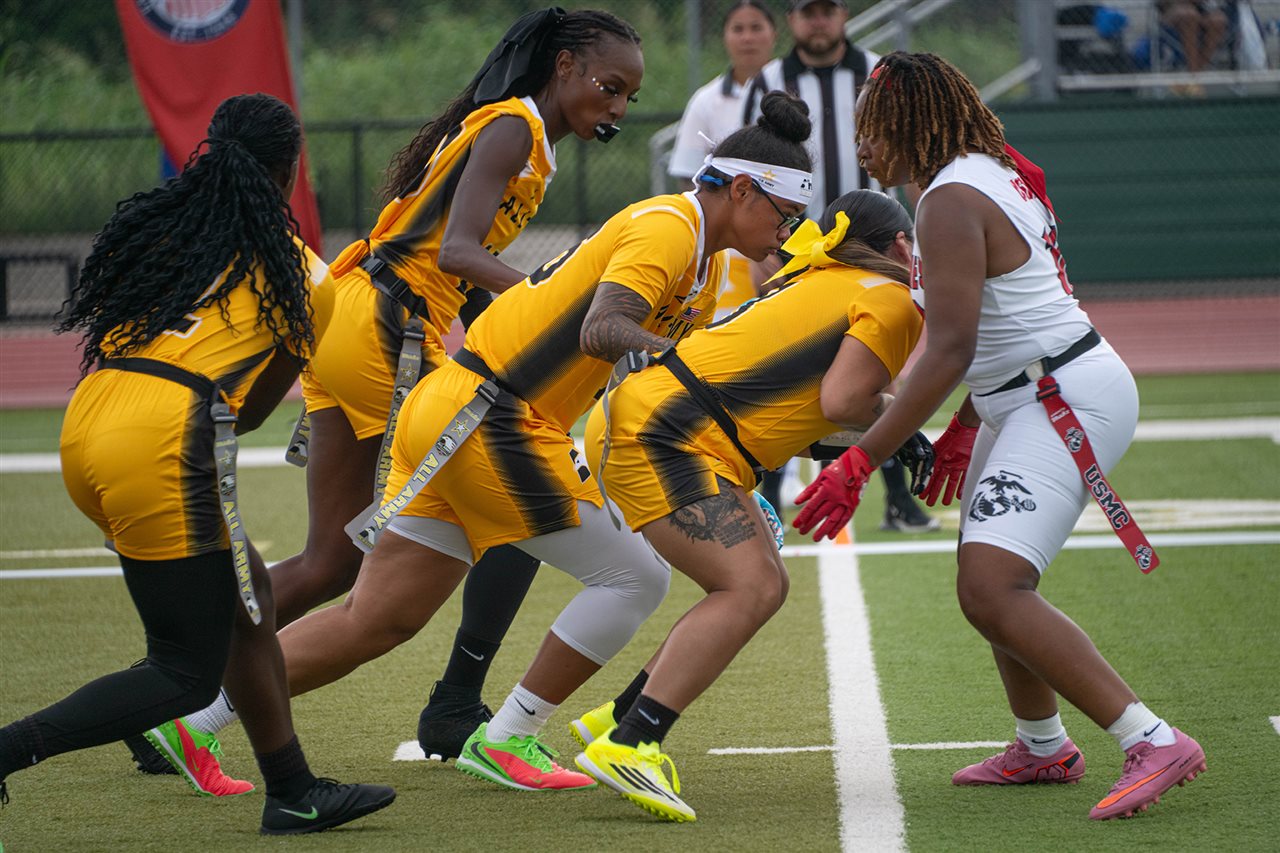
As the daughter of two Army Soldiers, Maj. Quinetta Forby lived in North Carolina, Japan, and Germany, before her family settled in Georgia. “I did not want to join the Army, to be honest,” she said. “I wanted to go to college, play sports, and go do other things.” But when she realized that the Army would help pay for her college degree, she joined the ROTC program at Tuskegee University and commissioned into the Army as a Logistics Officer, the same job her mother had held years before her.
She started playing flag football just a few years ago, after growing up playing basketball and running track. When the Army announced the creation of a flag football team, she knew she had to apply — following in her mother’s footsteps again, who played on an All-Army basketball team.
In the Army’s second meeting with the Air Force at the tournament, Forby read the quarterback early, stepped in front of a pass, and ran it back for a touchdown on one of the first plays of the game. “It just so happened to be the only touchdown for that game,” she said.
During competition, she remembers the way the team kept pulling each other up when things went wrong. “Forget all the noise. It’s us out on the field,” she said of the mindset that carried them through.
Educator Staff Sgt. Rayanna Johnson hopes to coach one day
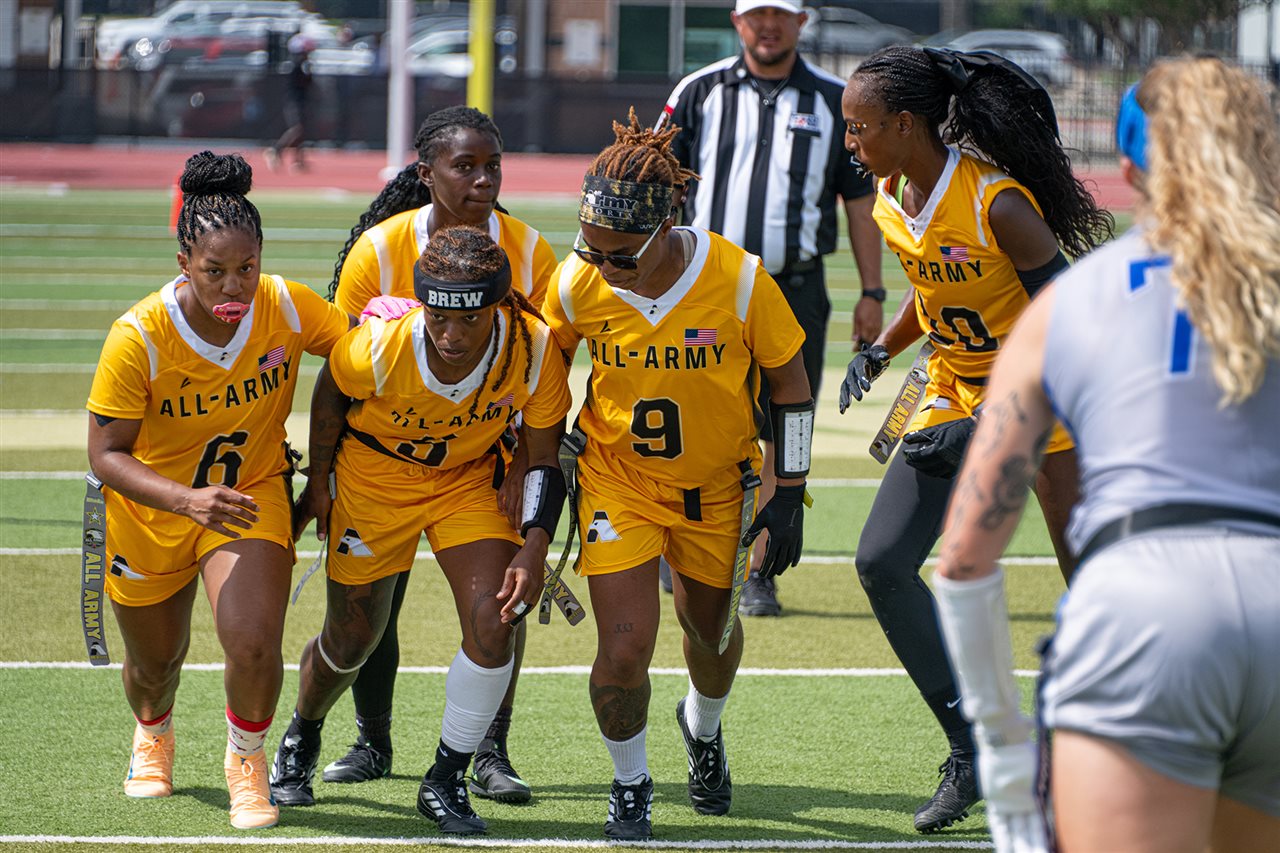
Staff Sgt. Rayanna Johnson had been teaching for more than a decade in Jacksonville, Florida, when she joined the U.S. Army Reserve in 2019. Going active duty never felt right to her. “I love my kids,” she said. “I couldn’t leave them.” Serving in the Reserve let her do both, and she has spent the years since balancing drill weekends while teaching and coaching a variety of sports including volleyball, basketball, and flag football.
Shortly after basic training, a friend invited her to a local co-ed flag football league, and she loved it right away. Six years and dozens of tournaments later, she has played internationally in Colombia and competed at the Flag Football World Championships in Tampa, Florida. While deployed to Kuwait, she organized intramural tournaments on base that drew more than 200 competitors.
When the Army announced it was forming its first flag football roster, friends from her deployment kept sending her the flyer until she gave in. She made the team, and in the tournament, she stepped in front of a pass intended for an Air Force receiver and returned the interception deep into Army territory before being tackled a few yards short of the end zone. “It was the best moment of the game,” she said. “A momentum changer for sure.”
Her next goal is to earn a spot on the combined U.S. military team competing at the 2027 CISM Games, the International Military Sports Council’s world championships. After that, she plans to keep coaching, telling her own students there’s no age limit on starting something new. “You can’t really put a time limit on your own greatness,” she said.
The Army offers plenty of opportunities for Soldiers to continue their athletic goals while representing the Army and the country — from All Army Sports to the World Class Athlete Program, which supports elite Soldier-athletes as they pursue the highest levels of competition, including the Olympic stage.
For more information on these opportunities and all the possibilities of Army service, visit GoArmy.com.