
7 expert insights on the future of branded content

2024-10-11T00:01:00

(BPT) – What’s next for branded content?

Branded content is a powerful, targeted way to connect with consumers, aligning your brand with their values. And it’s highly effective. A Nielsen report found branded content produced 86% brand recall. According to the International Journal of Advertising, branded content is 22 times more effective than traditional advertising.

If it’s not on your PR and marketing radar now, it should be. But, as the industry and technology evolve, branded content is evolving, too. For PR pros and marketers, it’s important to stay current on how best to use this powerful tool.

David Olson, senior vice president at Brandpoint, the industry leader in creating and distributing branded content, offers his insights into the future of this powerful tool. (Spoiler: it’s about leveraging AI correctly and focusing on personalization.)

Generative AI improvements and refinements

Longform content? Expert writers are the best at that. But AI can be a powerful ally in the process of creating that content. And it’s getting better at it.

Generative AI is best at story ideation and brainstorming, coming up with different approaches to a topic, and optimizing headlines. It can also help adjust tone and style for customized outreach. AI previously struggled at research — a critical aspect of brand storytelling — but has recently made positive strides and can help save time, as long as you double-check all sources for accuracy.

AI can create different versions of the same content

AI can quickly create multiple versions of your content, customized for different target audiences.

A basic example would be a lawn mower company using different imagery when speaking to people in Mississippi versus Minnesota to reflect the regional landscape and weather conditions. They might highlight different benefits of the product based on what people need in those locations. Digging even deeper, it could use language that is more appealing to people in those locations, such as different dialects or idioms.

Augmented and virtual reality

Immersive experiences through augmented reality and virtual reality will be huge.

Let’s say a museum is doing an exhibit on Ernest Hemingway that offers AR or VR where people scan or interact with artifacts to learn more. It may include photos of the writer and others at Hemingway’s favorite haunt in Key West, Sloppy Joe’s. You could use your phone to scan a code next to the photos to learn the history of this venerable establishment, Hemingway’s ties to it and to the owner, and that yes, the restaurant really does serve Sloppy Joes. Email yourself the recipe and enjoy one for dinner that night, in honor of Papa.

Even more personalization

Remember Tom Cruise in “Minority Report” and the customized advertisements as he walked through the mall? Spielberg was correct in seeing branded content as hyper-personalized. The more you can make content relevant to the individual, the more powerful the connection you create.

Inclusivity and diversity

Forget the broad strokes; we need to carefully consider things like age, ethnicity, abilities and sexual preference. In brand storytelling we must remember the people we’re talking to and reflect the things that matter most to them. This aligns well with the idea of personalized content.

Search is not the holy grail it once was

Much of branded content is not indexable by Google. Search is changing because of AI, so ranking is going to be even more difficult now. If you’re a brand putting out blog content, getting it to rank is challenging. It’s tough for a lot of brands to let go of that as the holy grail.

It’s not a quantity game we’re playing anymore. It’s not about posting more than your competitors. If you’re just posting for the sake of getting something up and out into the digital world, you’re doing yourself a disservice. You become the exact white noise you’re hoping to break through. Focus on quality instead.

Branded content is always evolving

Ultra personalized branded content will be more interesting and relevant. But, things are always evolving, which means it will be key for brands to pivot and embrace change as it comes.

Brandpoint is the leader in creating and distributing branded content, with average results of 1,000 print and online placements and a site audience of 140 million-170 million. Contact Brandpoint today to learn more about how to put the power of branded content to work for you.
The Impact of Primary Biliary Cholangitis (PBC): A Rare Autoimmune Disease

2024-10-09T07:01:00

(BPT) – Imagine waking up every day feeling utterly exhausted, no matter how much sleep you get. Now, add an unbearable itch that just won’t go away, dry eyes and mouth, and stomach pain. This is the reality for some people living with primary biliary cholangitis (PBC).

A Closer Look at Primary Biliary Cholangitis

Primary biliary cholangitis is a rare autoimmune disease in which the immune system mistakenly attacks and slowly destroys the bile ducts in the liver. Over time, this can lead to inflammation of the bile duct and scarring of the liver and may cause serious complications.1

The symptoms of PBC can at first be mild and get worse over time, and it may take 5 to 20 years to develop.1 Common signs are chronic itch (pruritus) and extreme fatigue, both of which may impact daily life.1,2 Some patients may have no symptoms, therefore the disease is oftentimes only discovered through routine liver blood tests.3

The Challenges of Getting a PBC Diagnosis

“The symptoms aren’t always obvious,” shares Naveen, a patient with PBC. “There haven’t been many treatments available for me in the past, which can be disheartening, especially with the intense symptoms that really affect my life on a daily basis.”

For many, the journey to diagnosis may involve numerous tests and procedures.4 The experience can be emotionally and physically exhausting, especially given the impact that untreated PBC can have on a person’s health.2

A Disease That Disproportionately Affects Women

PBC is more common in women, particularly those who are over 40 years old, with approximately 1 in 1000 women in this age group affected and 65 out of every 100,000 women in the US diagnosed with the condition.3,5 Although the disease is more prevalent in women, an increasing number of men are now being diagnosed. On average, women receive a diagnosis within 12 months, while for men, the process can take up to three years.6

If left untreated, PBC can lead to permanent liver damage, and even severe cases of liver failure.1 Early diagnosis and proactive management of the disease can play an important role in reducing the risk of complications and may help in improving the health of those affected.7,8

Living With PBC: The Daily Reality

Living with PBC means more than just managing the physical symptoms; it’s also about coping with the emotional and psychological toll that the disease can take. This could be incessant itching, debilitating fatigue, or other symptoms that can make it difficult to maintain a normal lifestyle, impacting work, social relationships, and overall well-being.2

For those with PBC, connecting with patient advocacy groups and support communities may offer both practical advice and emotional comfort, helping to navigate the complexities of living with this chronic condition.9,10

Moving Forward

While the challenges of living with PBC can be significant, advancements in understanding the disease and ongoing research into new treatment options offer hope.11 For people living with PBC, some treatment goals include improving or normalizing alkaline phosphatase (ALP) levels and managing symptoms of the disease, such as pruritus.2,12,13 A treatment plan that helps sustain ALP levels and more effectively fights debilitating symptoms may help improve disease outcomes.2,12,13

If you or someone you know is experiencing symptoms that might suggest PBC, it’s important to seek medical advice. Early detection and proactive management may help make a difference in the course of the disease and the outcomes of those affected.7,8

References

  1. Mayo Clinic. Primary biliary cholangitis. Accessed August 29, 2024. Available at: https://www.mayoclinic.org/diseases-conditions/primary-biliary-cholangitis/symptoms-causes/syc-20376874
  2. Sivakumar T, Kowdley KV. Anxiety and depression in patients with primary biliary cholangitis: current insights and impact on quality of life. Hepat Med. 2021;13:83-92. doi:10.2147/HMER.S256692
  3. American Liver Foundation. Primary biliary cholangitis. Accessed August 29, 2024. Available at: https://liverfoundation.org/liver-diseases/autoimmune-liver-diseases/primary-biliary-cholangitis-pbc/
  4. Mayo Clinic. Primary biliary cholangitis diagnosis. Accessed September 17, 2024. Available at: https://www.mayoclinic.org/diseases-conditions/primary-biliary-cholangitis/diagnosis-treatment/drc-20376880
  5. Hohenester S, Oude-Elferink RP, Beuers U. Primary biliary cirrhosis. Semin Immunopathol. 2009;31(3):283-307. doi:10.1007/s00281-009-0164-5
  6. Abdulkarim M, Zenouzi R, Sebode M, et al. Sex differences in clinical presentation and prognosis in patients with primary biliary cholangitis. Scand J Gastroenterol. 2019;54(11):1391-1396. doi:10.1080/00365521.2019.1683226
  7. Martini F, Balducci D, Mancinelli M, et al. Risk stratification in primary biliary cholangitis. J Clin Med. 2023;12(17):5713. doi:10.3390/jcm12175713
  8. Cleveland Clinic. Primary biliary cholangitis (PBC): living with this chronic disease. Accessed August 29, 2024. Available at: https://health.clevelandclinic.org/living-with-pbc
  9. National Organization for Rare Disorders. Primary biliary cholangitis organization. Accessed September 17, 2024. Available at: https://rarediseases.org/organizations/primary-biliary-cholangitis-organization/
  10. Global Liver Institute. Primary biliary cholangitis (PBC) externally-led patient-focused drug development (EL-PFDD). Accessed September 17, 2024. Available at: https://globalliver.org/wp-content/uploads/2023/02/PBC-EL-PFDD.pdf
  11. Bernal RB, Castro CM, Ferrigno B, et al. Management of primary biliary cholangitis: current treatment and future perspectives. Turk J Gastroenterol. 2023;34(2):89-100. doi:10.5152/tjg.2023.22239
  12. Murillo Perez CF, Harms MH, Lindor KD, et al. Goals of treatment for improved survival in primary biliary cholangitis: treatment target should be bilirubin within the normal range and normalization of alkaline phosphatase. Am J Gastroenterol. 2020;115(7):1066-1074. doi:10.14309/ajg.0000000000000557
  13. Lindor KD, Bowlus CL, Boyer J, Levy C, Mayo M. Primary biliary cholangitis: 2018 practice guidance from the American Association for the Study of Liver Diseases. Hepatology. 2019;69(1):394-419. doi:10.1002/hep.30145

GILEAD and the GILEAD Logo are trademarks of Gilead Sciences, Inc.

© 2024 Gilead Sciences, Inc. All rights reserved. US-UNBC-2497 09/24

Living with CIDP and Pathways to Innovative Treatment

2024-10-10T14:01:00

(BPT) – “At first I was kind of like, what is that? What is CIDP? I’ve never heard of that. But then, the relief set in more than confusion … because at least there was a name to what I had.”

Jamilah’s days were once filled with vibrant activities like dance classes, crocheting, and running a photography business. Her life was active — a true reflection of her passion and creativity. But in September 2021, everything changed. Jamilah began to have trouble standing up and moving around. She experienced numbness and tingling sensations in her hands, and within weeks, these symptoms rapidly progressed, spreading to other parts of her body. Soon, she found herself confined to a wheelchair. Only later was she diagnosed with chronic inflammatory demyelinating polyneuropathy (CIDP). Today, her life has changed dramatically from those days filled with vibrant activities, with most of her time spent at home. Her CIDP care requires monthly visits to an infusion center, and she is forced to rely on a wheelchair to get around. Hoping to deepen awareness and understanding of CIDP, Jamilah is an advocate, sharing her story to highlight that recovery is not linear, but reclaiming joy in one’s life.

Understanding CIDP

Chronic inflammatory demyelinating polyneuropathy, or CIDP, is a rare, debilitating, often progressive, immune-mediated neuromuscular disorder of the peripheral nervous system. This condition can lead to significant reductions in arm and leg function, frequent falls, and in severe cases, dependence on a wheelchair, rendering many individuals unable to work.

“CIDP can be debilitating and have a significant impact on quality of life. Many patients with CIDP require treatments that may be burdensome,” says Lisa Butler, Executive Director of the GBS|CIDP Foundation. The effects of CIDP extend beyond physical limitations, impacting daily life at home, work, and school. A cross-sectional study assessing limitations in activities among 147 patients with CIDP found that 85% reported difficulty running, 80% reported difficulty standing for longer periods of time, and 75% reported difficulty dancing. Additionally, more than 75% of patients reported sensory deficits.

In the United States alone, approximately 24,000 people are currently being treated for CIDP, yet there remains a considerable unmet need for effective and manageable therapies. “Existing therapies have traditionally been limited to corticosteroids and plasma-derived treatments, which, while effective for many, present challenges for some patients,” says Jeffrey Allen, M.D., Professor, Department of Neurology, University of Minnesota. Studies have shown an estimated 85% of patients require ongoing treatment with potentially time-consuming therapies and 88% of treated patients report residual neurological symptoms.

A New Era in CIDP Treatment

As new, targeted treatment options become available, patients stand to benefit from having an expanded arsenal of medications.

For Jamilah, her hope is to find a solution that could turn her dreams into reality — reviving her crochet business and launching a dance studio that welcomes both wheelchair users and differently abled dancers, giving them a place and community to express their creativity and passion for dance.

The potential of offering new innovative treatment options for patients like Jamilah and others living with autoimmune diseases is what motivates companies like argenx to continue innovating. “Every day, we are turning science into real solutions for patients suffering from severe autoimmunity,” says Luc Truyen, M.D., Ph.D., Chief Medical Officer at argenx.

To learn more about CIDP and advancements being made in autoimmune diseases, visit https://www.argenx.com/. If you are interested in learning more about CIDP treatments, please speak with a healthcare provider.

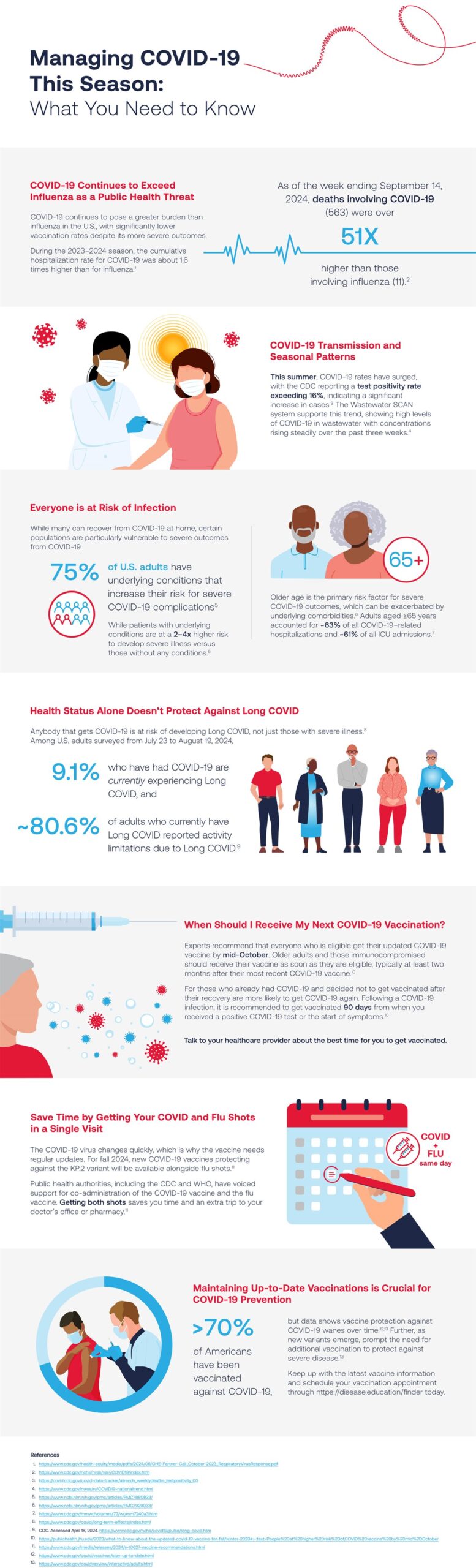
Managing COVID-19 This Season: What You Need to Know and How to Stay Informed

2024-10-10T14:35:00

(BPT) – COVID-19 can affect anyone, so it’s important to stay informed as we approach another respiratory virus season. This infographic offers key insights on COVID-19 vaccinations, transmission, increased risk factors, Long COVID risks, and the benefits of getting your flu shot at the same time. It also explains when and how to get your updated vaccine for the year. Always talk to your doctor if you have any questions or concerns about vaccinations this season. To find your local vaccine availability and COVID-19 resources, please visit: https://www.ForYouAndThem.com/.

Infographic

Make your shower a sanctuary of self-care

2024-10-10T11:01:00

(BPT) – The self-care movement is having a moment. Over the summer we observed Self-Care Month from June 24 to July 24, with the symbolic notion of 24/7 (July 24) self-care being top of mind in our stressful world today, not just during that month, but in every month. The World Health Organization even issued guidelines about its importance.

What is self-care? It’s the process of tending to your physical, spiritual and mental health and wellbeing. It can be about mindfulness and meditation, getting out and walking in nature, eating right, focusing on sleep, nurturing social connections and so much more. It’s the completely personal practice of taking care of yourself, whatever that means to you, and doing whatever helps you recharge and renew.

One way to bring more self-care into your life is to start in the bathroom, which has long been an oasis of solitude, pampering and luxury. Any busy parent can tell you they love their alone time in the bathroom, with a luxurious soak in the tub getting much of that glory. But your shower can be an oasis of pampering, too. Here’s how to turn your shower into an oasis of self-care.

Choose the right shower head. They’re not all created equal. A great shower head can elevate the entire shower experience from ordinary to extraordinary, and the technology has evolved to new heights of self-care. Kohler’s Cinq, a single-function showerhead, features a five-layer Aquifer KDF55 filtration system that delivers less chlorine, chemicals and scale so you can experience that perfect glow for your hair and skin.

Kohler’s new SpaViva Handshower & All-in-One Cleansing Device takes that concept up a notch, and brings self-care to your shower space. It’s an innovative product that combines essential skincare tools with deep clean capability. The two-function handshower offers two spray types, Katalyst Spray that infuses water with more air for a more robust water droplet that retains heat, and the Microbubble Spray that produces tiny bubbles.

The All-in-One Cleansing Device will have you wondering how you ever lived without it. It magnetically docks into the center of the handshower, transforming your showerhead into a multifunction beauty tool. It features four brush heads — Face Brush, Body Brush, Body Massager and Body Scrub — that rotate at a choice of three speeds. It truly is an innovation that turns your shower into a spa. Another plus: It’s a simple retrofit installation that anyone can do.

Set the mood. Create a spa-like atmosphere in your bathroom. Tuck those rubber duckies and other toys away, stow your spouse’s products under the sink and toss any used towels into the laundry basket. Then, dim the lights and break out the candles, your favorite playlist of soothing music and a sprig of eucalyptus or whatever scent you love.

Gather your products. This is the time for pampering, so grab a deep conditioner for your hair, your favorite body wash and other special products.

Practice mindful showering. Focus on the sensations of the warm water, scents, steam and your luxurious products.

Customize the experience. For a truly upscale shower, Kohler’s Anthem+ allows you to control all of your functions digitally. You can control steam and temperature for up to 12 shower outlets from one intuitive interface. Just one great feature: You can preset preferences for up to nine users. So, you can have the shower ready to go just as you like it, and so can your spouse, your teenagers, and any visitors.

With the right tools and a little planning, you can transform your shower from a step-in-step-out dash into a mindful routine of self-care that you can enjoy every morning or whenever the mood strikes.

Twice as nice: Step-by-step tips for painting a room two colors

2024-10-10T08:17:00

(BPT) – If your walls could talk, what would the paint color say about you? You’re bold? Calm? Sophisticated? Whatever the answer would be, painting a wall multiple colors is an affordable, yet impactful, way to uniquely express your personality. A two-toned wall is an interior design technique that utilizes two paint colors on the same wall, allowing you to express your individual style and add dimension to a flat surface. No matter your comfort or skill level, follow these steps to achieve professional-level results and showcase your creativity.

  • Prepare to paint: To get ready for painting, gather all necessary supplies, like a drop cloth, primer, a paintbrush, a roller and painter’s tape. Remove as much furniture as possible, covering any large items with a tarp. Using a sponge, wipe the walls with warm soapy water, then repair any cracks or holes with putty and sand the surface smooth. If you’re painting over a dark color, apply a primer as a base coat to ensure an even foundation.
  • Measure and mark: To create a dynamic color-blocking effect on your walls, start by determining where the colors will meet and mark the spot with a pencil or chalk, using a straight edge for precision. Color blocking can be executed horizontally or vertically, or with additional creative options like diagonals or geometric patterns. A horizontal scheme splits the wall, making the room feel longer, while a vertical approach enhances the sense of height and openness, especially in open floor plans.
  • Apply painter’s tape: Regardless of your chosen approach, using painter’s tape, such as FrogTape® brand painter’s tape, is essential for achieving clean lines. It’s treated with exclusive PaintBlock® Technology to seal tape edges and prevent paint bleed — critical in this type of project. Apply the tape along the marked line to create sharp edges where each color begins and ends. Use a firm plastic tool to eliminate gaps and seal edges. And, be sure to tape adjacent surfaces, including baseboards, ceilings and walls.
  • Paint the light color: To achieve full coverage, apply the light base color one coat at a time, starting by “cutting in” along the tape with a paintbrush and then using a roller to fill in the rest of the section. Allow each coat to dry before applying the next, using as many coats as needed for the desired look.
  • Paint the dark color: After completing the light color, repeat the painting process by cutting in along the tape with small brush strokes and using a roller to fill in the rest of the section. Keep adding coats until you achieve the finished product you have in mind.
  • Remove the painter’s tape: For best results, remove the tape while the paint is still wet, pulling slowly at a 45-degree angle to reveal a room that pops with personality.

Two-tone walls can transform a space to reflect your style with just a simple change. With the right supplies, techniques and color selections, you can create a look that you’re proud of, regardless of your skill level. For more step-by-step project tutorials, tips and tricks and creative inspiration, visit FrogTape.com.

Fire safety: Act now to protect your home and family

2024-10-10T14:01:00

(BPT) – Fall and winter are peak seasons for home fires, according to the National Fire Protection Association (NFPA). To protect your home this Fire Safety Prevention Week, take proactive steps to safeguard against fires, and to be sure your family is ready in case of an emergency.

Here are practical things you can do to prevent fires from starting, and to respond quickly when necessary.

Check your smoke detectors. Every fall and spring check your detectors and replace batteries annually. It’s vital to have working smoke detectors on every level of your home, outside bedrooms and near the kitchen (but at least 10 feet from cooking appliances).

Schedule an electrical inspection. For older homes, or if you haven’t had electrical work done for years, it’s recommended to make sure your home is properly wired and up to current safety codes.

Keep a close eye on kitchen safety. The NFPA reports the kitchen as the most common place for house fires to start. Unattended cooking is a common culprit, so make sure to always closely monitor your stovetop and oven while they’re in use.

Always keep a fire extinguisher handy, and make sure you and other family members know how to use it. Be prepared to use a pan lid to smother a grease fire if one should arise, as water will make it worse.

Consider kitchen appliances with built-in safety features. Some older appliances don’t offer safety features that up-to-date technology has made possible. Today’s electric and induction ranges are considerably safer than traditional gas ovens and stovetops, as there are no open flames, they don’t produce indoor air pollution and they’re not capable of causing gas leaks.

In addition, if you’re concerned about your stovetop accidentally getting turned on, you can now find electric ranges and cooktops that come with a safety locking device that can stop their functions. For example, these models from LG have a built-in safety feature that prevents the burners on the cooktop from being heated when the Lock function is set, even if the touch buttons are pressed: the LG STUDIO 6.3 cubic foot InstaView® Electric Slide-in Range with ProBake Convection® and Air Fry (LSES6338N) and the LG 6.3 cubic foot Smart Wi-Fi Enabled ProBake Convection® InstaView® Electric Slide-In Range with Air Fry (LSEL6335F). It is always recommended that you read the owner’s manual to ensure that you use the product as intended in the safest possible manner.

Safeguard your laundry room. Another potential area of concern for fire safety is your laundry room, specifically your clothes dryer. While you may remember to clean the lint filter, many homeowners forget about the dryer’s duct. With too much lint build-up in the duct, restricted airflow can cause dryers to overheat, which could lead to a fire.

To help you remember this important chore, consider an LG Dryer that offers FlowSense® Duct Clogging and Lint Filter Indicators with the LG ThinQ® app — which sends you notifications when it detects a reduction in airflow, prompting you to clean the duct. Regular cleaning based on these alerts helps maintain proper ventilation, reducing risk of overheating and ensuring safer dryer operation.

Models offering this feature include the LG 7.4 cubic foot Ultra Large Capacity Smart Front Load Electric Energy Star Dryer with Sensor Dry & Steam Technology (DLEX5500W), plus larger models like the LG 9.0 cubic foot Mega Capacity Smart Wi-Fi Enabled Front Load Electric Dryer with TurboSteam™ and Built-In Intelligence (DLEX8980V) and the LG 9.0 cubic foot Mega Capacity Smart Wi-Fi Enabled Front Load Gas Dryer with TurboSteam™ and Built-In Intelligence (DLGX8901B). These dryers include the ability to access smart functions to monitor drying cycles and more through the LG ThinQ® app.

Review your emergency plan. Make sure that everyone in your household knows what to do if a smoke detector goes off or there’s a fire in progress. Hold regular family meetings to review exits from each room, and practice where to meet outside in case of emergency. This can make a difference when there are only minutes to exit your home safely.

Being proactive, choosing appliances with safety features and reviewing your emergency plan will all give you more peace of mind when it comes to fire safety this season.

New Medicare Program Makes Prescription Costs Easier to Handle

2024-10-10T16:03:00

(BPT) – This year’s Medicare Annual Enrollment brings a major change for prescription drug users: a new payment program for older adults and those with disabilities to spread out their costs over time, making it easier to manage out-of-pocket expenses.

With 90% of Americans over 65 taking at least one prescription, and one in five skipping doses due to costs (Source: KFF), this plan could make a meaningful difference for millions, helping them afford the medications they need to stay healthy. Starting in 2025, Medicare drug plan members can spread out their prescription costs over time, avoiding the need to pay in full each time they fill a prescription.

“The Medicare Prescription Payment Plan is an important new option that can help Medicare beneficiaries manage their prescription drug costs and access the medications they need,” said Patrick Wildman, Senior Vice President of Advocacy at the Lupus Foundation of America. “The option to spread out prescription costs over the course of the year is critical — especially for those living with chronic and serious conditions like lupus who can have high drug costs and who rely on multiple medications to manage their disease.”

What Does This Mean for You?

Eligible beneficiaries can enroll in the Medicare Prescription Payment Plan during annual enrollment starting Oct. 15, 2024 and throughout the plan year. This benefit, along with a newly instituted $2,000 out-of-pocket maximum for Medicare Part D members, represents the biggest change to Medicare since the introduction of Part D in 2006. The “donut hole” will disappear in 2025, so no one will have to pay more than $2,000 per year for their covered prescriptions.

This change means you can worry less about managing large bills at the pharmacy, and instead spread those costs out over manageable monthly payments, giving you more control over your finances.

Who Benefits the Most?

While all eligible beneficiaries can use the new program to better plan and manage prescription costs, the Centers for Medicare and Medicaid Services (CMS) has previously stated that those most likely to benefit include anyone who spent more than $2,000 on out-of-pocket prescription costs in the past year and anyone struggling to pay out-of-pocket costs upfront at the pharmacy.

Pharmacists Are Ready to Help

Pharmacists nationwide are prepared to answer customer questions about the program. However, beneficiaries will need to enroll via their Part D plan sponsor before they can receive their medications for $0 upfront at the pharmacy.

“Taking your medications as prescribed is one of the most impactful things you can do for your overall health and well-being,” said Summer Kerley, Vice President of Health Plan Solutions for Rite Aid Corporation. “By spreading out your payments, this program makes it easier to stay on track with medications, which means better disease management and better quality of life.”

The Future of Cost Smoothing in Healthcare

This shift in spreading healthcare costs over time is becoming a standard approach across the industry, with commercial insurers, employer plans, and Medicare embracing cost smoothing programs. The solutions provide certainty of affordability, allowing more patients to access the care they need without the stress of large, unexpected bills.

Don’t Miss Out — Explore Your Options

With the Annual Enrollment period opening Oct. 15, 2024, now is the time to explore your options. Visit Medicare.gov, Paytient.com/MPPP, or call your Medicare plan provider to see if you qualify and learn how to enroll. Don’t wait — taking control of your healthcare costs today could mean better health and financial stability in 2025 and beyond.

The ABCs of type 1 diabetes screening and testing: A helpful guide

2024-10-10T07:01:00

(BPT) – Sponsored by Sanofi

As many in the type 1 diabetes community can attest, it can be difficult at first to understand the purpose of screening or the subsequent tests before and following a type 1 diabetes diagnosis, and what the results can mean for you or a loved one.

To help alleviate any uncertainties around which screening or test to take (and why), it’s time to bring it back to basics. Below are the “ABCs” of some of the screenings and tests (e.g., Autoantibody Screening, Blood Glucose Test, and A1C Test) that are currently available for type 1 diabetes, with the goal of empowering people of all ages with the tools and information necessary to advocate for their health when they are speaking to their doctor. It’s important to note that while a blood glucose test and an A1C test are crucial to the diagnosis, monitoring, and management of type 1 diabetes, an autoantibody test is the only test that can confirm your risk of developing the disease.

Autoantibody Screening

Autoantibody screening is a blood test that can detect whether someone is at risk for developing type 1 diabetes. The blood test looks for type 1 diabetes-related autoantibodies, which are proteins that appear in the blood in the early stages of the disease before there are noticeable symptoms, which tend to occur when type 1 diabetes has already progressed to a later stage after weeks, months, or even years.

When it comes to detecting type 1 diabetes early, knowledge is power. As a nurse who lives with type 1 diabetes herself, Grace Cochran could not agree more: “Having insights into whether you are at risk of developing type 1 diabetes is incredibly important. Early information can give you more time to educate yourself and your family about the disease and prepare for what will eventually come,” Cochran shared.

“People may think ‘ignorance is bliss’ when it comes to a future type 1 diabetes diagnosis, but as someone who not only received an unexpected diagnosis that required a hospital stay myself but also as a nurse who cares for people who might be in a similar situation, I can tell you that it’s 100% worth it to get screened,” Cochran continued.

The1Pledge.com has useful information about the importance of early screening and detection and how to start a conversation with your doctor. By the time someone is in the later stage of disease, complications of untreated type 1 diabetes can lead to an emergency room visit and hospital stay, as they did for Cochran, and lifelong insulin dependence begins — which brings up the “B” of the ABCs.

Blood Glucose Test

A blood glucose test not only confirms a type 1 diabetes diagnosis, but also helps people living with type 1 diabetes regularly monitor their disease. Doing so is important, as it gives a person insights into whether their blood glucose or sugar levels are within a normal range. Many factors can impact blood glucose levels, such as food, activity level, stress, illness, and certain medications and dehydration.

“There are a lot of tools these days that can help make routinely monitoring blood glucose levels easier and more convenient,” Cochran said. “For example, a doctor can test a person’s blood glucose levels, and many people living with type 1 diabetes also use devices to self-monitor their blood glucose levels throughout each day because this condition requires 24/7 care and attention. In addition to working with my care team, I’ve learned tips and tricks since I was first diagnosed 17 years ago to manage my glucose levels — but I, of course, still monitor my blood glucose levels multiple times a day, every day.”

Indeed, finding the right care team is incredibly important for people living with type 1 diabetes. For instance, an endocrinologist, a specialist who cares for people with diabetes, can work with someone living with type 1 diabetes and help them maintain normal blood glucose levels. Not only that, but they can also measure how someone is managing their disease over time, leading to the “C.”

A1C Test

An A1C test, which is also referred to as an “estimated average glucose,” can be used to show average blood sugar levels over two to three months. For people with type 1 diabetes, an A1C test can provide an overview of blood glucose management over a set period of time and help them, along with their endocrinologist, understand if any adjustments need to be made in the way they are managing their disease.

ABC Recap

It’s important to understand the role of screening before a type 1 diabetes diagnosis and the tests that are used following a diagnosis to monitor the disease and guide appropriate management. You can learn more about how to get screened early for type 1 diabetes and what to expect after screening by talking to your doctor, enrolling in a research option, or scheduling a telehealth visit through Screening Central.

Sanofi does not provide medical advice, diagnosis, or treatment — information is provided for educational purposes only. Your doctor is the best source of health information. Talk to your doctor if you have any questions about your health or treatment.

Grace Cochran is a paid spokesperson for Sanofi.

7 tips to help protect you from financial fraud

2024-10-10T11:01:00

(BPT) – Scammers seem to be getting more and more sophisticated, and older adults are often the target — especially of financial scams. In fact, scams targeting Americans 60 and older resulted in over $3.4 billion in losses in 2023, an 11% jump from the previous year, according to the 2023 FBI Elder Fraud report.

And imposter fraud is on the rise. That email seemingly from your bank or broker, the urgent message from a tech company alerting you to a computer problem, or the notorious grandparents scam saying your grandchild is in trouble and needs money — all are examples of imposter fraud. It’s easy to be taken in, so we all need to be on the alert and aware of how to protect ourselves and our finances.

At Charles Schwab, we’re committed to providing information and resources to help keep older investors — and all investors — safe. So here are seven ideas to help you avoid falling prey to financial fraud.

1. Look out for unsolicited offers

These can come from a text, email or messaging app, as well as on the phone. Don’t rely on caller ID to determine if a call is legitimate. Scammers use tools to make it appear they’re calling from a genuine government or business number. Instead, confirm independently whether a business, utility or government agency is indeed trying to reach you. If you receive a call from a company you do business with and they ask for information, consider hanging up and calling the company directly using the customer service number listed on your invoice, account statement, or the corporate or government website. And be sure to report imposter scams to the company or institution being impersonated.

2. Avoid clicking suspicious links

Don’t click on links or attachments included in unknown or suspicious emails and texts. In an email, hover over links to reveal the website’s URL and see where the link really goes, and double check the sender’s domain name in the email address to ensure it matches what you’d expect to see.

3. Beware of urgency and pressure tactics

Be cautious of communications urging immediate action or pressuring you to invest quickly with promises of guaranteed or unusually high returns. And be wary of investment opportunities based on alleged “insider” or confidential information.

Remember: If it sounds too good to be true, it probably is.

4. Check before giving remote access to your computer

Before giving someone remote access, especially if they proactively contact you saying there’s an issue or suspected fraud, call the phone number listed on your financial institution’s public site to verify you’re speaking with someone from the firm.

If you get an unsolicited call offering to fix a computer problem, hang up immediately. Companies like Apple and Microsoft will not contact you for tech support unless you’ve requested help, and they won’t ask for personal information.

5. Don’t give sensitive information

Is someone asking for credit card details, your Social Security number, or your one-time password? That’s a red flag. Never share sensitive information unless you’re sure you know who you’re dealing with. Be skeptical of anyone requesting that you share your one-time password, as criminals may be requesting your code so they can login and access your money.

6. Don’t send money to someone you don’t know

There are so many easy ways to send money these days. Be extra cautious. Make it a rule to never send money to someone you don’t know, someone you think you may know but aren’t sure, or someone you’ve only met online.

7. Establish a trusted contact at your financial firm

As an added layer of protection to keep your accounts safe, many financial firms ask you to designate a trusted contact in case you can’t be reached. This can be a friend or family member over 18 years old, who you trust and who is likely to know your current situation. If a financial firm suspects fraudulent or unusual activity on your account but can’t reach you, your trusted contact can confirm things like your current contact information, health status and other parties on your account.

Your financial firm may not require you to name a trusted contact, but it’s a good idea as a second line of defense. And be sure to update your trusted contacts regularly.

Whether you’re concerned for yourself or a loved one, share these tips and encourage everyone you know to protect themselves in the face of increasing financial fraud. Want more ideas on how to keep your accounts safe? Visit us at schwab.com/schwabsafe for how-to guides, added tips, and more. We’re committed to your security.

The information provided here is for general informational purposes only and should not be considered an individualized recommendation or personalized investment advice. The investment strategies mentioned here may not be suitable for everyone. Each investor needs to review an investment strategy for his or her own particular situation before making any investment decision.

All expressions of opinion are subject to change without notice in reaction to shifting market conditions. Data contained herein from third-party providers is obtained from what are considered reliable sources. However, its accuracy, completeness or reliability cannot be guaranteed.

Examples provided are for illustrative purposes only and not intended to be reflective of results you can expect to achieve.

1024-V6MP